Brett Jurgens

2K posts

Brett Jurgens banner
Brett Jurgens

Brett Jurgens

@bjurgs

Managing Partner @ Snowcat Group, Founder @ Net Energy https://t.co/J9NZHediQU | https://t.co/lcPSZsH5WO

Denver, CO Katılım Ağustos 2010
1.2K Takip Edilen853 Takipçiler
Brett Jurgens
Brett Jurgens@bjurgs·
I'm excited to attend Sneak Preview of the Vault! Colorado's Future Home of Entrepreneurship at Colorado Startup Week sched.co/28nAR
English
1
0
1
81
Copper Comms 🚨
Copper Comms 🚨@CopperCOMMS·
At this time, all summer activities and lifts are closed due to lightning in the area.
English
2
0
1
332
Brett Jurgens
Brett Jurgens@bjurgs·
@CopperMtn slush rush ended at 2. Posted 3 on the website. Just showed up and missed it. Bummed out!!!
English
0
0
0
15
Brett Jurgens
Brett Jurgens@bjurgs·
✌️☀️ I got a great reminder from Marta (the best yoga teacher on the planet!) earlier this week that, along with some amazing spring time weather in Colorado, has given me some needed peace… “Remember to do things slowly or you may miss them. You’ll miss the experience, the learnings, and the enjoyment of ‘the doing’ while you seek the end result as quickly as you can get it.”
English
0
0
2
121
Brett Jurgens
Brett Jurgens@bjurgs·
Thanks tariffs! (maybe) The 10-year is down 67 bps as of today at 4.1%. But does that matter in SFR (or broadly)? I’ve heard from three investors in the last two weeks that they believe they’re off by 500-750 bps on borrowing rates from being able to make deals pencil. The fed funds rate is currently higher than the 10 year at 4.3% – a recession warning. This may cause rate cuts with the next fed meetings happening: - May 6-7 - June 17-18 - July 29-30 My $0.02…borrowing rates come down some in the next three months, then hit an inflection point at ~3.75% in August right when investors are coming back from summer break in time for them to start being more active in August / September. Enjoy (or ignore) the chaotic news and slower summer, but buckle up for 2H 2025! Agree? Disagree? What borrowing rate would allow you to invest more actively, or finally sign that term sheet and buy?
English
0
0
0
96
Brett Jurgens
Brett Jurgens@bjurgs·
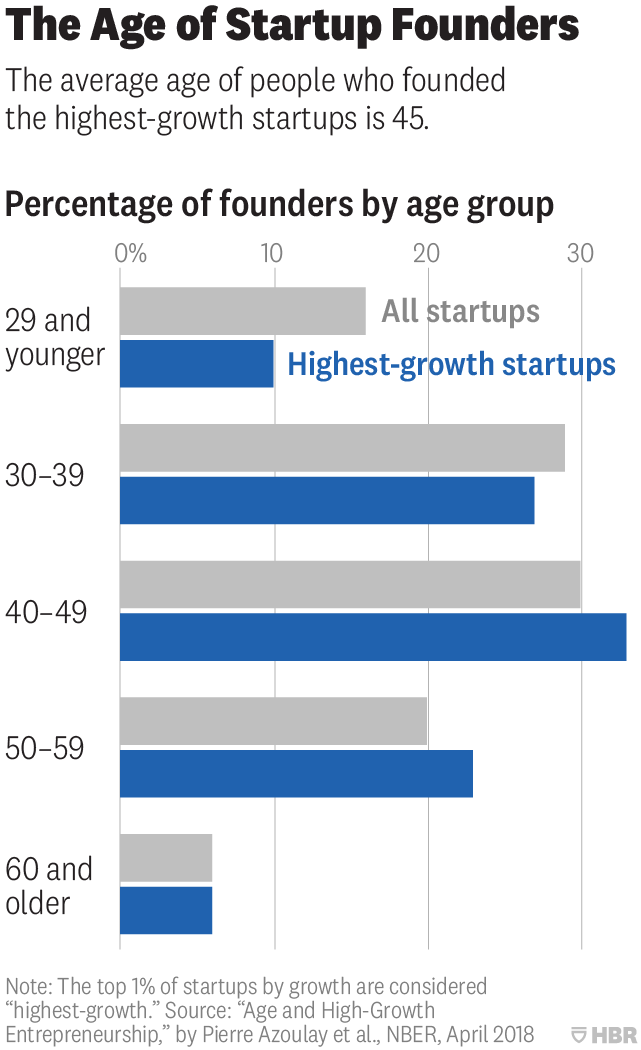
The average age of a successful startup founder is 45. Don’t take my world for it. That’s what the Harvard Business Review found (hbr.org/2018/07/resear…). I’ve been wanting more connectivity in the entrepreneurial community in Colorado, especially Denver. In my 20’s, I felt like the older, experienced crowd was nowhere to be found. I didn’t get it, and most people around me chalked it up to there not being as many successful founders vs. other major startup hubs like SF and NY. There’s some truth to that, but fast forward to today and I believe there are many more founders and startups in Colorado than there were 10-15 years ago. VC backed, bootstrapped and SMB / ETA founders are all over the place! COVID has only made people more disconnected. They’re more spread out and hybrid / remote work is the norm. Culturally though, Colorado founders “give first” more than any other city I’ve been to. They want to help without looking for anything in return. So, there’s a gap. I’m convinced some if it’s connected to the average age of founders. If you’re 45, have two kids, and live 15 minutes outside of Denver, are you going to show up to a meetup at a bar downtown on Tuesday at 7pm? Maybe every once in a while. But not as often as you did when you were 26. I know I don’t. Or, are you dropping your kids off at school, hitting a coffee meeting, maybe going to a lunch, then working from home until the night time routine starts at 5:30? More likely. In order to build more connectivity and serendipity, we need to meet founders where they are. Or maybe better said, where they want to be and when they want to be there. People are craving in-person interaction, daytime activities not always focused on drinking, intimate groups of peers to learn from and lean on, and meeting spaces that are fun, vibrant, and have parking! They also want services and convenience they didn’t need in their 20’s…though ironically I think the 20-somethings of today want many of the same things. Just some thoughts for now. Maybe more to come on this 😉 Agree? Disagree? What do we need in Denver?
Brett Jurgens tweet media
English
1
1
1
76
Brett Jurgens retweetledi
Sahil Bloom
Sahil Bloom@SahilBloom·
Your entire life will change when you realize that stress and anxiety feed on idleness. When you take action, you starve them of the oxygen they need to survive. The answer is found in the action.
English
232
2.4K
20.3K
797.3K
SMB Attorney
SMB Attorney@SMB_Attorney·
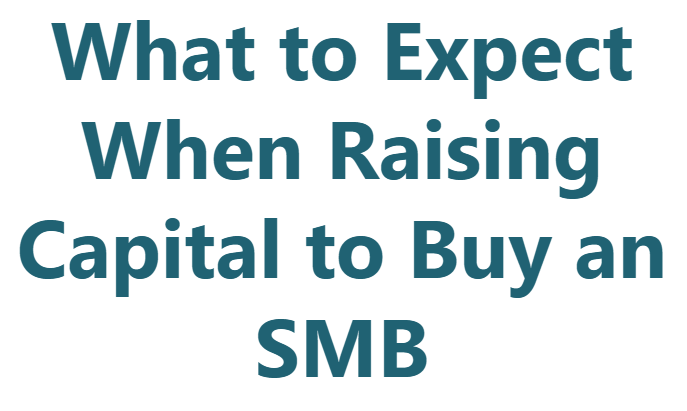
🚨 Big news! We just dropped the 2025 Edition of our brand-new guide: What to Expect When Raising Capital to Buy an SMB from @smblawgroup. It’s designed to help you: ✔ Demystify the capital-raising process ✔ Understand key legal & economic terms ✔ Avoid common deal pitfalls This resource is based upon our experience with over $1B+ in closed SMB transactions—covering real-world case studies, term sheet tips, and how to meet investor expectations. If you want a copy, just reply below, and I'll DM you the link.
SMB Attorney tweet media
English
188
9
105
46.8K
Brett Jurgens retweetledi
Nick Huber
Nick Huber@sweatystartup·
The most valuable trait of an entrepreneur: A sense of urgency. Most people walk slow, think slow, move slow, make decisions slow. They lolly gag around life. No energy. No excitement. Those people never end up making it happen. They end up working for the man, clocking in at 9am and clocking out at 5pm. Doing the absolute bare minimum to get paid next Friday and not get fired. Never making moves to chase additional opportunities and never taking a stab at entrepreneurship.
English
63
38
502
44.5K
Brett Jurgens
Brett Jurgens@bjurgs·
2024 was boring. At least for single-family rental investors. So, what’s coming in 2025? Think about this: - More loans are coming due. - Some investors still have cash to spend. - LPs still want to invest in SFR. - Good deals are hard to find and even harder to make work. - Home prices are high but might start dropping if investors need to sell. - Interest rates are up and probably won’t come down soon. - More build-to-rent is adding some inventory and opportunity. - A lot of renters will stay renters for years to come. - Home insurance costs are going way up in some places. Confused yet? Me too. The most important thing is loans coming due. Many investors borrowed money when rates were low. Now, they have to try and refinance at higher rates or sell portfolios to other investors. Investors with cash from raising (very few) or selling in the last 18 months will have a chance to buy some great portfolios in 2025 – maybe even at 20-30% discounts. Consolidation by the biggest SFR investors will continue. And some new and creative investment strategies will either expand or be tested for the first time. If you’re an SFR investor, do you think 2025 will be more exciting? What are you doing to differentiate, survive, and dare I say thrive? Here’s to (hopefully) a more exciting 2025!
Brett Jurgens tweet media
English
0
0
2
39
Brett Jurgens
Brett Jurgens@bjurgs·
100%, curious about what alternative solutions may pop up. I've always thought an HSA for your home would be a good idea...a home savings account. Even for areas that lack insurance coverage, the aging housing stock in the US + increasing labor costs are going to continue to put strain on homeowners.
English
2
0
1
105
John ! Jack
John ! Jack@Jackovin·
@bjurgs I’m not sure how insurance will manage those areas. The cost to cover is just too high when once in 500 year events happen every 5-10 years now.
English
1
0
1
24
Brett Jurgens
Brett Jurgens@bjurgs·
Home insurance is getting ugly. Rising premiums are starting to have a bigger impact. And investors and homeowners are facing a bigger challenge - in some markets, getting home insurance is becoming nearly impossible. Many large insurers have pulled out of markets like Florida and California. Natural disaster risk and cost to replace has become too high. This is no longer a sleeper issue and it’s impacting real estate markets more than most people realize. If insurance is too expensive—or unavailable—values and populations will shift. Some regions will become uninvestable (not to mention unlivable), while others will see an influx of demand. Inflation from 2018 - 2023 was ~24%. Insurance rate premium increases over the same period in some bigger states: - Texas - 60% - California - 48% - Florida - 43% A few questions: - Where will insurance availability remain high and rates low? - Will we see a decoupling of homeowners insurance and mortgages? - Where are the best SFR markets going to be in 5 years? - What innovative insuretech solutions come to market to fill the gap? To give homeowners options and different kinds of protection?
English
1
0
1
82
Brett Jurgens
Brett Jurgens@bjurgs·
Are you a founder? You’re (likely) making a huge mistake. I started my first company 14 years ago with my best friend as a co-founder and the unwavering support of my amazing wife (luckily, I still have both!). But despite those solid foundations, something was missing. We took our company through Techstars, built a phenomenal network, and raised capital from investors who were more than willing to make introductions. Yet, there were still times when I felt isolated—lacking the deep, ongoing connections I needed with people who truly understood the ups and downs of being a CEO. Mentors were great, but they were often distant, busy, or just in a different stage of life. Investors and their networks were helpful but usually for one-off questions, not the consistent, deeper support I craved. And professional groups or business coaches? Those always seemed like luxuries when budgets were tight. Then, a lightbulb moment came: a CEO friend invited me to join a small group where we’d meet monthly to just talk about CEO-ing—no filters, no agendas, just real conversations. It was AA for CEOs! Fast forward to today, our seven-members group is still going strong. We still meet monthly for dinner or happy hour, take 1-2 retreats a year for in-depth discussions, and connect for plenty of 1:1s in between. This group has become a lifeline, helping each other through everything from company exits, failures, fundraising, strategy, hiring, and even personal challenges like divorces and parenting. We make angel investments together, have invested in each other’s new companies, and will continue to do exciting things together in the future. Here were our initial rules: 1️⃣ Right size. 7-8 people so we could always have a quorum—too few, and it’s not enough; too many, and it gets unmanageable. 2️⃣ Complete transparency. Everything is 100% open, honest, and confidential. What’s said in the group, stays in the group. 3️⃣ No fees, no contracts. This isn’t a business deal—it’s a support system. We didn’t want anyone feeling like they were “buying” their way into the group. 4️⃣ Avoid potential conflicts. No companies that compete with each other or would hire each other. And we’re all at a similar stage (raised a seed or Series A). This way, we could openly discuss investor relations, board dynamics, and more. If you’re a founder, create your group. Get 7-8 people together who “get it,” and commit to meeting in person once a month. It will change your life, and your business.
English
1
0
3
71
Brett Jurgens
Brett Jurgens@bjurgs·
“I need to fundraise.” I just heard it again yesterday. I hear it too often and too early, especially from first-time founders. And most think VC is the answer. Founders are creative, dreamers, and hard workers. But too often, I don’t see that same creativity applied to how they fund and launch their companies. The default mindset is: “Raise VC money asap!” But in reality, most startups aren’t VC-backable businesses. Hastily raising a round too early can create more problems than it solves. The good news? You have options. People need to eat, kids need clothes—I get it! But before jumping straight into fundraising, consider these alternative paths that could set you up for long-term success: 💡 Sell first. What’s the simplest, cheapest version of your product you can actually sell? You think you know what to build—but you probably don’t. Selling first lets you validate demand before investing in tech or hiring a team. Obviously, this isn’t doable in every industry—like rocket ships or cars—but it’s possible much more often than people think. 💡 Hire part-time help. Can a college student, retiree, or stay-at-home parent help execute a v1 of your product? Can you keep your day job while they help move things forward? Maybe someone will even work for equity instead of cash. 💡 Launch with a partner. At Net Energy, we launched with a partner already committed. That meant profitable revenue on day one. We didn’t build anything before securing them. We networked, pitched, and structured a deal that funded our tech and operations before we considered raising money. 💡 Keep your day job. I know—this is easier said than done. Life is demanding. But entrepreneurship is hard as hell. If you’re serious, you’ll find a way to make it work. Take stress off of you and your family. Your progress will feel slower than you’d like it to, but the tradeoff for salary and benefits can allow your company to flourish vs. shutting it down before you even start. 💡 Buy a cash-flowing business. Starting from scratch can be tough (and always takes longer than expected). Instead, why not buy something that already makes money? With an SBA loan, you can buy a business with just 10% down. Seller financing is another option. Or, raise a small amount from individual investors (debt or equity) and replace your salary on day 1. Don’t default to fundraising right away – sell! And explore your options. I’m sure I’m missing some good ideas. What other creative strategies are there? 👇
English
0
0
1
48
Brett Jurgens
Brett Jurgens@bjurgs·
Things take too long. Ok, I’m an impatient entrepreneur. Fine. But hear me out... I’m finally getting solar installed on one of my rentals in Colorado today. Pumped!! I signed the contract and had the initial site visit done in September 2024. My residents have been amazing. The solar installation company has moved quickly. So what happened? Holidays played a role, but the main reason… PERMITTING Permitting took ~10 weeks. Xcel states, "The typical utility interconnection process with Xcel Energy can take up to 12-16 weeks after initial application submission." WHY?? Can we please get an EO for @SolarAPP_ for the entire country?
Brett Jurgens tweet media
English
0
0
2
58
Brett Jurgens retweetledi
Nick Gerli
Nick Gerli@nickgerli1·
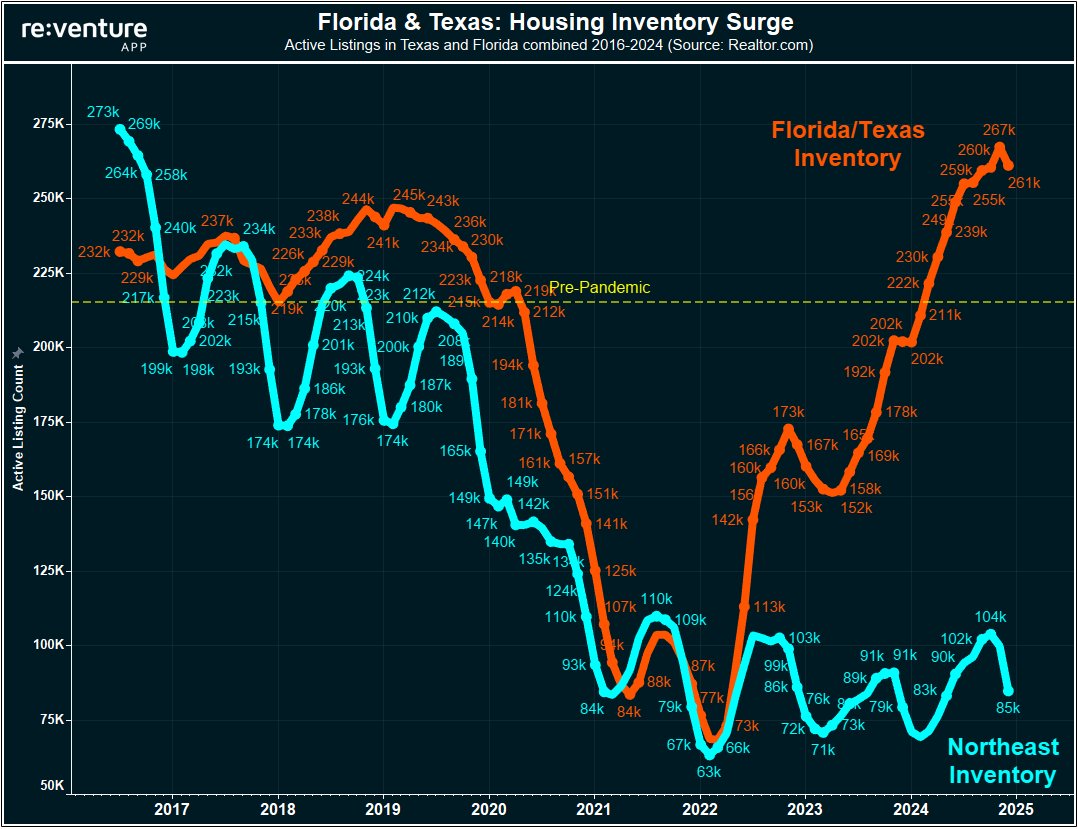
Probably my favorite housing market graph right now. Orange line is inventory levels in Florida & Texas, combined. Blue line is inventory level across entire Northeast US. In Texas and Florida, there are 261,000 active listings on the market. 207% higher than the level in Northeast, which covers 9 states. Prior to pandemic, these regions were the same. Highlights the very bifurcated nature of this housing market. The downturn is happening in TX/FL, but we are still suffering a historic inventory shortage in the Northeast.
Nick Gerli tweet media
English
230
540
3.4K
525.3K
Peter Kourounis
Peter Kourounis@petekourounis·
There's a ton of money to be made in home services. Private equity knows it. New business owners know it. Your family & friends know it. But after being in this space for several years, I've made a ton of mistakes. I created a free guide so you can learn from my missteps. Comment "guide" below and I'll share it with you.
English
49
3
43
10K
Brett Jurgens
Brett Jurgens@bjurgs·
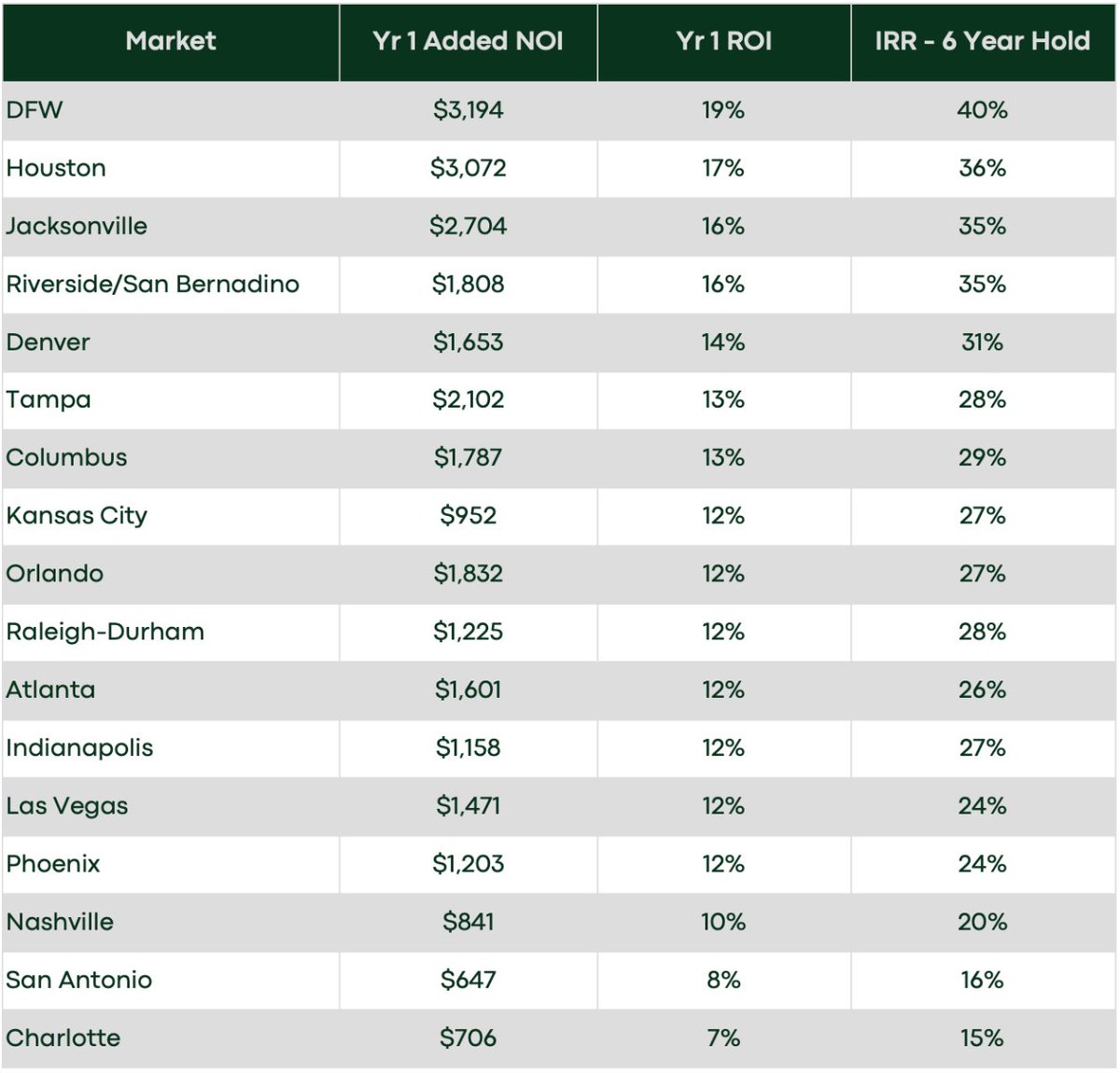
We’re nerds. While you sipped eggnog and ate too much, we spent the holidays crunching numbers on where Net Energy can have the biggest impacts on yields for single-family-rental investors! Here is what we’re capable of in some of the top SFR markets (sorry Charlotte and San Antonio): #SFR #BTR #realestate
Brett Jurgens tweet media
English
0
0
0
42
Brett Jurgens retweetledi
Michael Thomas
Michael Thomas@curious_founder·
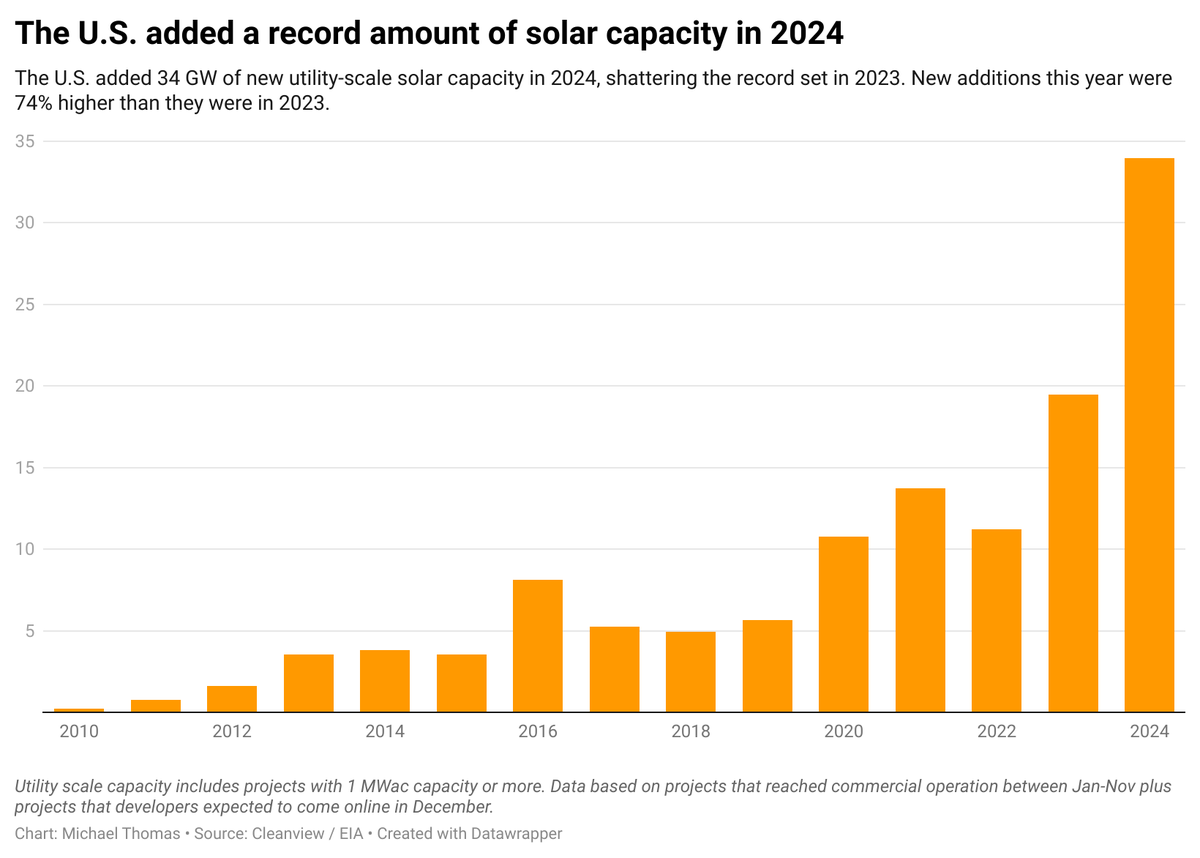
New data from @CleanviewEnergy: The U.S. added a record amount of solar capacity in 2024. The country added 34 GW of utility-scale solar, which is 74% more than last year's record year.
Michael Thomas tweet media
English
14
90
250
28K