Bodanomics

120 posts

Bodanomics banner
Bodanomics

Bodanomics

@bodanomics9341

(Baw-duh-noh-miks): A process of decision making that results in entropy at a macro level. Analysis of Ugandan thinking and its absurd outcomes.

Katılım Kasım 2024
1 Takip Edilen277 Takipçiler
Sabitlenmiş Tweet
Bodanomics
Bodanomics@bodanomics9341·
Just when you thought it was over.... #Bodanomics is back. It will feature here every Friday or when there is a commentary of interest... #watchthisspace!
Bodanomics tweet media
English
1
1
10
1.3K
Bodanomics
Bodanomics@bodanomics9341·
A Very Brief Financial Literacy Lesson on Value This article began its life as part of the banter on the ‘The Budonian Kafunda’, a WhatsApp chat group where there are no holds barred. The banter arose from a story carried by one of those digital fly-by-night tabloids. The paper was reporting about a family feud in which one property somewhere in the village was valued at Ugx. 20 billion. My first comment on the article, after it was posted on the ‘Kafunda’ was that I had stopped reading when I saw a value of twenty billion. Someone, in the group was quick to tease me about ‘obwaavu’ being my problem. I took that in good faith, because it is par for the course. Here you take the punches and patiently wait for your turn to throw a few back. You may choose to get pissed off, but that won’t stop the barbs flying. In fact, it could just make matters worse! That’s Budonians for you. The more irritated you become, the merrier the party! However, on a more serious note, I did take time to think about the 20 billion valuation for a property in the village. Many of us fall victim when it comes to appreciating the problem of commercial value as opposed to sentimental value. First, a little anecdote. In the late 1990's, when Greenland Bank collapsed, I was appointed as a receiver for some of the properties it owned through its subsidiaries. These were Sapoba Bookshop Press (rings a bell?) and Fiba Coffee. I was tasked to recover monies used to buy those businesses by Greenland Bank. I approached Sudhir Ruparelia to buy the property that used to house Sapoba in Katwe. He agreed to come and see it and true to his word he did. We found the place closed, and I hastily directed the guards to open the doors. After a very brief inspection, he asked me, "how much money are you collecting from this property?" I answered that it had just been taken over by the official administrator for Uganda Commercial Bank and was not generating any revenue. Whence he entered his car and drove off without saying another word. I was left wondering why I had failed to make a sale. I had a piece of real estate on one of the major roads into the city. Why was this property mogul not interested? Putting my disappointment aside, I realized that I was not putting into practice all the technical stuff I had learnt about valuation in my finance classes. A smart businessman, without the school training I had received, had figured out the problem in two minutes flat – and he had walked away from my ‘falling dagger’. The essence of his thought process was that if there was no income, the property was only as valuable as the land it stood on! I guess the founders of Sapoba would have had a mouthful to say regarding the lack of value to a business/property they had sweated blood to develop. Back to the Ugx. 20 billion village house. It does not matter how much you spend in building a wonderful village castle. It does not matter how many hectares/acres of land you have around that castle. What matters in terms of commercial valuation is whether the property counts as an asset or liability. If you have read Robert Kiyosaki’s ‘Rich Dad, Poor Dad’ then you know what I am talking about. In fact, accountants have gone ahead to redefine an asset as something (resource) you hold and from which you expect to derive future income streams (economic benefits). A liability is anything that you hold and spend money on. Please note that a resource can be an asset or liability depending on how it is deployed. While a residential house or personal car provides you with convenience, until you deploy it to produce income streams, it remains a liability in the sense that it is something on which you spend money. When valuing property or businesses, there are up to eight or so methods that can be used. But for purposes of investment, we primarily reference two methods. That is the discounted cash flow method and the income approach. And that is the basis of my skepticism about a Ugx. 20 billion valuation for a village house, which is probably further encumbered by that not so small matter of the family cemetery at the back. Many of us tend to consider our village homes as part of our commercial assets. In truth, they are no more than social-cultural symbols of our status. As the heir of my father’s estate, I should know better. Despite the old man (RIP) having claimed ownership to several rural pieces of land, I find myself spending more money than the value of the matooke I collect from there. Small wonder then, that if I had a way, I would not have anything to do with them! As one moves from employment to retirement, it is your passive income that is going to matter. It does not count that you have the biggest house in the village if you cannot afford to keep it pristine or pay for your health needs. So, think again, as you take you hard earned money (from the city) to invest in that village castle. All you are probably doing is creating a sentimental and social monument to yourself. You may invest a billions of shillings in that village project but remember that sentimental value is not business value. [Image Rights: Corporate Finance Institute]
Bodanomics tweet media
English
1
6
12
633
Bodanomics
Bodanomics@bodanomics9341·
The Problem of Armchair Analysis The interpretations we give to events in our environment(s) vary for many reasons. The ones that I can think of are a) knowledge about the context in which those events occur like the intentions of the actors, b) proximity to those events and c) our preconceived bias about the environments in which those events occur. I have found myself, observing various happenings in Uganda from afar over the last three weeks from the comfort of my armchair and inevitably drawing conclusions thereon. Even as I offer my version of the facts, it must be understood that my view is limited by not having much knowledge about context in which those events occurred, nor proximity to the said events. As I put ‘pen to paper’ I must also plead the problem of bias I suffer in interpreting those events. Take my rantings then, with a pinch of salt. Here are two events that I experienced from afar, and how I analyzed them. First were the reports of ‘chaos’, bribery and ‘fighting’ (verbal and physical in some instances) in the recently concluded National Resistance Movement’s (NRM) ‘primaries’. Not being an active politician, I must be forgiven for my incomprehension of the venom and viciousness with which the contestants went at each other. Perhaps the most shared and discussed, was the one between the current Speaker of Parliament and a former Speaker. It was not clear to me why these two eminent Ugandans were going at it, daggers drawn. What does it mean to be a member of the NRM’s Central Executive Committee (CEC)? What privileges does being a Vice Chairman proffer? I must have missed something, I guess. There MUST be something worth fighting for I thought to myself. But not being an insider, the only meanings I could decipher were that if they were fighting, regardless of what our realpolitik looks like, there must be some benefits for being near power. Secondly, if one fails to heed the signs of the times, they do so at their own peril because change is the only constant. If we don’t plan for it, it will surprise us in ways stranger than fiction when it happens. Thirdly, civic leadership cannot and should not be an eternal damnation. But that is the way we have learnt to treat personal dependence on the public purse in our beloved Pearl of Africa. We will fight to the end, even if the facts speak otherwise. My second event had to do with that damned and dirty Nakivubo Channel. The first we mere mortals came to know about its proposed ‘redevelopment and beautification’ was the publicization of a blue letter from ‘Above’. According to his missive, a certain well-meaning entrepreneur had devised a plan to sort out this eye sore. As we were reading the missive cum directive, the Lord Mayor of Kampala, flying on his broom, started asking some fundamental questions about the process. But even as the Lord Mayor was raising hell fire, the developer had started boarding off parcels of the Channel. I agreed with the Lord Mayor’s view, except that not being a politician, I did not appreciate why he was flying on a dirty broom. Due process had evidently not been observed, including an application for a lease on the said channel and a new environmental impact assessment study. Column inches have been written about this matter by experts, and the consensus seems to be that there are many ‘known knowns’ like the fact that Nakivubo Channel is a natural flood plain. After a bit of digging around, I landed on a 1999 EIA for the Nakivubo Channel rehabilitation project, that was funded under the IDA-financed First Urban Project (FUP), Credit 2206-U. The stupid report is hiding in plain sight! Section 8 of the executive summary reads thus: “Alternatives to the proposed rehabilitation project include (a) No action, (b) designing to the maximum probable Flood (MPF), and (c) covering large sections of the channel. Option (a) is not politically acceptable, options (b) and (c) are not economically viable at this time.” If the authors of that 1999 report are to be believed, this is a developing story as they say. The ideas of the ‘developer’ are not the problem. The bigger problem is the shortcut mentality of our businesspeople. It is a locker shop mentality. They count wealth in terms of locker shops. That mentality has turned Kampala into the Capital City of locker shops in the world. Please take all that I have written as the rantings of an armchair critic. In the words of Theodore Roosvelt: “It is not the critic who counts: not the man who points out how the strong man stumbles or where the doer of deeds could have done better. The credit belongs to the man who is actually in the arena, whose face is marred by dust and sweat and blood, who strives valiantly, who errs and comes up short again and again, because there is no effort without error or shortcoming, but who knows the great enthusiasms, the great devotions, who spends himself in a worthy cause; who, at the best, knows, in the end, the triumph of high achievement, and who, at the worst, if he fails, at least he fails while daring greatly, so that his place shall never be with those cold and timid souls who knew neither victory nor defeat.” [Photo credit: watchdoguganda.com and ugbulletin.com]
Bodanomics tweet mediaBodanomics tweet media
English
1
7
12
2.9K
Bodanomics retweetledi
Case Medical Services
Case Medical Services@casemedservices·
As we celebrate 30 years of Case Hospital, we honor the incredible people who have stood the test of time and made a lasting impact. - Watch their inspiring journey. - Celebrate with us by liking, commenting, and sharing this video with your friends.
English
4
20
155
105K
Bodanomics
Bodanomics@bodanomics9341·
@joseph_bagabo Rialle! Dax! I won't change! Am not communing with louts! 😅😅🤣
English
0
0
0
23
Bodanomics retweetledi
Joseph Bagabo
Joseph Bagabo@joseph_bagabo·
@bodanomics9341 Hopefully, the stint you had at CPS has not changed anything,
English
1
1
1
83
Bodanomics
Bodanomics@bodanomics9341·
When Citizens Become Environmental Delinquents (According to AI) This missive has been put together courtesy of Meta AI, Copilot™ and our Neighbourhood Watch. It all started with a community member posting a photo of an ungazetted garbage dump on one of the streets in the neighborhood. Like most of Kampala’s suburbs, ours has been badly hit by a high manifestation of objectionable citizenship behaviors. These include excessive noise from bars and places of worship, dumping of rubbish, overnight construction and all manner of incivility. On seeing the picture, I was reminded of the escalation in boorish and repugnant attributes among some of the citizens in our neighborhood. The phenomenon is not limited to our village. It is now part of the national ethos. Most public spaces are seamy and unpleasant. A lot of the public infrastructure is also derelict and impaired. What has led us to this state of affairs? Feeling rather indolent, I decided to write up about the topic. And so I asked Meta AI to give me one word to describe citizens who do not care for the environment and throw trash everywhere. It came up with polluters, trashers and irresponsible. I asked, “How about delinquent?”, and it agreed that “delinquent is a fitting term to describe citizens who neglect their environmental responsibilities and engage in behavior like littering. It implies a sense of neglect or failure to fulfill obligations…”. I then moved to my computer and typed the heading above. Upon which Copilot™ asked if I needed help in putting this together. I agreed and it produced the following paragraph. [Quote begins.] “In the tapestry of civic life, the transition from conscientious citizen to environmental delinquent is rarely abrupt or unprovoked. This shift often emerges subtly, woven from the threads of daily experience, social influence, and systemic shortcomings. The careless act of discarding waste in public spaces, for instance, can be rooted in more than mere negligence—it may reflect a complex interplay of knowledge, infrastructure, culture, and economics. Understanding why individuals cross this invisible threshold is essential for fostering lasting environmental stewardship.” It became clear to me that artificial intelligence has raised the bar for literary exploits! The rest of this article is therefore brought to you by AI. My next task was to ask Meta AI ‘What factors contribute to citizens becoming delinquent?” Upon which it replied: [Quote begins.] Several factors can contribute to citizens becoming delinquent in terms of environmental responsibility: 1. Lack of education and awareness: Limited understanding of environmental issues and the impact of littering. 2. Inadequate waste management infrastructure: Insufficient waste collection systems, recycling facilities, or litter bins. 3. Cultural and social norms: Littering may be perceived as acceptable or normal behavior in certain communities. 4. Lack of enforcement and accountability: Inconsistent or inadequate enforcement of littering laws and regulations. 5. Apathy and disconnection: Citizens may feel disconnected from their community or environment, leading to a lack of concern for its well-being. 6. Economic factors: Poverty, unemployment, or financial stress may lead to prioritizing immediate needs over environmental concerns. 7. Urbanization and population growth: Rapid urbanization can strain waste management systems and increase littering. 8. Lack of community engagement: Limited opportunities for citizens to participate in environmental initiatives or decision-making processes. Addressing these factors can help promote environmental responsibility and reduce delinquent behavior. I then asked Meta AI “How about ‘bad political systems such as those that lead to institutional failure?” Meta AI answered as follows. [Quote begins.] “Bad political systems can indeed contribute to environmental delinquency by: 1. Lack of effective governance: Weak or corrupt institutions may fail to enforce environmental regulations. 2. Inadequate policy framework(s): Poorly designed or inadequate policies may not address environmental issues effectively. 3. Prioritizing economic growth over sustainability: Political systems that prioritize short-term economic gains over environmental sustainability can lead to neglect of environmental concerns. 4. Institutional corruption: Corruption within institutions can undermine efforts to protect the environment. 5. Lack of transparency and accountability: Political systems that lack transparency and accountability can enable environmental degradation. By adding "bad political systems" to the list, you're highlighting the critical role that governance and policy play in shaping environmental outcomes. This comprehensive approach recognizes that environmental delinquency is often the result of complex, interconnected factors. I then asked CoPilot™ to rephrase the last paragraph above. This was its response. [Quote begins.] Collectively, these factors illustrate that environmental delinquency is not solely the result of individual actions but is deeply influenced by the structure, integrity, and priorities of political institutions. Addressing the shortcomings of political systems is therefore essential in fostering environmental responsibility and promoting effective stewardship. I did not author the quoted parts but the process of putting this article together has been instructive in many ways. First, without so much effort, I have been able to find explanatory variables for the transmogrification of my village and Ugandan society at large. The political events of the week, not far away from where we live, attest to this social loutishness. Second, I have experienced the literary and analytical power of AI tools. Lastly, and more importantly, we must appreciate that AI is only as useful as the input it receives. While it can help the smart or well informed to do better, it is not a panacea for idiocy - garbage in, garbage out! And that is not an intended pun! [Courtesy Photo: Anonymous/Kololo Neighborhood Watch]
Bodanomics tweet media
English
3
5
4
596
Bodanomics retweetledi
faustine areu
faustine areu@faustineareu·
@bodanomics9341 One time I read a document titled " broken mirror" . When systems break, the community is broken too.
English
0
1
1
47
Bodanomics
Bodanomics@bodanomics9341·
Our Delusions of Self Importance My people have so many ways of explaining why you cannot beat experience using proverbs or idioms. Some of the ones that quickly come to mind include the following: “the one who has never travelled thinks his/her mother is the best cook. It only rains where the young person knows. The one who never listens will sail in quick sand”. I could go on ad infinitum but the point is made. Yes, experience is the best teacher, only that it comes with a very heavy price or should I say school fees? But then experience (read misfortune if you will) is what happens to other people, not you and I! About fourteen years ago, I was arrested for a cartoon that appeared in the now defunct Summit Business Review. At that time, I was a senior public servant at the University (I was an Associate Professor). The cartoon was not drawn by me, but as Chairman of the Publication, I was lured by CID officers to the Central Police Station (CPS) to help ‘rescue’ the Editor who had already been arrested. After a very uninspiring and idiotic interrogation by the CID officers, they told me that I too was under arrest! Before I could blink, I found myself shoeless, beltless and was shoved into the coolers! All my assumed self-importance and ‘knowledge’ could not save me. Luckily, I was able to extricate myself from CPS before nightfall, thanks to some influential friends, who incidentally, were not government officials. I was quite shocked by the turn of events that had led to the Editor and me being locked up in such a callous and flippant manner. What did I learn from that experience? I learnt that those who wield the instruments of power and can take you down in the twinkle of an eye and are not necessarily the obvious face of power. Indeed, instruments of government and the state are as oblique as can be. It was always important to err on the side of caution and be suspicious of the best intentions of men and women. That experience did shake me a notch. Fast forward to 2014, I lost my position at the University and all the perks that went with it. A rented house, day and night guards, a car with fuel, plus business class travel of course. Overnight, I went from being called ‘sir’ and having someone carry my briefcase with a secretary at my beck and call, to turning into my own family’s night guard when the Business School’s administration withdrew the service. Here I was, about to become a ninja – no income, no job and no assets. Fortunately, as a professional, I had a few marbles I could fall back on. Nevertheless, it was starkly clear to me that I had been enjoying privileges bestowed by others. The key lesson for me was that “he who appoints can disappoint”. My assumed grandiosity was really ‘borrowed importance’. Many of our mandarins (whether in the public sector or corporate bodies) who have never experienced these kinds of misfortune, tend to think and behave like they are God’s gift to mankind. They have inflated views of themselves and behave like the organizations in which they work are family property. They have forgotten that they are supposed to be the ones serving the citizens and instead demand that the citizens and the state serve them. Like Louis XIV, they are the state, and the state is them! This sense of self-important pompousness has now extended to riding in convoys with soldiers or policemen perched on pickups shooing citizens off the roads. It is not clear to me where these delusions of grandeur emanate from considering the trivial value they add to the economy. Indeed, when most of these chaps lose their jobs, they tend to shrink visibly and blame everyone else for their misfortunes. They will retreat into tribal cabals and blame the very state they thought they were, for persecuting them! They are living a delusional existence, quite disconnected from the daily tribulations of us mere mortals. If they are politicians, their fall from grace is shockingly fierce. If they were in the public service, they fall through the cracks and are forgotten quickly. If they are corporates, you will see them shuffling their curriculum vitae from office to office, looking for the next opportunity. In reality, most of the big men and women you see around you are just paper tigers. Eliminate their access to the feeding trough and you will see them whittle in a jiffy. That is when you ask: what happened to modesty? Why does one have to move around with a brigade of soldiers, like Kampala is a war zone? What is that contribution to the gross domestic product that they make to one of the world's poorest countries that we are missing? What happened to common decency and civility? Just look around you, and you will see those who have fallen off their high horse going around pretending to be meek and social? This life! We come to it with nothing, spend our lives fighting for power and material possessions, only to leave with nothing! As the Nigerians say, “this life na turn by turn”! [Image: Courtesy of Monitor Publications]
Bodanomics tweet media
English
4
4
10
334
Bodanomics retweetledi
Kay Kay
Kay Kay@robkav4·
@bodanomics9341 This is a sobering reminder that without a real rethink - one that restores substance, integrity, and accountability to the centre of our politics—Uganda will keep paying a steep price for these “politricks.”
English
0
1
1
42
Bodanomics
Bodanomics@bodanomics9341·
Once Again, It Is The Season Of ‘Politricks’ And Silliness Every five years, we are subjected to a charade called ‘elections’. It is charade in which incumbent and prospective leaders come to us the ‘muntu wawansi’ (common man) to ask for our vote(s) for each of the over a million elective posts in Uganda up for grabs. According to available records, in 1996, when Uganda had its first direct elections under the no-party system, there were just 900 elective positions. The exponential growth in the number of elective positions shall be a story for another day probably, but today the focus is on the absurdity that accompanies this process of choosing political leaders, all the way from the Presidency to the lowliest. It is still early days as some of the political parties are still conducting primaries to choose representatives for the national competition, but we have already witnessed so much absurdity, ‘politricks’ and silliness. And we can still expect more or worse before the dust finally settles. We have witnessed violence and murder within and without groups, bribery, rigging, forgeries of eligibility (read academic) documents and outright misrepresentation to the gullible electorate. The process of elections is now effectively gutter politics, in which principles have no place. How did we convince ourselves that this is the ‘best’ way to govern and lead a country? This type of elective ‘democracy’ does not seem to be helping us build a national consensus or resolve our national questions. An election in which intellect and development ideas (read ideology) play no role cannot be a constructive process. Rather, it is an attritional pantomime in which even so-called winners are losers in a sense. It reminds one of the saying that “if you roll in the mud with pigs, you will inevitably get dirty too”. One can only hazard guesses at how we got here. First, politics has now become more of an apparent pathway to riches rather than a service avenue. Consider that an MP’s emoluments average about Ugx. 60 million (about US $ 16,000) a month. That is about Ugx. 720 million (US $ 200,000) a year plus a one-off car grant of Ugx. 200 million (about US $ 55,000) every five-year cycle. It gets better if you can be elevated to one of Parliament’s administrative positions, such as Speaker and Deputy Speaker, Leader of Opposition, Chair of a Statutory Committee or Commissioner. That comes with more charges on the consolidated fund, plus body guards and convoys, not counting per diem. We have seen the opulence on display and can recall the Late Hon. Kato Lubwama’s (RIP) plea to also ‘let him eat’ (the voters heard his plea)! But this does not stop there. The gravy train runs all the way from the topmost office in the land to the lowest of the lowest administrative units that are a charge on the public purse. Second, is that because of a deeply entrenched patronage system, political office has become an avenue for protecting the largesse garnered from corruption. We have had arguments that it is okay to steal so long as the money is invested in the economy or shared with the electorate! That is why some of those on the gravy train (men and women who sounded rational yesterday) have been supporting or defending some of the most egregious positions of the executive. It is better to play safe than to become a victim of the ‘revolution’. Third, and perhaps most disappointing is the lacuna created by the demise of intellectualism in politics. The ghettoization of our politics has created an environment in which ideas do not count. Violence carries the day, a sense in which might is right. Those who are powerful and have the means of violence can do what they wish unchallenged, even when their actions are unjustifiable! There is absolutely no more contestation of ideas. In its place, we have a radical theory of justice, whereby fairness is defined as the interest of the stronger. In such a situation, most of those who would lead have taken cover, and those who cannot, have taken center stage or the moral high ground. This then will be our lot up to and deep into the middle of 2026. The consequences of such a polity are myriad. They include an excessive fiscal burden for purposes of policing, diversion of scarce resources to the political process and scant attention to the country’s economic and social agenda. I don’t really know how we got here, but I am sure that this current state of affairs is unsustainable and is certainly not delivering the most optimal outcomes for our country. Maybe we need to think again. If you can read and understand this, then must appreciate that the fallacy of one man one vote cannot produce the most desirable outcomes where you have a poor/uniformed and unsophisticated electorate. [Image Rights: Uganda Broadcasting Company]
Bodanomics tweet media
English
2
4
4
237
Bodanomics retweetledi
Fred Masadde
Fred Masadde@FredMasadde·
@bodanomics9341 I live in that neighborhood. Another point to note is that they do not mix with locals. It's very hard to find an Eritrean engaged in non-commercial discourse with a Ugandan
English
0
1
4
111
Bodanomics
Bodanomics@bodanomics9341·
When Refugees Graze and Natives ‘Grass’ Call me curious or whatever, but I am no anthropologist. I just happen to observe society more keenly and ask more questions than proffer answers. Sometimes I ask myself ‘stupid’ questions. Sometimes I have ‘Eureka’ moments. But most times, I am focused on wondering if I am even asking the right questions. For a while now, I have been observing the transmogrification of Kampala with alacrity. I have been wondering about the influx of refugees, the chaotic building boom and the incredible strength of the shilling. In fact, the Uganda shilling is one of the strongest currencies in Africa. To these other questions, I will return another time, but first the refugees. One group that keeps on continually catching my attention is the Eritrean community of refugees that seems to beat the odds all the time. Just take a drive along the Ggaba road. From Kansanga and onwards, you can’t fail to see the transformation of businesses. As you drive, you are suddenly bamboozled by swarms of Eritreans going about their lives - from students going to school, to juice bars ready to receive patrons in the evenings. From clothes shops, to Eritrean ‘dukawallahs’ manning fully stocked close-up canteens along roads to nowhere. From eateries to night clubs, the road to Ggaba, and its environs could easily be called “Little Eritrea’. I don’t know how many Eritrean refugees or people of Ethiopian descent our Government has allowed into Uganda, but I do know that wherever they have set roots, they are grazing while the native ‘grass’. As day follows night, Ugandan shopkeepers have been abandoning the Ggaba route enmasse, claiming that the Eritreans are difficult to compete with. The indefatigable Eritreans are taking up the spaces abandoned by the fleeing Ugandans. You can see, especially in the evenings, Ugandan hawkers selling their wares on the CHOGM pavements of 2007, while Eritreans man the well-lit shops. But even the roadsides, are now interspersed with a smattering of Eritreans. There is just nowhere to run. Then, a horde of questions begins to attack my mind, like bees sensing the scent of honey in the warmth of the mid-morning. Why do dislocated minorities outperform majorities consistently (think of the Indians, Lebanese and now the Eritreans)? What advantage do these refuges have over the natives? Why the changing economic scenery? I must confess, I have no answers. But I must hazard a few guesses. My first guess is exposure to hardship. I am reminded of the quote: “hard times produce create strong men, strong men create good times, good times create weak men who in turn create hard times”. It must be the difficult times which landed the Eritreans on these shores that are probably making them successful, I think to myself. But I have no empirical data to prove that. My second guess is culture. We Ugandans are extravagant to a fault, spending money we don’t have, on frivolous show-off parties like baby showers, baptisms, weddings and other such anniversaries. I am reminded of the South Korean chap who recently opined that instead of throwing lavish weddings, we should be investing in factories. Ugandans will collect two hundred million shillings to throw a wedding party, and then go off to rent a ‘muzigo’ (one roomed apartment) after the bash. I have seen Eritrean weddings. They are usually simple and frugal. It is difficult to attribute wastefulness to these functions. But for our people, they are jostling to show off, even if it means borrowing. My mind still wanders on. My third guess is that Ugandans lack access to finance and that is what is giving the Eritreans a leg over us. But I also know that a few Ugandans, irrespective of finances, have gone on to beat the odds. So how are the Eritreans overcoming this hurdle of finances? Do they pool resources? Are they more communally minded than individualistic in matters of business? I am not privy to their financial savvy so I can’t know. All I know is that the Eritreans seem to be a legion ahead in matters of organizing. The changes on Gaba road are unmistakable and their imprint on the place will last for a long time. The upside is that we now know we too can organize better and do great things because competition usually leads to innovation and efficiency. Let them show us the way. We shall ‘fata nyayo’. [Image Rights: Daily Monitor]
Bodanomics tweet media
English
1
2
6
308
Bodanomics
Bodanomics@bodanomics9341·
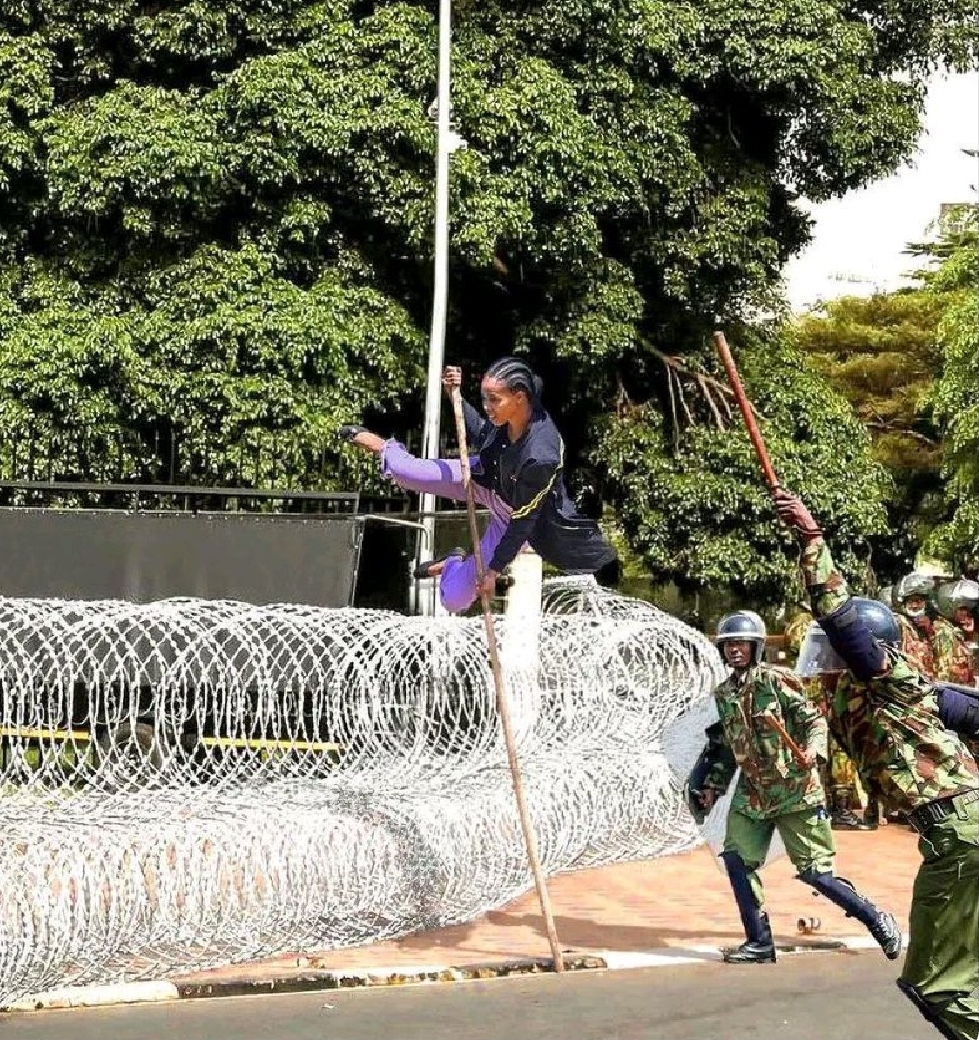
Dear Africa! Where are thine Conveyor Belts? I arrived in Nairobi in the mid-morning hours of June 25, 2025, only to be greeted by an eerily empty central business district. The famous Uhuru Highway, that leads from the Jomo Kenyatta International Airport to town was equally desolate. My driver told me that people were keeping away from the city centre because the Gen Zees had declared the day a ‘public holiday’. They were going to be marking the first anniversary of the 2024 Gen Zee riots in which sixty (sic) of them had lost their lives in skirmishes with law enforcement. The declaration of a non-gazetted ‘public holiday’ by the Gen Zees was rather impish, I thought to myself. But I suppose these chaps knew how to rub the authorities the wrong way. As we drove off the highway, towards the Haile Selassie exit and on to Upper Hill, I noticed some baton and gun wielding policemen trying to shoo the gangs of youths away. Little did I realize that the Gen Zees were just about to descend on the CBD and wage running battles with the police. As we drove on, I noticed them, swarms of youths, marching towards the city centre. That is when it hit me: these youths should have been riding the (nonexistent) public transport system or subway to (nonexistent) factories, to expend their energy in the lofty notion of ‘kujenga inchi’ or building the nation. They were marching onto the city because we had let them down badly. We had promised so much and delivered so little. They had no ownership and faith in the current system. Beyond the ‘education’ they had received, they could not envisage a better tomorrow, where they would reign over the commanding heights of the economy. They just had no hope, and that lack of faith, could be seen in their lack of fear as they engaged in daring skirmishes with the police. I was reminded of a tweet by one Pauline Muwanga aka @MukonoGamu (see x.com, June 21, 2025). She had argued that after forty years of rule, the NRM’s top functionaries did not have much to show for their efforts. All they had done was build palatial homes, buy ranches and send their children off to the West to live a better life. Not many of them could put their name to a sausage making factory, and were still ferrying cows to Lufula for slaughter. Juxtaposing her tweet to what I was seeing in Nairobi got me pondering about questions and events over the last few decades. In the late 1980’s and 90’s, a ‘new breed’ of leaders (a term attributed to the Clinton Administration) had taken power in Africa, promising transformation and development. What had become of this new breed of leaders? These leaders had cut an early image of reformism, despised strongmen who imprisoned opponents they could not kill or bribe and lived lavishly while their citizens wallowed in poverty (See Daily Monitor, March 26, 2016). Why had they hardly delivered on their promise of a new dawn? Why was Africa experiencing failure of leadership (of such a scale and magnitude) on a never-ending continuum? I couldn’t be that these leaders were collectively ill intentioned! For long, demographers have been touting Africa’s ‘youth dividend’. How and why had we failed to take advantage of this population bulge? These young kids were teeming with energy and ideas. Why were we failing to harness this energy and transform our continent? Why, instead of building conveyor belts, were we buying gas canisters and bullets to control this youthful energy? Clearly, we were failing to harness the unbridled energy of the youth. In many industrialized countries, populations have been falling for a while and it was believed that Africa would be the new factory of the world in the 21st Century, especially as China aged too. It was believed that manufacturing would be finding its new home in Africa, as the last bastion of cheap labour. Why was this promise eluding us? Instead, those youths who were not heading to the CBD, were heading north towards Europe and the Americas, hoping to find a better life. Something just didn’t add up, and I could not find the answers. Africa is seeing a significant rise in intolerance, cult-type fascism and violence. Democratic spaces are diminishing and the suppression of basic rights is on the rise again. Could this be a result of a failure to attain cross cutting transformation from agrarianism to mass consumerism? Societies that have managed to industrialize have been able to do away with scarcity and thereby eliminate the scramble for basic needs. This in turn has enabled the creation of what are called knowledge societies in which most menial tasks have been automated. But Africa seems to be stuck in the quicksand of Industry 1.0 and 2.0. As I pondered these questions, the day drew to a close. Several lives and manhours later, the youth had started trudging home from the scene of the riots and wreckage they had meted on the CBD. They were satisfied that they had made their point. Unfortunately, that point had only cost the Kenyan economy and taxpayers a day of bitterness and loss. I was left to think that surely there could be a third way. Only that, I too didn’t know which road to take to that nirvana. [Image Rights: x.com, Anon. Kenyan Gen Zee Rioter Fleeing from Police, June 25, 2025]
Bodanomics tweet media
English
3
6
4
792
Bodanomics
Bodanomics@bodanomics9341·
@TonyOwana @pine_eng Naye Tony, don't tell me WOII Mugendawala knows your behind! 🤣🤣🤣🤗🤗🤗
English
0
0
0
6
Tony Geoffrey Owana
Tony Geoffrey Owana@TonyOwana·
@pine_eng @bodanomics9341 Never heard of him again after my PLE but when I once mentioned him in a radio program a Rakai man claimed to be his grandson. Let me retrace...
English
1
0
1
29
Bodanomics
Bodanomics@bodanomics9341·
Do Not Walk on The Grass, Or Else! Arriving at the hallowed entrance of Budo as an innocent young starry-eyed boy was a thrill that will always be one of my favorite memories. We were driven to Budo from Entebbe with my village mate, Wilson Senfuka (RIP) in a police car, courtesy of Wilson’s dad. In our naïve estimation, it should have been a public holiday for the African quarters of Manyago and Katabi where we hailed from. How could we two non-entities have made it to Budo? In my case, coming from Lake Victoria School, it was really, fait accompli. But for Wilson… nara! He had, under the tutelage of a harsh regime and against all odds, made it out of the cauldron called Katabi Army Barracks Primary School. The School was famous for its no nonsense headmaster, Sergeant Mugendawala. The chap was not just a sergeant. He was known all over the Entebbe Peninsula as a legendary math’s teacher, an author of educational texts, and a whip master. So, on a balance of averages, Wilson was the real outlier. But we had made it, and our parents’ joy was palpable. On arriving at Budo, Wilson and I were assigned to (South) Africa house and we settled in quite easily. My knowledge of geometry, and childhood escapades had ingrained it into me that the shortest distance to any destination was a straight line. However, as we were being initiated into Budo, we were admonished against walking on the grass in the famous lawns that made up the main square of the School. We were warned that we were not allowed to walk on the pristine grass. Doing so would be a damnation so abominable, we would end up regretting why we had come to Kings College Budo. But just imagine a free spirited twelve-year-old me (I had just turned so when we joined) not being able to cavort and do cartwheels on the lush lawns. It was such a crushing edict. As we adapted to life in Budo, we also got familiar with how the system worked. We learnt who would simply admonish you for walking across the quadrangles, as they were called, and who would visit hell upon you (give you ‘porter’ or hard labour) for the same transgression. Being unrestrained young souls, there was always a hint of rebelliousness seething just under the surface. A mad dash across the lush quadrangles could provide an adrenalin rush of unapparelled proportions if you were not caught. You would relish the moment for days and strut or swagger around the place like a young mustang for days. You would inwardly stick your tongue out at authority, daring them to catch you if they could. But the rule remained. Do not walk on the grass or across the quadrangles. There were many other rules. Rules about waking up time, meals, uniforms, and off campus days. All these rules had to be observed or else you would be in trouble. There were rules about ‘prep’, games time, Bursary Road, and lights out. Bursary Road (I don’t know why it was named so) separated the girls’ residences from the boys. Boys were not allowed on the lower side of Bursary road after 7.00 pm. It was taboo if you even attempted to walk by Bursary Road anywhere after 7.00 pm. And it is by these rules we lived. On a balance of averages, bar the shortages of essentials in the Amin and Obote era’s, life was idyllic for us young souls. We didn’t know better anyway, excepting the gruesome murders and abductions of some of our colleagues’ parents that periodically brought a horrid hush over the whole School. We always worried which student would be called up next by the Headmaster to hear the crushing news of the murder of their parent. Barring these dreadful events, our pet obsessions remained lunch time cricket and walking on the lush quads without being caught. Taking after Roger the Dodger (of Beano fame), I had mastered the art of running across the quads. The best time was in the evenings, just before lights out at 10.00 pm. If you visited a friend in one of the dormitories on the lower side like Canada, England or Ghana, you didn’t have to walk through the designated paths after dark. You just run right across the quadrangles with gusto and the joy of a law breaker, as you made your way back to Africa House. I did this for a while, as I visited an older relative in Ghana. I just say I enjoyed the thrill of breaking the rule. Until one day, as I sprinted right into Africa House, there was the House Master in all his awesome glory, watching me arrive at my dwelling place via the wrong route. I knew I was done for, as I stood in front of him staring with apprehension at my inevitable fate. Calmly, he said to me, “Young man, do not walk or run on the grass again. I will give you an appropriate punishment tomorrow”. My night was ruined, wondering what fate awaited me. But nothing happened for days, and the next time we crossed paths, he said to me, “Don’t do it again”. Upon which I exhaled with gut wrenching relief. I don’t know if this makes sense for you. All I can tell you, in the context of today, is that since there are no House Masters to stop us walking on the grass (country) anymore, we have taken the liberty, not just to walk on the grass, but to litter it, pee on it and commit all manner of dastardly acts upon it. One can only wonder, if there will be any grass tomorrow. [Images Courtesy of skyscrapercity.com and Philip Songa]
Bodanomics tweet mediaBodanomics tweet media
English
4
5
16
2.2K
Bodanomics
Bodanomics@bodanomics9341·
@smugoya2 Amiina! That is why am moving to Rwabushande's constituency! They need me! 🫣🫣🫣
English
0
0
1
15
Bodanomics
Bodanomics@bodanomics9341·
The Unintended Consequences of Linear Decision Making Surely you have heard the saying that ‘the road to hell is paved with good intentions’ many times before. We often engage in a process of thinking and assumption making so as to arrive at a decision (which we actually want to justify) without considering the nature and reactions of the rest of humanity. This type of thinking is generally based on confirmatory bias, a tendency to process information by looking for, or interpreting, information in a way that is consistent with our existing beliefs or expectations. The truth, however, is that human nature and behavior are extremely multi-faceted and quite unpredictable. Richard Thaler, who is considered to be one of the founding fathers of behavioural economics won the Nobel Prize in Economics in 2017 for unbundling how humans make decisions, in what has now become one of the foremost approaches to studying economics: nudging. He dealt with the question of how human traits govern individual economic decision-making and what effects they have on markets as a whole. With the aid of insights from psychology, he analysed how we make economic decisions. In his work, he paid special attention to three psychological factors viz., a) the tendency to not behave completely rationally, b) our notions (perception vs. perspective) of fairness and reasonableness, and c) the lack of self-control. His findings have had a profound influence on many areas of economic research and policy, especially in dispelling the notion that human beings use logic and rationale in decision making. I am always drawn to Thaler’s findings on account of the blatant and consistent failures to ‘nudge’ societies (read economies) in the right direction, or to make people accept and do the most rational or optimal things. There are examples galore of good intentions that have gone to waste either because of the ulterior intentions of the policy makers, or the poor anticipation of how the public will react to these interventions. But first, back to the idea of “nudging’. Thaler found that it was easier to make people respond to stimuli if they were gently directed rather than ordered. A nudge is a technique used to change people’s behaviors in predictable ways without forbidding any options or significantly changing economic incentives. In one experiment at Amsterdam’s Schiphol Airport, which you the reader may have come across but not appreciated the origins off, it was discovered that cleaning costs could be reduced by up to 8% by etching an imaginary fly in the centre of the urinal bowls. Management had noted men’s lack of precision when aiming into the toilet bowls, which had the effect of increasing the cleaning costs of public washrooms (men tend to be careless in many things!). With the fly etched in the middle of the urinal bowl, most men aimed their offload at the fly, in an attempt to drown it! This action, which was not explicitly influenced, resulted in a reduction in spillage of over 80%! Closer home, we have had so many smart ideas not see the light of day because of how policy makers and leaders perceive the population. Every time they have a good idea, they ‘order or direct’ instead of convincing (nudging) people towards doing what is right through the use of say incentives. The most recent policy implementation failure we have seen involved the Express Penalty System (EPS). All the elements that Thaler identified with respect to poor decision making are present in this failure. First, there was a total lack of rationality on the side of the decision makers in a) not educating the public about its benefits and b) total disregard of the state of the roads, thereby setting unrealistic speed limits in the wrong places. Second, a poor notion of what was fair by a) setting high penalties that were not means tested, i.e. related to the ability to pay and b) assigning those penalties to the car owner rather than the driver. Third, was running the scheme in which a) the greed of the ‘innovators’ was unapparelled and b) eliminating the enforcers (traffic police) from participating in the enjoyment of the economic rents (corruption) derived from the automated scheme. In these matters of policy implementation, timing is also important. This being an election year, our perennial vote seekers were always going to side with the voters, ceteris paribus! The EPS, despite a long period of planning, was dead on arrival. We shall bury it in the coming months as a campaign promise. Another bad policy initiative that has had, and will continue to have far reaching unintended consequences is the decision to title communal lands. Titling land that is communally held enables it to be securitised (bankers call it perfection!) and commoditised. Those who have money, will eventually end up disenfranchising the poor land owners with titles. This is in complete counter intuition to the ideas of Peruvian economist Hernando De Soto Polar (2001) who argued that “The property of the poor is, in effect, "dead capital." It exists in a universe where there is too much room for misunderstanding, confusion, reversal of agreements, and faulty recollection. It is useless as collateral; it can neither secure a bank loan nor guarantee the payment of water, electricity, or other infrastructure services. As long as the majority cannot put their assets to work in the market because they are informal, they will not realise most of the benefits that should accrue from macro reforms.” But land reforms that enable poor people to easily dispose of their birthright have not necessarily corrected the wrongs de Soto sought to right! Thus, we must always beware the single bullet solution offered by linear thinking and the unintended consequences thereof. That is because human beings are more complex than we care to believe. [Image Courtesy: https:// thedecisionlab.com/intervention/h…]
Bodanomics tweet media
English
5
2
3
292
Bodanomics
Bodanomics@bodanomics9341·
I Understand Why...
English
0
0
0
37