Ricardo Borillo retweetledi
Ricardo Borillo
7.6K posts


Ricardo Borillo retweetledi

Like the rest of the internet, Sentry runs on Open Source. Like the rest of the @ThePledge companies, we also believe in paying it back.
In 2025, we gave out $750k to the OSS projects we rely on; here’s a sampling of some of them, and why they are so crucial 🧵

English
Ricardo Borillo retweetledi


Ricardo Borillo retweetledi

Todos pensaban que Roger Federer estaba loco...
Cuando se enteraron de que abandonó el acuerdo de 100 millones de dólares de Nike por una marca sin nombre que fabricaba zapatillas de correr con mangueras de jardín.
Pero los detalles de esta extraña apuesta cambiarían el deporte y los negocios para siempre...
Aquí está la historia completa: 🧵


Español
Ricardo Borillo retweetledi

Gemini CLI is our new #OpenSource AI agent that brings the power of Gemini directly into your terminal!
Access Gemini 2.5 Pro with 1M token context window, 60 requests/min, and 1,000 requests/day—at no cost with a free Gemini Code Assist license → goo.gle/3HW0jL0
English
Ricardo Borillo retweetledi

Ricardo Borillo retweetledi

Google Gemini 2.0 realtime AI is insane.
Watch me turn it into a live code tutor just by sharing my screen and talking to it.
We’re living in future.
I’m speechless.
English
Imprescindible incluso si haces OOP y quieres aprender conceptos funcionales que aplican a cualquier paradigma… también de 10 las charlas de Scott Wlaschin 👍
Dmitrii Kovanikov@ChShersh
Just finished reading "Domain Modelling Made Functional" by @ScottWlaschin. As promised, my full review of the book. If I can recommend one book about understanding how to model real-world problems with Functional Programming, it'll be this book. If you want to kill two rabbits with one shot: learn FP and Domain-Driven Design (DDD) - just read this book. If you want to learn F# - just read this book. If you want to learn FP architecture - you guessed it right - just read this book. I love how the book is structured around a single real-world project example and it covers lots of different problems: 1. Communicating tech design to non-tech people 2. Modeling the domain 3. Modelling external dependencies 4. Testing 5. Error handling 6. Evolving the design 7. Talking to 3rd parties 8. Talking to the database 9. Data persistence 10. Serialisation vs Persistence 11. And so much more! What's even more interesting is how it's all connected to functional programming. Honestly, if after this book you're not convinced that FP is awesome for writing enterprise software, I'm not sure you've actually read the book. The book uses F# but it looks almost exactly like OCaml, so I didn't have troubles reading the code at all. Honestly, I don't think anyone would have troubles because the book also gently introduces all F# concepts along the way, so I consider it a very accessible intro. I'm not a fan of particular approaches introduced in the book. Like the usage of Higher-Order Functions for Inversion of Control to achieve mocking for the easier tests. I hate mocks and prefer another way. But in the context of this book it makes sense, and the way it was introduced, I don't hate it too much. However, I specifically want to highlight attention to detail and countless examples. When writing real-world software, Software Engineers always consider alternatives and trade-offs. Besides, the system's design is not static, new requirements constantly arrive. So I really like how this book often considers potential changes to the design and addresses corresponding changes to the code. I want to end at the start of the book. One of the strongest book intros I've seen. Scott immediately starts with hard facts, so you don't have illusions about what Software Engineers actually do. 10/10, I recommend it to everyone.
Español
Ricardo Borillo retweetledi

Ricardo Borillo retweetledi


Ricardo Borillo retweetledi

eferro's random stuff: Good talks/podcasts (Sept 2024 I) eferro.net/2024/09/good-t…
English
Ricardo Borillo retweetledi


@flipper83 @dani_latorre @david_bonilla @540deg @codiumteam En el olvido… molaría mucho una lista de ese tipo 🧠
Español
@dani_latorre @david_bonilla @540deg @codiumteam Se que @borillo hizo una en su día, pero no se ni donde andará
Español

Quiero hacer una lista de «boutiques de desarrollo».
Compañías de servicios informáticos que ataquen proyectos pequeños, de menos de 50.000€.
ES PARA UN AMIGO...
Español
Ricardo Borillo retweetledi

Could we all just dump the idea of a Sprint, please? Pick one story. Narrow its scope down to something you think you can build in a couple days. Build that. Repeat. Sprints provide no value that I can see.
English
Ricardo Borillo retweetledi

The React Conf livestream starts now! Watch the keynote from @en_JS, @zmofei, @potetotes, @_gsathya, @acdlite, and @joshcstory youtube.com/watch?v=T8TZQ6…
YouTube
English
Ricardo Borillo retweetledi


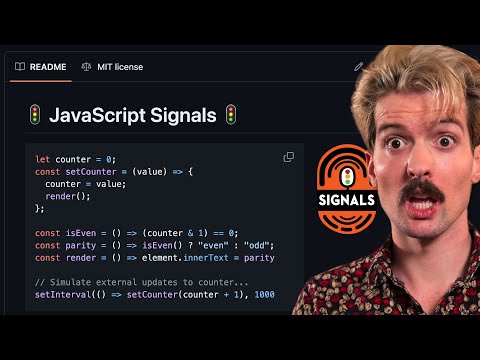
Publicada la propuesta de #signals en #javascript que puede cambiar el futuro de la reactividad en los frameworks github.com/proposal-signa… + vídeo análisis youtu.be/JvE_xQVIFF0?si…
YouTube
Español
Gracias @CodelyTV por contar conmigo para el directo de mañana donde veremos ejemplitos molones junto a los grandes @pedro_g_s y @JavierCane ❤️ #testing #tecnicas
Codely ﹤🍍﹥@CodelyTV
Quieres hacer testing, ya lo tienes decidido. Peeeero… hay muchos enfoques de tests y dependiendo del tipo de aplicación y lo que queramos testear nos va a ir mejor optar por una opción u otra. Mañana a las 18h CET directo con @borillo y @pedro_g_s analizando distintas estrategias de testing 🤟 Nos vemos en: youtube.com/watch?v=ARldau…
Español
Ricardo Borillo retweetledi

Quieres hacer testing, ya lo tienes decidido. Peeeero… hay muchos enfoques de tests y dependiendo del tipo de aplicación y lo que queramos testear nos va a ir mejor optar por una opción u otra.
Mañana a las 18h CET directo con @borillo y @pedro_g_s analizando distintas estrategias de testing 🤟
Nos vemos en: youtube.com/watch?v=ARldau…

YouTube
Español
Ricardo Borillo retweetledi