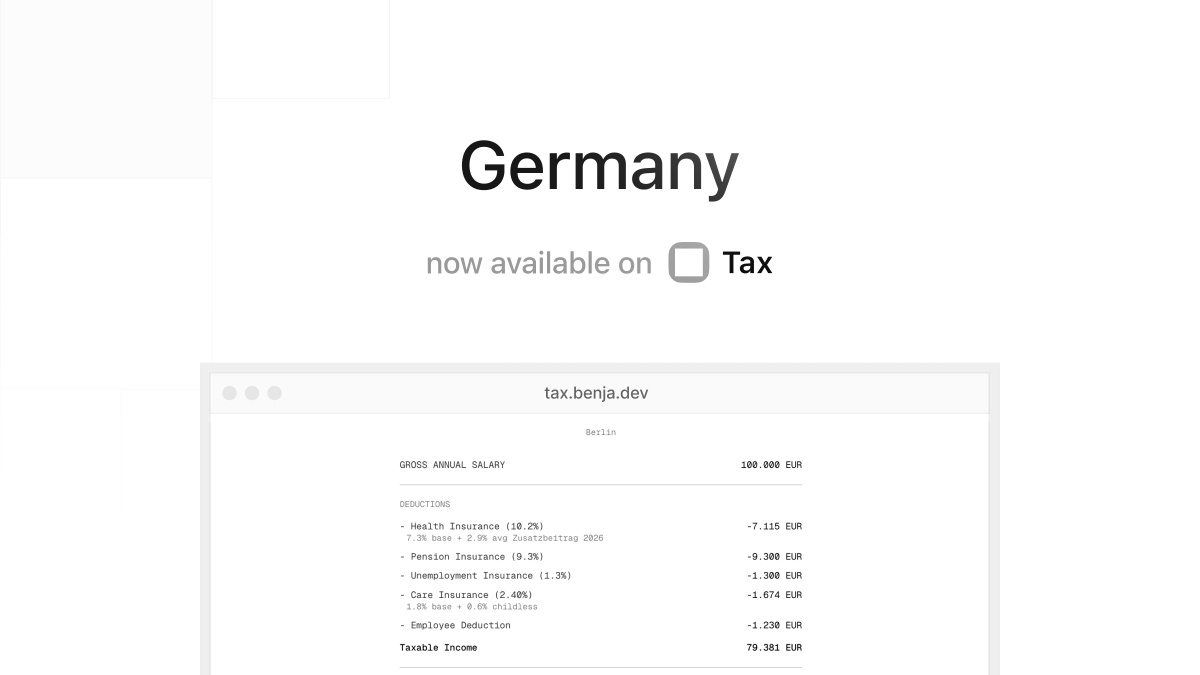
@benjaminakar Very nice tool. I noticed when clicking "Show in another currency", the conversion is wrong, the USD amount shows less than the EUR amount, although 1€=1.19$
English
Boris
5.1K posts





Actually infinite amount of ways to make money online rn it blows my mind… So much opportunity through ai as well, if you think outside the box and lock in a niche no one’s exploiting yet you will be ahead of everyone. Just simply have to get started , lock in for 2026



🛑Holding $eGLD screams #dilution, folks. TL;DR, with the new economy in place, there's no point in doing normal staking because: 1. You can earn at least double with looping. 2. I think it's better supply eGLD as collateral and you'll earn more than with normal staking. The ALPHA💡 is the e-Mode feature available on @XoxnoNetwork - it boosts your Loan To Value ratio up to 92.5%. Want to know why? Keep reading👇 @MultiversX’s new economic evolution proposal is likely to pass. With it, the network aims for a 10× expansion in liquidity, revenue, and token demand. The New Staking & Growth Dividend Incentives introduce: ■ 9.2% APR for normal staking ■ + additional 7.3% APR for liquid staking. This creates a combined incentive pool of around 16.5% APR - aimed at attracting new liquidity, locking supply, and encouraging long-term commitment. You get the full 16.5% only by liquid staking your eGLD - no loops required. Here’s the progression: 1️⃣ To avoid dilution, stake your eGLD. 2️⃣ To accrue more value, liquid stake it. 3️⃣ To earn even more, loop it. 4️⃣ To dominate like a final boss, use XOXNO’s e-Mode. ☆If you’re lazy and want to skip 10–12 loops, use XOXNO’s Multiply module. I ran the numbers & the results are astonishing. I simulated both strategies: ● Normal looping (72.5% LTV) ● e-Mode (92.5% LTV) Tested with 4 borrow APYs (5%, 9%, 12%, 15%) and up to 12 loops. ☆Key insight: The lower the borrow APY, the higher the net APY. Realistic borrow rates for eGLD will likely stay 12–15%. At that range, the net APY achieved will be around 40% for e-Mode and will deliver around 27% for normal looping. Bottom line: e-Mode delivers nearly 50% more yield than normal looping. 💡With these numbers, normal eGLD staking barely makes sense. Instead: ■ Supply via XOXNO → earn higher yield ■ Stay fully liquid — withdraw anytime ■ Even in supply-shock events, you earn juicy APY and can exit faster than 10-day unbonding You can check yourself the APYs using below pyton links👇 ■ Steroid looping vis XOXNO's e-Mode python-fiddle.com/saved/ad5ea624… ■ Normal looping with 72.5% LTV ratio. python-fiddle.com/saved/d650591b… Tell me in the comments: What are you doing with your eGLD? e-Mode or normal staking? #XOXNO #eGLD
About the new cacheLife being passed to revalidateTag, I don't fully understand what difference the profile you pass makes, since the content is marked as stale immediately. So the profile should only influence revalidate and expire, but since on the next visit it should automatically perform a background fetch for the now stale resource, I wonder what difference it makes if I pass revalidate 3600 or revalidate 1000000. Does the profile determine how it will behave in future stale cases? Like let's say I pass revalidate 3600, does that mean the flow is like this? - Server calls revalidateTag with revalidate: 3600 - Resource becomes stale immediately - On next visit, serve stale version and refetch in the background - On subsequent visit, serve the fresh resource - After 3600s, consider the fresh resource stale and revalidate again in the background, without any further "revalidateTag" needed If so, I also wonder how this would clash with revalidate being set on the tagged resource

Next.js 16 (beta) • Turbopack enabled by default • Turbopack file system caching (beta) • Optimized navigations and prefetching • Improved caching APIs • Build Adapters API (alpha) • React 19.2 nextjs.org/blog/next-16-b…