@Gracie_Blue89 His dad's name is 'Guy Justus Oscar Farage'.
Does that sound British to anyone?
French name 🇫🇷. German Wife. 🇩🇪
German + French Ancestry. 🇫🇷🇩🇪
It's always the foreign ones that try EXTRA hard to sell themselves as British.
English
Brahim
3.2K posts

@brav3starr
Independent | London | Account Nuked by Elon (Owes me $20)








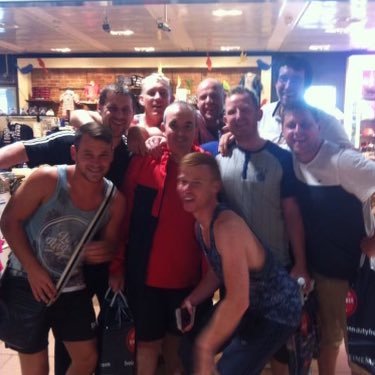




Ilia Topuria says he went to sleep thinking he was going to fight Islam Makhachev at the White House, then woke up to calls saying it's actually going to be Justin Gaethje 🗣️ Ilia: "[I went to sleep] knowing and thinking I was going to fight Islam." 🗣️ Reporter: "Why doesn't Islam want to fight you?" 🗣️ Ilia: "I don't know. Weird people, strange people. I don't know." (via @IratiPratSC)









Arnold Schwarzenegger's Son Joseph Baena Wins INBA Title tmz.me/EFJ1skh


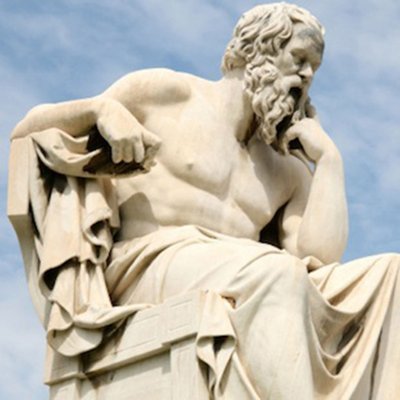
During the first months of the 1821 Greek Revolution, dozens of Greek civilians, men and women, were impaled in Constantinople as part of the general massacre carried out in retaliation. The German Johann W.A. Streit, who was working in Constantinople at the time, describes the massacre and the impalements in detail in a book he wrote in 1822: "Meanwhile, other Turks were fixing many iron spits into the ground.. There were about eighty spits. They stripped the Greeks, around 65 of them, young, old, women, and surrounded them with drawn swords, in front of the spits.. Two villains would seize a Greek man or woman, lift them high, and slam them down with force onto the sharp, pointed iron stake, so that the tip passed through the entrails and reached the chest. They impaled forty-four in this way. Thus transfixed, they writhed like beetles that children pierce with a needle for amusement. A howl of mortal agony rose to the heavens. It lasted about an hour, then faded, and their heads lolled to the side." Torture by hanging and impalement was so common during this period that the phrase became proverbial among our people: "He is a man of the rope and the stake!" The Frenchman Jean Antoine Guer, in his 1774 book "Customs and Habits of the Turks", describes impalement in the Ottoman Empire. Impalement was used as a method of exemplary execution of Greek Christian prisoners. In Patras, the Muslim Turks arrested a father and son and, after skewering them, lit a fire and forced the other prisoners to roast them like lambs. Ali Pasha was even more inventive in this regard: he slow-roasted his victims, thinning out the coals beneath them in order to prolong the torment and his own amusement, as well as that of his staff. In many cases, when he impaled Greek Christians, he forced relatives to torture and kill their own family members in order to avoid being impaled and roasted themselves. The impalement of Greeks in Patras in April 1821 is mentioned by François Pouqueville, drawing from the diary of his brother Hugues, who was present at the events: "Headless corpses, severed limbs scattered here and there... Soldiers drag women and children by the hair. In a ditch, impaled Greeks were breathing their last." The impalement of two Greeks in Patras during the same days is also reported by the Turkophile English consul Philip Green. He also states that many Ionian Greeks captured in the Battle of Lala were impaled by the Turks and Albanians, while a sack full of noses and ears was sent to the Sultan as a trophy. The newspaper "Ellinika Chronika", printed in besieged Missolonghi, reports the impalement of certain Greek civilians on 8 December 1825: "On the 8th of the same month [December]. In front of the enemy gun emplacements we saw today a priest, two women, and some men and boys impaled, whom the most savage and merciless barbarians had captured and condemned to such a cruel death, and they set them up in front of their gun emplacements as trophies of their inhumanity... In an enemy raid carried out around that time in the province of Venetiko, the Turks captured some women and children, who were brought to the enemy camp and condemned by the Arch-barbarian to such a loathsome death." The Dutch consul in Chios in 1822 describes the impalement of two Greeks during the Massacre of Chios. One of them, named Giakoumakis or Salonikios, was the vice-consul of Denmark and had openly declared his support for the revolutionaries. The Turks broke into his house, where he had raised the Danish flag, and led him along with other Greeks to the castle of Chios, where the pasha ordered him to be impaled. The impalement took place in the square of Vounaki using a church candelabrum, which emerged from his left shoulder. His agony lasted two days.