

Brett Watson
1.5K posts

Brett Watson
@brettjwatson
Resource economist @uaanchorage studying mining, fishing, and the Alaska PFD.
Anchorage, AK Katılım Mayıs 2017
680 Takip Edilen533 Takipçiler
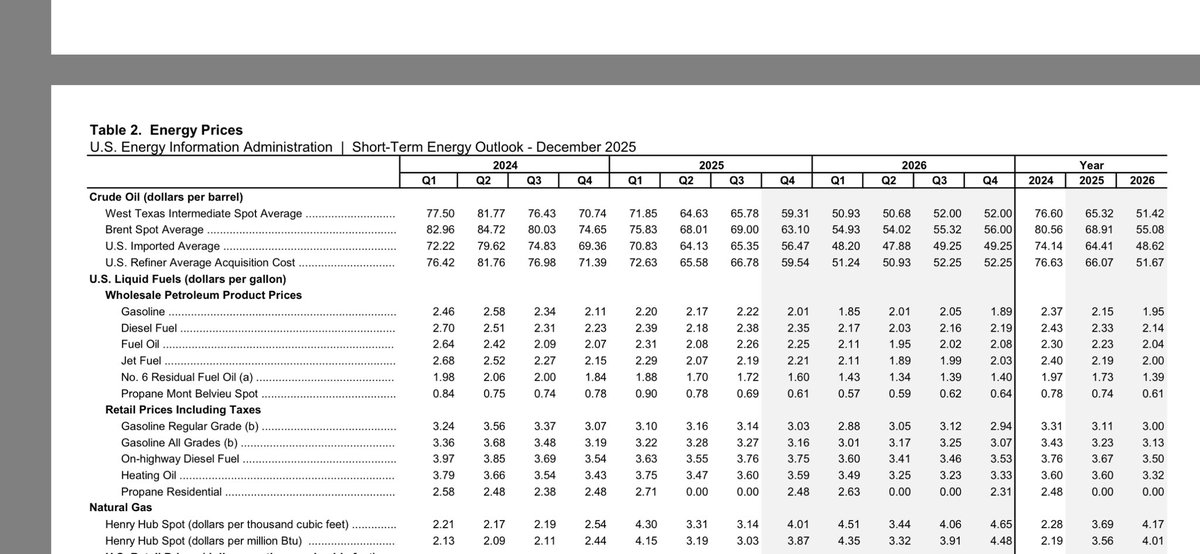

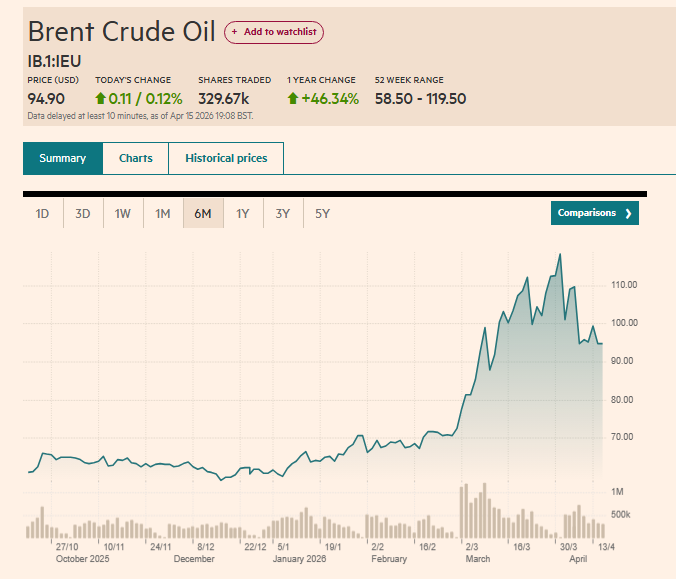
Yes, oil has sold off, war's over, Hormuz will reopen, etc. etc.
But we're still $20+ above the range of last year and where we all thought we'd be for 2026. #OOTT
English
@docstobar A key purpose of a commodity exchange is to eliminate this type of risk (credit risk). The exchange has various tools to protect itself, but you will be made whole with either barrels or cash to purchase barrels on the spot market.
English

Question for people who understand the oil market.
Let's say I had purchased a million barrels in oil futures in November, slated for April. It's April and there are 10 million fewer barrels available/day. What happens? I just don't get my oil? I get some kind of compensation?
English
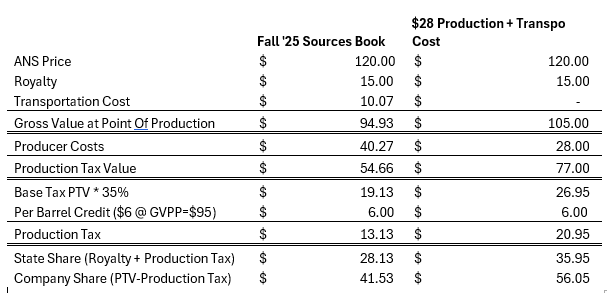
Unclear what the source of this information is, but one can do a simple modification of the DoR Fall '25 Rev Sources book Inc Statement Table and see that @ ANS $120 the state makes ~$28 per barrel and the companies are making $42 (assuming this is a Prudhoe barrel)
907Honest@907Honest
Who really profits from a $120 barrel of oil? The data might surprise you. 🛢️ A detailed look at the Alaskan North Slope (ANS) crude value chain reveals a complex distribution of capital that challenges common perceptions of oil industry profitability. While high prices at the pump typically draw scrutiny toward oil producers, the math shows a different reality: state governments and downstream refiners are the primary beneficiaries. Here is the financial breakdown of a $120 barrel of ANS crude: The Producer: After $28–$35 in extraction and transit costs, the extraction and production (E&P) company nets a minority share of $35–$45. The Resource Owner: The State of Alaska captures the largest upstream share at $45–$55 through royalties and severance taxes. The Refiner: Downstream refiners are currently commanding record-high "crack spreads" (margins) of $50–$70 per barrel, indicating that consumer costs are heavily driven by refining bottlenecks rather than raw crude prices alone. The Regulatory Impact on the West CoastOnce the crude reaches its destination, state-level environmental policies and levies act as substantial "hidden taxes." In strict regulatory environments, destination states extract more value per barrel than the companies producing the oil: Washington: $65.20 in effective taxes and fees per barrel California: $63.80 per barrel (with environmental compliance adding ~$0.92 per gallon to wholesale costs) Oregon: $22.40 per barrel The Bottom Line: The narrative that oil producers capture the majority of the wholesale value is mathematically unsupported by the data. The true financial drivers of a $120 barrel are the resource-owning state (Alaska), the consuming states (Washington and California), and industrial processing constraints at the refinery level. #OilAndGas #EnergyEconomics #Commodities #EnergyPolicy #SupplyChain #AlaskaNorthSlope
English
My friend Mouhcine Guattabi likes to say that it’s an economist’s job to tell you things that you already know and boy did I do a good job in this article.
nytimes.com/2026/03/25/us/…
English
I think people can argue whether higher income households should pay more or less or if the government should be bigger or smaller. But at least using the measure that this article prefers (Total output measured with a REMI-style model), I think our results are clear.
English
I'm certainly open to methodological criticism about our analysis. Reasonable people can make different assumptions and come to different conclusions.
English
I assume Gaetz is talking about the S-corp amendment that recently passed in the senate, but the qt article is about AK House Bill 152, which is an individual head/income tax. But the QT'd article itself is interesting...

English
@robin_j_brooks It appears their estimate turns positive in ~2015, so it’s not a COVID noise issue. If we take these estimate seriously, I presume a positive price elasticity would bring higher prices into the picture?
English

@brettjwatson That's a bit counterintuitive. I assume that's due to noise from COVID. If prices go up, there's things like luxury goods where perhaps people consume more. But not gasoline...
English
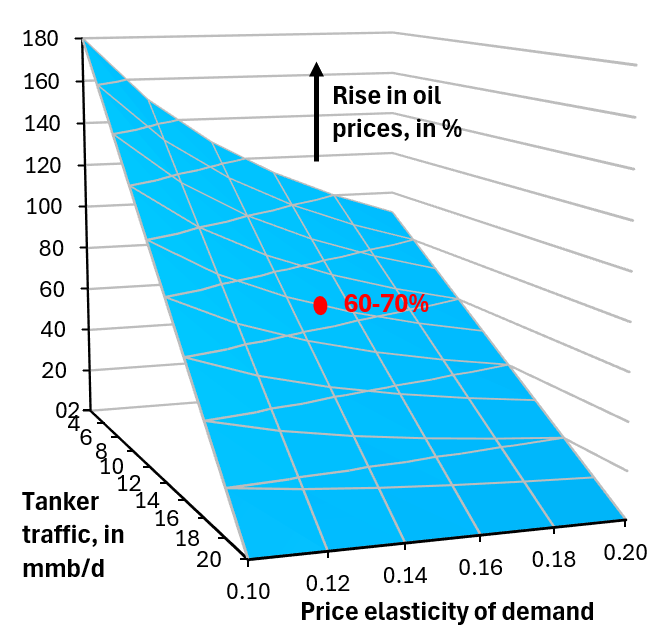
Apocalyptic oil forecasts of $150 or $200 assume either very low price elasticities of demand - not backed up in the academic literature - or catastrophic escalation of the war back to near total closure of the Strait of Hormuz. Yesterday was a reminder...
robinjbrooks.substack.com/p/how-high-wil…
English
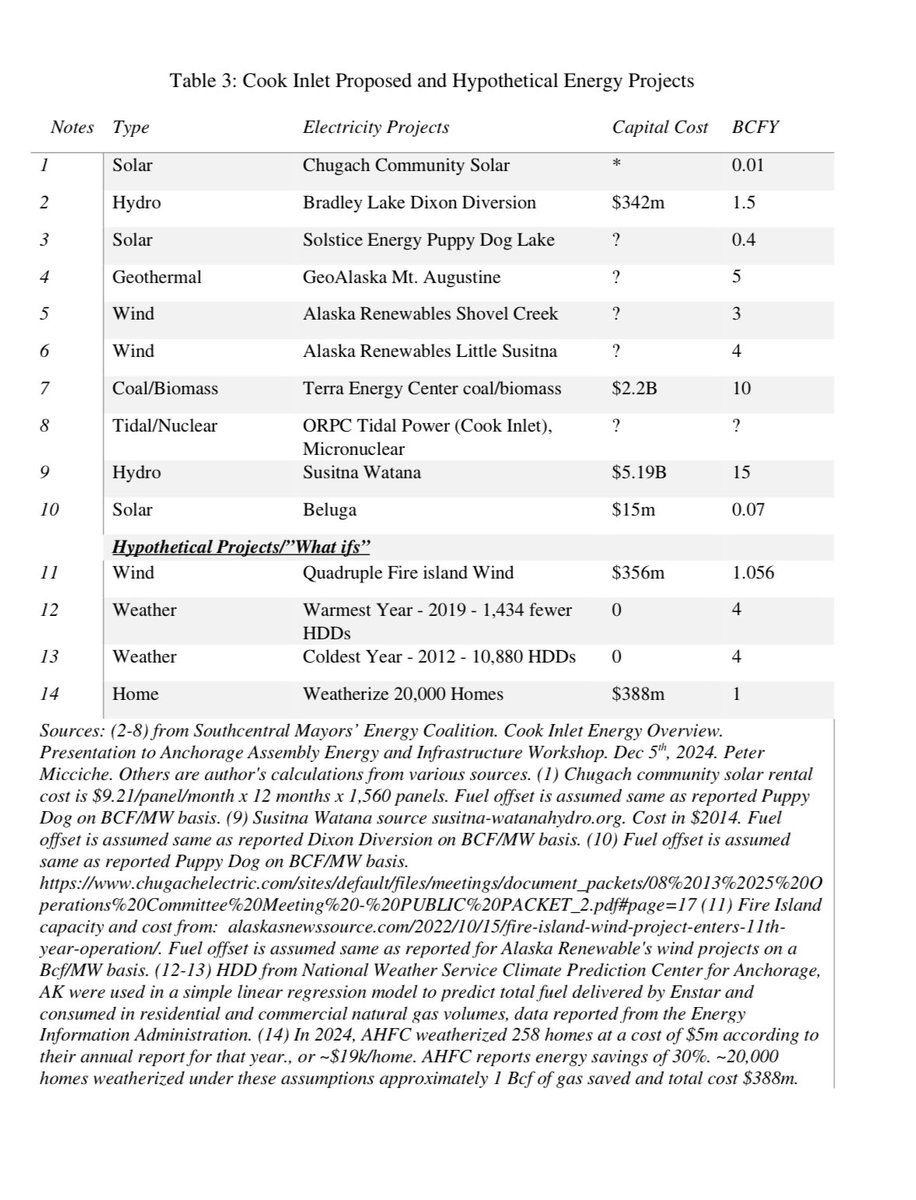
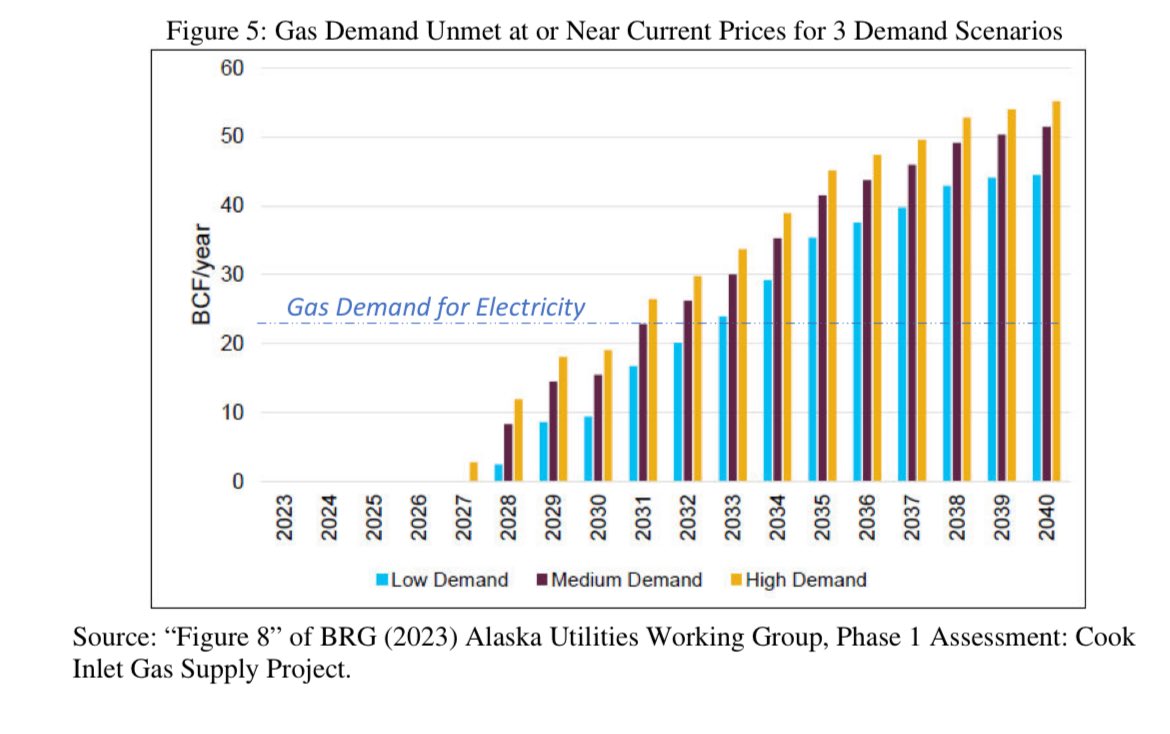
@alaskalandmine S-W could offset about 15 BCF of gas demand if all that energy were sent to Southcentral. That’s a big chunk of gas used for electricity, but not the full ~22BCF needed for electric utilities, not to mention the ~33BCF of gas that Enstar needs.
English

Great video on the Susitna-Watana hydroelectric project. If this 600 megawatt dam was built (5 times large than Bradley Lake), there would not be a gas issue in Southcentral. #akleg
akenergyauthority.org/Portals/0/Vide…
English
Brett Watson retweetledi

Poor weather when touring a college campus reduces students' likelihood of applying, from Olivia Feldman, Joshua M. Hyman, and @MattMcGann nber.org/papers/w34944

English
Neat. All* of our problems are magically solved.
*(None)
The Alaska Landmine@alaskalandmine
Spring Revenue Forecast is out. It forecasts oil at $75/barrel, but it also forecasts oil at $91 for the remainder of FY2026. This is all about the mess with the supplemental budget. Hope as a tactic is usually not a good idea. The next few months in Juneau gonna be wild! #akleg
English
Quoted in this @AKPublicNews story on the Cook Inlet lease sale that drew zero bids.
My take: investors respond to market fundamentals. As Cook Inlet has matured and costs have risen, industry interest in new offshore acreage has waned.
alaskapublic.org/news/2026-03-0…
English
This is not surprising at current prices. OCS leases have seen limited interest in the Cook Inlet. More interesting will be what happens in the NPRA in a few week.
alaskabeacon.com/briefs/public-…
Anna Kramer@anna_c_kramer
Welp: ZERO takers on the Trump administration's first lease sale for oil and gas development in the Cook Inlet, Alaska. Bidding closed today with no bids. The lease sale was supposed to spark new interest in oil and gas development in the region. It doesn't seem to be working.
English