

Bhadresh Sheth 🇮🇳
34.6K posts


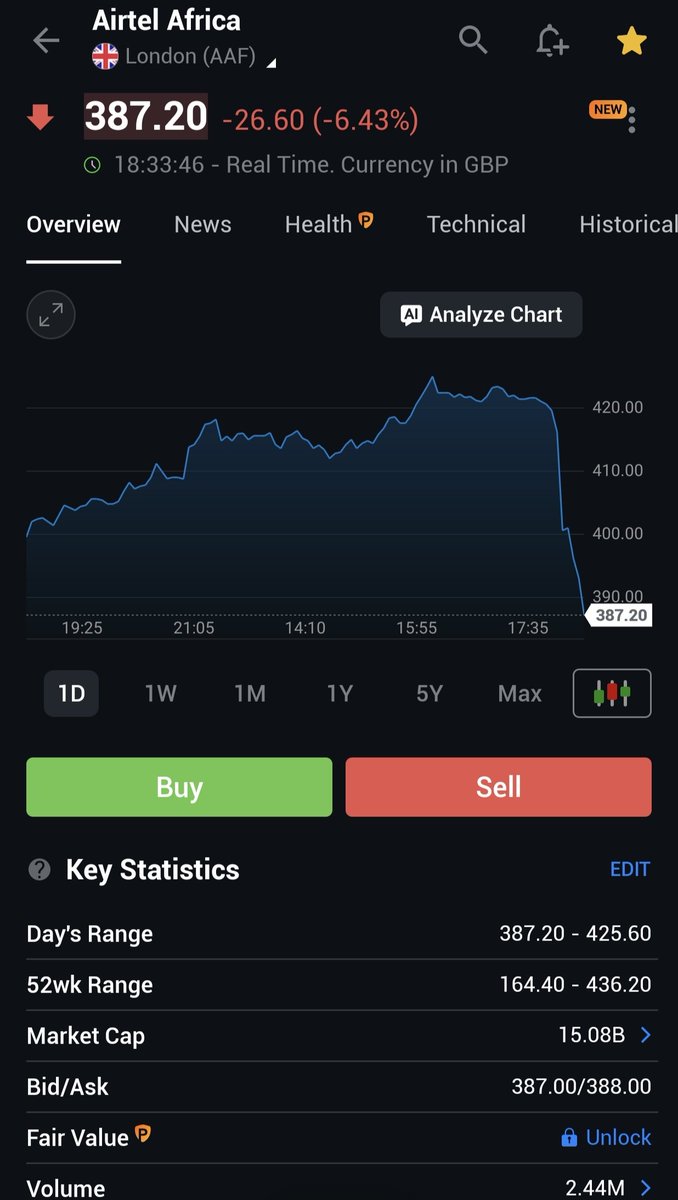
@Reematendulkar Fake news. It is a cashless deal. No cash outgo.Infact Bharti Airtel shares are valued at 10% premium for the swap.Very positive for Bharti.
English

Is Bharti potentially looking at $2.8b+ outgo?
Bharti to consider reorganization of shareholding of subsidiaries including Airtel Africa at its 13th May board meeting
Co might pay for this using cash, issuing new shares (preferential allotment), or a mix of both.
Thread (1/3)
English
@TamilanVS09 This is very positive for Bharti Airtel.Atlest 5-6% up tomorrow, maybe more.
English

@Urrmi_ @Preetam_M_Rao I also like Kesar a lot.And the amras of kesar + payri mix is heavenly.
English


Whoever says Banganapalli is better than Alphonso is either straight up lying or has no taste.
Alphonso's richness and taste are unmatched. The best of all. The king of all mangoes.
I said what I said!
English
@bhargavizaveri India is doing a huge amt of imports in INR compared to earlier.The RBI and Govt havent been unduly alarmed by the falling Rs.Thats bcoz it is by design.These measures are more precautionary in nature if the war prolongs which looks unlikely at the moment.
English
@bhargavizaveri If you take away Gold/Silver Imports,our overall Trade is almost balanced. Also lets not forget that almost $ 850 bn at 95 ex rate also means a lot more money for the exporter without doing anything extra.
English

India is desperate for stable foreign capital. INR is in a virtual free fall. Yet, there is an *absurd* bottleneck nobody talks about: the RBI’s FIRMS portal — mandatory for FC-GPR filings and therefore for receiving FDI share capital — has been down for weeks.
As a result, inward remittances for legitimate equity investments into Indian companies are getting stuck because founders literally cannot complete regulatory filings.
At a moment when the country needs every dollar of productive FDI it can attract, this is exactly the kind of invisible bureaucratic friction India should not be imposing on itself.
@RBI @RBIsays @NITIAyog @nsitharaman
English

Nothing will happen if you trust him blindly...
Mahadev ❤️

English
When legendary Manna Dey was asked to sing non-Bengali song…
He chose Gujarati folk song “Helo Maro Sambhalo”!
Observe his pronunciation of ણ and ળ. More clear than of many Gujaratis.
English
@mepritijain Ultimately it is all about people only. Someone failed in the planning.
English

Used to constantly come across Air India complaint posts on Twitter and always wondered how it was always Air India… until we became victims ourselves 🫢
Travelled on AI2146 from Bali to Delhi(3rd May) and had a really disappointing experience despite pre-booking vegetarian meals well in advance. The veg meals simply “finished” onboard. And this was on an 8-hour flight.
After repeatedly asking because we were genuinely hungry, the staff seemed confused for almost 30 minutes about what could be done. Eventually, we were offered the exact same breakfast meal again and told there was “no other option.”
To be fair, the cabin crew was polite and did try to help, so this is not about the staff. My issue is with the logistics and planning. How does a pre-confirmed meal become unavailable on an international flight?
I’ve raised this officially as well ( Case ID 40394418 ) and haven’t received any response, but this entire experience could have been very easily avoided.
To make matters worse, our Delhi to Pune flight after this was also delayed multiple times, with updates being communicated only after all the passengers reached the boarding gate.
Overall, thank you for turning what should’ve been a smooth journey into an exhausting and extremely inconvenient travel experience, @airindia.
English
@Macrobysunil Lottery for Indians.If the cumulative value of India's Gold and Silver holding is $ 4 tn,it just went up for $ 400 bn overnight! And best is yet to come for both Gold and Silver over the next few years!
English

Gold and silver MCX futures hit upper circuit as Government of India has increased import tax on gold and silver imports from 6% to 15%.
That is almost a 9% landed-cost shock getting priced in.

Macro Liquidity by Sunil Reddy@Macrobysunil
Government of India has increased tax on gold and silver imports from 6% to 15%. That means imported gold and silver can become nearly 8.5–9% costlier from duty impact alone. And this comes after the government had already requested citizens to stop buying gold. This is a macro warning. When oil pressure rises, forex outflow increases, and the rupee comes under stress, gold becomes the first target. Because every gold import sends dollars out. So the message is clear: They want to slow gold demand. They want to protect forex reserves. They want to reduce pressure on the rupee. But history says one thing clearly: Whenever governments make gold harder or costlier to buy, it usually confirms that currency pressure is real. Gold is no longer just an investment. It is becoming politically sensitive again.
English
@ShivaniGupta_5 It is profound, not just funny. Spirituality is Superstardom.
English

What a wonderful speech by Rajnikanth.
Effortlessly funny.
English
By accepting ₹23,649 crore relief to #VodafoneIdea, #DoT has now effectively admitted that #AGR calculation errors did exist. If calculation errors existed for one operator, principles of justice, equality and fair play demand that the same opportunity be extended to #BhartiAirtel, #TTML and every #telecom company adversely impacted by the flawed AGR regime.
The consequences of the order delivered by Justice Misra devastated the telecom sector by burdening companies not only with disputed dues, but also crushing interest, penalty and even interest on penalty. When a litigant had succeeded till the High Court, imposing such extraordinary liabilities after reversal by the Supreme Court was excessive and resulted in grave financial destruction. If the originating calculations by #DoT itself were defective, then the very basis of penal consequences stands seriously undermined.
From this also flows an equally important question — why should Government continue to hold equity in #Idea when circumstances leading to such distress were materially created by failures within the system itself? Instead of forced equity conversion, #Vodafone should now rightfully demand, and @narendramodi Government should accept, that #VodafoneIdea be allowed to pay spectrum dues and other liabilities in the ordinary course of business.
Not only should Government equity in #Idea be cancelled, reduced or readjusted to the extent of AGR correction and its consequential impact, but the company must also be given a fair opportunity to revive naturally. @AdityaBirlaGrp should examine all remedial measures in the upcoming #Idea board meeting.
Investors should note: the story of #Idea may be far from over.
They may remain invested or buy more for good gains . @JM_Scindia all your life you have stood for fairness now is the time to act .
English
@Macrobysunil Now we can say,Govt is serious.But Gold/Silver prices in India will immd jump by 10% which is a huge gift for existing investors.
English
@Macrobysunil Dont read too much into it.If Govt was serious about it, it would increase custom duty on the imports.Fact is Gold is an important part of BRICS de dollarisation drive.
English
Key things in India’s Gold Control Act, 1968:
It restricted private ownership of primary gold like bars, biscuits, and raw gold.
Gold dealers needed a government licence to operate.
Goldsmiths were allowed to hold only limited quantities of gold.
People had to declare gold holdings above prescribed limits.
Dealers and refiners had to maintain detailed records of gold bought, sold, held, or transferred.
Gold Control Officers had powers to inspect, question, and seize gold if rules were violated.
The aim was simple:
Reduce gold demand, protect foreign exchange, and defend the rupee.
But the result was the opposite.
Gold moved underground, smuggling increased, and Indians became even more convinced that gold was the real protection against weak currency and policy failure.
Macro Liquidity by Sunil Reddy@Macrobysunil
For those doubting whether the Indian government was really worried about people buying gold, leave the image aside for a moment. Look at what happened next. Due to severe pressure on foreign exchange, currency weakness, import dependence, and the public’s growing preference for physical gold , the Indian government launched the Gold Control Act in 1968. This was not a small policy. It was a direct attempt to control gold ownership, regulate gold dealers, restrict primary gold, and reduce public demand for physical gold. Why? Because the government understood one thing very clearly: When citizens lose confidence in currency, they naturally move toward gold. Gold becomes the silent vote against currency debasement, policy failure, and external dependence. The Act was aimed at reducing gold demand. But in reality, it only proved why Indians trusted gold in the first place. You can question the image. But you cannot question the history. India did launch the Gold Control Act. And that itself shows how seriously the government feared gold.
English
@Macrobysunil Unlike 1968,India has a huge amount of fast losing value USD.Gold and Silver import are a way to recycle usd earnt from exports.A lot of imports are already happening in non usd currencies.
English

Part 8 (FINAL Part):
Three developments in the last 48 hours frame what comes next.
China has ordered its companies not to comply with US sanctions on Iranian oil. This is no longer covert. It is stated policy now.
Mr. Putin's Beijing visit has been finalised for the week of May 18. Three days after Mr. Trump leaves. The choreography is now public.
Mr. Modi's Abu Dhabi stop on May 15 is the back end of a four-capital sequence.
1. Delhi for the BRICS Foreign Ministers meet on May 14 to 15.
2. Abu Dhabi for Mr. Modi and Sheikh Mohamed bin Zayed Al Nahyan on May 15.
3. Beijing for Mr. Trump and Mr. Xi on May 14 to 15.
4. Beijing again for Mr. Xi and Mr. Putin from May 18.
Four leaders in two capitals over six days.
Mr. Trump arrives in the middle of someone else's diplomatic sequence and leaves before the closing chapter is written. The agency does not rest with him.
The US cannot allow the settlement architecture being assembled to operate unimpeded. This can push Washington to reignite kinetic action.
Watch the readouts.
The absence of a Trump-Xi joint statement is already priced in.
The presence of a BRICS Foreign Ministers communique on alternative settlement mechanisms is not priced in.
The Fragmentation Premium clears at whatever Delhi says on May 15 and what the US and Israel do to Iran beginning May 16.
Good night!
Vedanjanam@VEDANJANAM
Part 7: The Fragmentation Premium was the developing thesis in March. It is the price now. Brent is at $107. WTI is at $102. Saudi Aramco CEO Amin Nasser has stated that the market is losing 100 million barrels of supply each week. Normalisation of the Oil Markets now pushes into 2027 if disruption persists. Trump is now reportedly meeting his national security team to weigh a return to military operations. Netanyahu has stated that the conflict with Iran is "not over." The ceasefire, in Trump's own words, is on "massive life support." This is the state of play 48 hours before he lands in Beijing.
English


Dear Mr.Sushil Agarwal, Promoters of #vodafoneidea & Management Team,
I hope you will keep in mind the points you outlined during the session held on 28 January 2026 :-
Accordingly : -
➤ Conversion of existing shares into GDRs would not lead to dilution — which is a positive step.
➤ If any strategic investor comes in, that would be highly beneficial, and even some equity dilution would be acceptable.
➤ Similar to Suzlon Energy, you may consider future share price appreciation and issue shares now at Rs.30 or Rs.40, which would also be acceptable.
@AdityaBirlaGrp
@ananya_birla
Yes, equity is the costliest form of financial instrument if it is not issued properly 👍
Arun Hebbar@ArunHebbar7
Curious to watch 16 May 2026👍👍👍 #vodafoneidea
English