

Bozo
64 posts


Saylor will get blamed but it was always in the cards.
English


you had 10 apps where users can lose money
now it’s 15
next week it’ll be 20
is this really what you built the fastest-turbo-nano-blockchain on the planet for?
$mega @megaeth
MegaETH@megaeth
App Wave 4 is now live on Terminal Seven new apps are ready to be explored. Intros in the thread below:
English

At the very minimum you can say that @izebel_eth loves crypto.
jez (equity perps era)@izebel_eth
proud to introduce @papertrade_xyz - a fair-launched, fully-onchain perpetuals exchange built on hyperliquid by @izebel_eth & @blurr -1000x leverage -0 slippage -No funding costs -Self-bootstrapping LP coming soon. learn more at: docs.papertrade.xyz
English

MegaETH is cool, amazing and all…
But I had exactly 1067x more fun doing activities on Blast
Dopamine, gamification, gambling, uncertainty, endless opportunities to earn and a dream were the degen fuel back then
Times are different now.
When Blast had over 1m active wallets, MegaETH has less than 30,000
Underfarmed? Perhaps.
Life-changer for top active users?
Nope, not like Blast

English

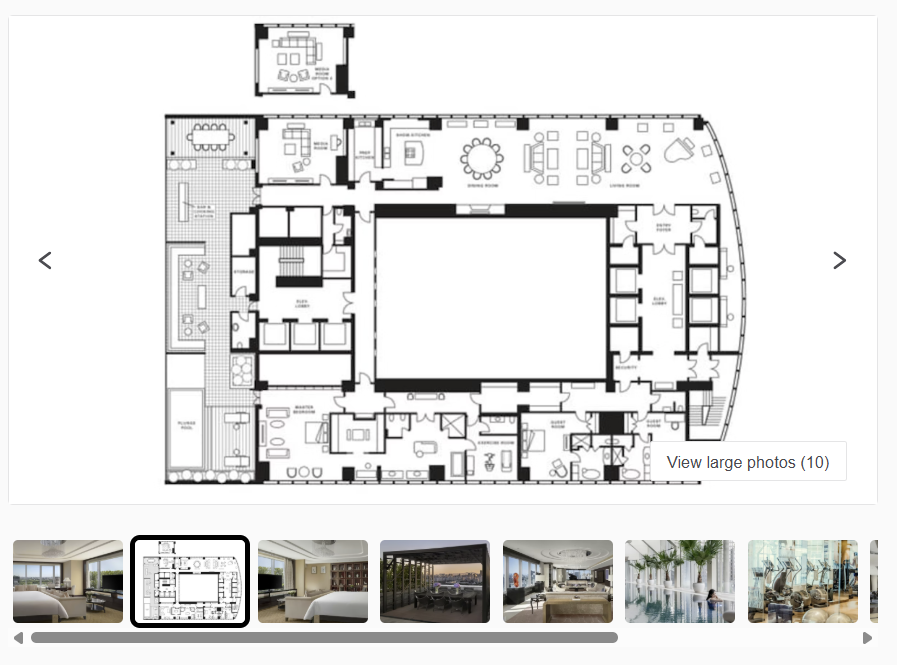
four seasons beijing where trump is staying has imperial suite (the largest room) and he probably stay there
it spans >7000 sq ft as it takes the entire floor, appears to have multiple large dining tables and bed rooms
definitely bit bigger than the rooms cat has stayed at😹

English
@coinmamba It’s the crypto GOAT of making grown men become emotionally attached.
English


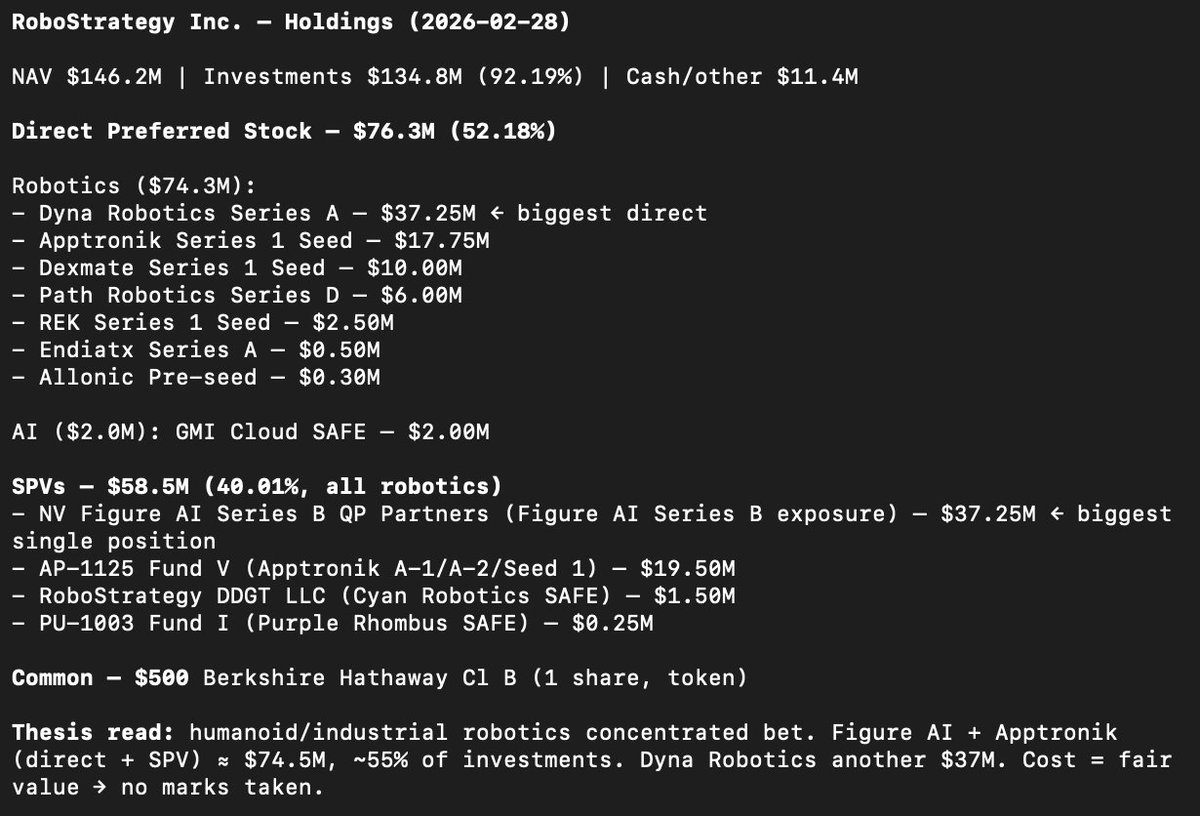
Congrats to @Rewkang & team on the launch of Robostrategy $BOT
Think it's gonna be a big altseason of frontier tech the next couple years across semis / space / energy / robotics and these guys are very well positioned in offering hard-to-get private exposure.
Also 1 share of $BRKB is lol
English

people keep saying "new l1's are dead", but the reality is that corpo chains are hoovering all the money, just like dat's did last year, institutions simply want to invest in stuff sold by suits
stripe/paradigm -> tempo: $5b
circle -> arc: $3b
digital assets -> canton: $2b

English




Whats up with $ZRO
Cut my pos to a smaller one because PA been weird there, what do we think lads
English


JUST IN: Michael Saylor's Strategy proposes selling some Bitcoin to pay dividends.
"You buy Bitcoin with credit, you let it appreciate, and then you sell Bitcoin to pay the dividend."


English
It’s actually quite obvious how monad is taking EVM from 0 to 1…and they are doing it at an incredible speed.
Keone Hon@keoneHD
MIP-10 - Deterministic RaptorCast - has been drafted by @category_xyz researchers. This is an important upgrade to how Monad propagates blocks, and lays the foundation for faster block times and other protocol improvements. What's changing Today, RaptorCast lets a leader fan out a block as encoded chunks across the validator set, with any sufficient subset enough to reconstruct. It's already the best-in-class solution for propagating blocks to a decentralized network. MIP-10 makes it deterministic. In v0, chunks were organized into multiple Merkle trees of 32 chunks each, with each tree independently signed by the leader. v1 replaces this with a single global Merkle trie containing all of the chunks, providing a unified commitment that binds every chunk to a single canonical encoding of the proposal. In v1, the leader derives the Raptor encoding from a canonical seed = hash(round, leader, proposal time). Every chunk's position in the Merkle tree is fixed by this seed, and validators can recompute it themselves. The first valid (Merkle root, signature) pair a validator sees for a round becomes the binding EncodingCommitment. Why this matters Under the current scheme, a single Merkle root could be consistent with multiple distinct payloads. Voting on the root before decoding wasn't safe. With deterministic encoding, a validator can verify any single chunk and vote on the root immediately. That unlocks the headline benefit: consensus voting can be pipelined directly with block propagation. Validators no longer wait to fully reconstruct the block before casting their vote. One full message delay gets shaved off the critical path, paving the way for protocol upgrades that interleave consensus and meaningfully shorten block times. It also closes two attack surfaces from Byzantine validators that could have moderate effects on network health. This change can be done relatively seamlessly. There are no changes to the QC format, the voting protocol, or execution. The only additions are a canonical seed, a global Merkle root, and per-round equivocation tracking. This improvement extends the team's excellent RaptorCast work without disturbing it. The net effect is a tighter, safer dissemination layer, and the groundwork for a more pipelined consensus mechanism. Spec + reference implementation linked in the next tweet.
English