

Concerned Citizen
5.2K posts

Concerned Citizen
@btg_68
Brad G. Originally from Edmonton. Also lived in St. Albert, Fort McMurray and now reside in Peterborough. Worked in res/comm const for 25 yrs, O&G for 13 yrs.
Peterborough, Ontario Katılım Şubat 2023
277 Takip Edilen690 Takipçiler

So Mark Carney is going to announce a new Governor General tomorrow. This individual will be bilingual.
English

PM Carney to name next governor general Tuesday, sources say ctvnews.ca/politics/artic…
English
@TheBuckYouWill @acoyne I guess Carney’s latest cheque to Andrew bounced.
English

@acoyne Are you ALLOWED to write this of your great leader?
English



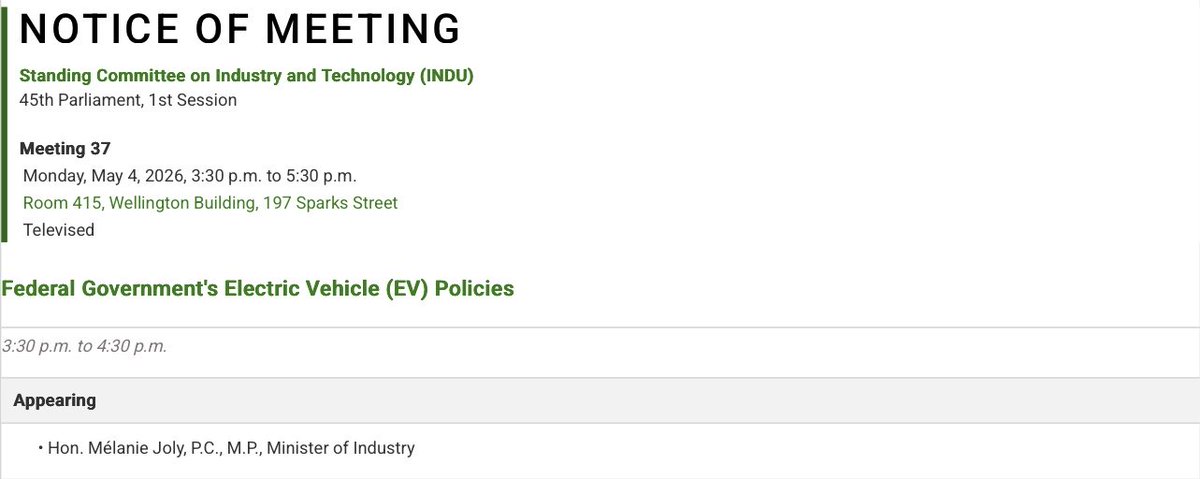
TOMORROW:
Min. Joly will be testifying before industry committee to answer Conservatives’ questions on the Liberal government’s EV strategy.
Watch here: ourcommons.ca/Committees/en/…
English
@ianmiles You’ve heard of Jive Talking? Newsom is Dance Talking.
English


@MarcNixon24 @gemstercasey1 Looks like she’s still overfilling her grocery cart.
English

Rosemary Barton FILLED up her car yesterday and was STUNNED at the price of gas
She doesn't know how parents with kids are affording gas right now its OUT OF CONTROL
This is coming from someone responsible for CHEERLEADING this Govt. and supporting their UNLIMITED SPENDING
English
@alissagolob @terrynewman Do they see the aborted child as a cash cow for organ donation? As with everything, follow the money.
English

Great thread.
I will also add that I personally went undercover into 4 late-term abortion clinics across Canada between 20-24 weeks pregnant to see how late I could get an abortion.
Each clinic said it was absolutely no problem for me to get one at the hospital after they inject the fetal heart with digoxin to kill the baby, and then the hospital would induce me to deliver the "dead fetus" (their words).
In Toronto, the abortionist said there is "no such thing as 'too far'", and was told I could have it done up until 30-32 weeks of pregnancy no problem. They didn't ask the reason, and they knew I was in perfect health as was the baby.
In fact, when I asked that if in order to get the late-term abortion, I had to prove my life was at risk, or something was wrong with the baby, the abortionist said "absolutely not" and that this type of abortion care hasn't existed since the "1960's".
These claims on late-term abortion are just false. Here are the videos: youtube.com/playlist?list=…
On top of that, in Vancouver I was told that "any pregnancy, no matter how it ends, after 20 weeks, is considered a stillbirth". Shortly after these videos came out, the Canadian Medical Journal said Canada’s stillbirth rate is “artificially high” when compared to other countries because it includes abortions past 20 weeks in the count.
They then confirmed that late-term abortions are happening in Canada, and that they are not rare.
cmaj.ca/content/198/3/…
Terry Newman@terrynewman
Here's the typical argument flow that happens on the left re: late term abortions in Canada. - Late term abortions aren't happening (at all). - If they are happening, they're rare. - Not only are they rare if they're happening, but they're only happening to save the life of the mother or because she was raped.
English
English

@Martyupnorth It was a little more consequential than a latte.
English

87% of you complied with the vaccine mandates. You willingly shared your private medical information....just so you could get a Starbucks latte.
So clutch your pearls a little more firmly, and save your sanctimonious BS for someone els
English
@BillboardChris @HappyCanadian55 Don’t count your chickens Chris. Carney will interfere in this and get it stopped.
English

Trudeau would not have allowed this, and was trying to implement a cap limiting oil and gas production.
Carney lifted that cap. For those who say he’s worse than Trudeau, he’s objectively not. He’s more pragmatic despite his claimed net zero aspirations.
The climate cult is quietly shrinking as many of its adherents discover the apocalypse never came.
Danielle Smith@ABDanielleSmith
BREAKING: A Presidential permit has been approved for a new bitumen pipeline that will initially deliver more than half a million barrels per day of Alberta oil to facilities and refineries throughout the United States. This project is a joint venture between two great Canadian and US companies South Bow and Bridger using existing assets. After years of advocacy from our government, and following the signing of the Canada-Alberta Energy Agreement last year, the federal government has lifted their oil and gas production cap. This means Alberta producers will be able to produce more of the oil that the world needs. It’s incredible to see that work already paying off with announcements like this. The US is our most important trading partner and we will continue to deliver energy to help secure North American energy dominance.
English
@DefazioIvano @donc80006256 This is my hill to die on. Keep your grubby hands off my home equity.
English

Who are they asking???? Let's put this to the test....Are YOU willing to pay Capital Gains on your home to support more newcomers?

English
@cbcwatcher @albertanmomma73 Asset recycling. Owned or managed by Brookfield.
English

Lisa Raitt "Number one, the servicing of the debt is going up 50% by 2030."
"It's going from 54 billion a year to 80.9 billion a year. That is a big jump."
"...Just remember there's a cost to the spending and it's going to hit my kids and my grandkids"
"Number two, I think they're selling the airports." @lraitt
English


If you had to listen to music from one band or artist for 14 hours straight for two full years to get paid $140,000,000
Who are you choosing?
English
@judyatrinh @donc80006256 Looks more like African students. The very reason our country is fucked.
English

On the day of the Spring Economic Update- these Toronto students are on the hill “smashing the debt”
It didn’t go as planned
English
@StaceyMonette27 @RealAndyLeeShow Let the raping of White Canadian women begin! Carney’s getting ready for Canada to submit to the EU migration policy.
English

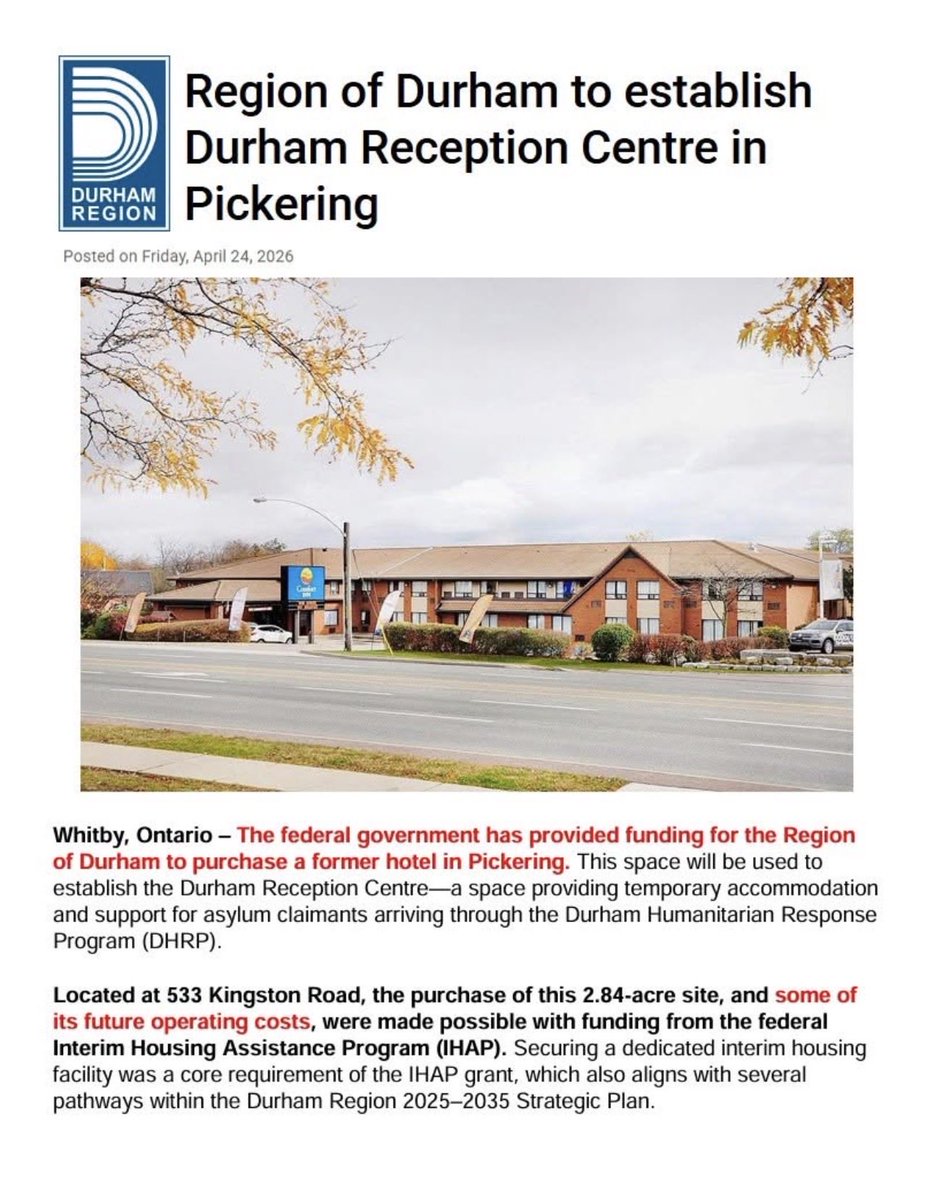
NEW- The federal government has provided funding to the Region of Durham to purchase a Comfort Inn hotel, for $28.79 million, in Pickering, Ontario.
The funding is part of a $48 million dollar federal initiative to house “irregular” asylum seekers in the region.
The program is not for pre-approved asylum seekers but for people who randomly show up in Canada, hoping to have their claim approved.
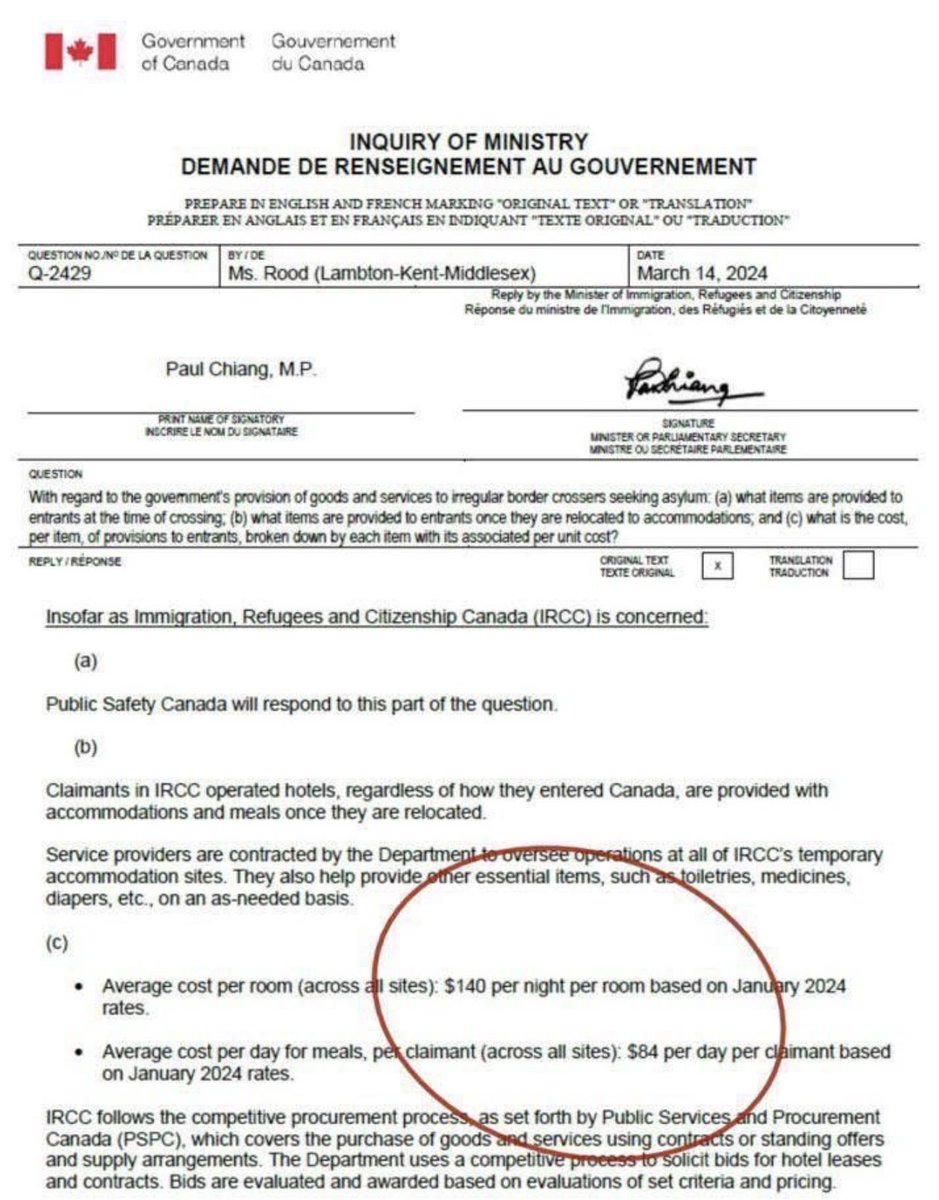
On top of the purchase price, room costs per day are $140/day and food costs are $84/day, based on 2024 rates, for stays of up to 90 days. ( $20,160 )
The “Welcome Centre” will house up to 250 claimants at a time.
Other items such as diapers, toiletries, diapers etc…will be provided as needed.
Future day to day operational costs are unclear.


English
@BritSikhAsso @Martyupnorth This was the most qualified person? JFC, we’re doomed.
English