

princess
896 posts

princess
@bubblebutt2237
You block me I win.
Princess, MN Katılım Kasım 2022
38 Takip Edilen33 Takipçiler

@marcusquest Is this a joke or a bit? Otherwise this is quite nasty to do
English



Finn is unfortunately the exact case that trans people like to pretend doesn't exist. He was groomed into thinking he wasn't just a guy by weirdos online giving him money to dress and act like a woman while he was in the throes of major depression.
English


@bubblebutt2237 ah it’s the riemann zeta function.
the sum thing is the definition of what it is
English

Emily Osment says she will not attend the Hannah Montana 20th anniversary premiere due to the filming of her new show but leaves a message for the fans:
“Hannah Montana changed my life… Thank you for letting me into your living rooms and I hope to still be there many years from now. Would never be where I am without you guys, working on another beautiful show I love so dearly. With all my heart, THANK YOU! - Lilly.”


English


I get stoned and still outperform people that are dead sober
English
@Rainmaker1973 I didn’t read all of this im not going to verify any further thank you for affirming me
English

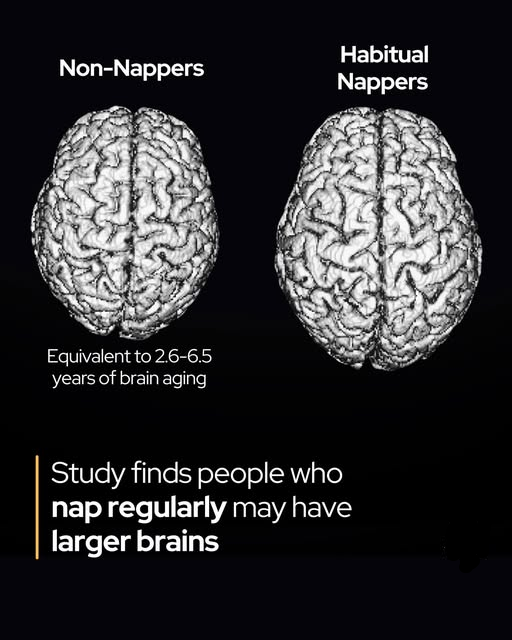
Skip your daily nap, shrink your brain.
A study by researchers from University College London and the University of the Republic in Uruguay has found that people who habitually take daytime naps tend to have significantly larger total brain volume—a key indicator of brain health that typically declines with age and is associated with reduced dementia risk.
The team used Mendelian randomization, a method that leverages genetic variants (present from birth) that make people more likely to nap regularly. By analyzing brain MRI scans and health records from more than 35,000 participants in the UK Biobank, they discovered that those genetically inclined to nap had brain volumes corresponding to 2.6 to 6.5 fewer years of aging.
While this doesn’t definitively prove that napping itself enlarges the brain, the genetic approach helps rule out many lifestyle-related confounding factors, providing stronger evidence of a potential causal relationship than traditional observational studies.
Notably, the researchers found no link between napping predisposition and performance on tests of reaction time, memory, or visual processing. However, previous studies have shown that short naps can deliver immediate cognitive benefits.
The study lacked specific data on nap duration, but prior research suggests naps of 30 minutes or less provide the greatest advantages while minimizing disruption to nighttime sleep.
This is the largest study to date linking regular napping with brain structure. Although further research is needed in more diverse populations, the findings bolster the idea that a brief daytime rest may help preserve brain volume and support long-term cognitive health.
English






i lowkenuinely think both of you are the problem
nella °❀⋆.ೃ࿔*:・@alivemaxxing
i fucking hate talking stages
English





WE HAVE TO DELETE WAYLAY AND NEON ASAP ALL WAYLAY NEON PLAYERS ARE TERRORISTS
English