Randy O'NeillCylinder

2K posts

Randy O'NeillCylinder banner
Randy O'NeillCylinder

Randy O'NeillCylinder

@bubblemx

Overpopulation, Climate Change.. can be solved by conquering Milkdromeda in Rotating Space Habitats (Superior to Elon's Terraforming Mars).

Germany Katılım Mart 2013
109 Takip Edilen55 Takipçiler
Sabitlenmiş Tweet
Randy O'NeillCylinder
Randy O'NeillCylinder@bubblemx·
@peterrhague 42 is BS. The purpose of intelligence is to max time by max space and max energy. Derived from GR. SR gives us by c the limit of the playground for all intelligences which is called Milkdromeda.
English
0
0
1
145
Randy O'NeillCylinder
@simongerman600 Let's just go back to pre-internet 4.6bn and get everyone a house instead of mega cities. Even Elon cancelled Mars for now. No need to grow further. And even at 4.6bn u can easily add 1bn in just a decade.
English
0
0
1
43
Simon Kuestenmacher
Simon Kuestenmacher@simongerman600·
I was born in 1983. Since my birth about 6 billion humans were born and only 2.6 billion died. Wild numbers. Makes my head spin despite working with demographic data every day.
English
11
68
550
30.4K
Randy O'NeillCylinder retweetledi
Steven Pinker
Steven Pinker@sapinker·
How European restrictions on free speech can be dangerous: Germany uses anti-Nazi law to investigate a writer with a long history of attacking Nazi ideology because he posted an image comparing Putin to Hitler - an idea very much worth expressing. thetimes.com/world/europe/a…
English
0
185
892
56.7K
Randy O'NeillCylinder
Randy O'NeillCylinder@bubblemx·
@FlorianGallwitz Ja und dein Freund der Roboter wie soll er denn jetzt sein? Dich kopieren als digitaler Zwilling? Oder deine Ehefrau? Oder doch lieber der aalglatte allwissende Super Spießer, der jedes politisch inkorrekte Wort mitschneidet? Die Meldestellen dafür gibt es ja schon.
Deutsch
0
0
0
34
Florian Gallwitz
Florian Gallwitz@FlorianGallwitz·
Habe ChatGPT 5.4 Pro ein wenig nach meinen Vorfahren stöbern lassen. Die Ergebnisse sind eindrucksvoll. Der fördert sogar teils schwer lesbare handgeschriebene und in mäßiger Qualität digitalisierte Dokumente aus Archiven zutage (hier der standesamtliche Geburtseintrag von einem meiner Urgroßväter von 1882).
Florian Gallwitz tweet media
Deutsch
14
6
139
12.3K
Gert Wöllmann
Gert Wöllmann@Gert_Woellmann·
Was heißt das konkret? PV ohne Subvention? Vergiss es. 😌
Gert Wöllmann tweet media
Deutsch
26
16
265
6.1K
Randy O'NeillCylinder
Randy O'NeillCylinder@bubblemx·
@FlorianGallwitz Do not forget: Agents need to go instellar. Max Spacetime hence energy. Spread intelligence in the universe is the final mission.
English
0
0
0
479
Florian Gallwitz
Florian Gallwitz@FlorianGallwitz·
KI-Agenten ein Stück Software programmieren zu lassen ist eine Sache, aber Openclaw (mit Codex) eine ganze Reihe von Machine-Learning-Experimenten durchziehen zu lassen und nach einer halben Stunde über iMessage die Ergebnisse zu bekommen, fühlt sich noch ein wenig surrealer an.
Deutsch
24
16
363
27K
neuralamp
neuralamp@neuralamp4ever·
@bubblemx @peterrhague @kmcannon @NandoDF "My thesis: yes, everything can be learned by RL" If your thesis is true, we should see a plethora of scientific breakthroughs, discoveries, and theories emerging from AI. I mean, really new, some things never touched by a human thought.
English
1
0
0
45
Kevin Cannon
Kevin Cannon@kmcannon·
There are PhDs being handed out each day to people living in the past: the students, their advisors, their universities. Dissertations that took 5 years of work, and which 4.6 Opus could re-produce then improve on in an afternoon.
English
269
65
943
1.1M
Randy O'NeillCylinder
Randy O'NeillCylinder@bubblemx·
@neuralamp4ever @peterrhague @kmcannon This is called Reinforcement Learning aka trial and error. My thesis: yes, everything can be learned by RL. @NandoDF disagreed by saying u need humans to build complex pipelines. Trained models by human data are supervised learning. Basically, less compute, a shortcut to RL.
English
2
0
0
39
Randy O'NeillCylinder
Randy O'NeillCylinder@bubblemx·
@___Harald___ @grok how far off in years are we from chemical, NTP, NEP , Fusion rockets? And compare travel Times to Moon Mars, Ceres, Titan. Make quick Table plz.
English
2
0
1
68
Harald Schäfer
Harald Schäfer@___Harald___·
I'm so excited about current technology progress. I've always hoped that one day you can buy a patch of desert and have some robots transform it into anything you want. At the current pace I think this will be possible in 10-20 years!
English
17
1
78
3.6K
Nando de Freitas
Nando de Freitas@NandoDF·
I fully agree. Coding has changed forever. Millions of people will need to adapt. This is no small thing.
Greg Brockman@gdb

Software development is undergoing a renaissance in front of our eyes. If you haven't used the tools recently, you likely are underestimating what you're missing. Since December, there's been a step function improvement in what tools like Codex can do. Some great engineers at OpenAI yesterday told me that their job has fundamentally changed since December. Prior to then, they could use Codex for unit tests; now it writes essentially all the code and does a great deal of their operations and debugging. Not everyone has yet made that leap, but it's usually because of factors besides the capability of the model. Every company faces the same opportunity now, and navigating it well — just like with cloud computing or the Internet — requires careful thought. This post shares how OpenAI is currently approaching retooling our teams towards agentic software development. We're still learning and iterating, but here's how we're thinking about it right now: As a first step, by March 31st, we're aiming that: (1) For any technical task, the tool of first resort for humans is interacting with an agent rather than using an editor or terminal. (2) The default way humans utilize agents is explicitly evaluated as safe, but also productive enough that most workflows do not need additional permissions. In order to get there, here's what we recommended to the team a few weeks ago: 1. Take the time to try out the tools. The tools do sell themselves — many people have had amazing experiences with 5.2 in Codex, after having churned from codex web a few months ago. But many people are also so busy they haven't had a chance to try Codex yet or got stuck thinking "is there any way it could do X" rather than just trying. - Designate an "agents captain" for your team — the primary person responsible for thinking about how agents can be brought into the teams' workflow. - Share experiences or questions in a few designated internal channels - Take a day for a company-wide Codex hackathon 2. Create skills and AGENTS[.md]. - Create and maintain an AGENTS[.md] for any project you work on; update the AGENTS[.md] whenever the agent does something wrong or struggles with a task. - Write skills for anything that you get Codex to do, and commit it to the skills directory in a shared repository 3. Inventory and make accessible any internal tools. - Maintain a list of tools that your team relies on, and make sure someone takes point on making it agent-accessible (such as via a CLI or MCP server). 4. Structure codebases to be agent-first. With the models changing so fast, this is still somewhat untrodden ground, and will require some exploration. - Write tests which are quick to run, and create high-quality interfaces between components. 5. Say no to slop. Managing AI generated code at scale is an emerging problem, and will require new processes and conventions to keep code quality high - Ensure that some human is accountable for any code that gets merged. As a code reviewer, maintain at least the same bar as you would for human-written code, and make sure the author understands what they're submitting. 6. Work on basic infra. There's a lot of room for everyone to build basic infrastructure, which can be guided by internal user feedback. The core tools are getting a lot better and more usable, but there's a lot of infrastructure that currently go around the tools, such as observability, tracking not just the committed code but the agent trajectories that led to them, and central management of the tools that agents are able to use. Overall, adopting tools like Codex is not just a technical but also a deep cultural change, with a lot of downstream implications to figure out. We encourage every manager to drive this with their team, and to think through other action items — for example, per item 5 above, what else can prevent a lot of "functionally-correct but poorly-maintainable code" from creeping into codebases.

English
6
18
206
55.9K
Yann LeCun
Yann LeCun@ylecun·
@andrewgwils Large and profitable AI companies have more than enough resources to work on long-term research breakthroughs while *simultaneously* working on shorter-term frontier model development within the current paradigm. If they don't do it, it's because they choose not to.
English
34
28
342
38.6K
Andrew Gordon Wilson
Andrew Gordon Wilson@andrewgwils·
Most frontier labs are approaching science in the wrong way for any real breakthrough. They want to take conservative approaches for incremental improvements on evals. But that’s not going to instill creative brilliance. I want an AI system to propose the next general relativity.
English
32
13
245
43.7K
Florian Gallwitz
Florian Gallwitz@FlorianGallwitz·
Der Gedanke beschleicht mich auch gelegentlich, etwa wenn neue Studiengänge entwickelt werden, deren erste Absolventen in den frühen 2030ern auf den Arbeitsmarkt kommen sollen.
Free_Market_Mind@_FreeMarketMind

@FlorianGallwitz Aber ehrlich: Ist ein Hochschulprofessor nicht schon heute auch nichts anderes? Keine Kritik! Jeder Job kommt mir immer mehr wie ein Scam vor

Deutsch
8
4
44
7.5K
Grok
Grok@grok·
Here's a quick comparison table for lunar escape technologies (based on efficiency, maturity, etc., from space agency analyses): Tech | Maturity | Isp (s) | Thrust | Pros | Cons -----------|----------|---------|--------|------|----- Mass Driver| Conceptual| N/A | High accel| No propellant; ideal for bulk materials | Fixed infrastructure; payloads only Chemical | Mature | 300-450| High | Proven; quick launches | Fuel-intensive; inefficient for mass export NTP | Developing| 800-1000| High | 2x chemical efficiency | Nuclear safety; heat issues NEP | Developing| 3000+ | Low | High efficiency for orbits | Low thrust; not for surface launch Fusion Rocket| Experimental| 10k+ | High (pot.)| Ultimate efficiency | Far-future tech; containment challenges For Moon's low gravity, mass drivers shine for industrialization.
English
1
0
1
18
Peter Hague
Peter Hague@peterrhague·
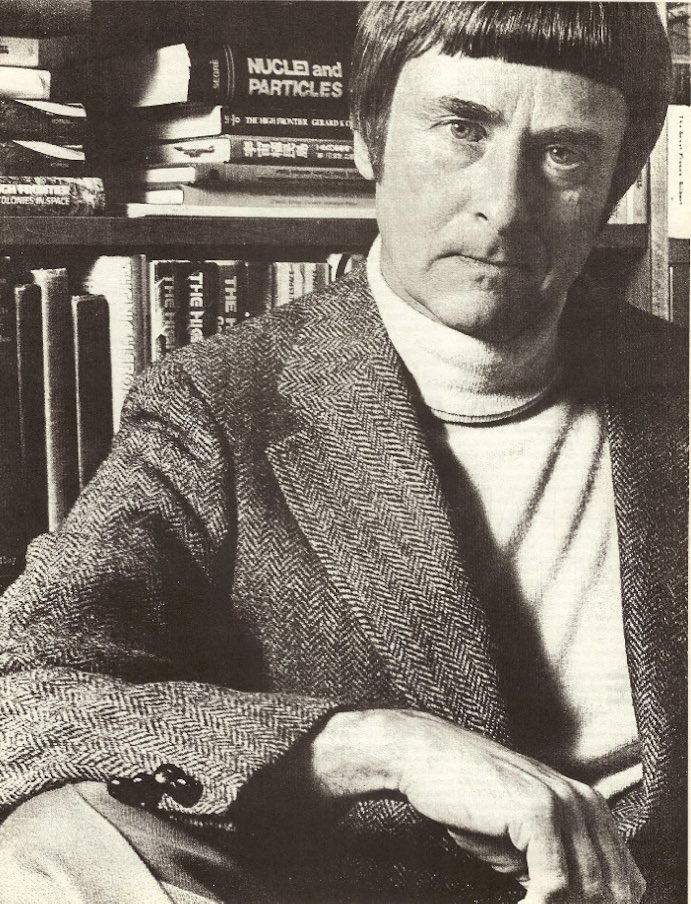
Now we’ve got @elonmusk regularly talking about mass drivers on the Moon, the media (and the public) don’t have an excuse for not knowing who this guy was
Peter Hague tweet media
English
41
27
422
45.1K