☁️Steve Buchanan

34K posts

☁️Steve Buchanan banner
☁️Steve Buchanan

☁️Steve Buchanan

@buchatech

Cloud Lead @ Jamf, #MicrosoftMVP x11, @Docker Captain, ex @Microsoft, @Pluralsight x29, @OReillyMedia x1, & Books x9 #Azure, #GCP, #AWS | #Docker | #K8s | #AI

Minneapolis Katılım Ocak 2011
269 Takip Edilen4.6K Takipçiler
☁️Steve Buchanan retweetledi
Vinícius Apolinário 🇧🇷🇺🇸
⁉️ Wondering what strategy to follow for AKS Ingress Controllers? 📺 Check out the next session (11am Pacific time) at the Azure Infra Summit: Introducing Application Gateway for Containers 🔗 azureinfrasummit.com Don't forget that you can ask questions in the chat!
English
0
1
2
101
☁️Steve Buchanan retweetledi
Kevin Evans ☁️
Kevin Evans ☁️@TheKevinEvans·
Honest LLM cheat sheet: 🏆 Agents → Qwen3-32B 🧠 Reasoning → DeepSeek-R1 💻 16GB Mac → Phi-4 14B 🏢 Enterprise → Granite 3.3 ⚡ Speed → Falcon H1 All free via Ollama. 99% aren't open source. They're open-weight. Details 👇
English
1
1
3
441
☁️Steve Buchanan retweetledi
Dave McCollough
Dave McCollough@davemccollough·
GitHub just launched the Agentic AI Developer certification with a focus on building, operating, and governing AI agents inside real SDLC workflows. learn.github.com/certification/…
English
2
8
70
4.1K
☁️Steve Buchanan retweetledi
Bobby Allen
Bobby Allen@ballen_clt·
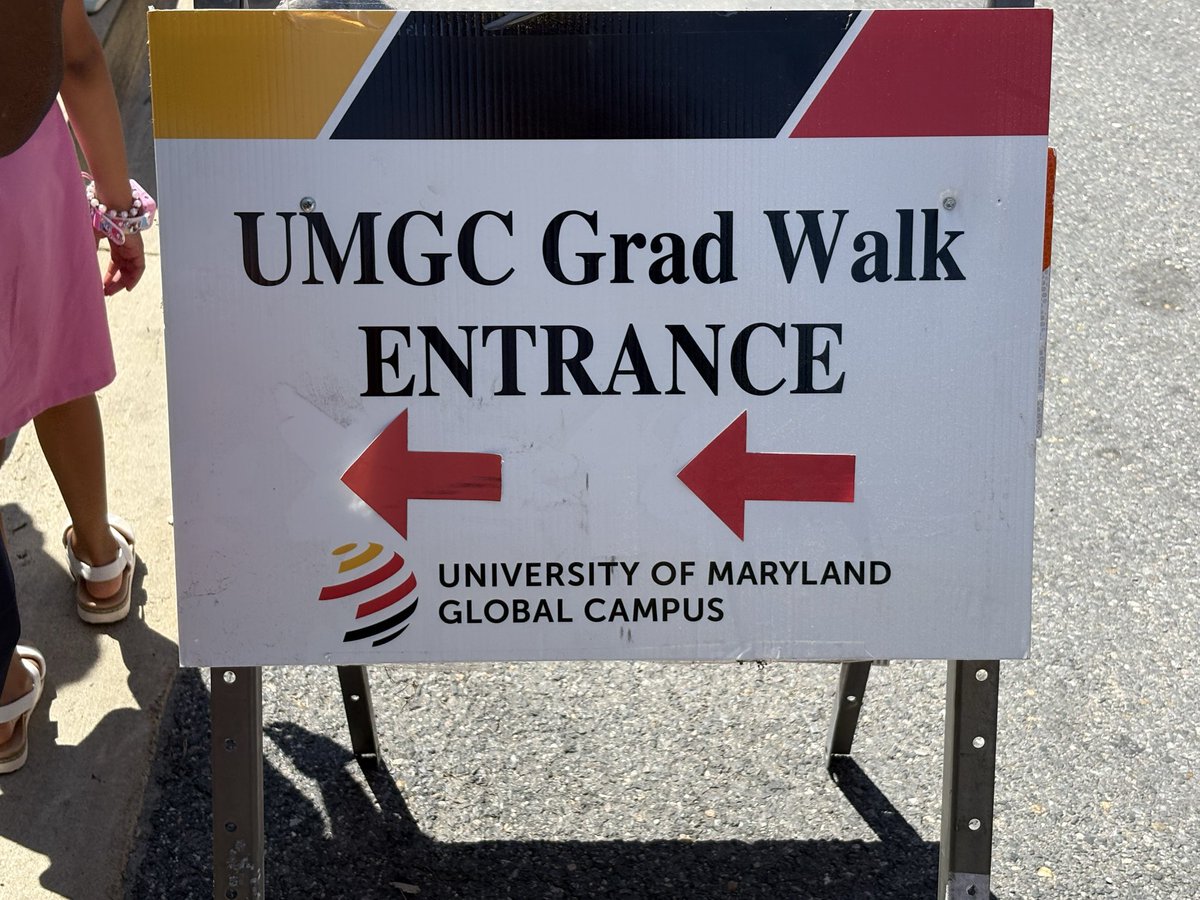
So important to run your own race. I finished undergrad at 21. My oldest brother walks across the stage to get his bachelor’s degree at 49. So proud of him for sticking with it all these years. The best part is that my nephew gets to see his Dad graduate.
Bobby Allen tweet media
English
1
8
82
1.8K
☁️Steve Buchanan retweetledi
TRÄW🤟
TRÄW🤟@thatstraw·
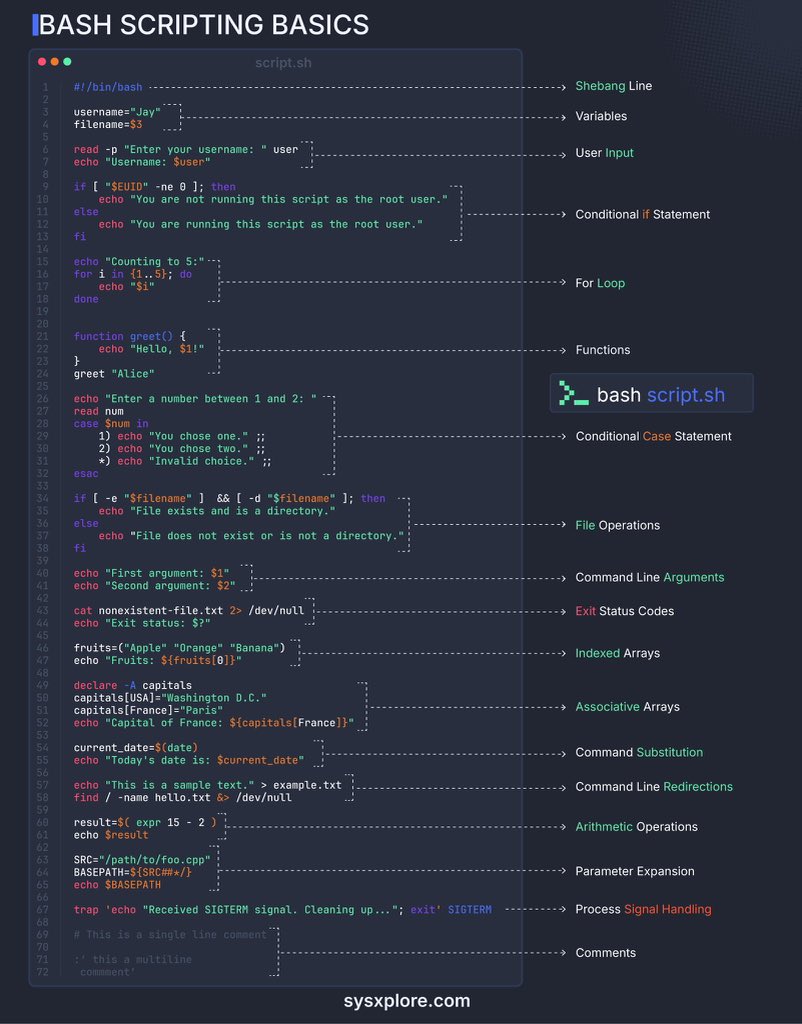
Bash Scripting Basics
TRÄW🤟 tweet media
English
3
106
911
29.4K
☁️Steve Buchanan retweetledi
Rick Claus 🦋 @RegularITguy.com
No slides. No marketing. Just a straight conversation with Mark Russinovich on how Microsoft actually runs Azure at hyperscale. If you build, run, or secure cloud infrastructure, you’ll want this one. May 19 at 8:00 AM PDT #Azure #Cloud #Security #Infra
English
2
6
9
1.1K
☁️Steve Buchanan retweetledi
Microsoft Developer
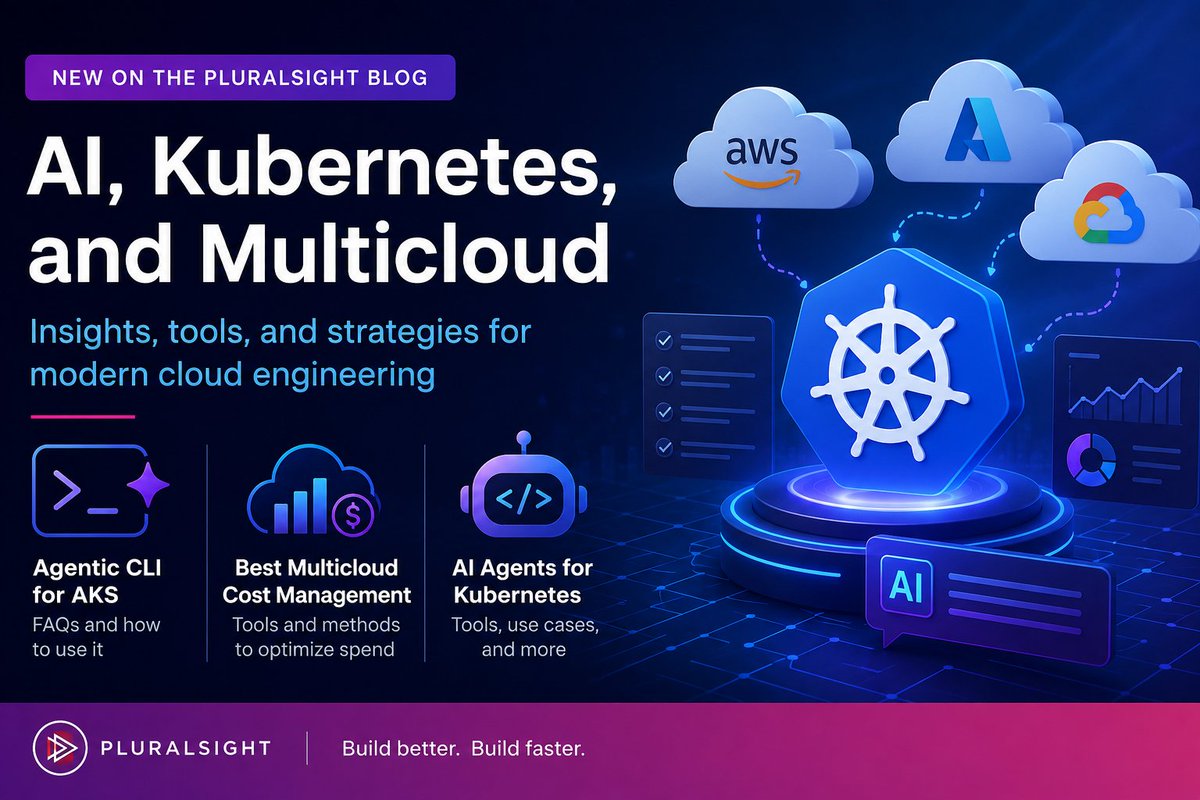
If you’ve been looking for a sign to attend Build, this is it. Join us June 2–3 in San Francisco or online for free. 🔗 Register: msft.it/6016vRVCu
Microsoft Developer tweet media
English
2
7
29
13.8K
☁️Steve Buchanan retweetledi
Mitchell Hashimoto
Mitchell Hashimoto@mitchellh·
I strongly believe there are entire companies right now under heavy AI psychosis and its impossible to have rational conversations about it with them. I can't name any specific people because they include personal friends I deeply respect, but I worry about how this plays out. I lived through the great MTBF vs MTTR (mean-time-between-failure vs. mean-time-to-recovery) reckoning of infrastructure during the transition to cloud and cloud automation. All those arguments are rearing their ugly heads again but now its... the whole software development industry (maybe the whole world, really). It's frightening, because the psychosis folks operate under an almost absolute "MTTR is all you need" mentality: "its fine to ship bugs because the agents will fix them so quickly and at a scale humans can't do!" We learned in infrastructure that MTTR is great but you can't yeet resilient systems entirely. The main issue is I don't even know how to bring this up to people I know personally, because bringing this topic up leads to immediately dismissals like "no no, it has full test coverage" or "bug reports are going down" or something, which just don't paint the whole picture. We already learned this lesson once in infrastructure: you can automate yourself into a very resilient catastrophe machine. Systems can appear healthy by local metrics while globally becoming incomprehensible. Bug reports can go down while latent risk explodes. Test coverage can rise while semantic understanding falls. Changes happens so fast that nobody notices the underlying architecture decaying. I worry.
English
496
1.8K
14.1K
1.4M
☁️Steve Buchanan retweetledi
Bill Ackman
Bill Ackman@BillAckman·
As two of the largest forces in equity markets -- growing index ownership and increasing amounts of capital controlled by extremely short-term-oriented, leveraged, volatility-intolerant investors -- converge, we have found occasional opportunities to acquire some of the most dominant long-term compounding franchises at attractive valuations. For example, we acquired Alphabet $GOOG when the stock declined substantially on the release of ChatGPT in late 2022, Amazon $AMZN in the weeks following Liberation Day, and $META more recently on the market's response to the company's unexpectedly large cap ex guidance and expenditures. In our 13F which we will file later today, we will disclose a new position in Microsoft, a company we have followed for many years now offered at a highly compelling valuation. While $PSUS will not be filing a 13F tomorrow, it has also recently made $MFST a core holding. Microsoft operates two of the most valuable franchises in enterprise technology, which account for approximately 70% of the company's overall profits: M365 and Azure. M365, the company's productivity suite, is the dominant operating platform for knowledge work, with over 450 million workers using Word, Excel, PowerPoint, Outlook, and Teams on a daily basis. Azure is the world's second-largest hyperscaler cloud platform and, like AWS in our Amazon investment, is a direct beneficiary of the multi-decade migration of enterprise IT workloads to the cloud, which is now further accelerated by surging demand for AI inference workloads. Both M365 and Azure are underpinned by Microsoft's unparalleled enterprise distribution and the security, compliance, and identity infrastructure it has built and refined over decades. Beyond these core franchises, Microsoft also owns a portfolio of other leading businesses, including LinkedIn (the world's largest professional network with 1.3 billion members), its gaming platform (Xbox and Activision Blizzard), and search and news advertising (Bing and the Edge browser). We began building our position in MSFT in February following a meaningful share price decline after the company reported its fiscal Q2 2026 results. We were able to establish our position at a valuation of 21 times forward earnings, broadly in line with the market multiple and well below Microsoft's trading average over the last few years. Notably, MSFT's headline multiple does not reflect the value of Microsoft's approximately 27% economic interest in OpenAI, which would represent approximately $200 billion, or 7% of Microsoft's market capitalization, at OpenAI's most recent funding round valuation. We believe Microsoft's recent share price decline has been principally driven by investor concerns around two key issues: i) the competitive positioning of M365 against increasingly capable AI lab offerings (notably Anthropic's Claude Cowork), and ii) the durability of Azure's growth, especially in light of Microsoft's evolving relationship with OpenAI. In our view, investors underestimate the resilience of the M365 franchise given its deeply embedded role across enterprises and highly attractive price-value proposition. Unlike point software solutions, which may be vulnerable to disintermediation by better-performing AI alternatives, M365 is tightly integrated into the daily workflow of nearly every large enterprise and is supported by Microsoft's identity, security, compliance, and data governance infrastructure, which would be nearly impossible to replicate. Attractive bundle economics further reinforce Microsoft's advantage, with monthly average revenue per user on the M365 suite at approximately $20, less than half of what customers would pay to purchase the underlying applications individually from different vendors. Moreover, we are encouraged to see Microsoft prioritizing its R&D efforts and investment in Copilot, its own AI agent embedded across M365, with direct involvement from CEO Satya Nadella. We believe these efforts will translate into improved product velocity and greater customer adoption over time. Alongside Copilot's rollout, the company has also begun shifting its pricing model from pure per-seat licensing to a hybrid model of seats plus metered consumption, which helps expand the company’s revenue opportunity as AI agents drive incremental usage that a seat-only structure would not capture. These initiatives should help sustain M365’s strong underlying growth momentum, which was already evident in the business unit’s 15% revenue growth (in constant currency) last quarter. We believe concerns regarding Azure's growth trajectory are similarly misplaced, particularly in light of the franchise's exceptional recent performance. Azure revenue grew 39% in constant currency last quarter, with company guiding to modest acceleration through the second half of the year. We view Microsoft's recent decision to restructure its OpenAI partnership not as a concession but as part of a deliberate pivot toward a more open, multi-model architecture that better serves enterprise customers, who increasingly seek optionality across model providers. Microsoft recently disclosed that over 10,000 enterprise customers have used more than one model on Azure Foundry, the company’s modular AI model marketplace. This model-agnostic approach also strengthens Copilot, which can auto-route queries across multiple models to deliver the optimal output for a given task. To support Azure's rapid growth amid persistent supply constraints, Microsoft has raised its calendar year 2026 capex budget to approximately $190 billion. Consistent with what we have observed at hyperscaler peers Amazon and Google, we view this spend as growth capex that should drive future revenue generation. This is particularly true for Microsoft, given that roughly two-thirds of its capex budget is allocated to server and networking equipment that correlates directly with near-term revenue. Like our purchases of $GOOG, $AMZN, and $META, we believe that $MSFT offers analogous and compelling long-term value at today's valuation.
English
333
473
4.9K
1.1M
☁️Steve Buchanan retweetledi
Pierce Boggan
Pierce Boggan@pierceboggan·
VS Code was already used by millions of developers for agentic coding. However, the editor layout has traditionally been optimized for single-task and single-workspace workflows. Today, we're introducing a new window to enable our users (and ourselves!) to work with multiple agents across multiple projects: Agents. Now available in VS Code stable!
English
75
128
1.2K
143.1K
☁️Steve Buchanan retweetledi
Kanika Tolver
Kanika Tolver@KanikaTolver·
My AI Journey in 7 steps
Kanika Tolver tweet media
English
4
21
78
2K
☁️Steve Buchanan retweetledi
Abdel SGHIOUAR
Abdel SGHIOUAR@boredabdel·
A new episode of the @KubernetesPod is out 🥳 Check our conversation with Lucy from Uber about running 5 million cores on #Kubernetes DNS and Fake KubeAPI Servers #Kubernetespodcast #Kubernetes
Kubernetes Podcast from Google@KubernetesPod

This episode we speak to Lucy Sweet. Staff Engineer @Uber and lead for the @kubernetesio Node Lifecycle WG. Lucy shares Uber 5 Millions cores on #k8s story at scale and why it's always DNS 😃 📃 kubernetespodcast.com/episode/266-k8… 🔊 kubernetespodcast.com/subscribe

English
0
1
3
328