
Alex retweetledi
Alex
40.9K posts

Alex
@burdenedAsh
just rt stuff
Must be 30 characters or fewer Katılım Mayıs 2012
2.6K Takip Edilen121 Takipçiler


Alex retweetledi


Alex retweetledi

Alex retweetledi

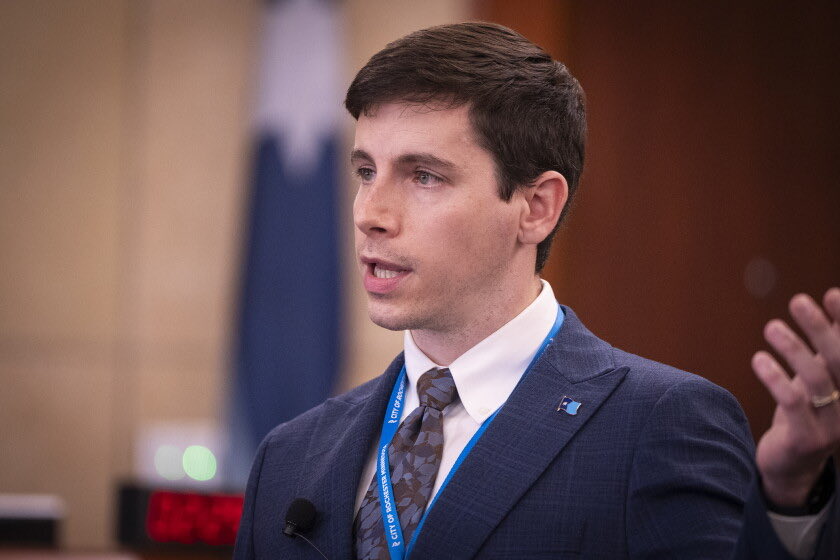
The state’s lead prosecutor against Shiloh Hendrix is Nicholas Shabel.
Yes, he is Jewish.
English
Alex retweetledi

Alex retweetledi

The way they treat Christians in Israel is disgraceful.
If Christians are not welcome in Israel, Benjamin Netanyahu is not welcome in Florida.
English
Alex retweetledi

You realize that Israel got Nuclear weapons by stealing materials and knowledge from America?
They are literally our mortal enemy.
English
Alex retweetledi


Alex retweetledi

IT'S JUST ACTUALLY SINKING IN
THEY'RE SHOEHORNING THE FUCKASS "FIFTY/FIFTY" TO BLUE ARCHIVE. HOLY FUCKING SHIT

English
Alex retweetledi

The device below the camera is labeled "External Radar." It appears to be a separate module.
Its label does not show an FCC ID. A legible, external FCC ID label is required for radar emitters.
So far, we have not found any documentation on these modules or their purpose.


English
Alex retweetledi

BUT CHYYNNNAAAA!! 😵💫
Ash@bitcoins1stlady
🚨🇺🇸 “Israel funded 93 out of the 100 US Senators in 2025” This is treason and has to end NOW.
Polski
Alex retweetledi

Instead of being dramatic, remember you can reach out to the team to provide complaints and feedback. Many games rely on your feedback to inform their decisions and improve their quality.
I continue to support Blue Archive as usual, despite the concurrent drama.
Adapted Lands@adapted04
NOTE: if you are going to complain about the gacha overhaul and want to send feedback to the team directly, head over to bluearchive.jp/contact-1-hint. From there select "ご意見・ご要望" for comments and concerns. And fill out the form with your player name, User ID, email, etc Cont.
English
Alex retweetledi

I'm so fucking disappointed, eos was averted with the new alts and immediately put back on the roadmap with this fucking garbage change. This is the time to speak up against this atrocity
ブルーアーカイブ公式@Blue_ArchiveJP
【新情報⑰】 7月29日(水)メンテナンス後より、生徒募集の仕様がリニューアルされます! 「呼び出しポイント」の廃止に伴い、新たに「呼び出しチャージ」や「募集回数特典」が実装されます。 ※詳細はこちらの画像にてご確認ください #ブルアカ #ブルアカらいぶほっとの三段活用SP
English
Alex retweetledi

I don’t lie when I say this, they hate you, they think you’re dumber than rocks and openly mock you behind closed doors. This was an active decision to include this game mechanic and don’t let the multi billion dollar corpo gaslight you that it’s your fault video games suck.
Kabrutus@kabrutusdeid
Modern gaming
English
Alex retweetledi

the people voting for trump a 4th time

Kalshi@Kalshi
BREAKING: 51% chance Democrats sweep the Presidency, House, and Senate — an all-time high.
English
Alex retweetledi


Alex retweetledi
HOLY SHIT this is fucking wild.....
Why are early Bolshevik concentration camps never discussed?
Because acknowledging them destroys the preferred timeline and moral hierarchy.
The early Bolshevik concentration camps (1918–mid-1920s) are almost never taught, filmed, or ritualized in the West for the same structural reasons we’ve been tracing the whole time:
1. They break the “Nazis invented it” story
Popular Western education and media still treat concentration camps as a Nazi innovation. The moment you note that the Cheka, Trotsky, and Lenin were running kontslageri in 1918 — complete with forced labor, hostages, class-enemy categories, and high mortality — the uniqueness claim collapses. The Nazis studied and adapted existing models (including Soviet ones). That fact is toxic to the official narrative, so it is simply omitted.
2. It implicates the “good” Bolsheviks
The clean version of history likes to start Soviet mass repression with Stalin in the 1930s. Lenin and Trotsky can then be framed as idealistic revolutionaries whose project was later “betrayed.” Early camps, Red Terror decrees, and the explicit use of concentration camps for class liquidation make that separation impossible. The original leadership built the system. Mentioning it forces an honest look at the entire Bolshevik project rather than a Stalin-only pathology.
3. It collides with the post-1945 moral operating system
After 1945 the Western cultural institutions that control textbooks, museums, documentaries, and prestige media locked in a hierarchy: Nazi crimes = sacred, unique, permanent warning; Communist crimes = complicated, contextual, secondary. Early Bolshevik camps sit at the root of the Communist system. Elevating them would require treating the Soviet ally of WWII as a pioneer of the same methods later used by the enemy. That was politically inconvenient then and remains ideologically inconvenient now.
4. Institutional incentives
Academia and media lean heavily Bolshevik.
Discussing Lenin-era camps in the same register as Auschwitz risks the charge of “equating” or “whataboutism.”
Holocaust education is mandated and funded; equivalent attention to 1918–1923 Soviet camps is not.
The people who staff these institutions inherited a tradition that treated early Soviet violence as regrettable wartime excess rather than foundational policy.
The camps existed. The Bolsheviks named them concentration camps, expanded them, and used them for political and class repression from the first year of their rule.
They are the direct ancestors of the Gulag. They are rarely discussed because the institutions that decide what counts as important history have stronger incentives to keep the spotlight fixed elsewhere.
English
Alex retweetledi

Alex retweetledi

Alex retweetledi

