Tinashe Madondo

2.2K posts

Tinashe Madondo banner
Tinashe Madondo

Tinashe Madondo

@bushvocate

I write what I want. I speak truth to power. Legal mind, political heart. Analyzing law, governance, and policy in Zimbabwe. Advocate for a just future. 🇿🇼

Harare, Zimbabwe Katılım Haziran 2019
430 Takip Edilen100.2K Takipçiler
Tinashe Madondo
Tinashe Madondo@bushvocate·
Gents, you may need to save these, I don’t need to tell you everything.
Tinashe Madondo tweet mediaTinashe Madondo tweet mediaTinashe Madondo tweet media
English
2
0
0
950
Tinashe Madondo retweetledi
Defiance Against Dictatorship {DAD}
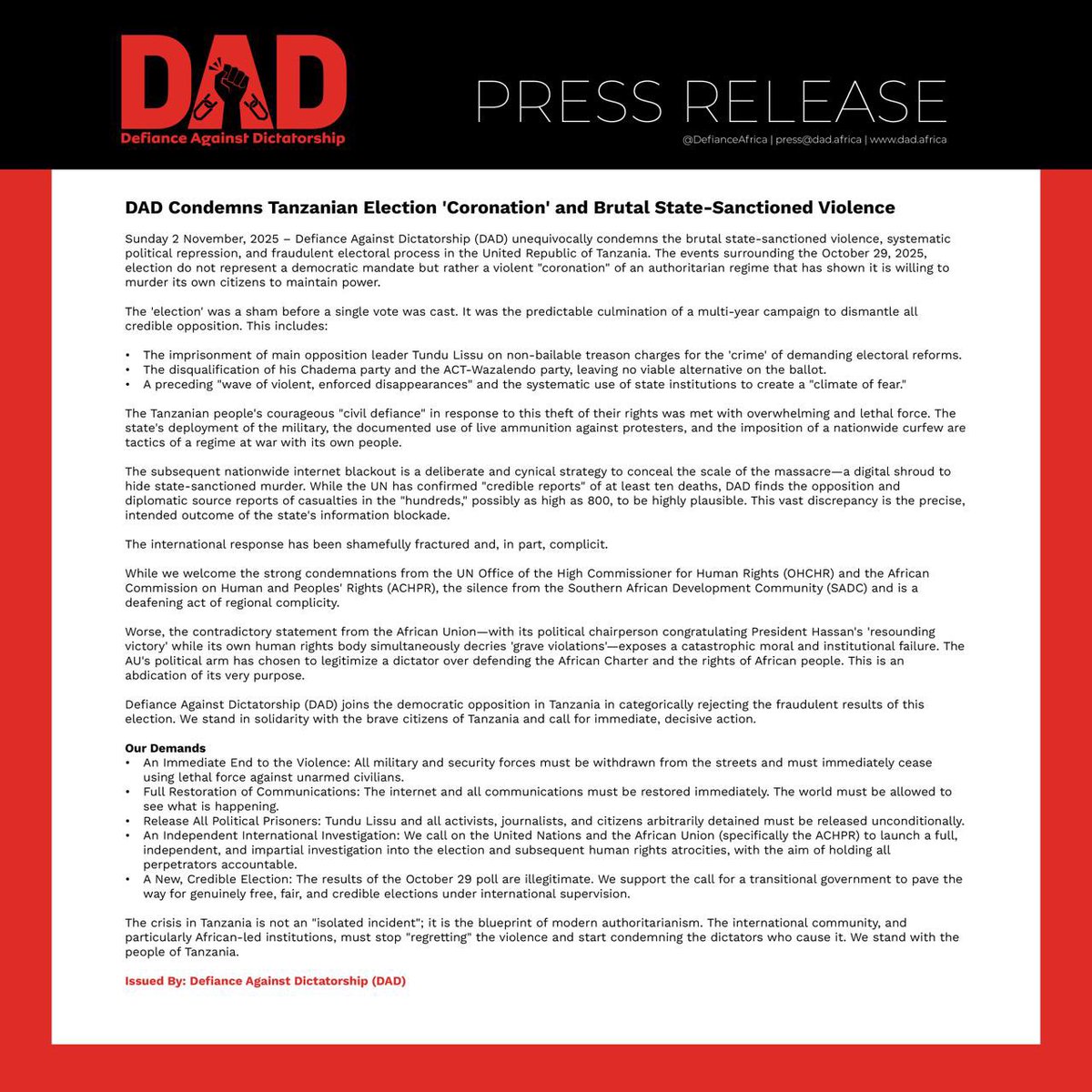
Defiance Against Dictatorship (DAD) unequivocally condemns the brutal state-sanctioned violence, systematic political repression, and fraudulent electoral process in the United Republic of Tanzania. The events surrounding the October 29, 2025, election do not represent a democratic mandate but rather a violent "coronation" of an authoritarian regime that has shown it is willing to murder its own citizens to maintain power. The 'election' was a sham before a single vote was cast. It was the predictable culmination of a multi-year campaign to dismantle all credible opposition. This includes: •The imprisonment of main opposition leader Tundu Lissu on non-bailable treason charges for the 'crime' of demanding electoral reforms. •The disqualification of his Chadema party and the ACT-Wazalendo party, leaving no viable alternative on the ballot. •A preceding "wave of violent, enforced disappearances" and the systematic use of state institutions to create a "climate of fear." The Tanzanian people's courageous "civil defiance" in response to this theft of their rights was met with overwhelming and lethal force. The state's deployment of the military, the documented use of live ammunition against protesters, and the imposition of a nationwide curfew are tactics of a regime at war with its own people. The subsequent nationwide internet blackout is a deliberate and cynical strategy to conceal the scale of the massacre, a digital shroud to hide state-sanctioned murder. While the UN has confirmed "credible reports" of at least ten deaths, DAD finds the opposition and diplomatic source reports of casualties in the "hundreds," possibly as high as 800, to be highly plausible. This vast discrepancy is the precise, intended outcome of the state's information blockade. The international response has been shamefully fractured and, in part, complicit. While we welcome the strong condemnations from the UN Office of the High Commissioner for Human Rights (OHCHR) and the African Commission on Human and Peoples' Rights (ACHPR), the silence from the Southern African Development Community (SADC) is a deafening act of regional complicity. Worse, the contradictory statement from the African Union—with its political chairperson congratulating President Hassan's 'resounding victory' while its own human rights body simultaneously decries 'grave violations'—exposes a catastrophic moral and institutional failure. The AU's political arm has chosen to legitimize a dictator over defending the African Charter and the rights of African people. This is an abdication of its very purpose. Defiance Against Dictatorship (DAD) joins the democratic opposition in Tanzania in categorically rejecting the fraudulent results of this election. We stand in solidarity with the brave citizens of Tanzania and call for immediate, decisive action.
Defiance Against Dictatorship {DAD} tweet media
English
1
116
312
37.3K
Tinashe Madondo retweetledi
Tawonga Kurewa
Tawonga Kurewa@mafira_kurewa·
Uyu acharigisa vanhu vakawanda.
Tawonga Kurewa tweet media
Filipino
5
22
102
8K
Tinashe Madondo retweetledi
Tawonga Kurewa
Tawonga Kurewa@mafira_kurewa·
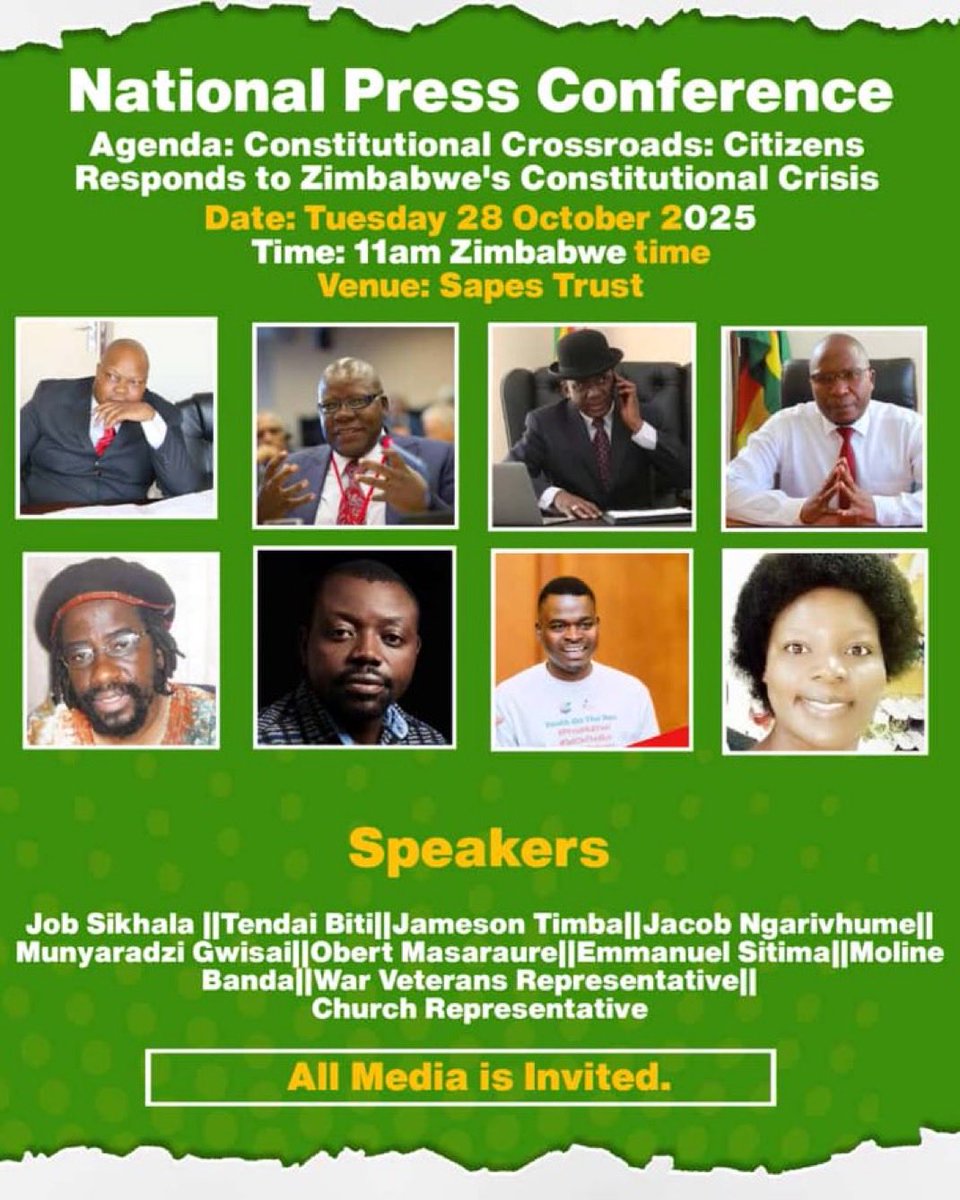
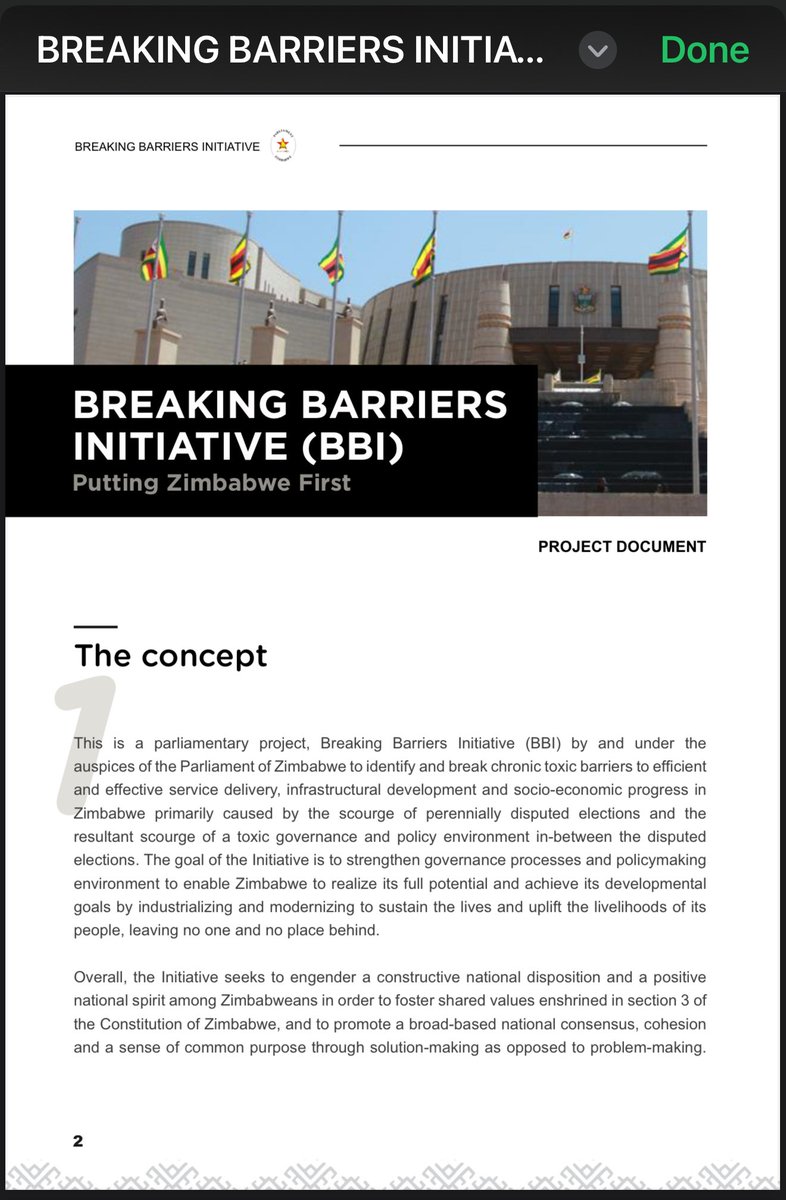
The burning of the SAPES Centre last night, hours before a press conference by progressives rising to defend the Constitution, was no accident. It was choreography, authored by the same dark architects who have always feared an awakened citizenry. And the irony cuts deep: The Daily News, once bombed and banned for daring to “tell it like it is,” has today carried coverage of that very press conference, whose venue now lies in ashes. History is looping before our eyes, this time in HD. Zimbabwe must not pretend this is new. In 2001, The Daily News printing press was blown apart after a series of threats from then Information Minister, Professor Jonathan Moyo. In the 1980s, homes and bodies in Matabeleland were burned under the banner of Gukurahundi. In 2008, citizens were beaten, raped, and killed for voting the wrong way. The architecture of terror has always been there, only its décor changes. @edmnangagwa, whose fingerprints stain every chapter of that bloodied script, now presides over a state that burns ideas when it cannot debate them. And behind the curtains, the not-so-good professor once the superintending minister during the Daily News bombing, later the loudest critic of repression, now lends his pen to justify it again, as chief author of the constitutional vandalism framework dressed up as a “BBI document.” The torching of Gilbert Mbwende’s home, a member of the Constitutional Defence Forum, on the same night, seals the message: the regime is terrified. Its instinct is fire. Its language is fear. But Zimbabwe has seen this movie before, and this time, it will not end the same way. And to those still loyal to @nelsonchamisa’s convenient evasions. Those who say, “this is not our fight”, that’s ok. The fight against oppression is still a democratic right and privilege. History has a long memory. It will record who stood with the oppressed and who aided the oppressor hiding behind hashtags and scripture while the Constitution burned. The system has panicked, and it will not stop until citizens make it stop. Those who understand what’s at stake will act. The rest will rationalize their silence. Brace.
Tawonga Kurewa tweet mediaTawonga Kurewa tweet mediaTawonga Kurewa tweet mediaTawonga Kurewa tweet media
English
13
43
76
11.8K
Tinashe Madondo retweetledi
mmatigari
mmatigari@matigary·
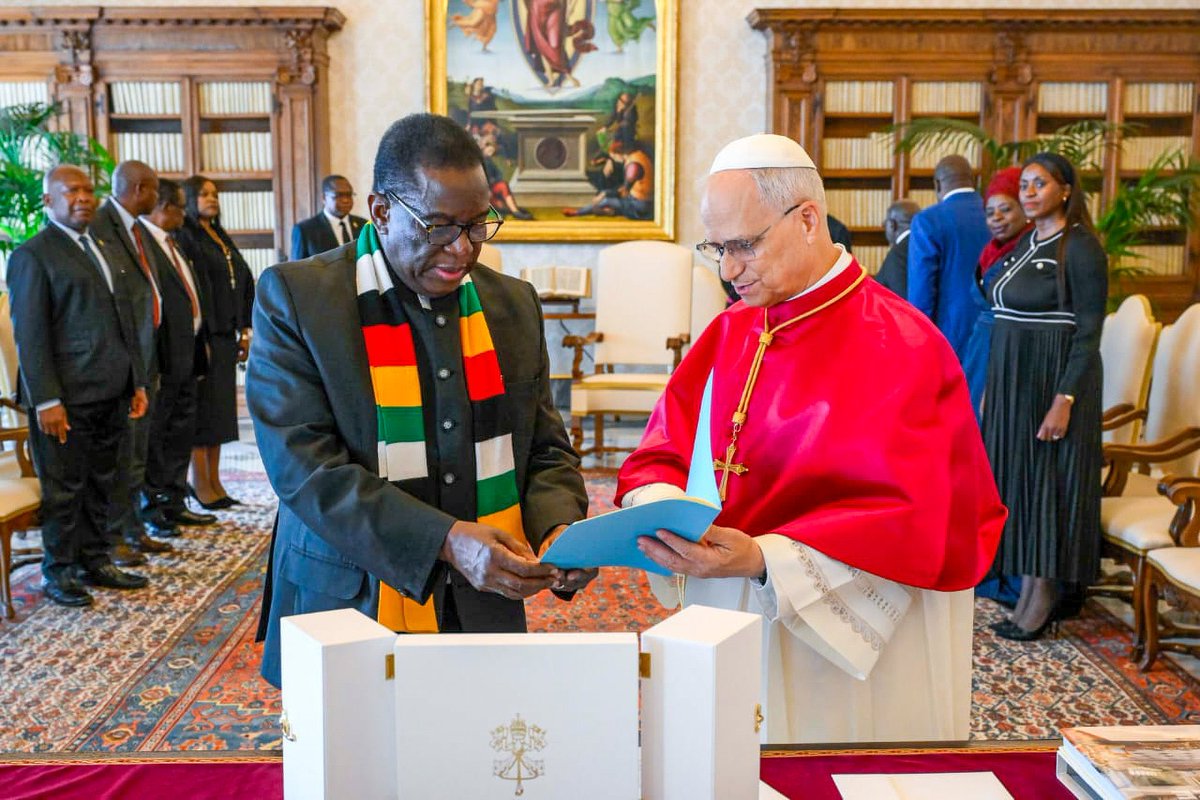
@TembaMliswa is all froth and no beer. Does he even know why the area in question is called SAINT MARTINS and not Mbare or Sunningdale? 😂 Does he understand why the President and his team had a special visit to the Vatican last month?
mmatigari tweet media
Bla B@bla_bidza

Someone needs to remind @TembaMliswa that even Epworth originally belonged to the Methodist Church, which voluntarily surrendered that land for it has always been seen as unusable for its stones. The area in question near St. Martins is entirely Catholic Church property—hence the housing estate’s name, Saint Martins, built in 1950. In law, one cannot give away what one does not own. Harare City Council cannot give or sell what is not in its possession or ownership. Even @ProfJNMoyo can help you refer to the common law principle of contracts regarding the term void ab initio (void from the beginning). Legally, it means no one can transfer rights or property they do not possess. Therefore, the offer letters issued by the Harare City Council are void (invalid) from the outset. They are not enforceable at law. The St Martins Housing Scheme is an illegality. Zimbabwean government in its diplomatic reengagement policy is trying to shake off its land invasions lawlessness and property rights in order to find a breakthrough in its debt negotiations and you and your hacks are going against. You are undermining @edmnangagwa’s government.
English
14
11
43
62.9K
Tinashe Madondo retweetledi
Ibbo D Mandaza
Ibbo D Mandaza@ibbosnr·
The SAPES Trust Seminar Room, the usual venue for meetings, has been completely gutted by the arsonists who have since abducted the security guard who was on duty.
English
108
176
361
144.8K
Tinashe Madondo retweetledi
Tawonga Kurewa
Tawonga Kurewa@mafira_kurewa·
Mari dzeropa dzinozvimbira. You are not an idiot; but offering this pathetic diversion because you are a hired gun blares that line. You must attack anything else because you are constitutionally incapable of refuting the argument. That argument does not change. It is my analysis and opinion, and is grounded immovably in the explicit text of the Constitution. Your post on the other hand is not a legal rebuttal; it is the transparent political work you've been paid for, defined by its pathetic avoidance of the core argument. Even your professor, a man of letters in other regards, has gone conspicuously silent when confronted with these facts. Do not embarrass yourself further. Engage the text, or concede
𝑲𝒖𝒅𝒛𝒂𝒊 𝑴𝒖𝒕𝒊𝒔𝒊@KMutisi

AI Law won’t work, stop massaging your egos with these AI written arguments. Those who know the law have already said the facts and that is what will carry the day if the amendments were to be made….

English
9
14
55
12.4K
Tinashe Madondo retweetledi
Tirivashe Mundondo
Tirivashe Mundondo@tcmundondo·
An interesting, if entirely self-serving, analysis from @Jamwanda2 . He lands a solid legal punch on @nelsonchamisa, but only by studiously ignoring his own glass jaw. Let's be precise, from a constitutional standpoint: A formal ZANU-PF resolution directing Government to initiate a legislative process is not a "mere intention." It is a declared, substantive political act and a direct, present threat to the constitutional order, specifically the S.328(7) safeguard. One cannot dismiss this as a mere "thought crime." He is, however, 100% correct about the glaring hypocrisy. You cannot, with a straight face, cry "coup against the Constitutional Order" while simultaneously proposing an extra-constitutional "Transitional Framework." A "Transitional Framework" or "Political Settlement" is, by legal definition, a suspension of the extant constitutional order and its electoral outcomes. It is a demand to set aside the Constitution in favor of a negotiated political pact. What we're witnessing isn't a principled defense of the Constitution. It's a battle between two political actors who both view the supreme law as an inconvenient obstacle. One seeks to illegally subvert it from within (bypassing S. 328). The other seeks to suspend it from without ("Transition"). I find both positions legally untenable and profoundly cynical.
Jamwanda@Jamwanda2

WHAT FINE MUDDLED THINKING!!! I have just been reading @nelsonchamisa interview with @DailyNews. He opines that ZANU PF proposals to extend the President’s term amount to a double coup against the Constitutional Order, and against Will of the Zimbabwean people which routinely finds expression through REGULAR ELECTIONS. He proceeds to outline what he terms A THREE-STEP SOLUTION. A solution to what? To a ZANU PF intention!!!🤣🤣🤣. Imagine President ED Mnangagwa as Zanu PF leader outlining A SOLUTION to Chamisa’s THREE-STEP SOLUTION PROPOSAL!!!!🤣🤣🤣 But that is a small point. Here is the big one. The THREE STEPS he proposes to SOLVE AN INTENTION are: 1) Inclusive Political Settlement Framework; 2) Transitional Framework(yaMandaza naReeler!!!); 3) Roadmap Towards Comprehensive Reforms leading to Credible Elections( Mandaza/Reeler x2). Let’s grant him all that borrowed programme, including his fatuous claim that elections which sired a government now entering its third year, was disputed (read: REJECTED BY HIM AS THE LOSER OF THOSE ELECTIONS!). Now, let’s read that three-part framework against his founding double grief, namely that of making a “coup” against the Constitutional Order, and against Popular Will through suspending elections; where do we find ourselves at? SUSPENDED ELECTIONS and a SUSPENDED CONSTITUTION, both suspensions to allow the THREE STEPS TO PLAY OUT!!!!🤣🤣🤣. The coup against elections and the present constitutional order becomes even longer if we take into account his other wish which he expresses “sote voce”, namely a renewed stale call for a TRULY CITIZEN-DRIVEN CONSTITUTION!! I don’t need to ask him which CITIZENS are couped by the “overthrow” of the extant constitution which is not truly citizen-driven!!!🤣🤣🤣. Which is all to say? Well, simply that Chamisa has NO PROBLEM with what he accuses Zanu PF of “committing” by mere intention. Any more than Zanu PF itself would have any problems reading his three-step intention whose modus operandi rests on intended steps lying outside the present constitution and outside elections!!! His three-step solution proposal is perfectly predicated on both!!! MUSANDITUKA; MUKWAMBO WANGU!!!!🤣🤣🤣🤣

English
2
4
8
6.3K
Tinashe Madondo retweetledi
LynneM 💕💝💎
LynneM 💕💝💎@LynneStactia·
Batai munhu Meya !!
David Coltart@DavidColtart

Utter nonsense. To quote another eminent lawyer: “This opinion is woefully mistaken and fundamentally wrong. The mistake emanates from at least three oversights from the Constitutional text as a whole: 1. Firstly, section 95(2) does not leave a lacuna in the Constitution that could be filled by a new provision that the President’s term could run for 7, 8 or 10 years. The phrase “except as provided for in this Constitution” must be read with the existing Constitutional text which provides for several scenarios where a President’s term would not be 5 years (I.e. would be less than 5 years). If, for example, the coup had been in 2014 instead of in 2017, the four years of Mugabe’s term that ED served would not have been 5 years in length but would have counted as a term per section 91. That is what the purpose of the phrase is, not so that Parliament could later insert some new clause that extends the President’s term. 2. Secondly, the opinion overlooks several other provisions that restrict the president’s term of office to 5 years. To be fair to Mr Nyambirai he accepts that his argument is based on an assumption that section 95 is the only provision which restricts the President’s term of office to 5 years. It’s not. Section 158(2) as read with section 143(1) also restrict the President’s term of office to 5 years since Parliament has a 5 year term and parliamentary elections have to be held concurrently with presidential elections. These are peremptory provisions. These provisions would need to be amended for ED to stay in office after 2028. 3. Thirdly, the opinion does not take into account the very broad definition of a term limit provision in section 328 and, most crucially, does not consider the words of section 328(7) which say that an amendment to a term limit provision “the effect of which would be to extend the length of term that the a person may hold office”. Therefore, section 328(7) is focused on the effect of the amendment - not technicalities. If its effect is to extend someone’s time in office, the incumbent cannot benefit.

Indonesia
0
5
21
16.2K
Tinashe Madondo retweetledi
LynneM 💕💝💎
LynneM 💕💝💎@LynneStactia·
What mercenaries? 😂😂 Samia Suluhu is a dictator and l don’t need to be paid to post that . Down with dictators! Free Tanzania🇹🇿 !
Kwame Kivaisi@kwamekivaisi

@LynneStactia @SuluhuSamia I see you have chosen x klout chasing over facts and a civilized discussion. Viva foreign social media mercenaries. Power to your thumbs 👍🏾👍🏾

English
0
6
21
4.1K
Tinashe Madondo retweetledi
David Coltart
David Coltart@DavidColtart·
Superb and correct riposte.
Tawonga Kurewa@mafira_kurewa

While I appreciate the academic effort to distinguish "term lengths" from "term limits," the argument is dangerous legal sophistry. It uses a strained, technical interpretation to find a semantic loophole in an unambiguous constitutional firewall. The argument is unconstitutional, failing for three primary reasons: 1. It creates a false dichotomy between "term length" and "term limit." 2. It catastrophically misapplies the Mupungu precedent. 3. It willfully ignores the purposive language of Section 328(7). I will break these down below: 1. The False Dichotomy The central thesis that Section 95(2) (a 5-year length) is not a "term-limit provision" and thus evades Section 328(7); is a distinction without a legal difference. A "term limit" of two terms (S. 91) is meaningless without the "term length" of five years (S. 95). They are inextricably linked. Arguing that Parliament can change the "length" to 20 years but not the "limit" of two terms renders the principle of limited government absurd. Furthermore, the claim that S. 95 is "flexible" is a severe misreading: "Except as otherwise provided...": This is a standard harmonization clause referring to existing provisions (like S. 158 wartime extensions), not a loophole for future amendments.  "Coterminous with... Parliament": This reinforces the 5-year term (S. 143), as it provides for shortening a term via early dissolution, not a basis for unilateral extension. 2. The Misapplication of Mupungu The reliance on Mupungu v. Minister of Justice (CCZ 7/21) is a critical legal error. In Mupungu, the Court ruled a judge's retirement age was not a term limit because it was a "non-specific effluxion of time" (contingent on a birthdate). A 5-year presidential term is the exact opposite: it is the very definition of a "fixed, determinable period." Therefore, the Mupungu precedent actually supports the conclusion that S. 95(2) is a term-limit provision, entirely defeating the argument. 3. The Disregard of Section 328(7) This is the argument's fatal flaw. The framers of S. 328(7) anticipated exactly this semantic trickery. The safeguard does not just ban amending "Section 91(2)"; it bans any amendment to a "term-limit provision" "the effect of which is to extend the length of time..." A court will not ask what label is put on the amendment ("length adjustment"). It will ask what its effect is. The only possible effect of amending "five years" to "seven years" is to "extend the length of time" the incumbent holds office. Therefore, S. 328(7) applies directly and prohibits the incumbent from benefiting. 4. A Note on Misreading Section 91(2) The claim that S. 91(2) sets a minimum term ("three or more years") but no upper cap is a stunning misinterpretation. That clause is an anti-circumvention provision to define what counts as a "full term," preventing a president from resigning after 4 years and claiming it "doesn't count." It in no way implies a term can be longer than the 5 years explicitly set in S. 95. This argument by the Professor who is yet to conclude his legal studies is an exercise in constitutional vandalism. The legal position is unambiguous and rests on a "double-lock" mechanism: 1. Any amendment changing "five years" to "seven" has the effect of extending the incumbent's time in office. 2. Section 328(7) explicitly prohibits such an amendment from benefiting the incumbent. 3. To make this amendment apply to the incumbent, Section 328(7) must first be repealed. 4. Repealing S. 328(7) requires a national referendum, as mandated by S. 328(9) and S. 328(6). Any attempt to bypass this referendum via a semantic "term length" trick would be a flagrant violation of the Constitution and should be struck down. I thank you. 🙏

English
5
19
61
24.3K
Tinashe Madondo retweetledi
Tawonga Kurewa
Tawonga Kurewa@mafira_kurewa·
The palace literally became a circus takatarisa.
Tawonga Kurewa tweet media
English
23
31
166
11.8K
Tinashe Madondo retweetledi
LynneM 💕💝💎
LynneM 💕💝💎@LynneStactia·
At this juncture @ProfJNMoyo and @glenmpani must return the money 💰 for the blueprint payment ku Zvigananda!! Give Kubakwake mari yake!YOU lied about compromising the CONSTITUTION! This will take Justice Luke Malaba to overthrow the constitution of Zimbabwe with ZERO SHAME! Well done @mafira_kurewa for setting the record straight! Abasha Zvigananda!!
LynneM 💕💝💎 tweet mediaLynneM 💕💝💎 tweet media
Tawonga Kurewa@mafira_kurewa

While I appreciate the academic effort to distinguish "term lengths" from "term limits," the argument is dangerous legal sophistry. It uses a strained, technical interpretation to find a semantic loophole in an unambiguous constitutional firewall. The argument is unconstitutional, failing for three primary reasons: 1. It creates a false dichotomy between "term length" and "term limit." 2. It catastrophically misapplies the Mupungu precedent. 3. It willfully ignores the purposive language of Section 328(7). I will break these down below: 1. The False Dichotomy The central thesis that Section 95(2) (a 5-year length) is not a "term-limit provision" and thus evades Section 328(7); is a distinction without a legal difference. A "term limit" of two terms (S. 91) is meaningless without the "term length" of five years (S. 95). They are inextricably linked. Arguing that Parliament can change the "length" to 20 years but not the "limit" of two terms renders the principle of limited government absurd. Furthermore, the claim that S. 95 is "flexible" is a severe misreading: "Except as otherwise provided...": This is a standard harmonization clause referring to existing provisions (like S. 158 wartime extensions), not a loophole for future amendments.  "Coterminous with... Parliament": This reinforces the 5-year term (S. 143), as it provides for shortening a term via early dissolution, not a basis for unilateral extension. 2. The Misapplication of Mupungu The reliance on Mupungu v. Minister of Justice (CCZ 7/21) is a critical legal error. In Mupungu, the Court ruled a judge's retirement age was not a term limit because it was a "non-specific effluxion of time" (contingent on a birthdate). A 5-year presidential term is the exact opposite: it is the very definition of a "fixed, determinable period." Therefore, the Mupungu precedent actually supports the conclusion that S. 95(2) is a term-limit provision, entirely defeating the argument. 3. The Disregard of Section 328(7) This is the argument's fatal flaw. The framers of S. 328(7) anticipated exactly this semantic trickery. The safeguard does not just ban amending "Section 91(2)"; it bans any amendment to a "term-limit provision" "the effect of which is to extend the length of time..." A court will not ask what label is put on the amendment ("length adjustment"). It will ask what its effect is. The only possible effect of amending "five years" to "seven years" is to "extend the length of time" the incumbent holds office. Therefore, S. 328(7) applies directly and prohibits the incumbent from benefiting. 4. A Note on Misreading Section 91(2) The claim that S. 91(2) sets a minimum term ("three or more years") but no upper cap is a stunning misinterpretation. That clause is an anti-circumvention provision to define what counts as a "full term," preventing a president from resigning after 4 years and claiming it "doesn't count." It in no way implies a term can be longer than the 5 years explicitly set in S. 95. This argument by the Professor who is yet to conclude his legal studies is an exercise in constitutional vandalism. The legal position is unambiguous and rests on a "double-lock" mechanism: 1. Any amendment changing "five years" to "seven" has the effect of extending the incumbent's time in office. 2. Section 328(7) explicitly prohibits such an amendment from benefiting the incumbent. 3. To make this amendment apply to the incumbent, Section 328(7) must first be repealed. 4. Repealing S. 328(7) requires a national referendum, as mandated by S. 328(9) and S. 328(6). Any attempt to bypass this referendum via a semantic "term length" trick would be a flagrant violation of the Constitution and should be struck down. I thank you. 🙏

English
3
25
76
26.4K
Tinashe Madondo retweetledi
David Coltart
David Coltart@DavidColtart·
Utter nonsense. To quote another eminent lawyer: “This opinion is woefully mistaken and fundamentally wrong. The mistake emanates from at least three oversights from the Constitutional text as a whole: 1. Firstly, section 95(2) does not leave a lacuna in the Constitution that could be filled by a new provision that the President’s term could run for 7, 8 or 10 years. The phrase “except as provided for in this Constitution” must be read with the existing Constitutional text which provides for several scenarios where a President’s term would not be 5 years (I.e. would be less than 5 years). If, for example, the coup had been in 2014 instead of in 2017, the four years of Mugabe’s term that ED served would not have been 5 years in length but would have counted as a term per section 91. That is what the purpose of the phrase is, not so that Parliament could later insert some new clause that extends the President’s term. 2. Secondly, the opinion overlooks several other provisions that restrict the president’s term of office to 5 years. To be fair to Mr Nyambirai he accepts that his argument is based on an assumption that section 95 is the only provision which restricts the President’s term of office to 5 years. It’s not. Section 158(2) as read with section 143(1) also restrict the President’s term of office to 5 years since Parliament has a 5 year term and parliamentary elections have to be held concurrently with presidential elections. These are peremptory provisions. These provisions would need to be amended for ED to stay in office after 2028. 3. Thirdly, the opinion does not take into account the very broad definition of a term limit provision in section 328 and, most crucially, does not consider the words of section 328(7) which say that an amendment to a term limit provision “the effect of which would be to extend the length of term that the a person may hold office”. Therefore, section 328(7) is focused on the effect of the amendment - not technicalities. If its effect is to extend someone’s time in office, the incumbent cannot benefit.
Prof Jonathan Moyo@ProfJNMoyo

Extending Zimbabwe's Presidential and Parliamentary Terms of Office: A Contingent Term Length Provision, Not a Rigid Term Limit Cap This insightful post by @tawandan1 (Tawanda Nyambirai) adds critically valuable perspective to the ongoing debate on presidential term limits, sparked by Zanu-PF's resolution to extend the term from five to seven years (effectively from 2023 to 2030). The key insight from Nyambirai's analysis is that section 95(2)(b) of Zimbabwe's Constitution functions as a "default provision" rather than a true term-limit provision, as defined under section 328(1). Nyambirai argues that section 95(2)(b), which sets the presidential term length, contains a lacuna—it acknowledges the possibility of alternative provisions elsewhere in the Constitution overriding the five-year default. Thus, the five-year term applies only in the absence of contrary stipulations, allowing Parliament to insert a new clause for a longer term without directly amending section 95 or violating section 328(7). The logical conclusion from this is that section 95(2)(b) does not qualify as a term-limit provision under section 328(1), which defines such provisions as those limiting the length of time a person may hold public office through fixed, capped tenures. While I fully agree with the core of Nyambirai's reasoning, a closer examination suggests section 95(2)(b) is a "contingent" provision without a genuine lacuna. This means it can be amended directly—without the need for an awkward insertion of a clause elsewhere—and still avoid the restrictions of section 328(7). Consider the language of section 95(2)(b): the term "extends until" certain conditional events (e.g., resignation, removal, or election of a successor), "except as otherwise provided in this Constitution," and is coterminous with Parliament's life. These elements introduce inherent flexibility, not a fixed boundary. The phrase "extends until" implies variability based on events; the "except as otherwise provided" proviso allows for overrides; and coterminosity ties it to Parliament's potentially adjustable lifespan (e.g., via early dissolution under section 143(2)). Together, they make the endpoint of the presidential term of office indeterminate, distinguishing it from rigid term-limit provisions like section 186(2)'s non-renewable 15-year term for Constitutional Court judges. This interpretation aligns with the Constitutional Court's decision in Marx Mupungu v Minister of Justice, Legal and Parliamentary Affairs & Ors (CCZ 7/21, 2021), which differentiated fixed, determinable periods (true term limits) from non-specific or adjustable ones (e.g., age limits or conditional tenures). The ConCourt deemed these to be "non-specific effluxions of time"—which are contingent and adjustable—thus falling outside term-limit protections. As a result, amending section 95(2)(b) to extend the presidential term of office (e.g., from five to seven years) falls under section 328(5)'s standard parliamentary process, without requiring a referendum under section 328(7) for incumbents. Section 95(2)(b)'s duration is thus a malleable single-term length, susceptible to political or procedural changes—consistent with the "effluxion of time" concept in Mupungu—rather than a capped limit. Extending it modifies a flexible framework, bypassing referendum requirements, unlike true term limits such as section 91(2)'s two-term cap. Notably, section 91(2) itself—the actual presidential term-limit provision—sets only a minimum threshold: "three or more years" counts as a full term, with no upper cap on individual term length. It states: "A person is disqualified for election as President or appointment as Vice-President if he or she has already held office as President under this Constitution for two terms, whether continuous or not, and for the purpose of this subsection three or more years’ service is deemed to be a full term." The "or more" phrasing allows terms longer than three years (e.g., five, seven, or beyond), as determined by section 95(2). Amending that duration—within reasonable, justifiable bounds in a democratic society—requires only section 328(5)'s parliamentary approval, no referendum is needed. To clarify: "term lengths" refer to the duration of a single term (e.g., five years), while "term limits" restrict the number of terms or total service (e.g., two terms max). Term limits govern re-eligibility with explicit caps, featuring clear start and end points. In constitutions without term limits such as Zimbabwe’s former Lancaster Constitution, only term lengths are specified, allowing unlimited re-elections subject to elections and eligibility rules. This "unlimited" aspect stems from silence on caps, not explicit provisions. This distinction is evident when comparing Zimbabwe's pre-2013 Lancaster House Constitution with the current one. The former's section 63(1) ("Duration and dissolution of Parliament") set a five-year parliamentary term: "Parliament shall continue for five years from the date of its first sitting following a general election, unless sooner dissolved..." This mirrors section 143(1) of the 2013 Constitution: "Parliament is elected for a five-year term which runs from the date on which the President-elect is sworn in... and Parliament stands dissolved at midnight on the day before the first polling day in the next general election..." Neither was nor is a term-limit provision; they simply and only define flexible durations or single term lengths, not term limits. A non-term-limit provision in the old Constitution doesn't transform into one in the new without explicit language. Term-limit provisions regulate “re-eligibility” and they do so by employing express language imposing an express limit or cap with a beginning point and an end point, which defines the limit or cap: they don't imply, suggest or infer such limits. The interconnected flexibility of presidential and parliamentary terms—consistent across the old Lancaster and the new 2013 constitutions (except for the added cap in section 91(2) in the new)—is highlighted by the 2007 Constitution of Zimbabwe Amendment (No. 18) Act. Sections 3 and 14 shortened the Fifth Parliament's term (2005–2010) by two years to align with the President's 2008 end date (under a six-year term from Amendment No. 7 in 1987). Section 3 revised section 29(1): "The term of office of the President shall be a period of five years concurrent with the life of Parliament... or a lesser period where the President earlier dissolves Parliament... or a longer period where the life of Parliament is extended..." Section 14 updated section 63(4): "Parliament, unless sooner dissolved, shall last for five years... Provided that, where the period... is extended... Parliament... shall stand dissolved on the expiration of that extended period." These amendments demonstrate term lengths' historical adjustability for alignment, without constituting term limits or caps—a standard in constitutional democracies. The pre-2013 Constitution lacked presidential term limits, allowing unlimited re-elections, with section 29(1) setting a six-year term: "The President shall hold office for a period of six years: Provided that the President shall continue in office until the person elected as President at the next election... assumes office." This was a single term length, not a term limit provision. It was replaced by section 95(2)(b) in the 2013 Constitution, setting five years coterminous with Parliament. The old focus was solely on duration; the 2013 added a two-term cap in section 91(2), but without capping individual term lengths beyond the minimum of three years. Comparatively, the U.S. Constitution's Article II, Section 1, Clause 1 (1788) set a four-year single term-lengths for the president without limits or caps: "He shall hold his Office during the Term of four Years..." Unlimited re-elections were possible until the 22nd Amendment (1951) added: "No person shall be elected to the office of the President more than twice..." The 1951 term limit left the four-year duration for a single term intact, separating term length from term limits—as did Zimbabwe in 2013. The Mupungu precedent reinforces this: term-limit provisions impose fixed caps, requiring referendums under section 328(7) for incumbent extensions, while term-length provisions allow amendments via section 328(5), with no referendums. Zimbabwe's history and the U.S. example confirm sections 95(2)(b) and 143(1) are amendable single term lengths, not term limits that are subject to section 328(7)!

English
22
62
191
64.7K
Tinashe Madondo retweetledi
LynneM 💕💝💎
LynneM 💕💝💎@LynneStactia·
Please follow @mafira_kurewa for sound analysis of our constitution and the illegal amendments purportedly introduced by Zvigananda and their godfather who has insatiable appetite for power and wealth! Munhu Wese kuna Kurewa !!
Tawonga Kurewa@mafira_kurewa

While I appreciate the academic effort to distinguish "term lengths" from "term limits," the argument is dangerous legal sophistry. It uses a strained, technical interpretation to find a semantic loophole in an unambiguous constitutional firewall. The argument is unconstitutional, failing for three primary reasons: 1. It creates a false dichotomy between "term length" and "term limit." 2. It catastrophically misapplies the Mupungu precedent. 3. It willfully ignores the purposive language of Section 328(7). I will break these down below: 1. The False Dichotomy The central thesis that Section 95(2) (a 5-year length) is not a "term-limit provision" and thus evades Section 328(7); is a distinction without a legal difference. A "term limit" of two terms (S. 91) is meaningless without the "term length" of five years (S. 95). They are inextricably linked. Arguing that Parliament can change the "length" to 20 years but not the "limit" of two terms renders the principle of limited government absurd. Furthermore, the claim that S. 95 is "flexible" is a severe misreading: "Except as otherwise provided...": This is a standard harmonization clause referring to existing provisions (like S. 158 wartime extensions), not a loophole for future amendments.  "Coterminous with... Parliament": This reinforces the 5-year term (S. 143), as it provides for shortening a term via early dissolution, not a basis for unilateral extension. 2. The Misapplication of Mupungu The reliance on Mupungu v. Minister of Justice (CCZ 7/21) is a critical legal error. In Mupungu, the Court ruled a judge's retirement age was not a term limit because it was a "non-specific effluxion of time" (contingent on a birthdate). A 5-year presidential term is the exact opposite: it is the very definition of a "fixed, determinable period." Therefore, the Mupungu precedent actually supports the conclusion that S. 95(2) is a term-limit provision, entirely defeating the argument. 3. The Disregard of Section 328(7) This is the argument's fatal flaw. The framers of S. 328(7) anticipated exactly this semantic trickery. The safeguard does not just ban amending "Section 91(2)"; it bans any amendment to a "term-limit provision" "the effect of which is to extend the length of time..." A court will not ask what label is put on the amendment ("length adjustment"). It will ask what its effect is. The only possible effect of amending "five years" to "seven years" is to "extend the length of time" the incumbent holds office. Therefore, S. 328(7) applies directly and prohibits the incumbent from benefiting. 4. A Note on Misreading Section 91(2) The claim that S. 91(2) sets a minimum term ("three or more years") but no upper cap is a stunning misinterpretation. That clause is an anti-circumvention provision to define what counts as a "full term," preventing a president from resigning after 4 years and claiming it "doesn't count." It in no way implies a term can be longer than the 5 years explicitly set in S. 95. This argument by the Professor who is yet to conclude his legal studies is an exercise in constitutional vandalism. The legal position is unambiguous and rests on a "double-lock" mechanism: 1. Any amendment changing "five years" to "seven" has the effect of extending the incumbent's time in office. 2. Section 328(7) explicitly prohibits such an amendment from benefiting the incumbent. 3. To make this amendment apply to the incumbent, Section 328(7) must first be repealed. 4. Repealing S. 328(7) requires a national referendum, as mandated by S. 328(9) and S. 328(6). Any attempt to bypass this referendum via a semantic "term length" trick would be a flagrant violation of the Constitution and should be struck down. I thank you. 🙏

English
1
18
54
7.8K
Tinashe Madondo retweetledi
Tawonga Kurewa
Tawonga Kurewa@mafira_kurewa·
Nemo Nemo. I have immense respect for his body of work. His reflections resonate with both the letter and spirit of the Constitution. I recommend following him.
Tinashe Madondo@bushvocate

The opinion that a constitutional loophole exists to extend the presidential term for an incumbent is not the discovery of a clever legal pathway; it is a constitutional fantasy. The proposition dangerously conflates creative wordplay with legal reality and represents a frontal assault on the foundational principles of the Republic of Zimbabwe. The argument's core, distinguishing an "insertion" from an "amendment"; is a semantic game. Any change that alters the Constitution's legal effect is an amendment and is therefore subject to the full, unyielding rigour of Section 328. Likewise, the phrase "...except as otherwise provided..." in Section 95 is not a procedural backdoor; it is a standard drafting tool for internal consistency, not an open invitation to override the definitive five-year term at will.   Crucially, both the duration of a term (Section 95) and the number of terms (Section 91) are indivisible "term-limit provisions". Any attempt to extend the term's length runs directly into the constitutional fortress built by Section 328.   1The Anti-Incumbent Firewall: Section 328(7) is absolute and unambiguous. It explicitly prohibits an amendment extending a term limit from applying to "any person who held or occupied that office... at any time before the amendment". This clause was purpose-built to stop precisely this kind of self-serving maneuver.   

 2The Referendum Double-Lock: To bypass this firewall, one would have to amend Section 328(7) itself. This triggers the double-lock mechanism in Section 328(9), which subjects any such change to the highest possible procedural hurdle: a national referendum, the same required to amend the Declaration of Rights.   

 Finally, beyond these insurmountable procedural barriers, such a scheme would be a profound violation of the Constitution's foundational spirit. The principles of "regular elections" and "the orderly transfer of power" enshrined in Section 3 are not mere suggestions. An amendment that seeks to destroy these core tenets could be challenged as an "unconstitutional constitutional amendment"—an act that mutilates the very identity of our national charter.   The notion of a loophole is, therefore, a legal absurdity. The Constitution is not a flimsy document to be bent by political ambition; it is a fortress, deliberately constructed with layered defences. Any attempt to proceed down this path is an act of constitutional vandalism, destined to fail before any court committed to upholding the supreme law of the land.

English
2
5
18
10.6K
Tinashe Madondo retweetledi
Tawonga Kurewa
Tawonga Kurewa@mafira_kurewa·
The proposed 2030 changes present the judiciary with a stark, institutional choice: is it a co-equal branch of government bound by the supreme law, or is it merely a procedural arm of the executive? For this proposal to survive judicial scrutiny, the Constitutional Court would be required to engage in interpretive acrobatics so profound they would shatter the very concept of constitutionalism. The bench would have to willingly reduce the "citadel of the book," as you put it, from a binding covenant into a purely programmatic document, a list of polite suggestions to be ignored at the executive's convenience. Verily, unless Chief Justice Malaba and his bench are prepared to stage another command performance of political theatre, trading their judicial robes for the motley of a court choir singing a capella for their political principals, there is no intellectually honest interpretation or recognized legal precedent under which such a change could ever be deemed constitutional. In any genuine constitutional society, this absurdity would be summarily dismissed as legally stillborn.
Tawonga Kurewa tweet media
English
16
43
110
14.8K