

Tim Hoff
8.1K posts

Tim Hoff
@calbit_72
💚#Bitcoin 34/7🐀♎🥩🥚🍳🍗🥖🥓💦🥛📈📉📈⚽️💪🏋️♂️🚴♀️🇮🇪💚 Nostr npub1sw8mt5755axxphhjl8uug4fwurea5wlar7w4hzs77h9zapemvgmsv92lrh
Katılım Ocak 2015
424 Takip Edilen215 Takipçiler

Nobody knew if it would work.
Then the Ship flipped, slowed, and touched down softly in the ocean for the very first time.
English
@Airbtconline You can't explain anything to a 10 yr old that their teacher hasn't told them! They'll think you're crazy
English


Integrity Looks Back at Earth
captured by the optical navigation sensor on Integrity on April 1

English
@TheGlobeIsDead They hate the scientific method but love to tell us we dont understand science...fckn dipshits
English

Their globe is bursting.
You can write a book, or:
1. Show an experiment where a pressurized system can exist next to a vacuum.
2. Show an experiment demonstrating how a huge amount of water can adhere to a spherical surface.
(Using the scientific method, please.)

English
I can’t stop thinking about this.
Saylor rarely posts off topic.
What motivated him to say it?
Michael Saylor@saylor
Three perfect products: A car that drives you. A robot that serves you. An asset that pays you.
English
@Szabadsag1956 Coming from someone who still believes what he was told when he was 5
English

Every time you see someone denying the Moon landing or any other spaceflight, remember that their ranks include people who don't understand how night and day work.
It does largely stem from a fundamental ignorance of science and refusal to learn.

English


I'm just blocking all moon-landing deniers. They're people too stupid to tolerate.
Jay Fivekiller@JayFivekiller
Cool life hack: Say the moon landing was real and your mentions will be filled with more literal retards than the Special Olympics.
English
NASA SHARES IMAGES OF THE EARTH FROM "SPACE"
Something seems very off about these photos, almost as if they are AI images.
What do you think?


English
@sly_sparkane They would disappear like all the other witnesses over the years
English

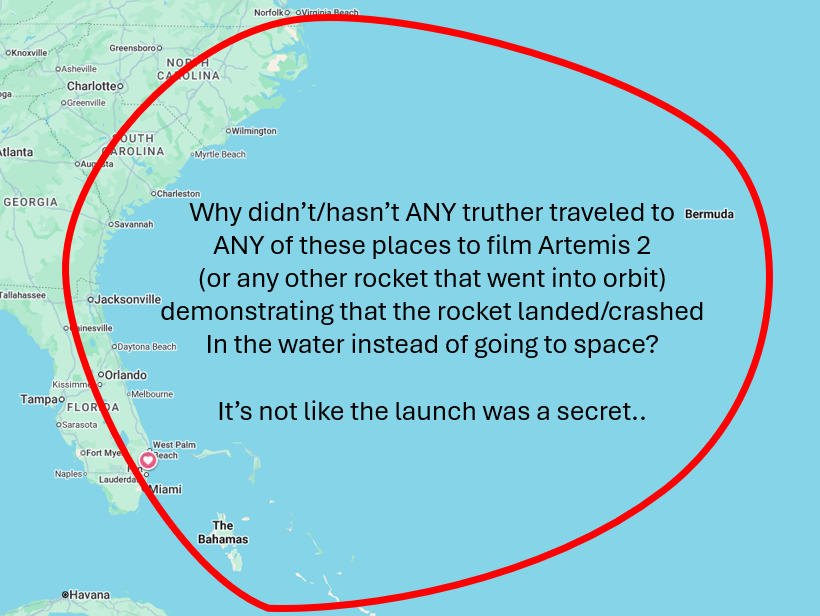

So. I’m curious.
Have any of you ever wondered if nobody else is real and that everything is an illusion?
English
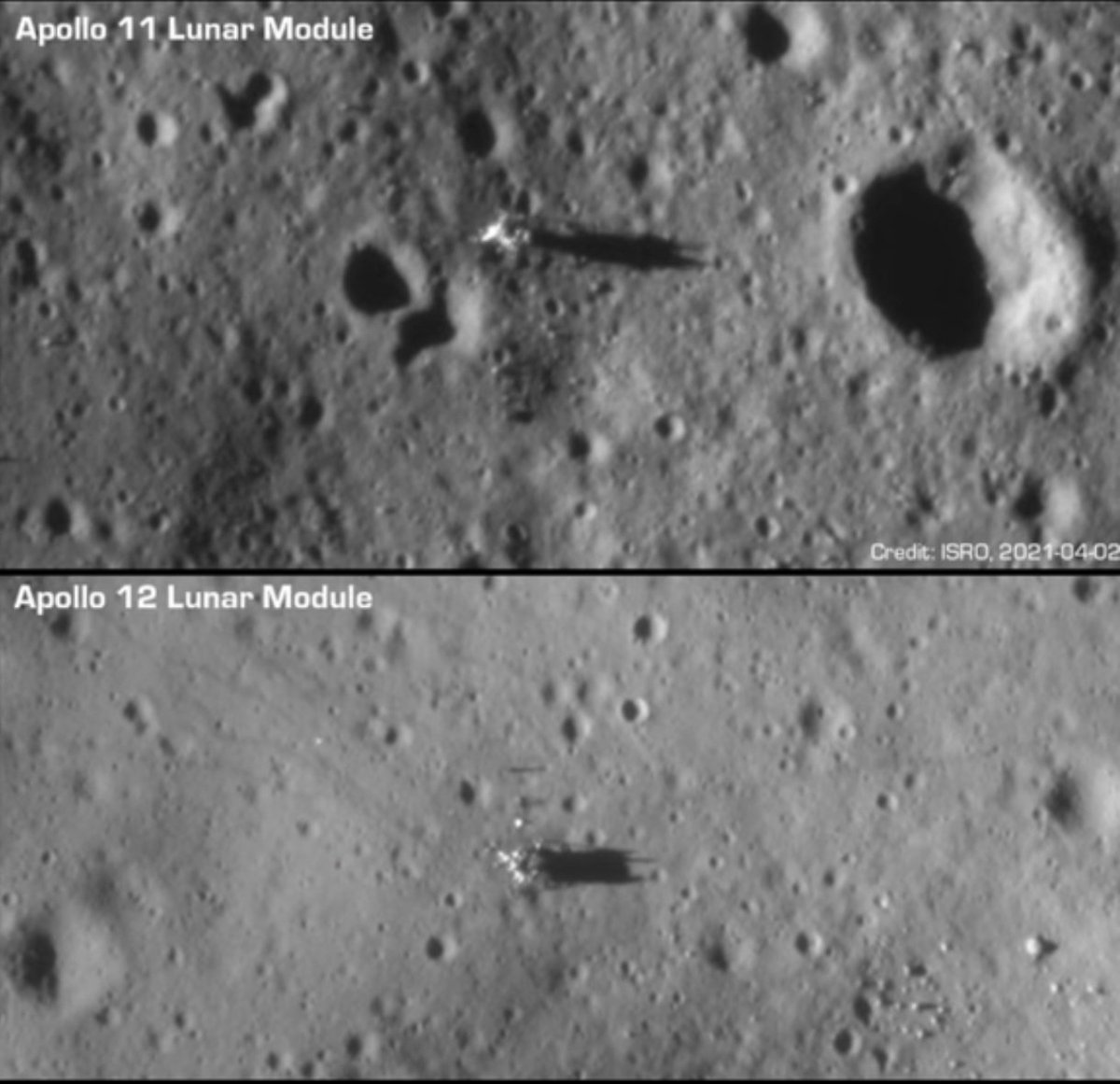
Dear No Moonies:
If we never landed on the moon what is your explanation for these images taken by the Chandrayaan-2 probe from the Indian Space Research Organisation (ISRO), when it mapped the lunar surface in detail in 2021?
English
@calbit_72 @2Swerdy You Really Have NO Understanding of Anything Scientific! That’s Ok; We Can’t All Be Intelligent!!
English

Tim Hoff retweetledi
What's going on these days in Thailand that we're not hearing about? World events are not black & white. There's more going on here than what meets the eye.
Below is a synopsis of important events happening in Thailand and the region that nobody is talking about.
The US is quietly pivoting a significant slice of its Southeast Asia engagement, especially with long-time treaty ally Thailand, around countering transnational organized crime, with a heavy emphasis on the explosion of pig-butchering/crypto-investment scam centers operating out of Cambodia, Myanmar, Laos and border areas.
This is not replacing traditional military/diplomatic ties; it is layering on top of them and using law enforcement and intelligence tools as a core predicate for aid, training, sanctions and even some military assistance.
While the Middle East events dominate headlines, the Thailand/SE Asia story is playing out in joint task-force war rooms, multibillion dollar crypto forfeitures, and targeted aid packages that get almost no media coverage.
Here’s what’s actually happening on the ground right now (as of early April 2026) based on public U.S. government, Thai, and regional reporting:
1. Military assistance? The U.S. recently delivered 17 armored Stryker vehicles to the Royal Thai Army. . Thai officials framed the transfer as part of a broader $100 million U.S. military-support package that also includes border-security enhancements and help modernizing Thai armored units. This is classic alliance maintenance, but it is increasingly justified in Thai and U.S. statements as helping Thailand secure its borders against the same criminal networks that run scam compounds just across the line in Myanmar and Cambodia.
2. FBI, Royal Thai Police integration in Bangkok is deep and operational The FBI’s Legal Attaché office (Legat Bangkok) has embedded personnel inside Thai led War Room task forces and the Royal Thai Police Anti-Cyber Scam Center (ACSC). They are running real-time information-sharing ops with the Thai police and other partners. Recent Joint Disruption Weeks have led to:
Mass account takedowns (150,000+ scam-related accounts disabled in one March 2026 operation).
Dozens of arrests inside Thailand.
Victim rescues and domain seizures targeting compounds in Myanmar (e.g., the Tai Chang network).
This is not advisory, U.S. agents are co-located and co-investigating with Thai counterparts on a daily basis.
3. The $15 billion Prince Group crypto seizure was the biggest law-enforcement headline almost nobody in the West noticed
In October 2025 the DOJ and FBI, under Director Kash Patel, announced the "largest asset forfeiture in U.S. history": roughly 127,000 Bitcoin, valued at ~$15 billion, tied to Cambodian tycoon Chen Zhi and his Prince Group conglomerate. Chen was indicted for running forced labor scam compounds that specialized in crypto pig-butchering fraud targeting Americans. Thailand itself later seized hundreds of millions in linked assets and issued arrest warrants. This is an ongoing enforcement wave, not a one-off.
The U.S. government explicitly links these networks to Chinese organized-crime syndicates and, in some FBI statements, to implicit Chinese Communist Party tolerance or facilitation. The scam centers are treated as a hybrid national-security threat: they generate billions in illicit revenue, traffic thousands of people, and fleece U.S. citizens. Estimated U.S. losses from SE Asia scams topped $10 billion in 2024 alone.
4. A recent US $45 million aid package is explicitly law-enforcement-heavy
In January 2026 the U.S. announced "$45 million" in new assistance split between Thailand and Cambodia to lock in the Trump-brokered Kuala Lumpur Peace Accords which ended 2025 border fighting between the two countries. Of that, $20 million is earmarked for joint Thai, Cambodian initiatives against transnational crime, online scams, and drug trafficking. The rest covers border stabilization, de-mining, and community recovery. Thai officials have highlighted the anti-scam component as a major win.
Why this feels like a shift, and why it’s flying under the radar:
Law-enforcement predicates are now a primary justification for engagement. Traditional alliance language such as “shared democratic values,” and “Indo-Pacific strategy” are still there, but the concrete deliverables: aid, vehicles, training, sanctions relief, are increasingly tied to measurable results on scams, trafficking, and cybercrime. This is pragmatic: scams directly hurt American voters and are a growth industry that destabilizes the region.
Thailand is the indispensable US partner. As a U.S. treaty ally with a functioning justice system and a long border with the scam hubs, Thailand has become the forward operating base for FBI and interagency efforts. The Thai government has declared anti-scam work a “national agenda” and is happy to host the Americans.
Media vacuum.
The Middle East statements about the war in Iran, Gaza, NATO drama, etc., get media attention. Meanwhile, a $15 billion crypto bust, embedded FBI, Thai police task forces, and armored-vehicle deliveries tied to counter-crime ops barely register outside niche security outlets.
In short, what we're seeing is the Trump administration’s foreign policy in practice in one theater: use every lever (military assistance, sanctions, FBI presence, targeted aid, diplomacy) to protect U.S. citizens from a massive, borderless criminal enterprise while reinforcing a key Southeast Asian ally. It’s less flashy than aircraft carriers in the Strait of Hormuz, but it’s producing tangible results such as arrests, seizures, rescued victims, and hardened borders, right now. The pundits may be focused on the Middle East, but the operational story in Thailand and the scam-center belt is where a big, quiet piece of U.S. foreign policy is actually being executed.

English


A proposal: Public flogging for anyone who denies the Moon landing.
English

Globe Earth is DERIVED from the sky...
It is a model based on reverse engineering of sky phenomena.
As such... YOU CANNOT use what the sky does... to justify Earth being a globe.
This would be circular referencing. (Begging the question logical fallacy.)
English

I'm an aerospace engineer.
I made this prediction over five years ago, and I'm still correct.
I'm not interested in non-engineers trying to explain to me how I'm wrong somehow.
Elon Musk is not an engineer.
Christopher David@Tazerface16
By the way, Starship will never make it into orbit.
English