Califlortex
10.5K posts

Califlortex
@califlortex
An Earth Experience. Commentary/Original content: Two D1 Athletes, Fathers, Businessmen. Say hello and follow. We will do the same immediately.
California, USA Katılım Ağustos 2023
1.1K Takip Edilen1K Takipçiler
Sabitlenmiş Tweet

Hey there, thank you for stopping by. Califlortex is a duo so don’t be surprised if we like or comment on our own posts. We are wanting to create a dialogue with epic individuals no matter what your story is. We believe in uplifting others, fighting back against negative vibes, and enjoying life. We enjoy 🏄🏻♂️ ⚽️ 📚 🏈 🍔 🙏 🎶 🧳 ⛷️ 🕺🏻 🍣 🎣 🏔️ 🚴 🥩 ❤️ ⚾️ 🏃🏻 🏀 🚙 .
—-> Follow us and we will follow you immediately. Stoked to see your posts.
English
Califlortex retweetledi

Astronaut Victor Glover with a phenomenal Easter message from the spaceship. Watch this. x.com/spacebrandonb/…
English

@BernieSanders So you're not the party of innovation and progression? That's what progress looks like bud. And you won't be able to stop it, adjust.
English
Califlortex retweetledi

@mmpadellan Anyone who's rich as hell or wealthy hates tariffs. We need access to cheap labor either from south of the border or Asian. Both is great for our pocket books but not right.
English

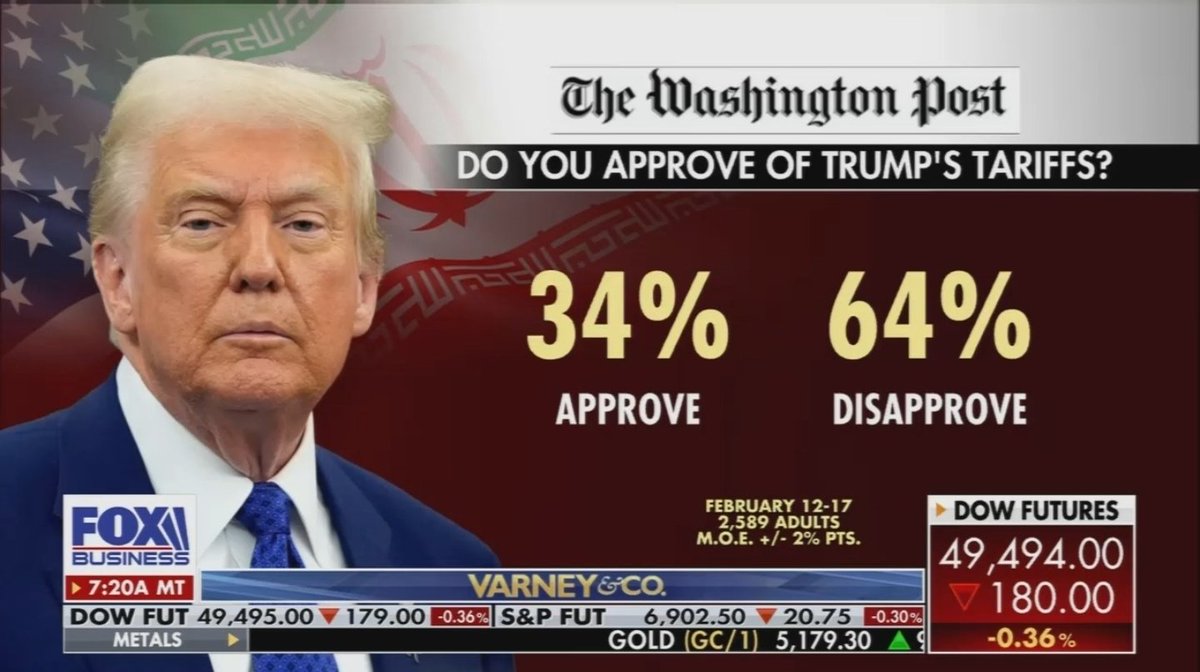
TWEEPS: Trump promised lower prices. Instead we got illegal tariffs acting like a national sales tax on working families, costing hundreds a year while billionaires get tax breaks. This is TrumpTariffChaos.
I need 1,000 fast RTs and replies using #TrumpTariffChaos.
Please and thank you! 🙏💪

English

@ReallyAmerican1 You need an ID for everything. This is another common sense policy. Democrats are digging a hole.
English

Has Skid Row Evolved Into a Modern-Day Concentration Camp?
The American Heritage Dictionary defines a concentration camp as: “A camp where persons are confined, usually without hearings and typically under harsh conditions, often as a result of their membership in a group which the government has identified as dangerous or undesirable.”
If we apply that definition to Skid Row—not as a rhetorical flourish, but as a test of function—Skid Row begins to resemble a modern, open-air containment regime for the unwanted.
1) “A camp where persons are confined.”
Skid Row is not a random cluster of poverty. It is a geographically bounded district—roughly 50 blocks—immediately east of downtown Los Angeles, commonly defined by 3rd Street to the north, 7th Street to the south, Main Street to the west, and Alameda to the east.
More importantly, it has long been discussed as a containment strategy—an “officially unofficial” zone where the human fallout of mental illness, addiction, and economic collapse is concentrated so the rest of the city can function without having to look at it. A camp does not require fences when policy, service placement, enforcement patterns, and political convenience operate like walls.
2) “Usually without hearings… typically under harsh conditions.”
Critics will say, “No one is locked in.” Technically, true. But confinement can be functional as much as physical.
When people are trapped by untreated mental illness, substance dependency, disability, the absence of safe alternatives, and the constant churn of survival—freedom becomes theoretical. Leaving requires stability, medication, a bed, identification, a caseworker who isn’t overloaded, and a system that actually works.
And the conditions are harsh in ways a developed country should never normalize. Unhoused people in Los Angeles are dying at a devastating rate—often summarized as an average of roughly five deaths per day across the county’s unhoused population. Even if that figure is not “Skid Row alone,” it underscores the moral horror of a system that can absorb ongoing mass death as background noise.
3) “Because of membership in a group identified as dangerous or undesirable.”
This is the most uncomfortable part: the group is not “criminals.” It is the visibly poor, the mentally ill, the addicted, the broken—people treated as a public nuisance rather than residents with enforceable dignity.
There is documented history of institutions treating Skid Row as a dumping ground—allegations in the mid-2000s that agencies and institutions were depositing homeless people there triggered investigations and public scrutiny. (Related reporting on “dumping” has also been widely covered in local outlets over the years.)
And even when officials say they are simply enforcing ordinances rather than targeting homeless people, outcomes matter more than intentions: if enforcement and services combine to funnel one stigmatized population into one bounded district, the result is containment.
The political incentive no one wants to say out loud
Here’s the part that turns Skid Row from a “failure” into something closer to a system:
Skid Row has become the anchor of a massive homelessness-response economy—contracts, grants, shelters, interim housing, “services,” consultants, and nonprofits—where the flow of public money can create political insulation rather than solutions.
This is not a partisan claim; it’s a structural one. But in California, where Democrats dominate most Los Angeles governance, that structure can produce a perception—fair or not—that a Democratic-aligned political ecosystem benefits from the status quo.
Recent scrutiny reinforces why people suspect a “pipeline” problem:
Federal prosecutors and local authorities have brought major fraud allegations involving homelessness funds—money intended to help people off the streets—diverted into personal enrichment.
Audits and accountability reporting have raised serious questions about oversight, conflicts, and how homelessness contracting is monitored.
And Skid Row has even been the setting for criminal election-related schemes targeting unhoused people—showing how vulnerable populations can be exploited politically.
So the argument is not, “One party is secretly paying people to stay.” The stronger, evidence-respecting argument is this:
When billions flow through a dense web of NGOs and contractors, political incentives can shift from “end homelessness” to “manage homelessness,” because management funds itself while resolution shuts down the revenue stream.
If any organization is donating to campaigns while simultaneously receiving large public contracts, the public deserves full transparency—because even the appearance of pay-to-play corrodes trust and encourages cynicism that human suffering is being monetized.
Conclusion: This is an open-air containment zone—and it must end
Skid Row is a moral indictment sitting in the middle of wealth and influence. It is a concentration of human misery that we have decided is tolerable, because it is politically convenient and geographically contained.
The question is no longer “Who is to blame?” The question is: How many more have to die before we admit that containment is not compassion?
Skid Row should be dismantled—not by scattering people and sweeping tents, but by replacing containment with housing, treatment, and enforceable accountability for every dollar spent. And if political actors—of any party—are benefiting from a homelessness-industrial complex, then the public must demand independent audits, contracting reforms, and strict conflict-of-interest enforcement.
California, wake up. The country, wake up. A civilized society does not warehouse its most vulnerable people in an open-air camp and call it policy.
English

🚨 @nickshirleyy just exposed the HORROR unfolding on California streets:
“Migrant children living in tents on Skid Row, the most densely populated homeless hellhole in CA.
Sickening… CHILDREN out there surrounded by drugs, needles, chaos, and danger”
English

Has Skid Row Evolved Into a Modern-Day Concentration Camp?
The American Heritage Dictionary defines a concentration camp as: “A camp where persons are confined, usually without hearings and typically under harsh conditions, often as a result of their membership in a group which the government has identified as dangerous or undesirable.”
If we apply that definition to Skid Row—not as a rhetorical flourish, but as a test of function—Skid Row begins to resemble a modern, open-air containment regime for the unwanted.
1) “A camp where persons are confined.”
Skid Row is not a random cluster of poverty. It is a geographically bounded district—roughly 50 blocks—immediately east of downtown Los Angeles, commonly defined by 3rd Street to the north, 7th Street to the south, Main Street to the west, and Alameda to the east.
More importantly, it has long been discussed as a containment strategy—an “officially unofficial” zone where the human fallout of mental illness, addiction, and economic collapse is concentrated so the rest of the city can function without having to look at it. A camp does not require fences when policy, service placement, enforcement patterns, and political convenience operate like walls.
2) “Usually without hearings… typically under harsh conditions.”
Critics will say, “No one is locked in.” Technically, true. But confinement can be functional as much as physical.
When people are trapped by untreated mental illness, substance dependency, disability, the absence of safe alternatives, and the constant churn of survival—freedom becomes theoretical. Leaving requires stability, medication, a bed, identification, a caseworker who isn’t overloaded, and a system that actually works.
And the conditions are harsh in ways a developed country should never normalize. Unhoused people in Los Angeles are dying at a devastating rate—often summarized as an average of roughly five deaths per day across the county’s unhoused population. Even if that figure is not “Skid Row alone,” it underscores the moral horror of a system that can absorb ongoing mass death as background noise.
3) “Because of membership in a group identified as dangerous or undesirable.”
This is the most uncomfortable part: the group is not “criminals.” It is the visibly poor, the mentally ill, the addicted, the broken—people treated as a public nuisance rather than residents with enforceable dignity.
There is documented history of institutions treating Skid Row as a dumping ground—allegations in the mid-2000s that agencies and institutions were depositing homeless people there triggered investigations and public scrutiny. (Related reporting on “dumping” has also been widely covered in local outlets over the years.)
And even when officials say they are simply enforcing ordinances rather than targeting homeless people, outcomes matter more than intentions: if enforcement and services combine to funnel one stigmatized population into one bounded district, the result is containment.
The political incentive no one wants to say out loud
Here’s the part that turns Skid Row from a “failure” into something closer to a system:
Skid Row has become the anchor of a massive homelessness-response economy—contracts, grants, shelters, interim housing, “services,” consultants, and nonprofits—where the flow of public money can create political insulation rather than solutions.
This is not a partisan claim; it’s a structural one. But in California, where Democrats dominate most Los Angeles governance, that structure can produce a perception—fair or not—that a Democratic-aligned political ecosystem benefits from the status quo.
Recent scrutiny reinforces why people suspect a “pipeline” problem:
Federal prosecutors and local authorities have brought major fraud allegations involving homelessness funds—money intended to help people off the streets—diverted into personal enrichment.
Audits and accountability reporting have raised serious questions about oversight, conflicts, and how homelessness contracting is monitored.
And Skid Row has even been the setting for criminal election-related schemes targeting unhoused people—showing how vulnerable populations can be exploited politically.
So the argument is not, “One party is secretly paying people to stay.” The stronger, evidence-respecting argument is this:
When billions flow through a dense web of NGOs and contractors, political incentives can shift from “end homelessness” to “manage homelessness,” because management funds itself while resolution shuts down the revenue stream.
If any organization is donating to campaigns while simultaneously receiving large public contracts, the public deserves full transparency—because even the appearance of pay-to-play corrodes trust and encourages cynicism that human suffering is being monetized.
Conclusion: This is an open-air containment zone—and it must end
Skid Row is a moral indictment sitting in the middle of wealth and influence. It is a concentration of human misery that we have decided is tolerable, because it is politically convenient and geographically contained.
The question is no longer “Who is to blame?” The question is: How many more have to die before we admit that containment is not compassion?
Skid Row should be dismantled—not by scattering people and sweeping tents, but by replacing containment with housing, treatment, and enforceable accountability for every dollar spent. And if political actors—of any party—are benefiting from a homelessness-industrial complex, then the public must demand independent audits, contracting reforms, and strict conflict-of-interest enforcement.
California, wake up. The country, wake up. A civilized society does not warehouse its most vulnerable people in an open-air camp and call it policy.
English
Califlortex retweetledi