Ian Campbell

788 posts

Ian Campbell

Ian Campbell

@Campbellian_

Digital Editor @MLInstitute

Katılım Ekim 2020
656 Takip Edilen219 Takipçiler
Ian Campbell retweetledi
Adam Zivo
Adam Zivo@AdamZivo·
We absolutely *should* stigmatize addicts who pass out on playgrounds where small children play. Your movement’s push to “destigmatize” drug use has been a social disaster.
long live empathy@longlivempathy

@AdamZivo This platform, and most current dominant media narratives, provide abundant confirmation that stigma against drug use (and particularly those who use illicit drugs) is alive and well.

English

21
87
959
26.5K
Ian Campbell retweetledi
Macdonald-Laurier Institute
The West offers the “ideal environment” for an organization like the Muslim Brotherhood to carry out its operations “because we are extremely tolerant,” says Lorenzo Vidino, an expert on the Islamist organization. The Muslim Brotherhood has inspired or spawned some of the world's most dangerous terrorist organizations. Yet its goals, strategy, structure, and financing remain poorly understood – even by many of the world's leading national security and intelligence agencies. The Brotherhood’s long-term goal is the Islamification of society. The West’s tolerance offers fertile grounds for its activities to remain unchecked – creating a national security blind spot within Western democracies. One of the world’s leading experts on the Brotherhood, Vidino is director of the Program on Extremism at The George Washington University @gwupoe. He joins Inside Policy Talks to share his research conducted over the past 25 years. “In the West, they could operate freely,” says Vidino. “They can fundraise, they can open mosques, they can disseminate the propaganda, they can carry out all the social, religious, and political activities and fundraising activities.” On the podcast, he explains in detail to MLI’s @DrCaseyBabb how the Brotherhood carries out activities like raising revenues. He says this involves a combination of receiving money from the Middle East, conducting ventures like real estate businesses in the West, and obtaining funds directly from unsuspecting Western governments. Watch the full episode: youtu.be/phGWAqgimLA
YouTube video
YouTube
English
2
23
31
2.1K
Ian Campbell retweetledi
Macdonald-Laurier Institute
Macdonald-Laurier Institute@MLInstitute·
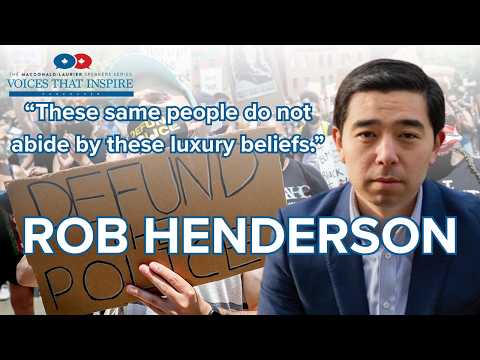
We were thrilled to welcome author and political commentator Rob Henderson—who famously coined the term “luxury beliefs”—as our latest guest at the Macdonald-Laurier Institute's Voices That Inspire speaker series in Vancouver. In a live conversation with MLI Managing Director @brianleecrowley, Henderson discussed how today’s elites use luxury beliefs to elicit approval from their social circle—espousing fashionable views like “defund the police” or suggesting that marriage is an outdated, patriarchal institution—while hypocritically not following these beliefs in their own lives. Holding these views “separates you from the unwashed masses, the unenlightened rubes,” says @robkhenderson. “And yet, when you look at the behaviours of these same people, they do not abide by these luxury beliefs.” Watch the full conversation here: youtu.be/HTh6PsHyyU8
YouTube video
YouTube
English
0
18
67
49.8K
Ian Campbell retweetledi
Alex Deane
Alex Deane@ajcdeane·
@LibyaLiberty No, I meant what I said. Jews. Like those stabbed today. I don’t think that the stabber ascertained their views before stabbing them.
English
6
18
478
11K
Ian Campbell retweetledi
Brivael Le Pogam
Brivael Le Pogam@brivael·
Hello Julia, sans aucune ironie, c'est top que tu prennes le temps de te renseigner. Mais le problème quand on lit Marx aujourd'hui, c'est qu'on prend pour acquis sa prémisse de départ, alors qu'elle a été démontée scientifiquement il y a plus de 150 ans. Toute la pensée de Marx repose sur la théorie de la valeur-travail. L'idée que la valeur d'un bien vient de la quantité de travail nécessaire pour le produire. Si tu acceptes cette prémisse, alors oui, tout son raisonnement tient. Le capitaliste "vole" la plus-value du travailleur, l'exploitation est mathématique, la révolution est inévitable. Sauf qu'en 1871, trois économistes (Menger en Autriche, Jevons en Angleterre, Walras en Suisse) découvrent indépendamment la même chose : la valeur n'est pas objective, elle est subjective et marginale. Un verre d'eau dans le désert vaut une fortune. Le même verre à côté d'une rivière ne vaut rien. Le travail incorporé est identique. Donc le travail ne détermine pas la valeur. C'est le consommateur qui valorise un bien selon son utilité marginale dans un contexte donné. Exemple concret : tu peux passer 1000 heures à tricoter un pull moche que personne ne veut. Selon Marx, ce pull a énormément de valeur (beaucoup de travail incorporé). Selon la réalité, il ne vaut rien. Parce que personne n'en veut. À l'inverse, Bernard Arnault crée des milliards de valeur non pas parce qu'il "exploite" mais parce qu'il a su anticiper et organiser des désirs humains à grande échelle. La valeur est créée par la coordination, pas extraite par le vol. Cette découverte (la révolution marginaliste) a invalidé tout l'édifice marxiste. Pas pour des raisons idéologiques, pour des raisons scientifiques. C'est pour ça que plus aucun département d'économie sérieux au monde n'enseigne Marx comme un cadre d'analyse valide. On l'enseigne en histoire de la pensée. Maintenant, le truc important. Si ton intention en lisant Marx c'est d'aider les pauvres (c'est une intention noble), alors tu vas être surprise par ce qui suit. Regarde les chiffres de la Banque mondiale. En 1820, 90% de l'humanité vivait dans l'extrême pauvreté. Aujourd'hui, moins de 9%. Cette chute historique ne s'est PAS produite dans les pays qui ont appliqué Marx. Elle s'est produite dans les pays qui ont libéralisé leur économie. Chine post-1978, Vietnam post-1986, Inde post-1991, Pologne post-1989. À chaque fois qu'un pays libéralise, des centaines de millions de gens sortent de la pauvreté en une génération. À chaque fois qu'un pays applique Marx (URSS, Cambodge, Corée du Nord, Venezuela), c'est la famine et les goulags. Ce n'est pas une opinion, c'est l'expérience la plus massive jamais menée en sciences sociales. Plusieurs milliards de cobayes humains, sur un siècle. Donc paradoxalement, si tu aimes vraiment les pauvres, la position la plus cohérente n'est pas d'être marxiste. C'est d'être pour la liberté économique. Parce que c'est empiriquement la seule chose qui a jamais sorti massivement les gens de la misère. Pour creuser, je te recommande trois lectures qui vont changer ta vision : "La Loi" de Frédéric Bastiat (court, lumineux, gratuit en ligne) "La Route de la Servitude" de Hayek "Économie en une leçon" de Henry Hazlitt Bonne lecture, et vraiment chapeau de chercher à comprendre plutôt que de rester dans tes certitudes. C'est rare.
Julia ひ@lifeimitatlife

Depuis tout à l'heure je me renseigne sur les idées de Karl Marx sincèrement je n'arrive pas à comprendre comment on peut être pour le capitalisme et même plus généralement être de droite

Français
1.5K
11.1K
48.8K
3.3M
Ian Campbell retweetledi
Dan Robertson
Dan Robertson@pdrobertson·
On the first day of the Battle of the Somme, 800 (overwhelmingly “white heterosexual”) men of the Royal Newfoundland Regiment went over the top. 68 answered roll call the next morning. Now their male descendants can’t work at NL’s only university which was named in their honour.
National Post@nationalpost

'Five active job postings by Memorial University explicitly bar applications from heterosexual white men' nationalpost.com/opinion/univer…

English
351
4.5K
22.2K
735.5K
Ian Campbell retweetledi
Macdonald-Laurier Institute
Macdonald-Laurier Institute@MLInstitute·
“The whole of the West views Islam … through a Western cultural prism,” and that’s a problem, says British author and commentator Melanie Phillips. With terrorism, extremism, and antisemitism surging throughout the West, people are looking for answers. They’re trying to understand why our leaders and institutions are failing to stand up to this threat. Phillips @MelanieLatest, one of the clearest voices sounding the alarm about these issues, joins Inside Policy Talks to share her assessment of the problem. As a journalist, Phillips has championed traditional values in the culture war for more than three decades. She is the author of numerous books, including her 2006 best-seller Londonistan, about the British establishment's capitulation to Islamist aggression. Her latest book, Fighting the Hate: A Handbook for Jews Under Siege, was released earlier this year. On the podcast, she tells @DrCaseyBabb, director of The Promised Land at MLI, that the West’s “ignorance” of Islam is one of the key factors leading to the extremist threat going unchecked. “They think (Islam) is a private matter between the individual and the Almighty,” says Phillips. “I'm sure that is part of the religion of Islam, but Islam is also a political project. … If you're a pious Muslim, you have a religious duty to Islamize the non-Islamic world.” “The West can't get their heads around that at all.” She says Western governments must show leadership by standing up for their own cultures. “I don't think it's coincidence that governments that have gone down this bad road of not defending their culture properly have descended into … a mire of absolute incompetence,” says Phillips. “They can no longer keep the show on the road.” Watch the full episode: youtu.be/Y72zLgm24OI
YouTube video
YouTube
English
18
118
404
17.4K
Ian Campbell retweetledi
Howard Anglin
Howard Anglin@howardanglin·
The new K'ómoks Treaty announced by the BC NDP And the federal Liberals yesterday embeds UNDRIP into a constitutional treaty. This is a new trend, following the Kitselas and Kitsumkalum treaties. Making the interpretation of a constitutional treaty subject to UNDRIP introduces a permanent source of ambiguity and will be the basis of future uncertainty and disagreement - exactly what treaties are supposed to prevent. The agreement also commits to giving the 238 eligible voting members of the K'ómoks an effective veto over all resource development in that territory, which is also not how older treaties worked. Meanwhile, other First Nations are protesting the agreement because it affects land over which they also claim s35 rights. The K'ómoks Treaty punts that problem by saying the government will still have a duty to consult them. Treaties are supposed to settle rights. This new template is setting up new rights battles.
CPAC@CPAC_TV

LIVE: B.C. Premier David Eby announces K'ómoks Treaty Act ➡️ow.ly/2zex50YJ3Jo EN DIRECT : Le PM de la C.-B., David Eby, annonce la loi sur le traité K’ómoks ➡️ow.ly/3Psv50YJ3Jk #cdnpoli | #bcpoli

English
7
34
96
6.1K
Ian Campbell retweetledi
Stephen Gordon
Stephen Gordon@stephenfgordon·
Any competent economist can explain why this idea is dumber than a sack of hammers. Avi Lewis doesn't care, because he knows - as all Canadian economists do - that Canadian economics journalism sucks ass. He knows he will never be called out on this idiocy.
Scott Robertson@sarobertson_

Avi Lewis: "We have a very clear plan to cut grocery prices by 30-40% for Canadians at a cost to the federal government ... We'd subsidize it. It costs $350m to launch and $300m a year, which is one-half of 1% of the current defence budget."

English
57
40
333
24.4K
Ian Campbell retweetledi
Jamie Sarkonak
Jamie Sarkonak@sarkonakj·
Biological male criminals identifying as trans aren't just being kept in women's prisons. For the ones too mentally ill for prison, they're being kept in women's psych wards, too. I wrote about two instances where this happened at CAMH. My column: nationalpost.com/opinion/jamie-…
English
11
99
287
4.9K
Ian Campbell retweetledi
Lisa Bildy
Lisa Bildy@LDBildy·
The "rule of law" is one of those concepts, like "public interest", that has been bent toward a progressive worldview. I think what the CBA learned this week (if they are capable of introspection) is that a large swath of the public believes (correctly) that the rule of law requires equal treatment of every person under and before the law, regardless of their immutable qualities, heredity, or station in life. That is the opposite of equity, which has been embraced by legal regulators, law schools, courts and bar associations across the country. Their answer, when challenged, is usually to call for more public education and cracking down on "misinformation". That's not in the public interest -- it's in the interest of protecting a radical ideology that belongs in the dustbin of history.
Carson Jerema@CarsonJerema

The CBA has quite a lot of power in Canada's legal system, which it uses to advance a progressive political agenda unrelated to the rule of law. nationalpost.com/opinion/np-vie… via @nationalpost

English
13
75
285
6.3K
Ian Campbell retweetledi
Matt Gurney
Matt Gurney@mattgurney·
So I used an online, for-pay service, got help, got a prescription, went to a 24-hour-a-day pharmacy, got it filled, and fixed the problem. All it took was totally bypassing the Ontario system and spending my own cash. 3/3
English
27
7
469
18.4K
Ian Campbell retweetledi
Tristin Hopper
Tristin Hopper@TristinHopper·
The very fact that Canadian courts are so butthurt by @sarkonakj's mild criticism of them is some of the best evidence I've seen for why we absolutely need to keep criticizing our courts. If they they didn't think they were getting away with something, they'd be much more zen about critics.
English
32
209
1.3K
22.3K
Ian Campbell retweetledi
National Post
National Post@nationalpost·
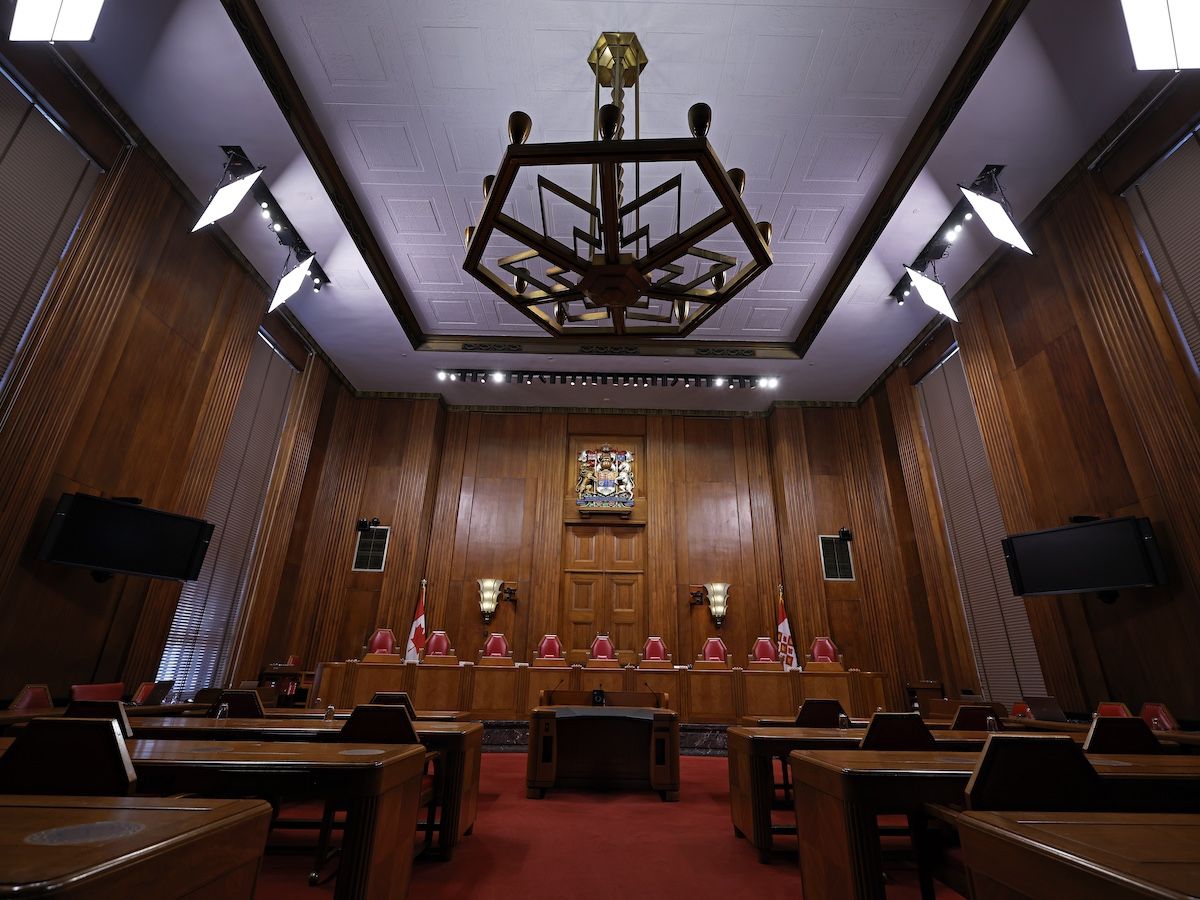
By seeking to have limits put on the notwithstanding clause, “what the Canadian government is asking the Supreme Court of Canada to do is to amend the constitution without democratic consent,’ Zhu writes nationalpost.com/opinion/yuan-y…
National Post tweet media
English
21
103
261
7.8K
Ian Campbell retweetledi
Kerry Sun
Kerry Sun@SunKerry·
Various actors are promoting the increasingly common trope that reasoned criticisms of court rulings amount to attacks on the “rule of law” and “judicial independence”. These attempts to weaponize the rule of law against public scrutiny of judicial decisions should be resisted.
Jamie Sarkonak@sarkonakj

The CBA is scolding an unnamed journalist for criticizing a judge, calling it a "crude effort at undermining public confidence in the judiciary." Since this is clearly about me: I will not apologize for my column about Justice Faisal Mirza two weeks ago.

English
8
41
208
5K
Ian Campbell retweetledi
Jamie Sarkonak
Jamie Sarkonak@sarkonakj·
The CBA is scolding an unnamed journalist for criticizing a judge, calling it a "crude effort at undermining public confidence in the judiciary." Since this is clearly about me: I will not apologize for my column about Justice Faisal Mirza two weeks ago.
Jamie Sarkonak tweet media
Canadian Bar Assoc.@CBA_News

CBA President Bianca Kratt, K.C., warns that recent media commentary questioning the impartiality of a sitting judge of the Ontario Superior Court risks undermining public confidence in the judiciary. 🔗 Read the full statement: bit.ly/4sQV4Pi

English
187
802
2.9K
101.3K
Ian Campbell retweetledi
Carson Jerema
Carson Jerema@CarsonJerema·
If writing accurately about what the courts are doing risks undermining confidence in the judiciary, the problem just might be the judges, not the people who are reporting what the judges are doing ...
Canadian Bar Assoc.@CBA_News

CBA President Bianca Kratt, K.C., warns that recent media commentary questioning the impartiality of a sitting judge of the Ontario Superior Court risks undermining public confidence in the judiciary. 🔗 Read the full statement: bit.ly/4sQV4Pi

English
15
198
922
36K
Ian Campbell retweetledi
Reuben Rodriguez
Reuben Rodriguez@ReubenR80027912·
Truly incredible stuff here. This is such an egregious error for the A section of the NYT (not a typo, genuinely not knowing what NATO stands for) that it should lead every piece on the decline in journalism
Sasha Issenberg@sissenberg

Does the @nytimes know what NATO stands for?

English
421
4K
41K
2.1M