
Cesca
363 posts


Cesca
@cescacentini
Building TheModernRenaissance | obsessed with everything that can be learned and forever damned by the fallacy of being human
Milan, Lombardy Katılım Mayıs 2022
370 Takip Edilen153 Takipçiler
Cesca retweetledi

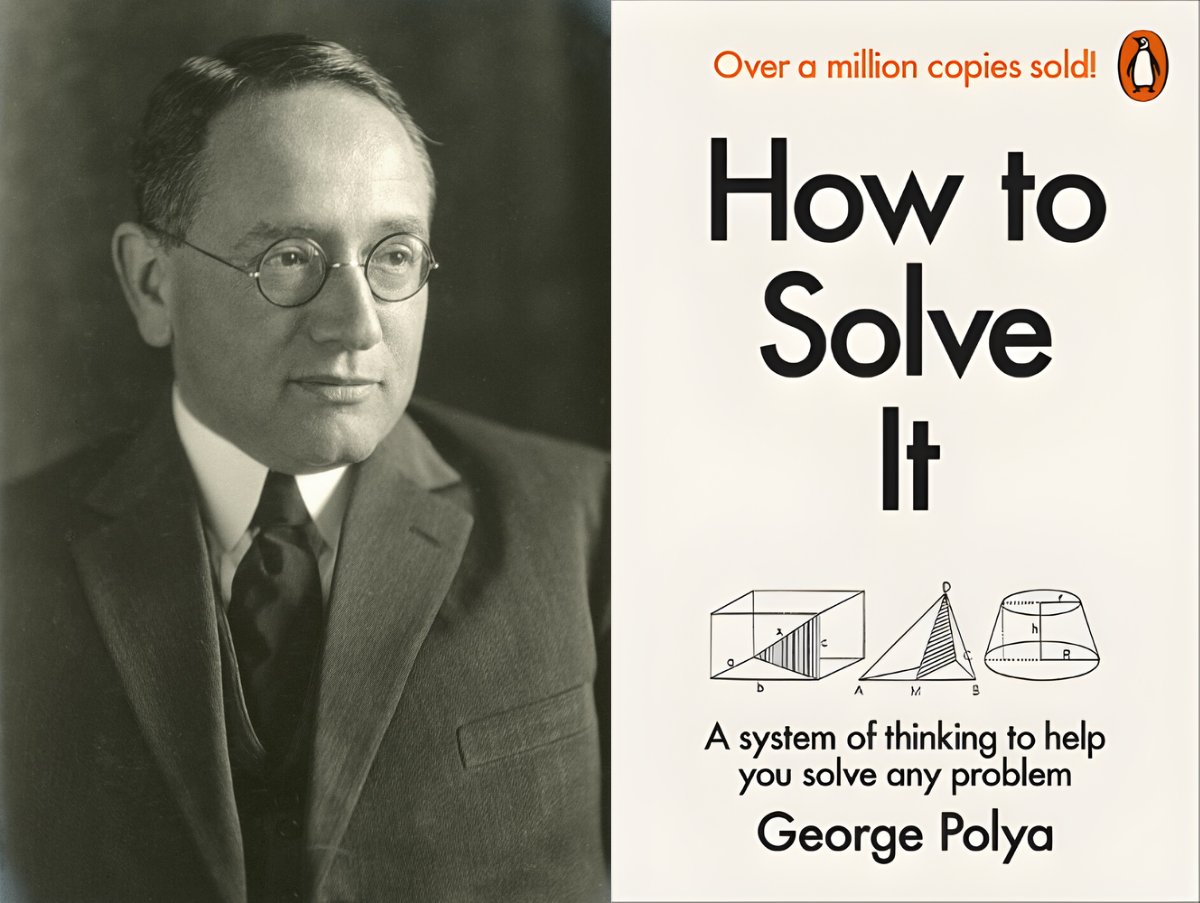
A Stanford mathematician spent 40 years watching brilliant students freeze in front of hard problems.
Not because they lacked intelligence. Because nobody had ever taught them what to do before they started solving.
His name is George Pólya, and the book he wrote in 1945 has never gone out of print. It has sold over a million copies. Marvin Minsky, the man who built the first neural network machine at MIT, said publicly that everyone should know this work. Engineers, mathematicians, and computer scientists treat it as scripture.
Most people have never heard of it.
Here is the framework buried inside it that changed how I think about every hard problem I face.
Pólya watched the same failure repeat itself across decades of students. A problem would be presented. The student would stare at it for a moment, feel the first wave of anxiety, and immediately start calculating. Not because calculating was the right next step. Because calculating felt like doing something, and doing something felt better than sitting with the discomfort of not knowing what to do.
The calculation was almost always wrong. Not because the student lacked the skill to execute it. Because they had not yet understood what they were being asked.
Pólya called this the most neglected step in all of problem solving, and he spent the rest of his career trying to make people take it seriously.
Step one is to understand the problem. Not skim it. Not assume you know what it is asking because you have seen something similar before. Understand it. Completely. He gave students a specific set of questions to force this: What is the unknown? What are the given conditions? Can you draw a figure? Can you restate the problem in your own words without looking at it?
That last one is the filter. If you cannot restate a problem in your own words, you do not understand it. You have only read it.
Most people skip this entirely and wonder why they get stuck.
Step two is to make a plan. Not to execute. To plan. Pólya documented every heuristic he could observe in successful problem solvers, and one pattern appeared more than any other. When a problem feels impossible, find a simpler version of it and solve that first. Not because the simpler version is the goal. Because solving it gives you a foothold, a method, a partial structure you can carry back to the original problem and build from.
He phrased it with precision: if you cannot solve the proposed problem, try first to solve some related problem. Could you imagine a more accessible related problem?
That question alone is worth more than most problem-solving courses.
Step three is to carry out the plan. This is the step everyone thinks is the whole game. It is not. It is the third of four. And Pólya spent the least time on it because it is the most obvious. Once you understand the problem and have a plan, execution is mostly patience.
Step four is the one almost nobody does. Look back. Not to check the arithmetic. To ask a different set of questions entirely. Can you verify the result by a different method? Can you use this result or this method to solve a different problem? What would you do differently next time?
This is where the real learning lives and almost no one goes there.
The look-back step is not about the problem you just solved. It is about building a library of methods that transfers to the next problem, and the one after that. Every expert problem solver Pólya studied had this habit. Every struggling student skipped directly from the answer to the next question on the page, carrying nothing forward, starting from zero every time.
Pólya's deepest insight was not a technique. It was a diagnosis.
The reason most intelligent people feel bad at problem solving is not that they lack the ability to reason. It is that they conflate understanding a problem with having read it. They conflate having a method with starting to work. They conflate getting an answer with having learned anything.
These are not the same things. They never were.
The students who get genuinely good at hard problems are not the ones who practice more. They are the ones who slow down at the beginning and the end, at the two moments every instinct tells them to rush.
The problem is almost always not as hard as it looks at the start.
You just haven't understood it yet.
English
Cesca retweetledi

Ex-MIT researcher Isaak Freeman quits his PhD and drops the 50,000 H100 GPU roadmap to emulate a full human brain.
He mapped the entire path from 302-neuron worm to 86-billion-neuron human with connectomics costs now at 100 dollars per neuron and data acquisition via advanced microscopes as the only blocker left - digital humans just got a realistic timeline.
pdf.isaak.net/thesis

English
Cesca retweetledi


Our @osvllc 2026 Fellowship and Grants Program now has 5,619 applications from 166 countries!
Application deadline is April 30, 2026, so you still have time to apply.
Do it.
osvfellowship.com/map
English
@dariusdan spongebob, the girl from apothecary diaries, spiderman, giorgia meloni
English

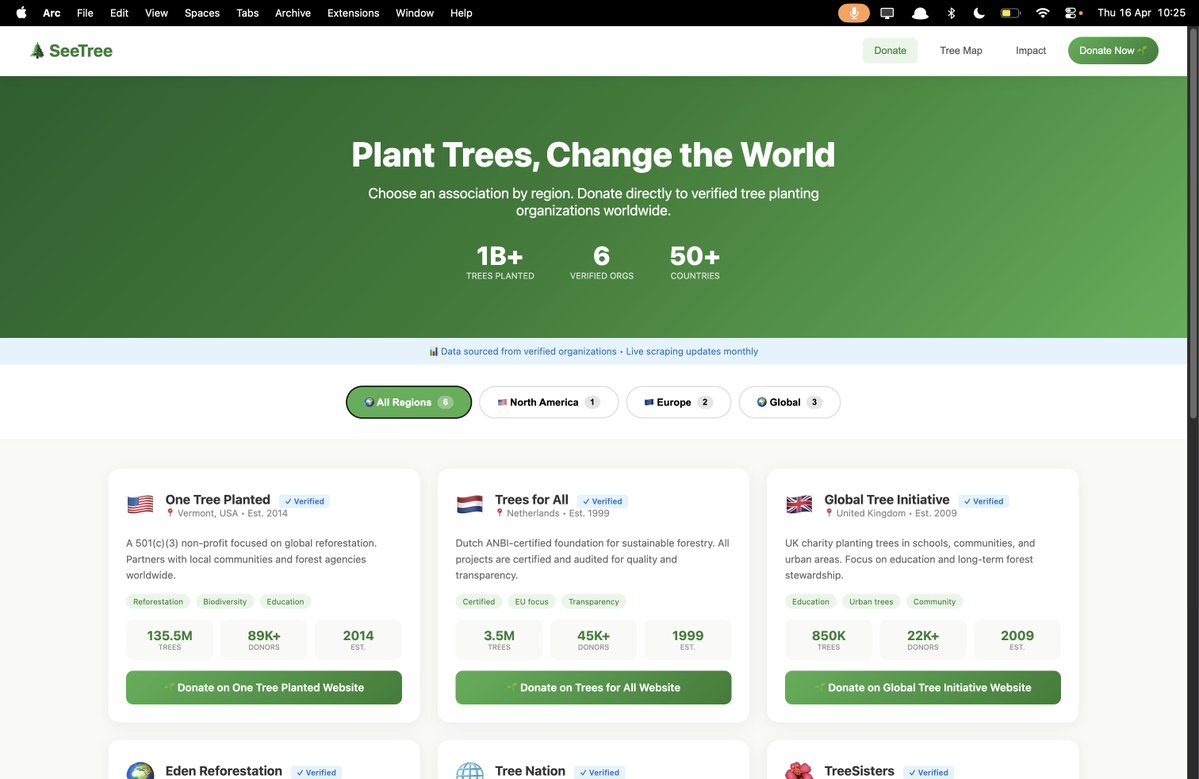
I'm very proud of my collection of tiny pfp characters. Custom requests, all sold, all hand-drawn.🤍
Zero AI involved.
Drop who should I draw next?👀

English

Cesca retweetledi

We’ve opened surveys for our Pop-up City Research Initiative.
We’re building a public-good, community-informed research report on pop-up cities, using systematic methods to make cross-case comparisons. Whether you participated in a pop-up city as an attendee, operator, or partner, you can find your role-based survey here: thouartofficial.com/research/popup…
Candidate focal cases include Zuzalu, Edge Esmeralda, Network School v2, Burning Man, and others. Each focal case receives a dedicated case profile, cross-case comparisons, and positioning on the report’s landscape map. The final public good report will feature 8–12 focal cases from an initial candidate pool of 15, which may expand; cases that do not meet minimum data thresholds will be included as comparator references rather than full profiles.
More about the initiative: thouartofficial.com/research/popup…
This is independent research. No affiliation or endorsement is implied for any referenced candidate case. Our analysis draws on surveys plus formal interviews to date with 71 stakeholders across 48 pop-up cities and relevant organisations, and this dataset is still growing. We also conduct on-the-ground fieldwork at select pop-up cities, with additional interviews ongoing.
Questions, feedback, suggestions, support, or bug reports: research@thouartofficial.com
cc @denisalepadatu_ @thouartstudio @crecimientoar @James_of_Arc @burningman @EdgeEsmeralda @formacity @infinitacity @Mars_College @ns @themu_xyz @proofofretreat @_zanzalu @ZuBerlinCity @zuitzerland @zucity_japan
English
Cesca retweetledi

become a generalist.
specialization makes you efficient. generalization makes you dangerous.
what it actually means:
• learn across domains → math, physics, software, economics, biology. patterns repeat across fields.
• connect ideas → innovation happens at the intersection, not inside silos.
• adapt fast → when one field shifts, you don’t collapse, you pivot.
• see systems → specialists see parts, generalists see the whole
• build end-to-end → from idea → design → implementation → delivery
the world rewards specialists in stable environments.
it rewards generalists when things are changing.
right now, everything is changing.
don’t just go deep.
go wide, then stack depth where it matters.

English
Cesca retweetledi

A short afternoon nap restores brain neuroplasticity.

English
Cesca retweetledi

A Chinese student created a website that maps British Museum artifacts to their countries of origin.
English
Cesca retweetledi
My dear front-end developers (and anyone who’s interested in the future of interfaces):
I have crawled through depths of hell to bring you, for the foreseeable years, one of the more important foundational pieces of UI engineering (if not in implementation then certainly at least in concept):
Fast, accurate and comprehensive userland text measurement algorithm in pure TypeScript, usable for laying out entire web pages without CSS, bypassing DOM measurements and reflow
English
Cesca retweetledi


Cesca retweetledi
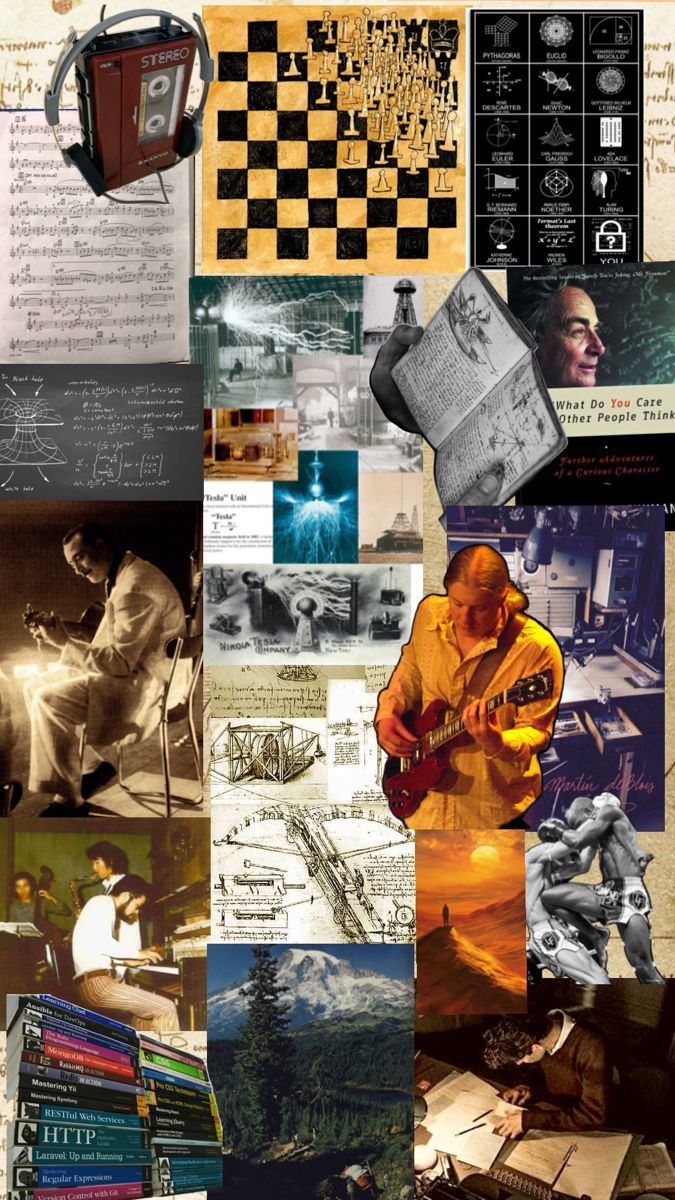
how to become a modern polymath:
1. build strong foundations
math
physics
computation
systems thinking
these are the meta-tools.
2. learn how to learn
reading
note systems
self-study
experimentation
knowledge compounds only if you can absorb it fast.
3. work across domains
biology
engineering
economics
history
design
innovation happens at the borders.
4. build things
code
hardware
models
tools
thinking becomes real only when it meets reality.
5. integrate knowledge
connect ideas from different fields into systems.
a polymath is not someone who knows everything.
it is someone who can connect everything.
English
Cesca retweetledi
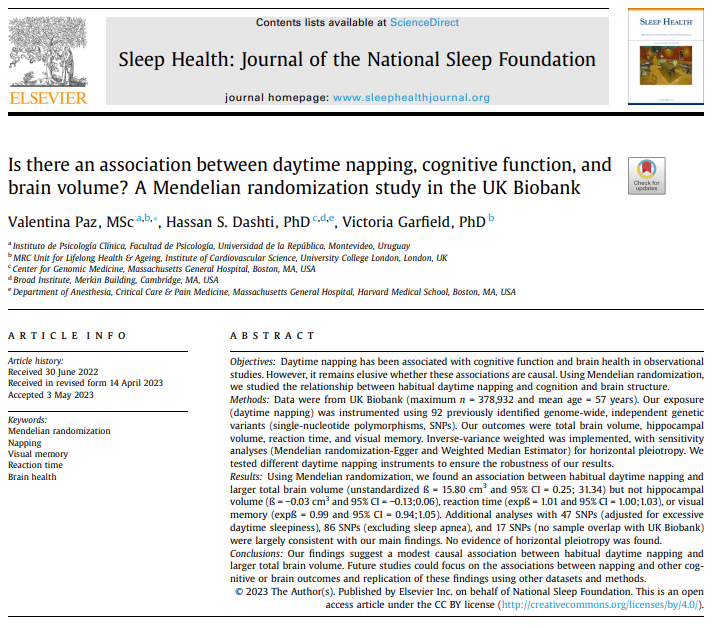
Daytime napping is associated with a larger total brain volume.
Pop Base@PopBase
Today is National Napping Day.
English