Sabitlenmiş Tweet
Chadi El
68 posts


Chadi El retweetledi

Re7 Labs - Incident Update | Resolv / USR
We are aware of the @ResolvLabs exploit that enabled a malicious actor to mint undercollateralized USR. Our flagship strategy - mRe7YIELD - has zero exposure to any of today’s attacks and continues to be unaffected by severe exploits and adverse market conditions.
𝗧𝗶𝗺𝗲𝗹𝗶𝗻𝗲 𝗢𝗳 𝗘𝘃𝗲𝗻𝘁𝘀
Our internal monitoring systems flagged this in real time, and at 2.46am UTC we were among the first to notify partners, platforms and competitors across DeFi to enable swift risk mitigation. Shout out to @HypernativeLabs who continue to be an excellent partner in real time risk management.
𝗢𝘂𝘁 𝗼𝗳 𝘁𝗵𝗲 𝟭𝟴𝟰 𝗺𝗮𝗿𝗸𝗲𝘁𝘀 𝘄𝗲 𝗰𝘂𝗿𝗮𝘁𝗲, 𝗼𝘂𝗿 𝗲𝘅𝗽𝗼𝘀𝘂𝗿𝗲 𝗶𝘀 𝗶𝘀𝗼𝗹𝗮𝘁𝗲𝗱 𝘁𝗼 𝗼𝗻𝗹𝘆 𝟮 𝘀𝗺𝗮𝗹𝗹 𝗺𝗮𝗿𝗸𝗲𝘁𝘀 𝗼𝗻 𝗠𝗼𝗿𝗽𝗵𝗼 𝘄𝗵𝗲𝗿𝗲 𝗨𝗦𝗥 𝗶𝘀 𝗹𝗶𝘀𝘁𝗲𝗱 𝗮𝘀 𝗰𝗼𝗹𝗹𝗮𝘁𝗲𝗿𝗮𝗹.
At 3am UTC we initiated a series of tx's on the Re7 USDC vault on Morpho Base that set caps to 0, flow caps to 0, and removed the impacted markets from the supply queue.
At 3:02 am UTC we initiated a series of tx's on the Re7 USDC Core vault on Morpho mainnet that set caps to 0, flow caps to 0, and removed the impacted markets from the supply queue.
𝗠𝗼𝗿𝗽𝗵𝗼 𝗗𝗼𝗻𝗮𝘁𝗶𝗼𝗻 𝗔𝘁𝘁𝗮𝗰𝗸
In relation to basescan.org/tx/0xc8acd3f95…, a donation attack on Morpho was identified - also flagged in real time by our alerting infrastructure. This involved abuse of Morpho's supplyOnBehalf mechanism, which allowed the attacker to force-allocate USDC into the USR/USDC market by supplying directly to Morpho on behalf of a vault address. This bypasses Morpho’s vault supply queue and supply cap controls entirely, as those restrictions govern vault-level allocation but do not restrict direct calls to the underlying Morpho contract.
We have currently mitigated this by removing all markets from the supply queue, which we think prevents further exploitation of this attack vector. We immediately disclosed the attack to Morpho - including the steps we took to contain it - and they have since advised curators to take equivalent protective action.
We are actively monitoring the situation and are in contact with all relevant parties to contain further exposure across DeFi.
English
Chadi El retweetledi

Damian from Starknet:
"Re7 is a crypto hedge fund that's fully regulated under the FCA. They have one of the longest and best performing DeFi Delta Neutral Funds. This fund has been in operation since five years. They earn 10% to 20% depending on which year it is. We went live with them on a new BTC yield fund. You get the same protection as an investor. One of their strategies is getting yield on their BTC on Starknet."
English
Chadi El retweetledi

Chadi El retweetledi

1/ Time flies… This week marks 4 years since we launched @Re7Capital . Back then, we held a simple belief that #DeFi would become the backbone of tomorrow’s capital markets. We set out to be pioneers who lead financiers in this uncharted frontier.
English
Chadi El retweetledi
Re7 X World Liberty Financial
Re7 is proud to announce its joining forces with @worldlibertyfi to support the launch of USD1, an institution-ready stablecoin designed for composability, transparency & scale.
Risk-curated by @Re7Labs.
Backed by U.S. Treasuries.
Custodied by @BitGo.
Now live on @BNBCHAIN

English
Chadi El retweetledi

Chadi El retweetledi
Chadi El retweetledi
The next TikTok might be onchain.
We're backing the builders making that happen.
Big thanks to the @TheBlock__ for the feature and to our strategic partner @LC
The Block@TheBlockCo
EXCLUSIVE: Re7 Capital bets on SocialFi with a $10 million fund targeting around 30 startups theblock.co/post/352562/re…
English
Chadi El retweetledi
1/
Less than 6 days.
That’s all it took for the @eulerfinance vaults curated by @Re7Labs to hit $100M+ in TVL on @avax.
Michael Bentley@euler_mab
Euler's launch on @avax melted faces this week crossing 100m in just a few days! Going to be jumping on with the Avant team this week to help explore some of Euler's most loved features and explain avUSD's role in the ecosystem.
English
Chadi El retweetledi
1/3 Introducing mRe7YIELD by Re7 on @MidasRWA!
Risk-managed by @Re7Capital, mRe7YIELD is a delta-neutral DeFi yield strategy designed to maintain balanced market exposure while generating returns on stablecoin holdings.
x.com/MidasRWA/statu…
Midas@MidasRWA
💠 mRE7YIELD - Risk-managed by @Re7Labs Re7 Capital is an award-winning research-driven digital asset investment firm specialising in DeFi, alpha generation and risk management. 🔷 APY: ~18.52% Invest here: midas.app/mre7yield
English
Chadi El retweetledi

Chadi El retweetledi
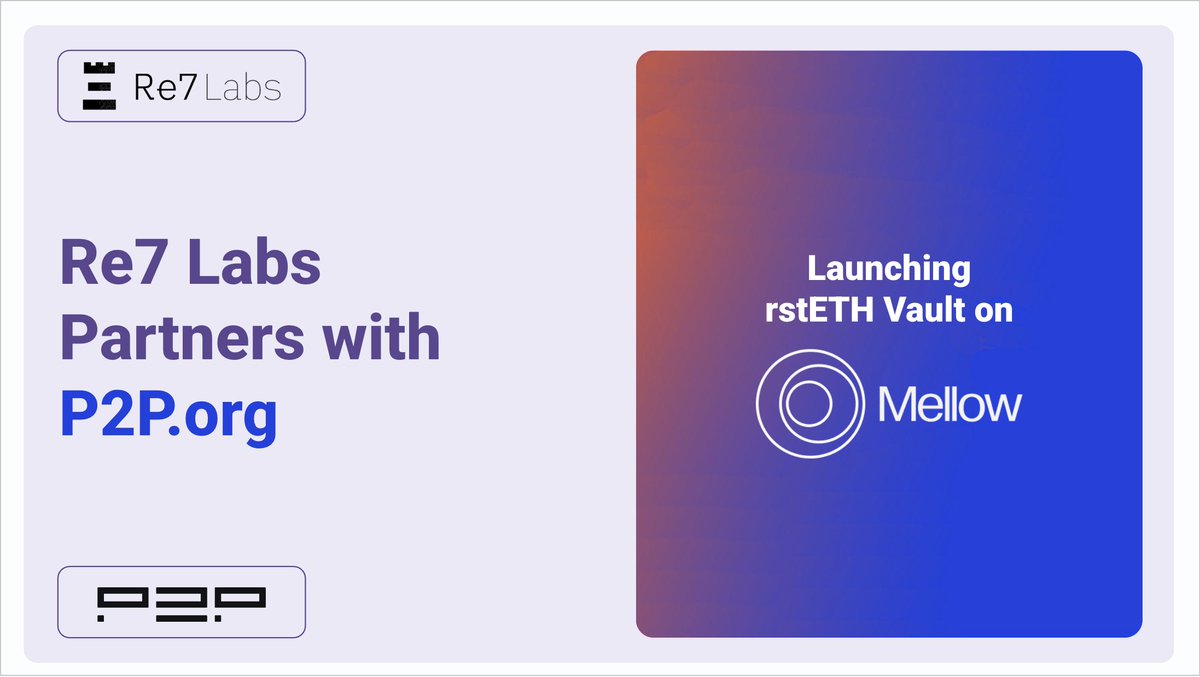
🚀 Re7 Labs x P2P.org: A Powerhouse Partnership Elevating rstETH Staking 🚀
1/ We're excited to work with @P2Pvalidator - an institutional-grade infrastructure provider and one of the leading names in non-custodial staking.
This partnership marks a big step forward for the staking ecosystem! 🚀
English
Chadi El retweetledi

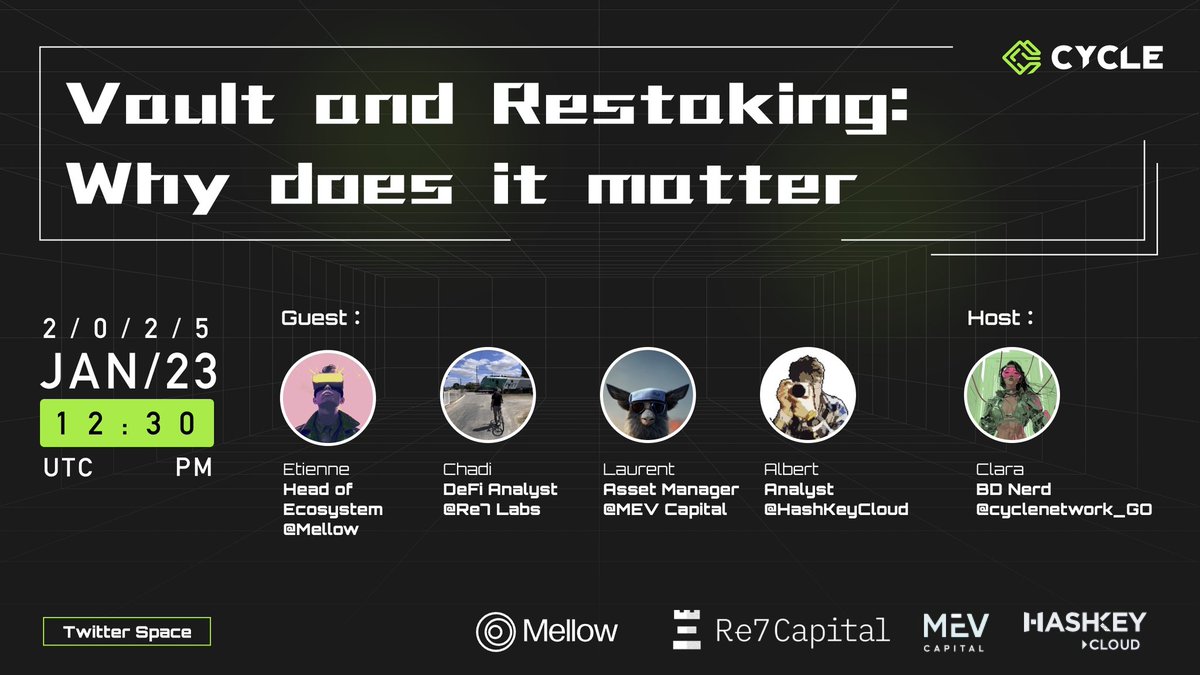
🚀Ready to dive deep into Vault and Restaking: Why does it matter
🕙Date & Time: Jan 23th 12:30pm UTC
🙋Guest Speakers:
✨@etn1337, Head Of Ecosystem @mellowprotocol
✨@chadi_adnani, DeFi Analyst @Re7Capital
✨@JarvisglobalP, Asset Manager @MEVCapital
✨@ChenHashkey, Analyst @HashKeyCloud
🎙️Host:
✨@ClaraChengGo, Head of BD Asia, @cyclenetwork_GO
📅 Set your reminder now! Don't miss out!
x.com/i/spaces/1vOxw…
English

This is a great explainer thread about why Usual/USD0++ depegged yesterday. The @MoonwellDeFi Flagship vaults will never supply into risky collateral markets like this because they already have 2-digit APYs with only safe collateral: ETH, cbBTC, cbETH, and stETH.
Which vault curators supplied into USD0++ and now have potential losses to socialize across vault depositors?
MEV Capital
Smokehouse
Gauntlet
Lead Block
Relend
Steakhouse
RE7 Capital
Risk management is critically important in this space, and it seems like every cycle we rediscover the hard lessons. Usual is basically just UST/LUNA with extra steps.
Dive into the data in @BlockAnalitica's dashboard here: morpho.blockanalitica.com

mytwogweis 🌳@mytwogweis
Why USD0++'s Depeg was Imminent I used to work on Morgan Stanley’s high-yield bond desk, so I’ve seen my fair share of distressed assets and quirky mechanisms. "High-yield" sounds fancy, but let’s call it what it is: trading the shittiest of shit bonds. Think defaults waiting to happen—the gutter trash of the credit world. What’s happening with USD0++ feels like déjà vu. Let me clarify: I’m not saying it’s trash—it’s collateralized by very safe assets, but let's say there are definitely some high-yield elements at play, along with a whole lot of tranching. As of writing, USD0++ is trading at $0.94, a 6% depeg from its supposed $1 peg on DEXes. Why? After the protocol's announcement of its “dual exit” option, hundreds of millions of USD0++ got dumped by DeFi traders, leaving its largest Curve pool wildly imbalanced. What is USD0 / USD0++? USD0 is a simple stablecoin. The real point of this entire game is to convert it to USD0++, the staked version. USD0++ is where the action happens because it earns you $USUAL tokens (we’ll get to those in a bit). But here’s the kicker: Holding USD0++ locks you in for four years—a detail many DeFi farmers glossed over. In essence, USD0++ functions as a zero-coupon bond—you lock up your money and earn nothing until the end of the term. If you expect 4% annually over four years, the fair value of USD0++ today should be around $0.855. This means you’d buy it at $0.855, hold it for four years, and redeem it at $1 for a risk-free 4% return. Before today’s announcement, you could redeem USD0++ 1:1. Now, that’s all changing. The Dual Exit Details for USD0++ Here’s how the new exit mechanisms work: 1. Conditional Exit: Redeem USD0++ at 1:1, but you forfeit part of your accrued yields. This “Early Unstaking” option launches next week - I'm guessing you'll need to burn $USUAL to exit. 2. Unconditional Exit: Redeem at a floor price, currently $0.87, which will gradually rise to $1 over four years. This option is for those who want to keep their upfront rewards. For those still HODLing their USD0++ There's a trade-off: 1. Choose the speculative strategy by staking USD0 to USD0++ to farm USUAL tokens and chase those headline-grabbing 60% yields. 2. Choose the Base Interest Guarantee option by locking up USD0++ for four years to earn the “real” risk-free yield of 4% annually, payable only at the end. But why lock up USD0++ for four years when you could buy liquid treasury-backed ETFs from BlackRock, exit anytime, with higher liquidity? DeFi users are farmers, and those shiny 60% yields are what they’re after. Option 1 was the only ‘real’ option—at least, until today’s announcement. The key takeaway: USD0++ is now being recalibrated to reflect its true nature and value: a zero-coupon bond plus a $USUAL token emission mechanism. But there are more layers to this. USUAL... USUALx... USUAL* Right now, the protocol keeps all the revenue from treasury bills, while participants are left with what looks like an ever-emitting token. There’s a fee-switch coming, though. Soon, 100% of the interest revenue from treasury bills will go to USUAL stakers, who will earn another token called USUALx (with a 10% fee for unstaking). It gets even more complicated: early investors receive a token called USUAL* (or USUAL Star), entitling them to 10% of all USUAL emissions and 33% of penalty fees. Lots of Moving Pieces Here’s how to read it: 1. USD0 Holders: surrendering your interest yield to use the stablecoin, effectively financing this game for the other counterparties—USD0++, USUAL holders, USUALx holders, and USUAL* holders. 2. USD0++ holders: surrendering your interest yield for 4 years, effectively financing this game by betting that $USUAL tokens emitted will be worth more than the interest yield. 3. USUAL / USUALx stakers: betting on the USUAL token to rise / capturing the interest yield surrendered by USD0 and USD0++ holders. 4. USUAL* holders: get 10% of all $USUAL emissions, as well as 33% of penalty fees, receiving a percentage of the value chain. Just my two gweis, and as always, DYOR
English
Access the complete newsletter 👉 us10.campaign-archive.com/?u=74bc6532eb6…
English
4⃣ theblock.co/post/312561/gr…
Grayscale Investments has launched the "Grayscale Avalanche Trust," providing accredited investors with exposure to Avalanche's AVAX token. This new offering aims to expand access to the growing crypto ecosystem.
English