Sabitlenmiş Tweet
C 🌙
6K posts


C 🌙
@chandithamelia
🇬🇾 x Punjabi
South East, England Katılım Aralık 2019
1.1K Takip Edilen3.4K Takipçiler

C 🌙 retweetledi

According to psychology, being the "good, low maintenance" child isn't a sign of innate maturity. It is a survival strategy known as parentification or fawning. You subconsciously recognized that your caregivers were too emotionally overwhelmed, volatile, or fragile to handle your age appropriate needs. You swallowed your own childhood and became invisible just to keep the peace
quote@itsmubashi
Hit me with the harshest reality truth.
English
C 🌙 retweetledi

How come these men never think to sell their own bodies?
Why is it always women having to pay the price with their bodies, and souls for both the lack of protection from their fathers and the degenerate freaks willing to violate innocent girls.
Visegrád 24@visegrad24
The BBC portrays an indebted Afghan father selling his 7-year-old twin daughters into sexual slavery with adult men as a man who is forced to make difficult choices 🇦🇫
English
Why do people like this have kids? If you know you don’t have the means to look after a child then simply don’t have them, vile.
Visegrád 24@visegrad24
The BBC portrays an indebted Afghan father selling his 7-year-old twin daughters into sexual slavery with adult men as a man who is forced to make difficult choices 🇦🇫
English
C 🌙 retweetledi

C 🌙 retweetledi

C 🌙 retweetledi
C 🌙 retweetledi

Una generación entera tuvimos que renunciar a eventos como nuestra graduación para que estos viejos hijos de puta pudieran vivir un par de años más y así lo pagan
Bertrand Ndongo@bertrandmyd
Mientras tanto, un evacuado quitándose la mascarilla
Español
C 🌙 retweetledi




C 🌙 retweetledi


C 🌙 retweetledi

Impressive how healthy he looks for a 100 year old man. Doesn’t have a semblance of frailty. Wonder what his dietary/physical lifestyle is.
Netflix UK & Ireland@NetflixUK
100 years old and still the coolest person alive. Happy birthday, Sir David!
English
C 🌙 retweetledi

C 🌙 retweetledi

Waking up in another country/island on your bday 10/10. Will always recommend.
English
C 🌙 retweetledi

C 🌙 retweetledi

Birds chirp an hour before dawn and the frequency opens up the stomata of the plants to breathe. The frequency is common in classical music. Play classical to your plants for MUCH larger crops. Its called sonicbloom.
Ifediche@esther_stan
Teach me something new .
English
C 🌙 retweetledi

I have a friend who moves quietly. You don’t know she’s relocating until the boxes are packed. You don’t know she bought a car until she pulls up in it. Her relationship? Never a group discussion. What’s hers stays hers.
I used to think that meant she wasn’t open, like real friendship required sharing everything. But I get it now. It’s not distance, it’s protection. It’s privacy. It’s peace. Not everything needs an audience, and not every bond needs full access to be real.
English
C 🌙 retweetledi

Travel. As much as you can. As far as you can. As long as you can. Life's not meant to be lived in one place.
English
C 🌙 retweetledi

March 11, 2011. 2:46 PM.
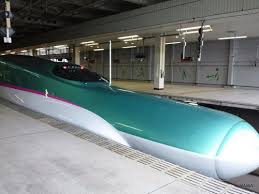
33 Shinkansen bullet trains were running through northern Japan.
Several were moving at 300 km/h.
Then the earthquake hit.
Magnitude 9.1. The 4th largest ever recorded.
Epicenter: off the Sanriku coast, 130 km ESE of the Oshika Peninsula.
Every single train stopped safely.
Zero passenger injuries.
Here's what happened.
12 to 22 seconds before the violent shaking reached the tracks,
a seismometer on Kinkazan — a small island off Japan's Pacific coast —
detected the quake and sent a signal inland.
The signal traveled faster than the earthquake itself.
Power to the tracks was cut.
Every train in the zone automatically braked.
By the time the ground started shaking violently,
the trains were already slowing down.
One empty test train derailed at Sendai Station.
Not a single train in service derailed.
The Shinkansen has been running since 1964.
In 60 years, it has killed zero passengers —
not in a collision, not in a derailment.
Zero.
Most people stop reading here.
The real story starts now.
Japan built this safety system in two layers, for two different problems.
First: UrEDAS — the Urgent Earthquake Detection and Alarm System.
Invented in the early 1980s, deployed on the Tokaido Shinkansen in 1992.
The world's first operational P-wave warning system for trains.
Its seismometers sit along the coast, listening for earthquakes out at sea.
When one hits, the system reads the first 3 seconds of P-wave motion,
estimates the magnitude and location,
and sends a warning inland to the tracks.
Second: Compact UrEDAS.
Built after the 1995 Kobe earthquake,
which struck directly beneath a city with almost no warning.
When the earthquake happens directly under the train,
there's no time to calculate anything.
So Compact UrEDAS asks one question:
"Is this shaking dangerous?"
It answers in about 1 second.
Both systems end the same way.
They cut the power.
The Shinkansen is built so that the moment it loses power,
emergency brakes engage automatically.
The driver makes no decision.
There's no time to.
A 300 km/h Shinkansen takes about 90 seconds to stop.
No warning system in the world buys you 90 seconds.
The goal isn't to stop the train before the earthquake arrives.
The goal is for the train to be slowing down when it does.
This is the part foreign coverage misses.
The goal isn't to prevent the accident.
The goal is to make the accident survivable.
In-service Shinkansen have derailed twice in 60 years.
2004. Niigata Chuetsu earthquake.
A trackside Compact UrEDAS detected the P-wave.
Power was cut one second later. Emergency brakes engaged 1.5 seconds after that.
But the earthquake was directly beneath the train,
which was moving at 204 km/h.
8 of 10 cars derailed.
The train skidded 1.6 km before stopping.
154 passengers on board.
Zero injuries.
2022. M7.4 off Fukushima.
A Shinkansen traveling at 320 km/h detected the first tremor and began braking.
As the train decelerated toward a stop,
a second, stronger quake (M7.4) hit.
16 of the 17 cars derailed.
75 passengers. 3 crew.
Zero deaths. No serious injuries.
Two other derailments involved empty trains.
2011, Sendai Station, a test train.
2016, Kumamoto earthquake, a transit train.
In every case, the warning system had already cut the power
before the shaking reached its peak.
The system does not stop earthquakes.
It does not always stop derailments.
It just makes sure the earthquake arrives after the train is already slow.
Japan's earthquakes and Japan's trains grew up in the same country,
watching the same ground.
Somewhere in Japan right now,
a Shinkansen is moving at 300 kilometers per hour.
Far away, on a quiet coast,
a sensor is listening to the rock beneath it.
It has been listening since 1992.
Every time it was needed, it worked.
English
C 🌙 retweetledi