Hobo

2K posts

Hobo banner
Hobo

Hobo

@chariotcel

Ħ

Katılım Eylül 2021
335 Takip Edilen472 Takipçiler
Hobo
Hobo@chariotcel·
@rais512 There’s no record of him being subdued in that period. Firuz Jang did open negotiations with him which led to rapproachement with the Peacock Throne, but he was clearly negotiating from a position of power considering he was made a mansabdars of 5000/5000 zat and sowars
English
0
0
0
22
رئیس
رئیس@rais512·
@chariotcel That's a different campaign. The one I posted about is of 1705/06, after he had been appointed fawjdār of Dahāmūnī.
English
1
0
0
48
Hobo
Hobo@chariotcel·
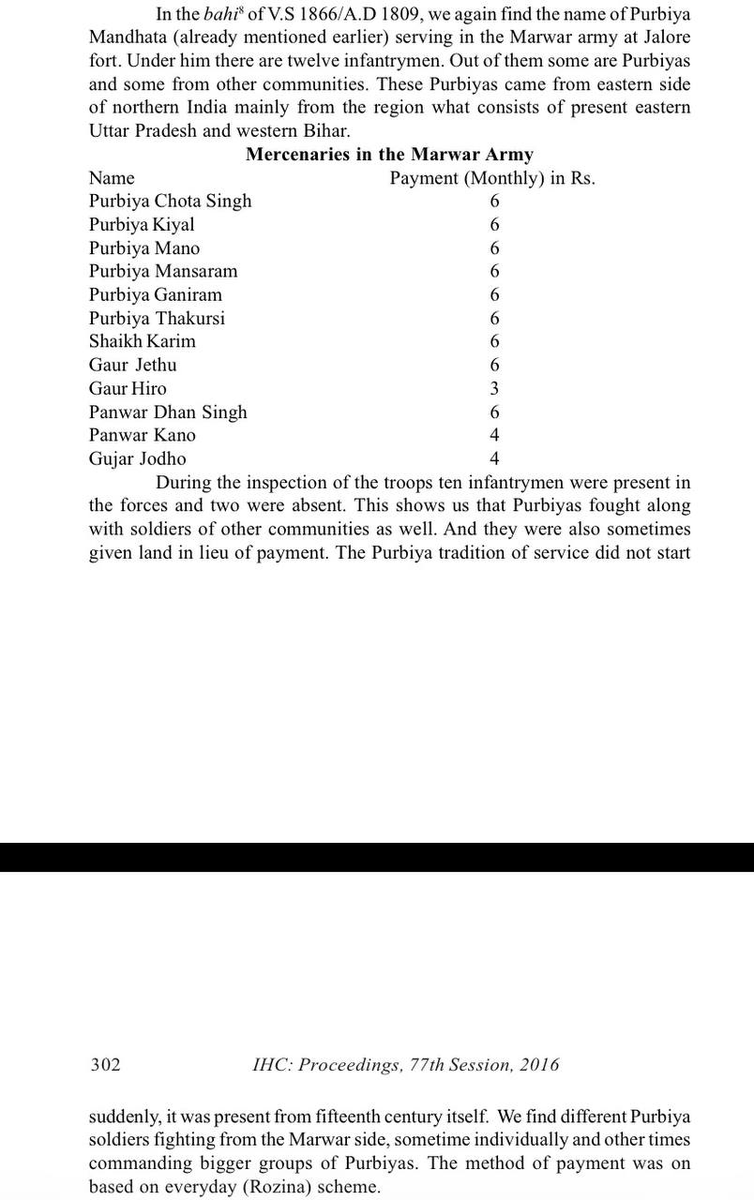
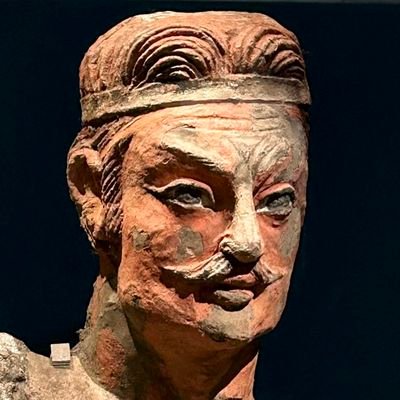
@Indrauta_ @prithvii Here we have a record of some of purbia infantry from a payroll. In addition, a community of Kanyakubja Brahmins had settled in Jodhpur, descendants of mercenaries who fought in Vijay Singh’s infantry battalions.They were later trusted with guarding the zenana & treasury
Hobo tweet mediaHobo tweet media
English
0
0
2
67
~
~@Indrauta_·
@prithvii Apart from Purabiya Rathores, there were at least two Bais patayats as well and one of them fell in the battle of Dharmat (so did one of the Purabiya Rathores).
English
2
0
9
280
dado daddy
dado daddy@prithvii·
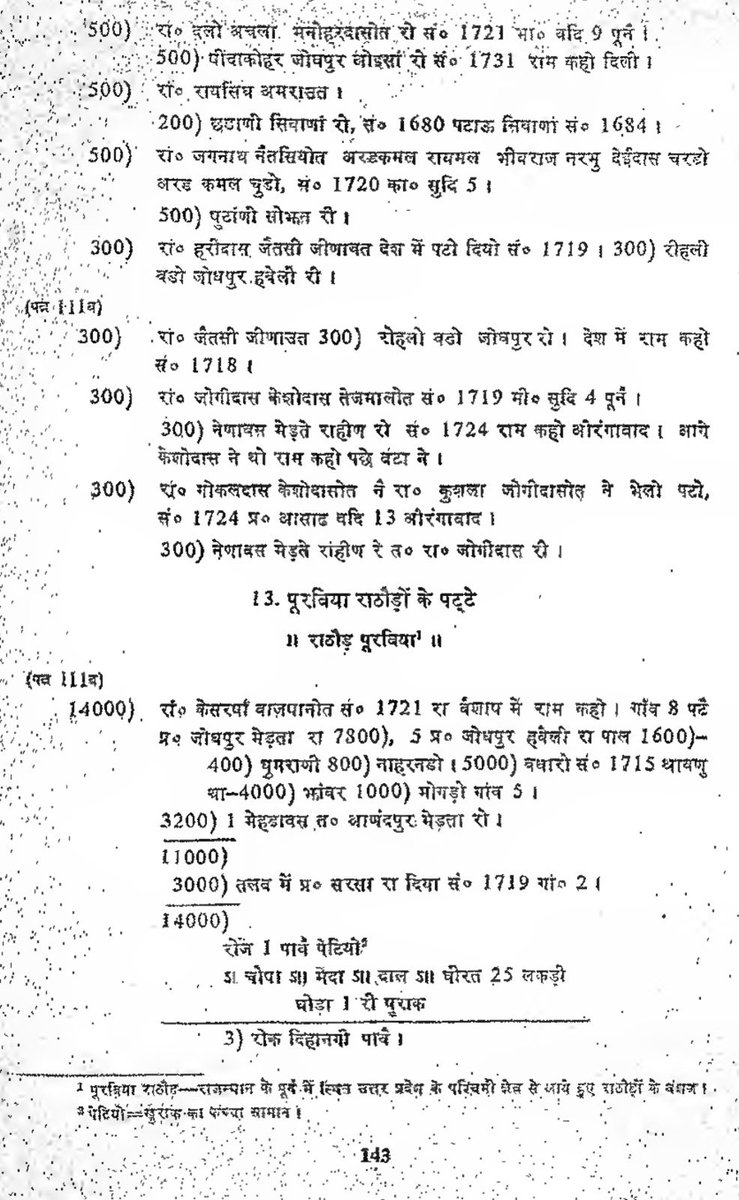
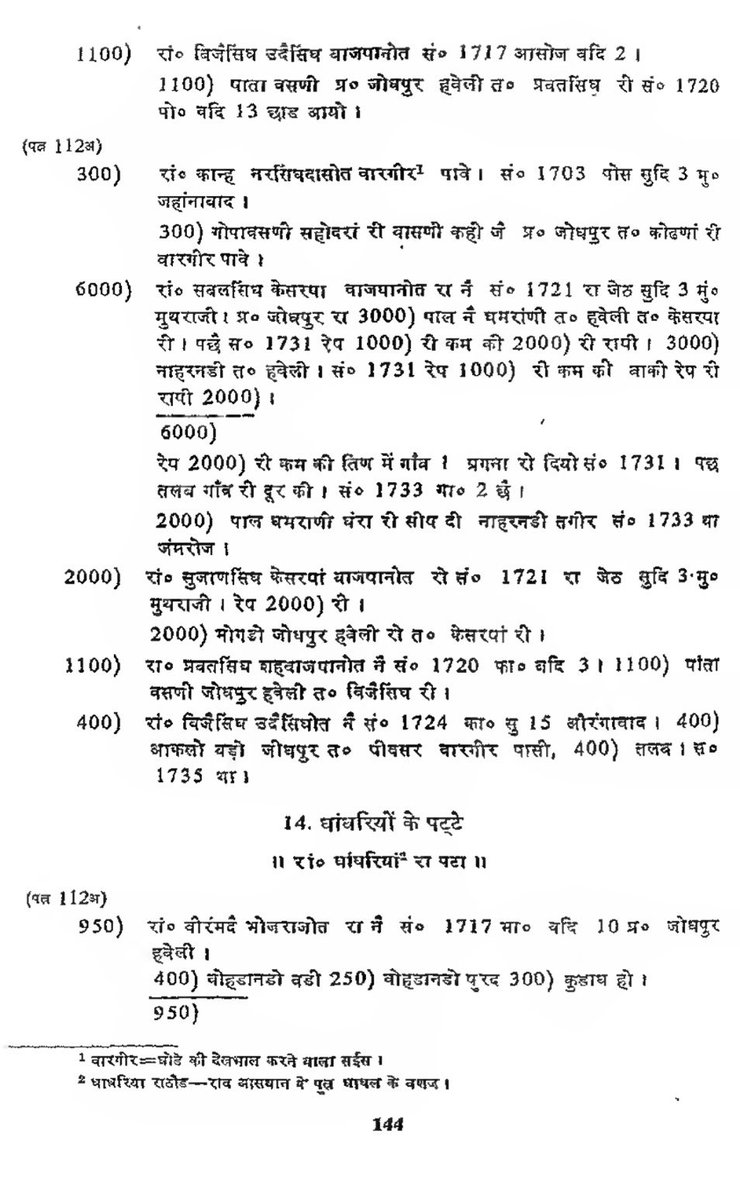
Interesting, we find mentions of Purabiya Rathores from western UP in Marwar during the reign of Maharaja Jaswant Singh Ji I in contemporary records. They were granted pattas of a few villages in Marwar, and they also fought alongside him in the Battle of Dharmat.
dado daddy tweet mediadado daddy tweet media
English
5
9
67
1.6K
Hobo
Hobo@chariotcel·
@NomadicBrahmin As late as 1880s they were a distinct community, if we go by Bombay Presidency district gazetteers
English
0
0
0
5
Vadhryaśva
Vadhryaśva@NomadicBrahmin·
Does anyone know what happened to these Kanyakubja Brahmins who settled in Konkan, Do they have assimilated into Saraswats ?
Vadhryaśva tweet mediaVadhryaśva tweet media
English
7
4
31
2.7K
Hobo
Hobo@chariotcel·
@TPeshwa Even with the mistranslated version of the text, the original mentions in the Manusmriti exhorting conquest, raids, bridenapping, and glorious deaths for the aristos would have remained
English
0
0
2
24
Hobo
Hobo@chariotcel·
@TPeshwa I don’t recall all the mentions but it’s eclectic and mostly limited to his subjects of study (Western Europe, Hellenic Civ, Iberia). He studies eastern civs in more depth after he wrote this essay though, and essentially echoes similar things for the Indic aristocracy
English
1
0
2
25
Hobo
Hobo@chariotcel·
This reflects the reality of any pre modern society, that violent crime was dominated by those with the best ability to exercise such violence (the aristocracy). Nietzsche’s leonine beast etc
The_Peshwa@TPeshwa

Those classes of Oudh who believe arms to be their profession think it prudent to engage in Robbery rather than any honest trade when lacking suitable employment. This includes the principle feudal class of the land, the Rashboots, as well as a great deal of the Brahmans of the place.

English
1
0
7
244
Hobo
Hobo@chariotcel·
@TPeshwa Interpretation is controversial but considering he includes the Japanese in his list of blonde beasts the leonine interpretation makes more sense. He does espouse vaguely nordicist ideas elsewhere though
English
1
0
2
52
Hobo
Hobo@chariotcel·
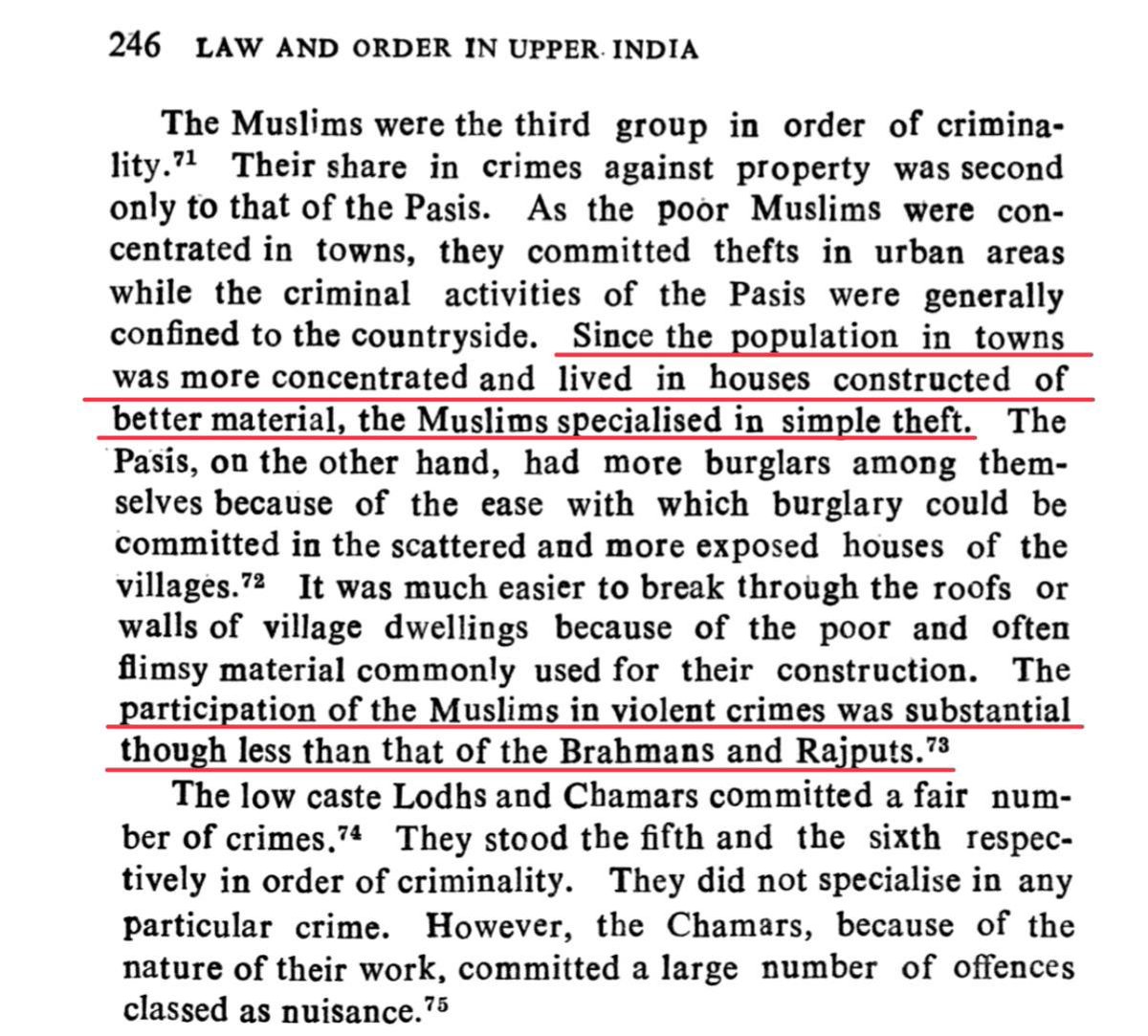
Thus, Mahommedans were not in fact as involved in illegal violence, but in fact specialized in theft and other such petty crime. Despite being one of the single largest demographic categories in the region, they fell behind both Brahmins and Rajputs in incidence of violent crimes
Hobo tweet media
English
0
1
5
96
Hobo
Hobo@chariotcel·
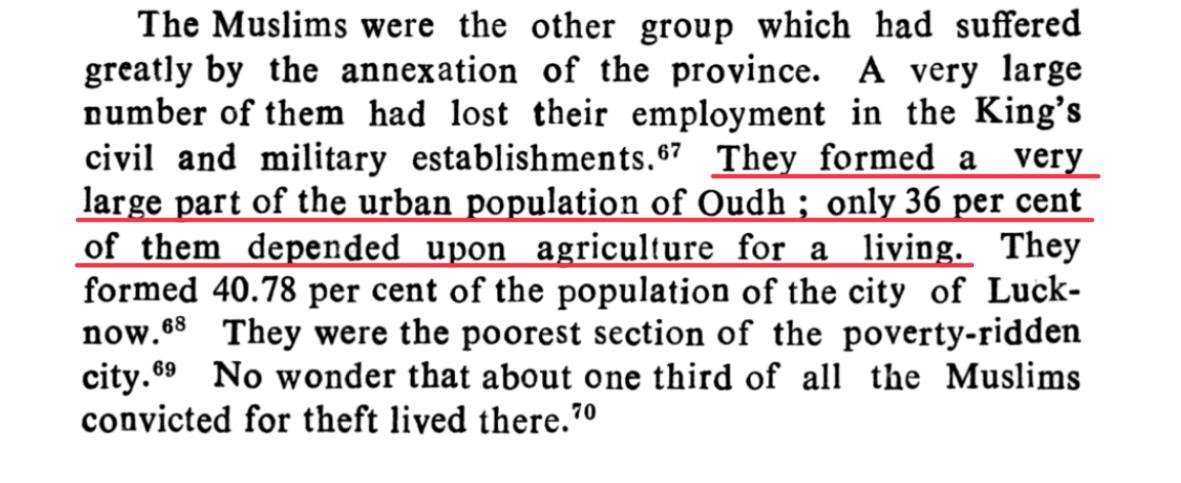
In the post I initially quote tweeted, Sleeman specifies “a great part of the rural Mahommedan” population. This is significant as the majority of the Muslim population of Oudh was urbanized, only around 1/3rd derived their living from agriculture.
Hobo tweet media
English
1
1
3
96
Hobo
Hobo@chariotcel·
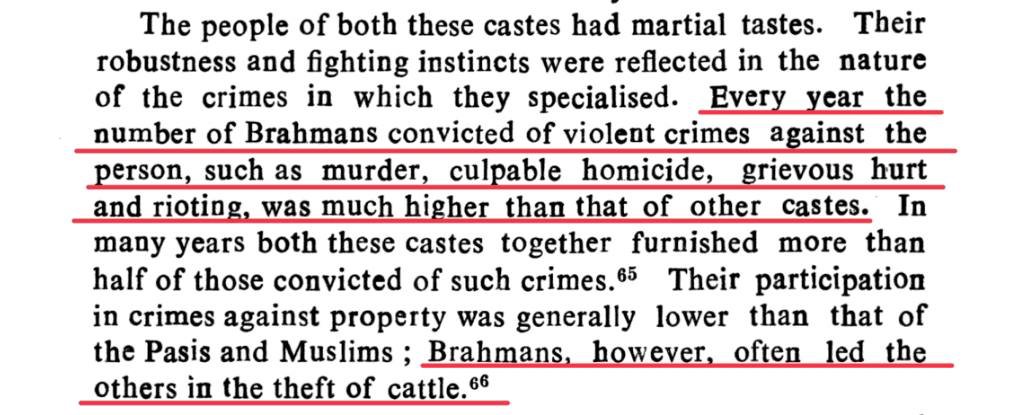
This pattern continues even after the annexation of Oudh.The Brahmins in particular seem to have had the most participation in violence.They and Rajputs together often furnished over half the violent convicts.These Brahmins would have been of the Kanyakubja/Saryupareen subtribes
Hobo tweet media
The_Peshwa@TPeshwa

Those classes of Oudh who believe arms to be their profession think it prudent to engage in Robbery rather than any honest trade when lacking suitable employment. This includes the principle feudal class of the land, the Rashboots, as well as a great deal of the Brahmans of the place.

English
2
8
16
748
Hobo retweetledi
The_Peshwa
The_Peshwa@TPeshwa·
A thread on dueling in pre-modern India. The earliest references to duels in India come from a a tradition of single combats amongst Champions. The greatest warriors of the opposing sides would engage each other in combat before their respective armies, while their armies watched. This is especially common in the Great Hindoo epics, the Mahabharata and Ramayana. The champion duels between the chariot borne warriors are described in great detail by the poets. Even the gods appear to behold the duels between the warriors. The key point of these duels is that they represent a clear distinct phase in a battle. This does not occur when “mass combat” is occurring but as a part of a distinct phase of a battle. By convention, no one outside of the champions may engage in the duel. Now when would these occur? From my readings of the epics, these champion duels occur when the forces of each side have just met, or after a withdrawal and before the forces re-engage each other. Premodern combat around the world was not a day long slugfest, but a series of actions against the other side with withdrawals and then another round of engagement. These champion duels would occur in those interim phases. Several excerpts from epic duels below: “Then Rama and Ravana, both eager for victory, stood facing each other in battle, like Indra and Vritra. They struck each other with arrows blazing like fire, and the sky was filled with shafts discharged from their bows. Ravana, filled with wrath, pierced Rama with many arrows; and Rama, in return, struck Ravana with keen shafts. Their bodies were covered with blood, yet they continued to fight without yielding. The roar of their bows and the clash of their weapons filled the quarters with a dreadful sound. Gods, Gandharvas, and Siddhas assembled in the sky to behold that combat.” - Ramayana Yuddh Khanda “Then Lakshmana and Indrajit, both skilled in arms, encountered each other in a dreadful combat. They pierced each other with sharp arrows, and their bodies were covered with blood. Neither yielded to the other, and both were firm in their valor. Like two enraged elephants in battle, they fought, each striving for victory. The combat between them grew exceedingly fierce, and all the warriors beheld it with wonder” - Ramayana Yudh Khanda “Then Krishna confronted Shishupala in battle, and a duel arose between them, terrible and resounding. Their weapons clashed with a mighty noise, and sparks seemed to flash from their blows. Shishupala, filled with fury, rushed upon Krishna and struck him; but Krishna, unmoved, returned the blow with equal force. Neither turned back from the fight, but each stood firm, eager for victory. The assembly of kings beheld that combat with wonder” -Shishupalavadha
The_Peshwa tweet mediaThe_Peshwa tweet media
English
1
1
14
573
Hobo
Hobo@chariotcel·
@HHMaharajaSawai @Chauhanditya686 Weren’t there more dogra brahmins than Rajputs, or is this going off of companies entirely composed of either caste. Afaik most Dogra companies were of mixed demographic
English
0
0
0
22
Sawai
Sawai@HHMaharajaSawai·
@Chauhanditya686 Both. Brahmins and Rajputs. Ratio would be 1:3
English
1
0
7
1.4K
Sawai
Sawai@HHMaharajaSawai·
Recruit intake in the British Indian Army by Class, b/w 1914-1918, for World War 1 : Punjabi Mussalmans : 136,126 Sikhs* : 88,925 Rajputs (total) : 62,190 Gurkhas : 55,589 Jats (total) : 55,239 Brahmans (total) : 27,227 Mahrattas (total) : 24,304 Dogras* (total) : 23,491
Sawai tweet media
English
12
47
178
25.9K
Hobo
Hobo@chariotcel·
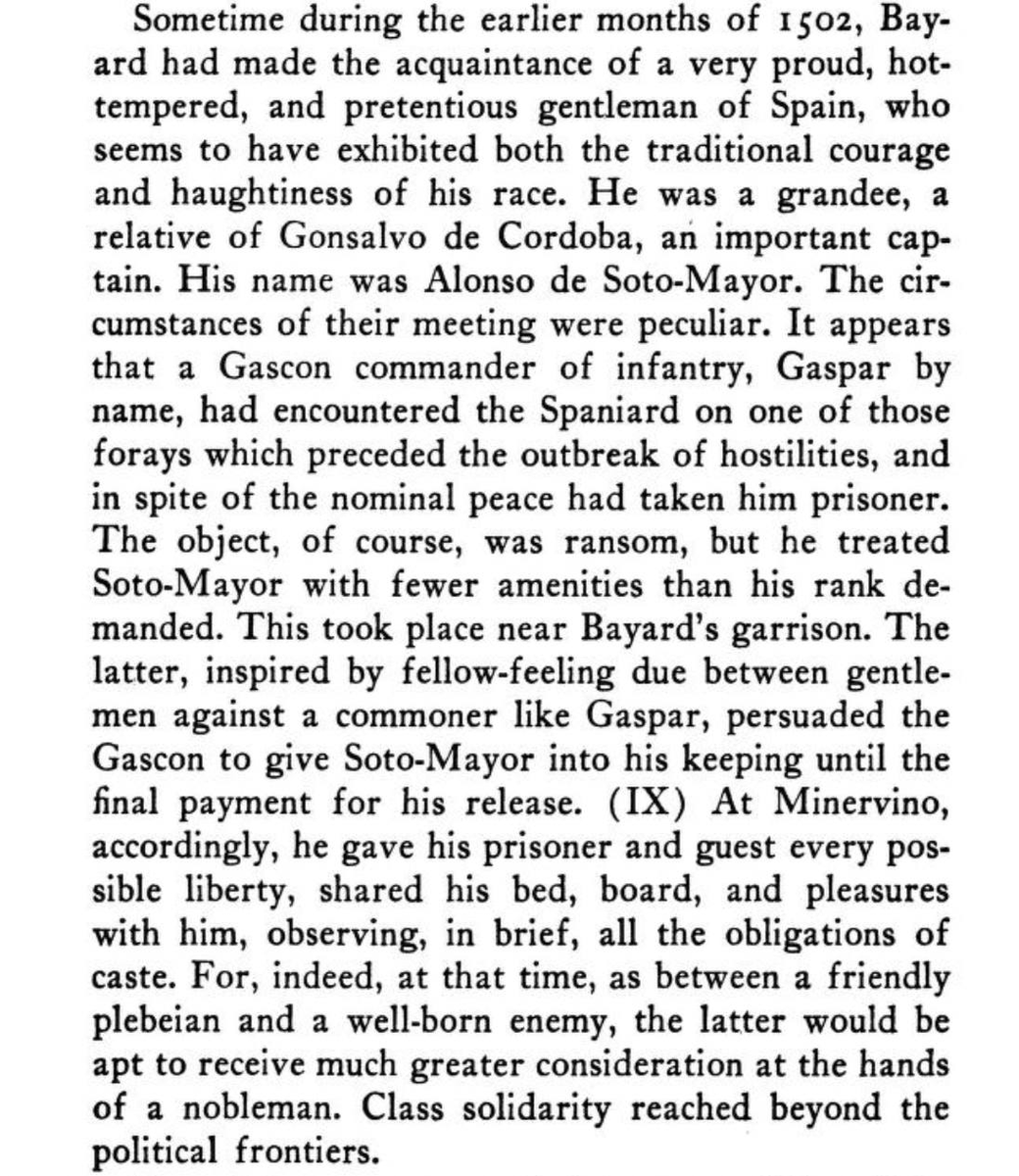
@TPeshwa Trve. These nobles recognized each other as members of the same estate, hence Bayard’s initial rescue of Alonzo de Sotomayor
Hobo tweet media
English
0
0
5
91
The_Peshwa
The_Peshwa@TPeshwa·
The European Nobility before the French Revolution was pretty much an endogamous caste. This includes the lower aristocracy aka “Second Rate UCs”. Also bishops could only be sourced from this caste. Across Europe, there was a common courtly culture, religion and high culture. Regarding genetics, Europeans in general are extremely close to each other genetically.
English
1
0
4
674
Hobo
Hobo@chariotcel·
@savarkarvaadi Which bakhar is this event recorded in
English
0
0
0
91