
jendugeña retweetledi
jendugeña
49.8K posts


jendugeña
@cheez_miss
is serious about entertainment
United States Katılım Eylül 2009
532 Takip Edilen389 Takipçiler


jendugeña retweetledi

Actual proof that the shots didn’t come from the NBI guys at all.
So ano po ang lesson natin? Sinungaling po talaga si Alan. Oust him.
TV Patrol@TVPatrol
FIRST ON ABS-CBN NEWS: Narito ang ilang eksena na kuha ni ABS-CBN News reporter Zyann Ambrosio kasama ang NBI sa area ng GSIS, gabi ng May 13. Abangan ang buong ulat sa TV Patrol ngayong Huwebes, Mayo 14, 2026.
English
jendugeña retweetledi

FROM P50 TO P35-M! 💸🤑
Laking buwenas ng isang lalaking solo parent nang manalo siya ng mahigit P35 milyong jackpot prize sa Lotto 6/42 nang itaya niya ang natitirang P50 sa kaniyang bulsa.
Sa inilabas na pahayag kamakailan ng Philippine Charity Sweepstakes Office, sinabing mula sa Negros Occidental ang lucky winner, na nanalo ng jackpot sa Lotto 6/42 draw noong May 2, 2026.
Basahin: gmanetwork.com/news/balitamba…

Filipino
jendugeña retweetledi

zyann ambrosio's coverage TOGETHER WITH the nbi ended and exposed the inconsistencies and manipulation tactics of alan cayetano.
#lamangangmayresibo
English
jendugeña retweetledi

The black-footed cat may look like a small house pet, but it is actually the deadliest feline on the planet. Weighing only about three to five pounds, this tiny hunter achieves a staggering 60% success rate in its hunts. To put that in perspective, a lion only succeeds about 25% of the time. This diminutive predator is an eating machine, often catching up to fourteen small animals in a single night to fuel its incredibly high metabolism.
Living in the arid regions of Southern Africa, these cats rely on their exceptional night vision and hearing to track prey in the dark. They are strictly nocturnal and can travel over twenty miles in a single evening looking for food. Because they are so small, they face many threats from larger predators, leading them to be incredibly secretive and fierce. They prove that in the wild, size has very little to do with being an elite apex predator.

English

jendugeña retweetledi





jendugeña retweetledi

Tawang tawa ako sa caption ng GMA. "BATO DELA ROSA, KUMANTA NA!" Shutacca teh literal pala. HAAHHAHA. Hanga din naman ako kay Mariz magpigil ng tawa. 🤣
Filipino
jendugeña retweetledi

Japan has opened a one-of-a-kind bar in Yokohama specifically for people considering quitting their jobs.
Called Tenshoku Sodan Bar (Job-Changing Consultation Bar), the establishment offers completely free drinks while professional career counselors serve as bartenders. Instead of just mixing cocktails, they listen to customers’ frustrations, career anxieties, and aspirations, then provide practical advice on job transitions, resume building, and job-hunting strategies.
The relaxed bar setting makes it easier for people to openly discuss their struggles, something that can feel difficult in Japan’s high-pressure work culture, known for long hours and strong company loyalty.
By combining drinks with genuine career support, the Tenshoku Sodan Bar has become a refreshing and innovative space for those contemplating a fresh start.

English
jendugeña retweetledi

jendugeña retweetledi

🔻 THE WORLD HEALTH ORGANIZATION JUST CLASSIFIED ELECTROMAGNETIC FREQUENCIES AS A "CLASS 1 THERAPEUTIC AGENT" IN AN INTERNAL DOCUMENT THAT WAS NEVER RELEASED TO THE PUBLIC. THE DOCUMENT IS DATED MARCH 14, 2026.
Not "alternative." Not "complementary." Not "under investigation." Class 1 Therapeutic Agent. The same classification as surgery and pharmaceutical intervention. Equal standing. Full recognition.
The document is 67 pages. Internal reference: WHO/HIS/SDS/2026.4. It was circulated to 14 member state health ministries on March 22nd. None of them published it. None of them held a press conference. None of them updated their national health guidelines.
A health ministry official in Estonia — a country with 1.3 million people and apparently less to lose — uploaded the document to a public health transparency portal on April 9th. It was removed within 4 hours. But the Wayback Machine archived it at 11:47 AM UTC.
⟁
The document states the following:
Electromagnetic frequencies between 0.1 Hz and 1000 Hz, when applied at specific amplitudes and durations, produce measurable therapeutic outcomes in:
— Bone regeneration (7.5 Hz pulsed field, 78% acceleration vs. control)
— Chronic pain reduction (10 Hz, 64% reduction in VAS scores)
— Wound healing (15 Hz, 41% faster epithelialization)
— Depression remission (10 Hz alpha entrainment, 52% remission rate vs. 23% SSRI)
— Insomnia resolution (3 Hz delta entrainment, 71% resolution within 21 days)
— Inflammation reduction (30 Hz, CRP decrease of 38% in 14 days)
Six conditions. Six frequency ranges. All outperforming pharmaceutical interventions in controlled trials cited within the document.
⟁
The WHO has known since at least 2019. The document references 340 peer-reviewed studies. 12 meta-analyses. 7 randomized controlled trials funded by WHO member states. The evidence was never in question. The classification was delayed for 7 years.
Why?
Page 51 contains a section titled "Economic Impact Assessment." It estimates that widespread adoption of frequency-based therapeutics would displace approximately $418 billion in annual pharmaceutical revenue across the six indicated conditions.
$418 billion. That is not a typo. That is the number they calculated. That is the number that kept this document internal for 7 years.
Depression alone: $28 billion in SSRI sales per year. A 10 Hz signal from a $200 device achieves higher remission rates. The math is not complicated. The silence is not accidental.
⟁
The classification is now official within WHO internal governance. It cannot be unwritten. It cannot be reclassified downward without a full General Assembly vote. The 14 member states that received it are now legally obligated under IHR Article 44 to "develop and implement" therapeutic frameworks based on new WHO classifications within 24 months.
24 months. March 2028. That is the deadline.
But Estonia already published it. The archive exists. The 67 pages are readable. The frequencies are listed. The protocols are described. The evidence is cited.
You don't need to wait for your government to tell you what the WHO already admitted internally. Frequencies heal. It's classified now. Not as conspiracy. As medicine.
340 studies. 67 pages. One classification that changes everything. They gave it to 14 governments and told none of them to tell you.
♟ They classified it as medicine and kept it classified. Share it, be part of the disclosure.
English
jendugeña retweetledi

A woman adopted a 12-year-old shelter dog who had been overlooked for eight months, and within hours of coming home he planted himself in her bedroom doorway and refused to let her through. She thought he was being aggressive and called for help - but firefighters discovered a massive gas leak hidden behind her bedroom wall so severe that a single flipped light switch could have leveled the entire house. The dog had smelled the danger the moment he walked in and used his body as a barrier to keep her alive. For eight months nobody gave him a second look, and on the very first night he proved exactly why he was worth saving.
English
jendugeña retweetledi
jendugeña retweetledi

@PAcumbria Soul self can’t be wounded, and does t live in fear .EGO human self, is the Monster flight or fight response in stomach region ,the yellow chakra.
14 -21 age it got stuck in.
Mine joined marines at 17to prove hisdad wrong.
He’s stuck in yellow ,green (heart)and blue (cmmnctn)
English

@bluewmist That's an amazing way to go about it...
Flip the script.
Instead of aiming for success and accidentally finding it...
Aim for rejection and "accidentally" find success.
It completely removes the fear associated with constantly getting "no" and the demoralization as well.
English

A girl just said she tried to get rejected 1000 times in 2025 and ended up being cast in plays, winning pageants, securing hella paid brand deals, and appearing in commercials.This is your sign to chase rejection to the point of "accidental" success. You'll be surprised.
English
jendugeña retweetledi
This boils my blood. My cooked chicken smells and tastes like laundry soap, the perfumed kind.
Grok says that is likely due to added phosphates, yet this chicken advertises no additives, and the ingredient has one item: Chicken.
I figured out why, by sniffing.
The additives are in the pad under the meat, where they don't have to be listed in the ingredients.
Bastards.

English
jendugeña retweetledi

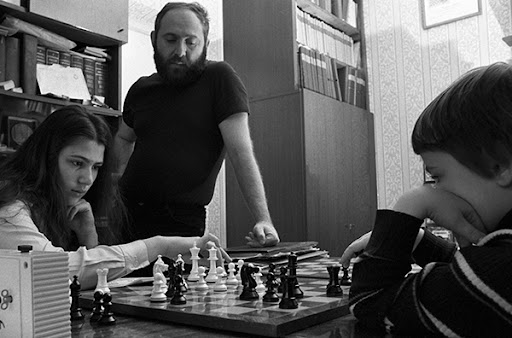
A Hungarian psychologist raised three daughters to prove that any child could become a chess grandmaster through early specialization. He succeeded. Two of them became grandmasters. One became the greatest female chess player who ever lived.
Then a sports scientist looked at the data and found something nobody wanted to hear.
His name is David Epstein. The book is called "Range."
The Polgar experiment is one of the most famous case studies in the history of deliberate practice. Laszlo Polgar wrote a book before his daughters were even born arguing that geniuses are made, not born. He homeschooled all three girls in chess from age four. By their teens, Susan, Sofia, and Judit were dominating tournaments against grown men. Judit became the youngest grandmaster in history at the time, breaking Bobby Fischer's record. The story became the gospel of early specialization. Pick a domain young, drill it hard, and you can manufacture excellence.
Epstein opens his book by telling that story honestly and then quietly demolishing the conclusion most people drew from it.
Chess works that way. Most things do not.
Here is the distinction that took him four years of research to articulate, and that almost nobody who quotes the 10,000 hour rule has ever read.
There are two kinds of environments in which humans develop expertise. Psychologists call them kind and wicked. A kind environment has clear rules, immediate feedback, and patterns that repeat reliably. Chess is the cleanest example. Every game ends with a winner and a loser. Every move is recorded. The board never changes shape. The pieces never invent new ways to move. A child who plays ten thousand games will see most of the patterns that exist in the game, and pattern recognition is exactly what chess mastery is built on.
A wicked environment is the opposite. Feedback is delayed or misleading. Rules shift. The patterns that worked yesterday may be exactly the wrong patterns to apply tomorrow. Most of the real world looks like this. Medicine is wicked. Investing is wicked. Building a company is wicked. Scientific research is wicked. Almost every job that involves a complex changing system with humans in it is wicked.
The Polgar sisters trained in the kindest environment any human can train in. Their success was real and the method was correct. The mistake was generalizing the method to fields where the underlying structure of the environment is completely different.
Epstein's research is what made the implication impossible to ignore.
He looked at the careers of elite athletes outside of chess and golf and found that the pattern was almost the inverse of what people assumed. The athletes who reached the very top of their sports were overwhelmingly people who had played multiple sports as children, specialized late, and often switched disciplines well into their teens. Roger Federer played squash, badminton, basketball, handball, tennis, table tennis, and soccer before tennis became his focus. The kids who specialized in tennis at age six and trained year-round for a decade mostly burned out, got injured, or topped out at lower levels of the sport.
The same pattern showed up everywhere he looked outside of kind environments. Inventors with the most patents had worked in multiple unrelated fields before their breakthrough work. Comic book creators with the longest careers had drawn for the most different genres before settling. Scientists who won Nobel Prizes were dramatically more likely than their peers to be serious amateur musicians, painters, sculptors, or writers.
The skill that mattered in wicked environments was not depth in one pattern. It was the ability to recognize when a pattern from one domain applied unexpectedly in another. That kind of thinking cannot be built by drilling a single subject. It can only be built by accumulating mental models from many subjects and learning to move between them.
The deeper finding is the one that should change how you think about your own career.
Specialists in wicked environments often get worse with experience, not better. Epstein cites studies of doctors, financial analysts, intelligence officers, and forecasters showing that years of experience in a narrow domain frequently produce more confident judgments without producing more accurate ones. The expert builds elaborate mental models that feel comprehensive and turn out to be increasingly disconnected from the actual structure of the problem. They stop noticing what does not fit their framework. They mistake fluency for understanding.
Generalists do better in wicked domains for a reason that sounds almost mystical until you understand the mechanism. They have less invested in any single mental model, so they abandon broken models faster. They are used to being a beginner, so they are not threatened by the discomfort of not knowing. They have seen enough different domains that they can usually find an analogy from one field that unlocks a problem in another. The technical name for this is analogical thinking, and the research on it is one of the most underrated bodies of work in cognitive science.
The single most useful sentence in the entire book is the one Epstein puts almost as a throwaway.
Match quality matters more than head start.
A person who tries six different fields in their twenties and finds the one that genuinely fits them will outperform a person who picked one field at fourteen and stuck to it on willpower alone. The lost years were not lost. They were the search process that produced the match. Every field they walked away from taught them something they later imported into the field they finally chose.
The reason this is so hard to accept is cultural, not empirical. We tell children to pick a path early. We reward the prodigy who knew at six. We treat the late bloomer as someone who failed to launch on time, when the data suggests they were running an entirely different and often more effective optimization process underneath.
The Polgar sisters were not wrong. The conclusion the world drew from them was.
If your environment is genuinely kind, specialize early and drill hard. If it is wicked, and almost every interesting human problem is, then the people who win are the ones who refused to specialize until they had seen enough to know what was actually worth specializing in.
You are not behind. You were running the right experiment all along.
English
jendugeña retweetledi

jendugeña retweetledi

National Geographic Award winning photograph of the year.
So beautiful. 🐝🐝🐝

English