ChessPlus

2.1K posts

ChessPlus banner
ChessPlus

ChessPlus

@ChessPlus

An education consultancy using games to develop cognitive and social skills. Organiser of the annual London Chess Conference. https://t.co/rayfYm8UVU

Online, hybrid and physical Katılım Ocak 2010
507 Takip Edilen1.2K Takipçiler
ChessPlus retweetledi

ECU EDUCATION COMMISSION
ECU EDUCATION COMMISSION@ECU_Education·
Chess represents one structured way of thinking. However, a wider repertoire of strategy games broadens this cognitive framework to develop flexible, creative problem-solving skills. 🗓️09-10 May ⏰10:00 - 16:30 CET 👉Join our next training and learn more: ecuhub.eu/course/chess-a…
ECU EDUCATION COMMISSION tweet media
English
0
4
5
216
ChessPlus retweetledi
ECU 2030
ECU 2030@ecu2030·
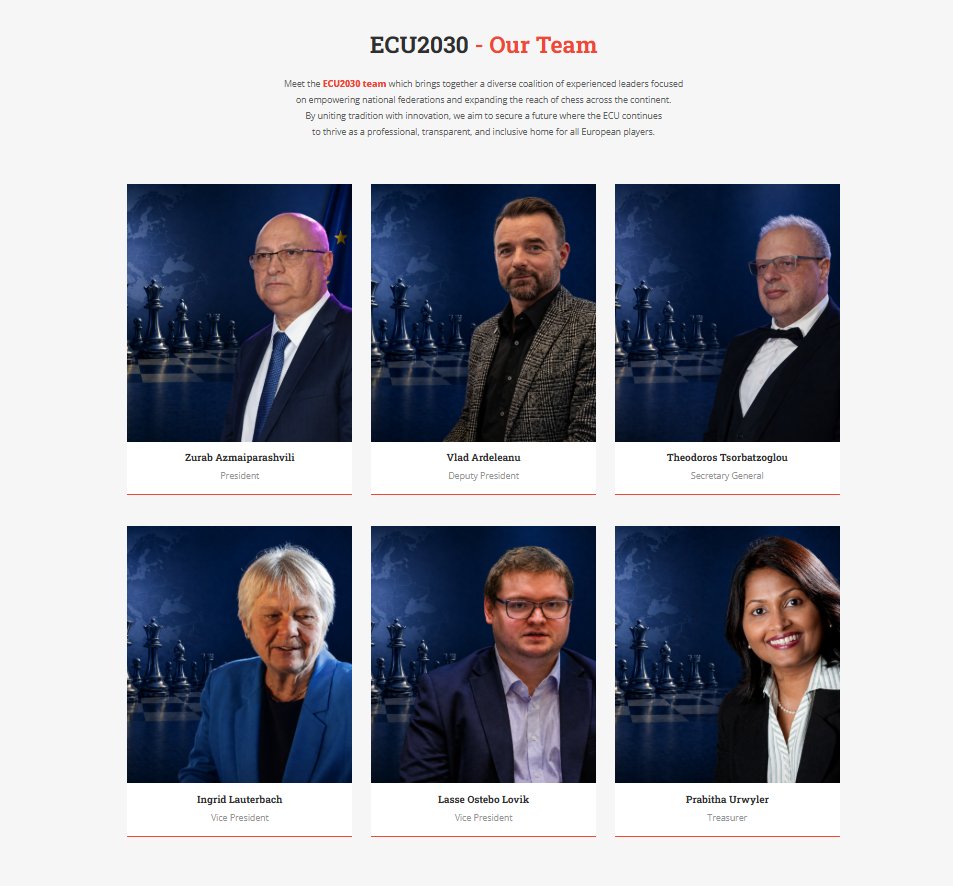
We pleased to announce the official launch of ECU 2030 - a new campaign designed to support a clear, long-term vision for European chess and to strengthen cooperation across our member federations. We have also launched the official ECU 2030 website, which will serve as the central reference point for campaign information, updates, and key materials: ecu2030.org Thank you for your continued commitment and cooperation. Wishing you a strong month of May, with continued collaboration and shared progress across European chess. #TeamEurope
ECU 2030 tweet media
English
0
3
13
3K
ChessPlus retweetledi
Ihtesham Ali
Ihtesham Ali@ihtesham2005·
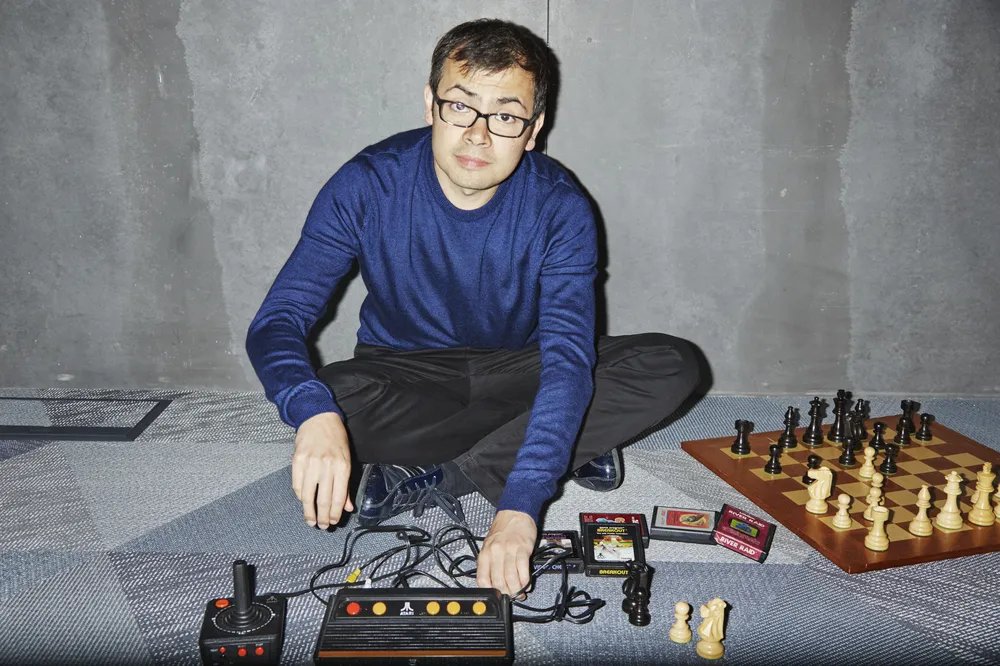
A British kid became a chess master at 13, then a bestselling video game designer at 17, then a PhD neuroscientist at 33, then the CEO of the AI lab that won the 2024 Nobel Prize in Chemistry. People called him unfocused for twenty years. He was running the most deliberate career plan in modern science. His name is Demis Hassabis, and the thing almost nobody understood while he was doing it was that every single step was feeding the same underlying obsession. Here is the thread that connects the whole career, and why it matters for how anyone should think about building toward a hard goal. The chess came first. He was born in London in 1976 and started playing at age four. By eight, he was the London champion for his age group. By thirteen, he had an international master rating that put him in the top fifty players in the world under his age bracket. He was on a track that would have made him a professional player for the rest of his life. He walked away. The reason he gave later, in interview after interview, is the part most people miss. He said chess forced him to think constantly about thinking itself. Every move required him to simulate what his opponent was simulating about him. He became fascinated not with winning the game, but with the process the human brain was running in order to play it. He decided chess was too small a container for the real question he wanted to answer, which was how intelligence actually works. The video games came next. He used the money he won from chess tournaments to buy a ZX Spectrum. He taught himself to code. By seventeen, he was a lead programmer on a game called Theme Park that sold millions of copies. He could have stayed in that industry and built a career as one of the top game designers in Britain. He walked away from that too. He went to Cambridge, did a double first in computer science, and then made the move that looked like the strangest pivot of his life. He enrolled in a PhD in cognitive neuroscience at University College London. He was thirty. His peers from Cambridge were already running companies. He went back to graduate school to study how the human hippocampus builds memories and imagines future scenarios. His 2007 paper on the link between memory and imagination was named one of the top ten scientific breakthroughs of the year by Science magazine. But the paper was never the point. The point was that he had spent three decades quietly building the exact combination of skills nobody else in the world had put together. Deep intuition for how intelligent agents behave in complex systems, from a lifetime of chess. Hands-on engineering fluency, from years of shipping commercial software. And a rigorous scientific understanding of how biological brains actually produce cognition, from a PhD in neuroscience. In 2010, he used that combination to co-found DeepMind with Shane Legg and Mustafa Suleyman. The mission statement he wrote was two sentences long and sounded absurd to most people who heard it. Solve intelligence. Then use it to solve everything else. For the first six years, DeepMind worked almost entirely on games. Atari. StarCraft. Go. People outside the field could not understand why a lab that claimed to be building artificial general intelligence was spending hundreds of millions of dollars teaching computers to play Pong. Hassabis kept explaining the reason in interviews and almost nobody was listening. Games were not the goal. Games were a controlled environment where you could iterate on general-purpose learning algorithms fast, measure their progress precisely, and prove to yourself that you had built something that could transfer between domains. In 2016, AlphaGo beat Lee Sedol, the world champion at Go, in a match that had been considered decades away. And the day after that match ended, Hassabis sat down with his team lead David Silver and asked what they should do next. The answer was the thing he had been working toward his entire life. They turned the same deep reinforcement learning approach at a problem biology had been stuck on for fifty years. Protein folding. Given an amino acid sequence, predict the three-dimensional shape the protein would fold into. Every drug discovery effort in the world depended on it. The best computational methods could only solve a small fraction of proteins. Experimental methods took years per structure and millions of dollars per protein. AlphaFold2 was released in 2020. Within a year, it had predicted the structure of almost every protein known to science. Two hundred million structures. Made freely available to the entire research community. More than two million researchers from a hundred and ninety countries have used it since. In October 2024, Demis Hassabis and John Jumper were awarded the Nobel Prize in Chemistry for that work. The line almost nobody quotes from his speeches is the one that explains the whole career. He has said, many times, that he did not build AlphaFold to solve protein folding. He built AlphaFold to prove that the approach he had been developing for thirty years could actually work on a real scientific problem. Protein folding was the demonstration. AGI was always the goal. The chess taught him how to think about adversarial systems. The games taught him how to ship software. The neuroscience taught him how the only existing example of general intelligence actually worked. DeepMind used all three to build a method that could transfer between domains the way the human brain does. And the moment the method was ready, he pointed it at the single most important unsolved problem he could find in a domain where a breakthrough would save millions of lives. Most people looking at his career from the outside, at any point before 2016, would have called it scattered. A chess prodigy who gave up chess. A video game designer who walked away from a gaming career. A computer scientist who detoured through neuroscience. A startup founder who burned six years on board games. From the inside, it was the most focused career in modern science. Every step was quietly answering the same question. How does intelligence actually work, and what would it take to build one that could solve problems humans have not been able to solve alone. The people who change a field are almost never the ones who looked focused along the way. They are the ones who were obsessed with a single question so deep and so long that the path they took to answer it looked like chaos from the outside and like a straight line from the inside. And they almost never get credit for the plan until decades later, when the Nobel Committee calls.
Ihtesham Ali tweet media
English
67
817
3.5K
264.9K
ChessPlus retweetledi
ECU EDUCATION COMMISSION
ECU EDUCATION COMMISSION@ECU_Education·
A beautiful book is soon to be out. We are so proud of Hari's passion and creativity and cannot wait to have her book in our hands. Well done and a huge congratulation my friend. We support you all the way ❤️🥳❤️👏👏👏
hari_neo@hari_neo21

📣 I'm publishing a children's book this summer! Read the latest @logiqBoard blog for behind the scenes moments... ✏️ ♟️ Woohoo! 🎉 blog.logiqboard.com/2026/04/20/my-…

English
1
5
5
307
David Llada ♞
David Llada ♞@davidllada·
was a loyal user of @evernote. It was one of my core apps for everything for 15 years. But they kept adding superfluous features and pointless tiers to justify raising subscription fees. It went up to $200 a year if you wanted to sync across more than three devices. I canceled my account about a year ago. Over the past three days, I built a perfectly functional alternative with Claude that does everything I need: no subscription, no tiers, no artificial limitations to squeeze more money out of me. Next on the list: @Metricool and @Mailchimp. I also thought of building a chess database, but @chessmonitor is already doing pretty much what I had in mind, and it is looking good 🙂
English
13
3
38
3.2K
ChessPlus retweetledi
London Games Festival
London Games Festival@londongamesfest·
Introducing #LGF26's Ensemble line-up! The Ensemble initiative celebrates diversity across game development roles and backgrounds. Charlie Webb Charmie Kim Christopher White Deanne Pierre-Pacquette HaZ Dulull Harun Ali Jennifer Estaris Sara Veal games.london/ensemble
London Games Festival tweet media
English
0
1
1
307
ChessPlus retweetledi
ECU EDUCATION COMMISSION
ECU EDUCATION COMMISSION@ECU_Education·
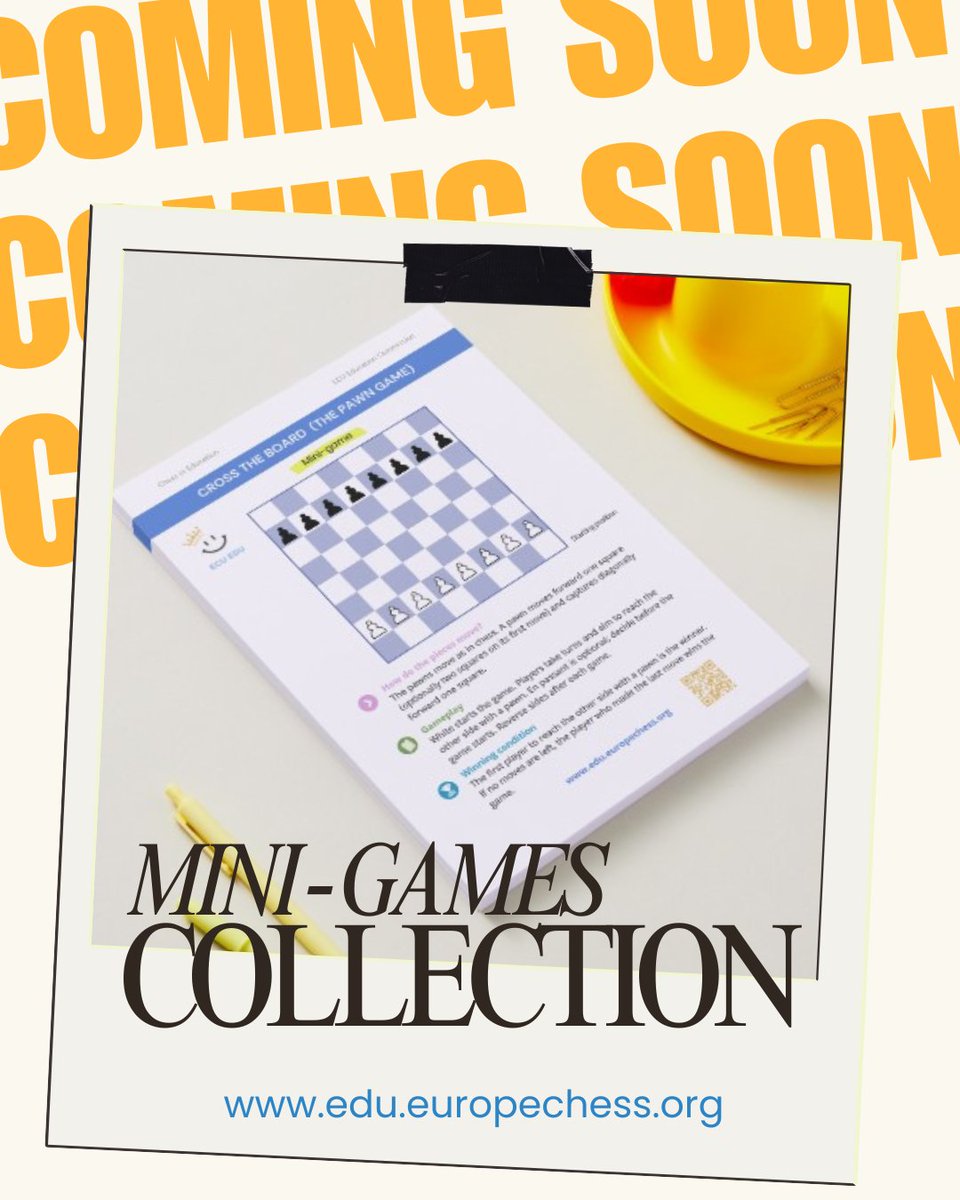
Mini-games are at the heart of #ChessinEducation, and for a good reason. Starting with mini-games is a pedagogical strategy. It ensures that learning is developmentally appropriate from the very first move. Mini-games break chess down into a manageable experience. @ECUonline
ECU EDUCATION COMMISSION tweet media
English
0
4
7
209
ChessPlus retweetledi
ECU EDUCATION COMMISSION
ECU EDUCATION COMMISSION@ECU_Education·
We are delighted to welcome our newest ECU School Chess Teacher graduates👏 a diverse and dedicated international group of educators from 16 different countries. 🌍Chess continues to provide a common ground that connects teachers, ideas and educational practice across continents.
ECU EDUCATION COMMISSION tweet media
English
0
3
3
79
ChessPlus retweetledi
ECU EDUCATION COMMISSION
ECU EDUCATION COMMISSION@ECU_Education·
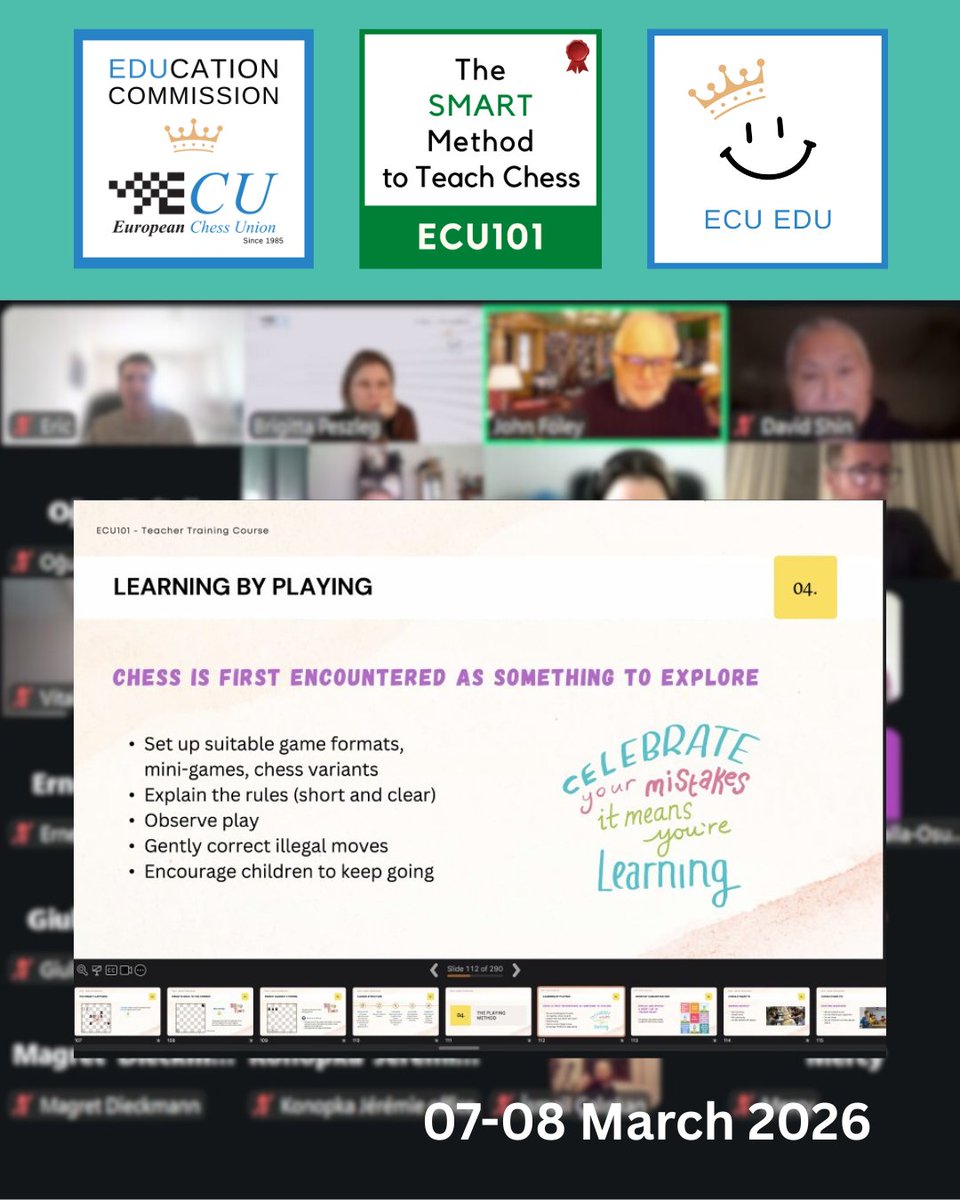
We have a full house for this weekend’s ECU101 training course, with dedicated educators joining us from around the world to deepen their understanding of #ChessinEducation with John Foley, Jesper Hall and Brigitta Peszleg. @ECUonline
ECU EDUCATION COMMISSION tweet media
English
0
5
5
236
ChessPlus retweetledi
Vladyslav Heraskevych OLY
Vladyslav Heraskevych OLY@heraskevych·
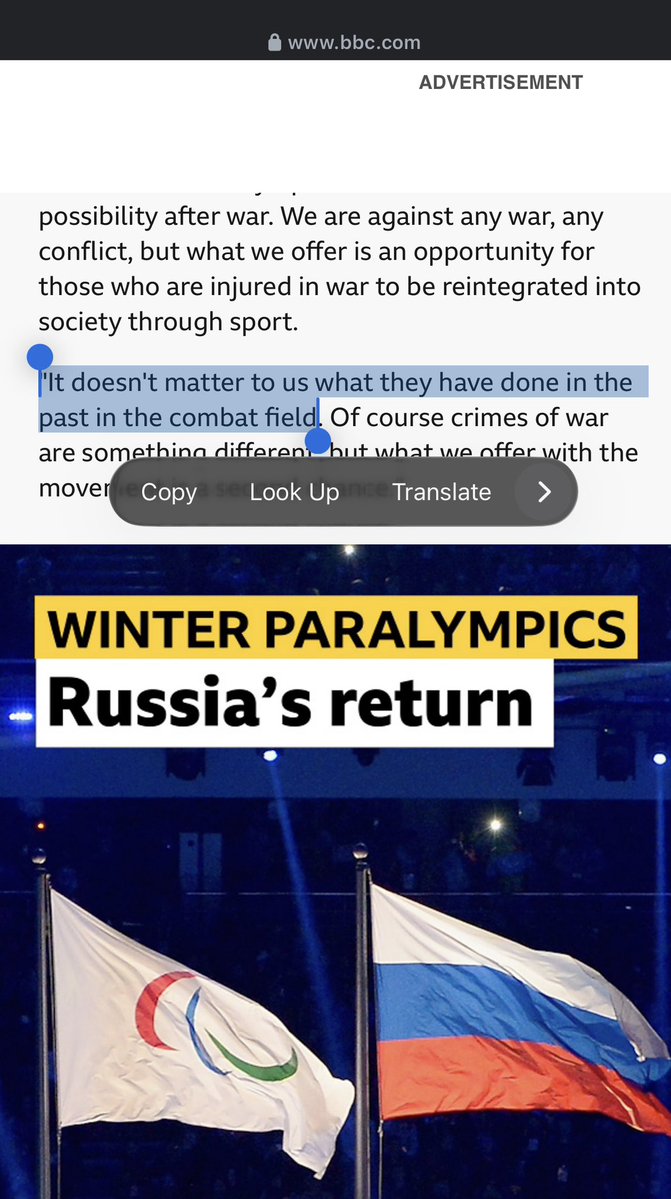
I am the Ukrainian skeleton racer who was wrongfully disqualified from the Olympics last month because of my “Memory Helmet.” Tonight in Milano-Cortina, the Paralympic Games are opening. The Committee has bizarrely permitted Russian soldier-athletes to participate under the Russian flag. The head of the International Paralympic Committee (IPC) literally stated that they don’t care about what Russian soldiers did in Ukraine. The problem is that we do care. They are killing Ukrainians on the battlefield, bombing our cities, and committing genocide. Now, with this step of allowing them to compete, the IPC is giving them the opportunity to continue committing genocide by spreading Russian narratives with Russian flags and symbols. They try to manipulate the situation by pointing out that the movement started after World War II, but during World War II the Olympic Games were cancelled, and German athletes were not invited and did not take part in the Games until 1952. It looks like the head of the IPC doesn’t know the history of the Olympic and Paralympic movement at all. What a shame. This whole story is just getting worse and worse.
Vladyslav Heraskevych OLY tweet media
English
746
7.6K
26.1K
407.5K
ChessPlus retweetledi
ECU EDUCATION COMMISSION
ECU EDUCATION COMMISSION@ECU_Education·
Join our upcoming courses designed for educators seeking structured Continuing Professional Development. These courses are suitable for educators working in schools, federations, organisations, and wider educational contexts. 👉More info and registration: ecuhub.eu/course-categor…
ECU EDUCATION COMMISSION tweet media
English
0
7
8
441
ChessPlus
ChessPlus@ChessPlus·
Strategy Games Belong in the Classroom: John Foley’s Vision for More Engaged Learners. John was interviewed by Jonathan Zhi from Princeton and discussed what makes strategy games uniquely suited for developing thinking skills. youtube.com/watch?v=HoCy5j… @ChessScholar
YouTube video
YouTube
English
0
2
5
130
ChessPlus
ChessPlus@ChessPlus·
✨Many, many new and amazing strategy games were introduced and play-tested. 🔁 Seven hours of non-stop playing. A definite cognitive overload. 🤪 Thank you for playing and sharing. More pics to come... ⭐️🌟💫 @ChessScholar
ChessPlus tweet media
English
0
1
5
68
ChessPlus
ChessPlus@ChessPlus·
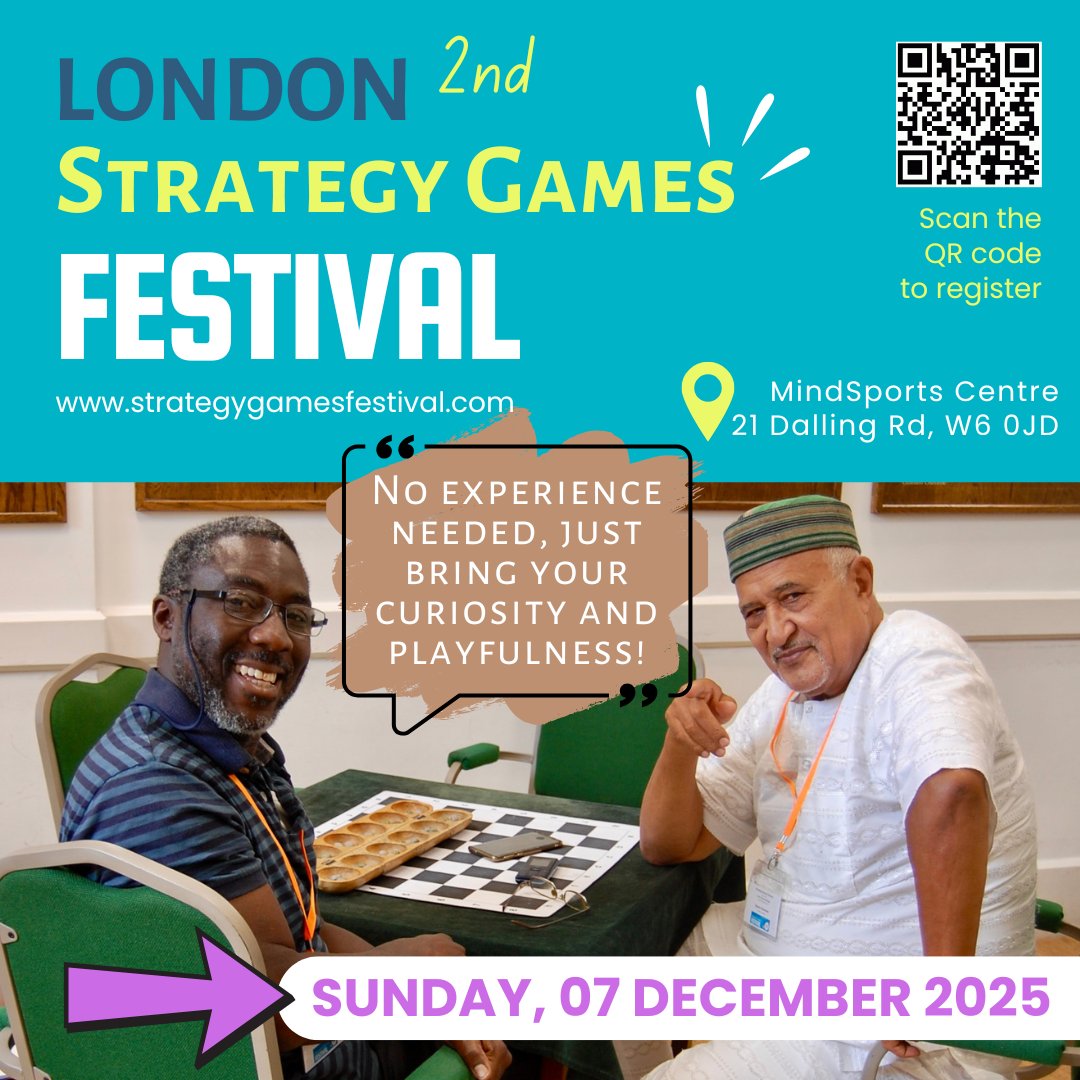
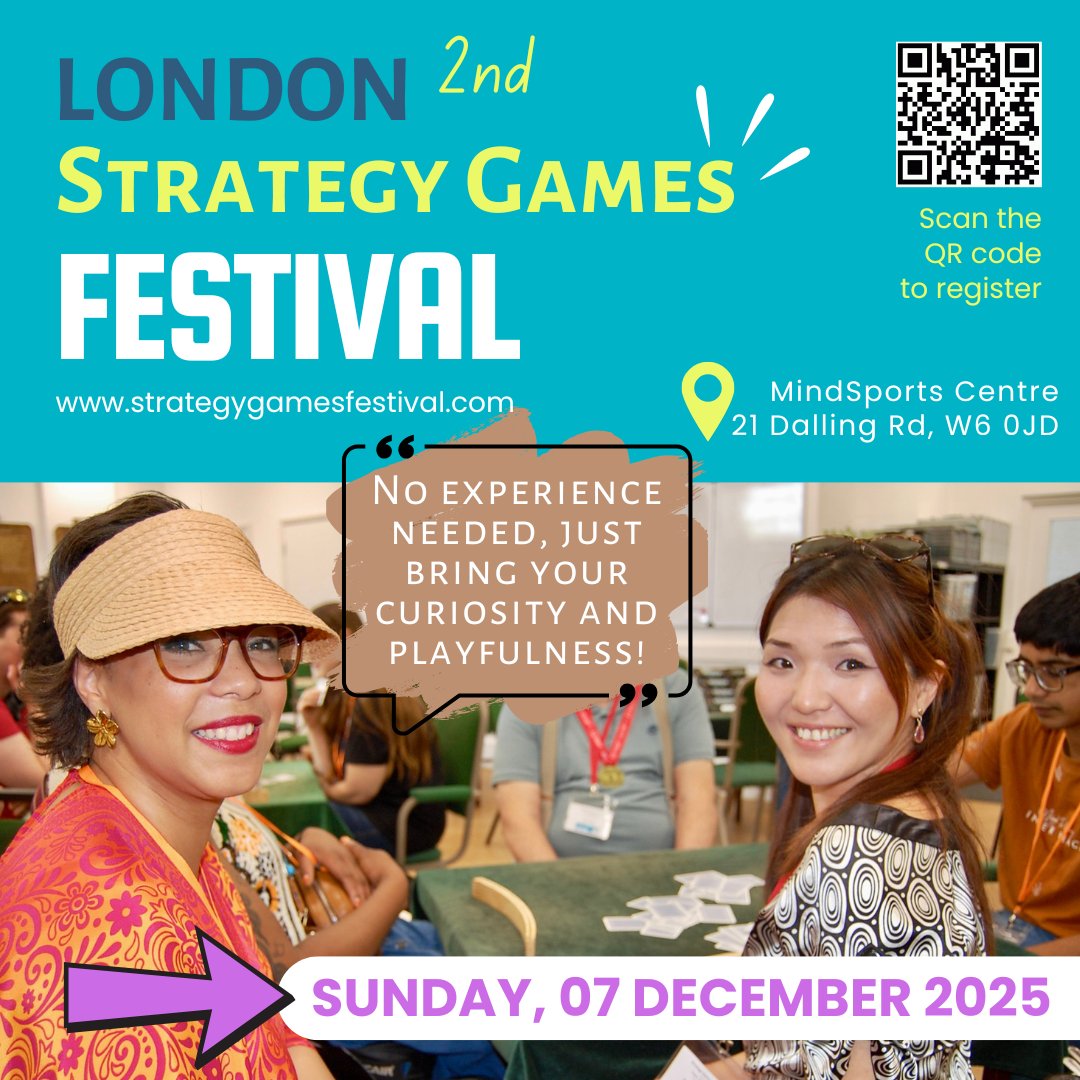
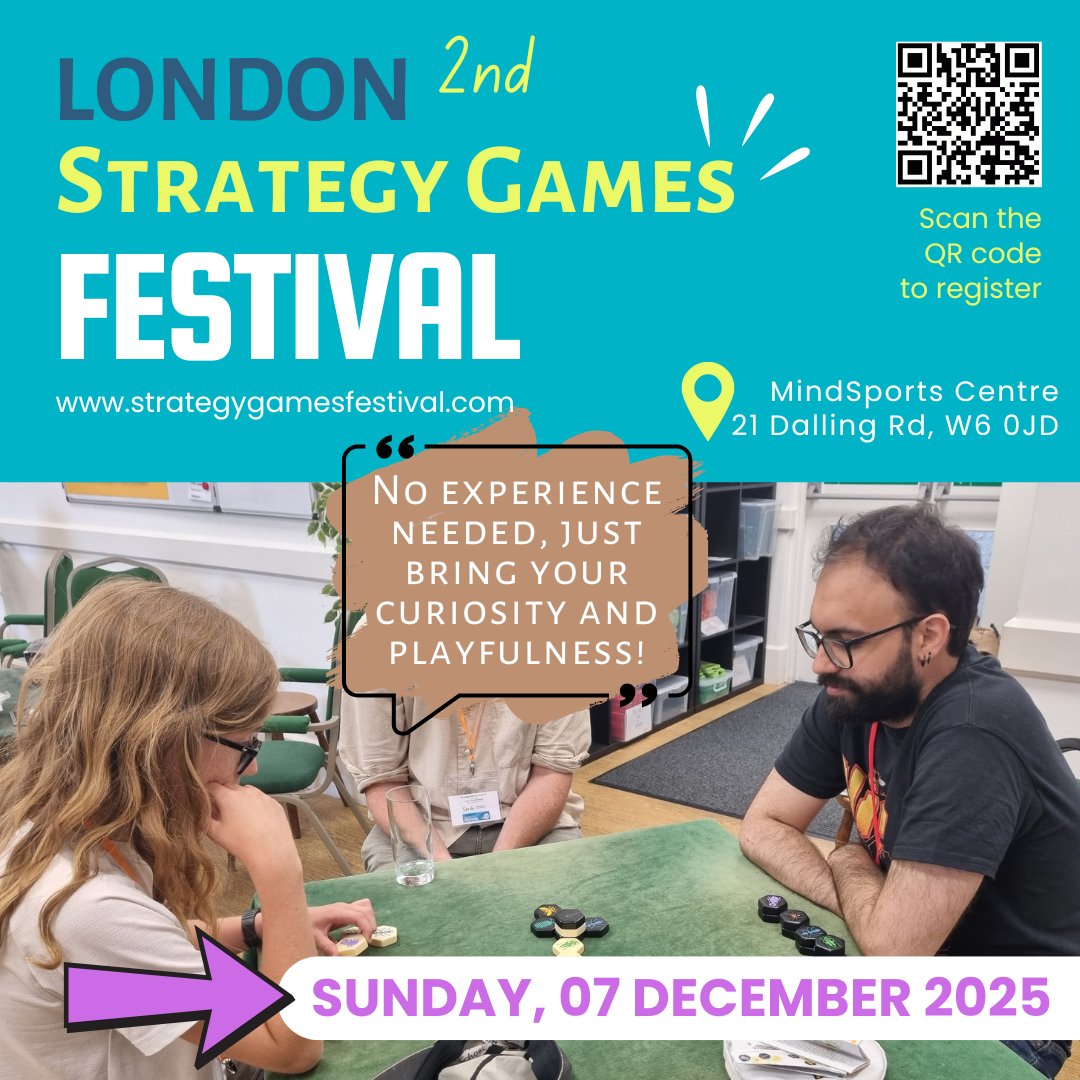
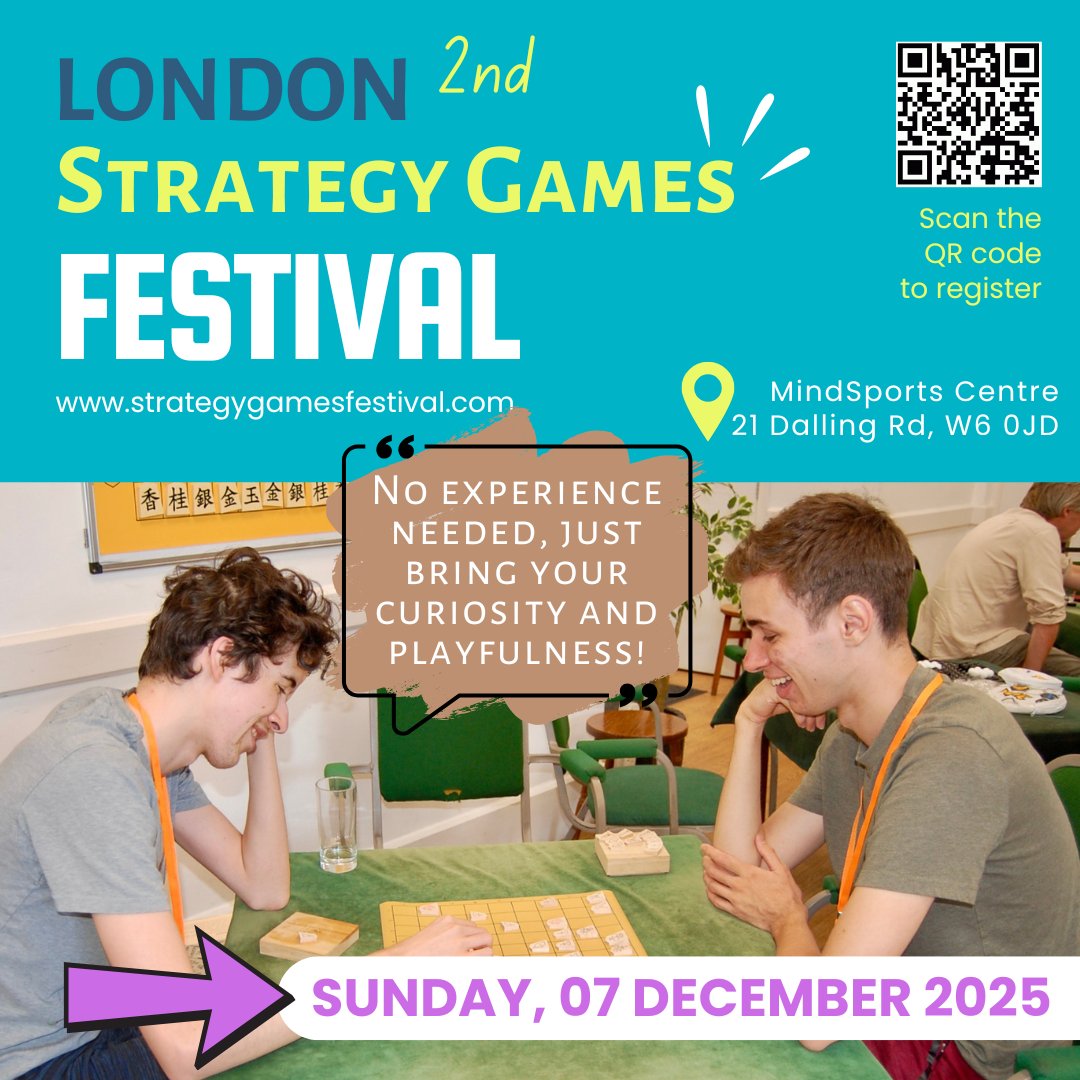
Let the crazy Christmas shopping wait, and opt for chill vibes... 💫🌿😉 THIS SUNDAY ⏰ LONDON STRATEGY GAMES FESTIVAL 07 December 2025, at the London Mindsports Centre 👉 More info and Registration: tickettailor.com/events/chesspl… @ChessScholar
English
0
1
0
69
ChessPlus
ChessPlus@ChessPlus·
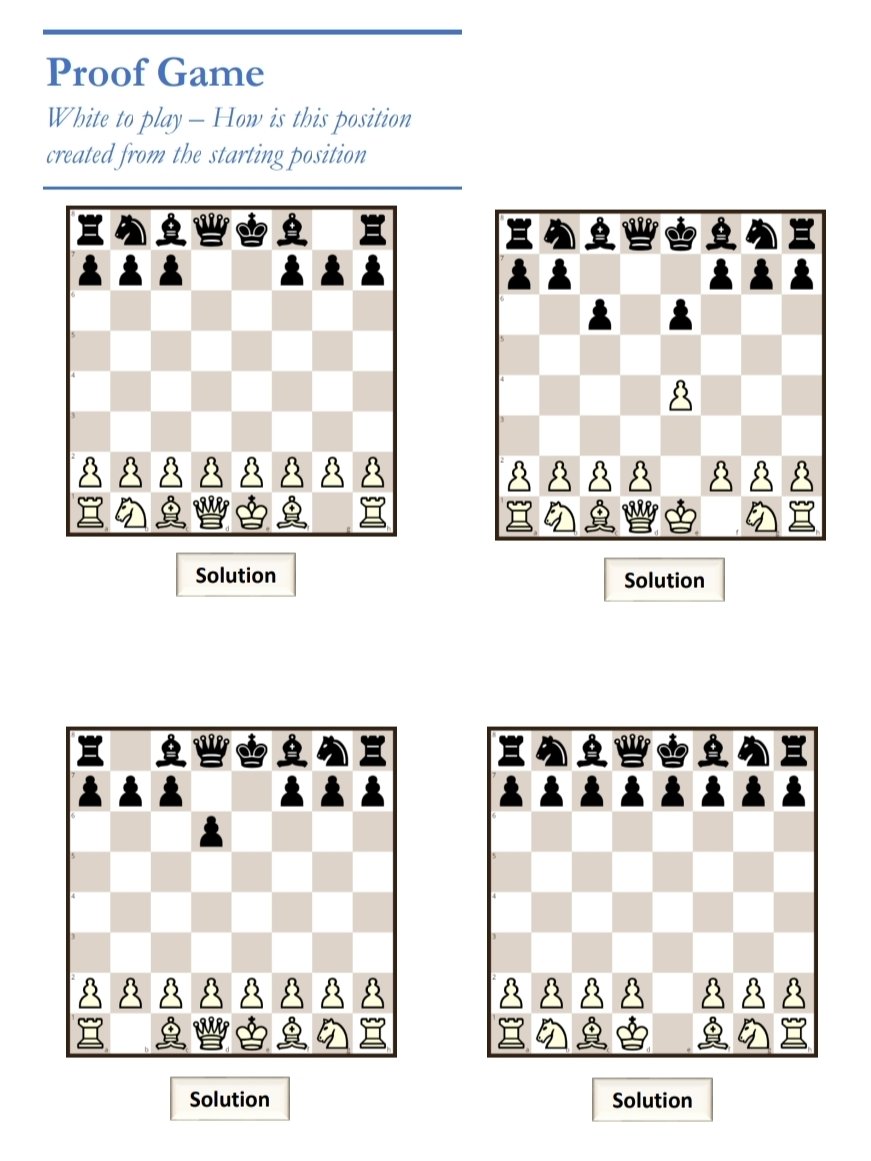
LEARN, PLAY, DESIGN 2nd London Strategy Games Festival Come and join us this ⏰ Sunday, 07 December 2025, at the London Mindsports Centre 👉 More info and Registration: tickettailor.com/events/chesspl…
ChessPlus tweet mediaChessPlus tweet mediaChessPlus tweet mediaChessPlus tweet media
English
0
1
2
69