Millie Marconi@MillieMarconnni
Bruce Lee spent the last 3 years of his life secretly writing a book that argued the entire system of martial arts he had built his fame on was a trap, and then died at 32 before he could decide whether the world was ready to read it.
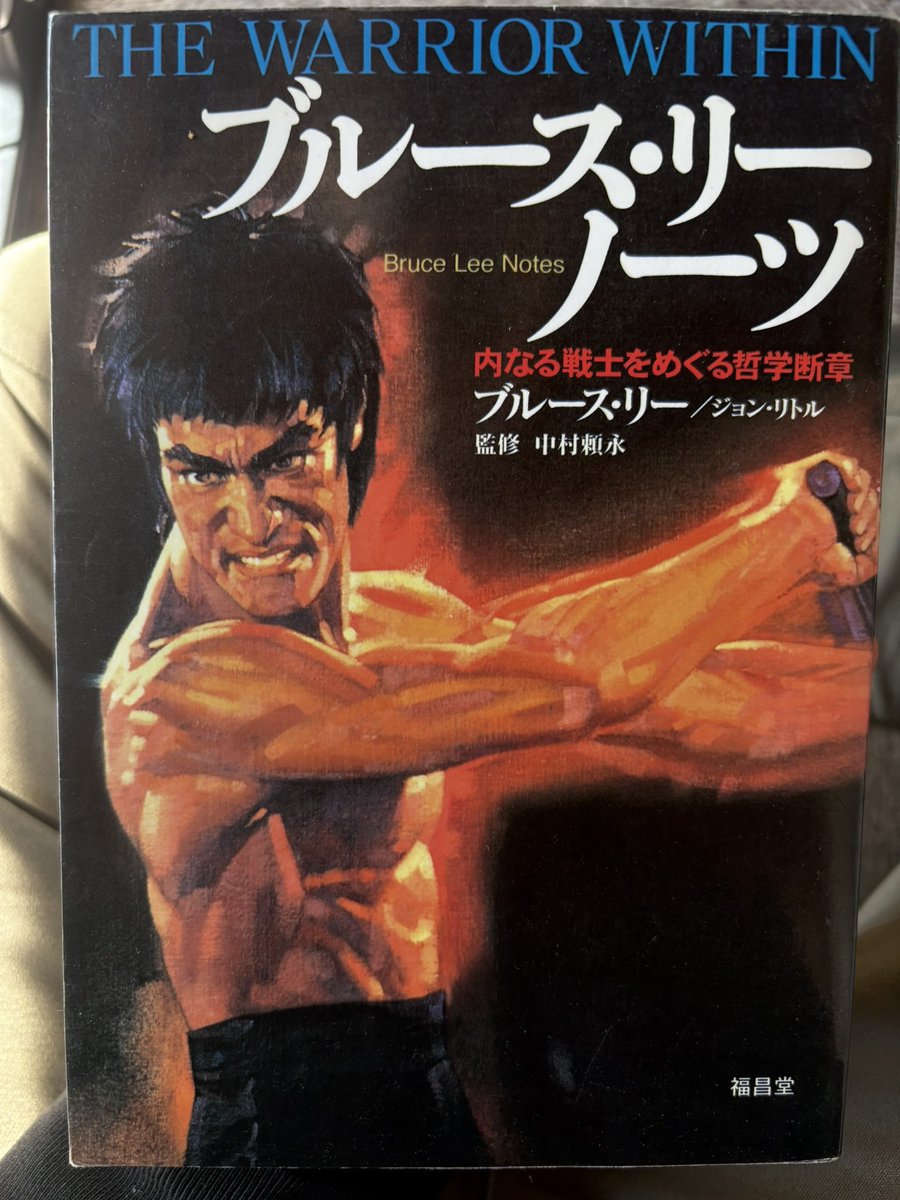
The book is called Tao of Jeet Kune Do. It is the bestselling martial arts book in history. And almost nobody who quotes it has actually understood what Bruce Lee was warning them about.
The story most people know is the famous one. In 1970, at the peak of his career, Lee suffered a severe back injury during a training session. His doctors told him he might never walk normally again. They ordered him into bed for 6 months.
He was 30 years old, in the best shape of his life, and suddenly unable to throw a single punch.
What people miss is what he did with those 6 months.
He had a library of over 2,500 books in his home. He pulled them onto the bed and started reading. Lao Tzu. Krishnamurti. Alan Watts. Sun Tzu. Eric Hoffer. He filled 7 notebooks with quotes, diagrams, sketches, and his own arguments. He was not writing a fight manual. He was building a case against the entire concept of fight manuals.
The argument is the part almost everyone misses.
Lee had spent his early career mastering Wing Chun, then training in boxing, fencing, judo, and Western wrestling. He was a black belt in nothing because he refused to participate in the ranking systems.
He noticed something nobody around him was willing to say out loud. Every traditional style on earth teaches you a fixed set of responses to fixed situations. Block here. Strike there. Move this foot first. The styles were elegant. They were beautiful. And they were turning their students into robots.
A real fight does not run on a script. The opponent does not stand still while you execute your form. The moment you commit to a pre-rehearsed sequence, you have already lost, because you are responding to a situation that exists in your training instead of the one in front of you. Lee called this crystallization, and he believed it was the disease at the heart of every martial art ever taught.
He invented Jeet Kune Do as the antidote. The name means "way of the intercepting fist," and the central idea was formlessness. Use no way as way. Take what works for your specific body in this specific moment, reject what does not, and never let any of it harden into a system. He wrote the line that would define him. Be water.
Then he watched his own students start to crystallize it.
Within a few years, Jeet Kune Do had its own techniques, its own loyalists, its own dojos. His followers were learning Jeet Kune Do moves the same way the rest of the world learned Karate moves. The thing he had built specifically to destroy the idea of a fixed style was becoming a fixed style. He had created the cage all over again.
In 1970, he shut down his own schools.
Almost nobody talks about this. The man whose name is on the bestselling martial arts book in history closed the institutions teaching his own art, because he had decided that institutionalizing it was the betrayal of the entire point. He kept teaching privately. He stopped trying to make Jeet Kune Do scale.
The line from his notes that captures the whole project is four words long. Absorb what is useful. Reject what is useless. Add what is essentially your own. This is not a martial arts instruction. It is a learning method. It says do not copy a master. Do not pledge loyalty to a school. Do not let any single source own your development. Take what works for you, leave what does not, and make the rest yourself.
He hesitated to publish the book for exactly the reason you might guess. He was afraid people would treat his notes the same way they treated every other martial arts text. As gospel. As a sequence to memorize. As another style to crystallize around.
He died on July 20, 1973. He was 32 years old. The notebooks sat in a drawer for two years until his widow Linda Lee, his student Dan Inosanto, and editor Gilbert Johnson decided to publish them. They organized 7 volumes of unfinished thinking into a 200-page book and sent it to the world.
What happened next is the irony Bruce Lee saw coming.
A generation of fighters memorized Tao of Jeet Kune Do as if it were a manual. They quoted "be like water" without ever reading the chapter where he explained that water has no form precisely because it refuses to commit to one. They tattooed his face on their bodies. They built schools certifying Jeet Kune Do instructors. They turned the man who killed styles into a style.
The book is still the bestseller it has always been. The lesson inside it is still ignored by most of the people who buy it. He warned them on the first page. The truth in combat is that there is no truth in combat. The moment you think you have found the answer, you have lost.
The book is not a manual. It is a permission slip to throw away every manual you own.