Keeping it Casual

42 posts

Keeping it Casual banner
Keeping it Casual

Keeping it Casual

@chookiemon

MTG content creator

Katılım Mart 2023
104 Takip Edilen113 Takipçiler
Keeping it Casual
Keeping it Casual@chookiemon·
@__Sanscript @SaffronOlive If you exile the entire deck aside from a single land then you can name zirda when you’re starting up a new game, then put permanents exiled this way into play when the game starts
English
0
0
0
17
sans.
sans.@__Sanscript·
@SaffronOlive You can't companion Zirda if you have Battle of Wits in your deck, as Battle of Wits is a permanent without an activated ability. However, you could companion Obosh or Keruga...
English
1
0
1
162
Saffron Olive
Saffron Olive@SaffronOlive·
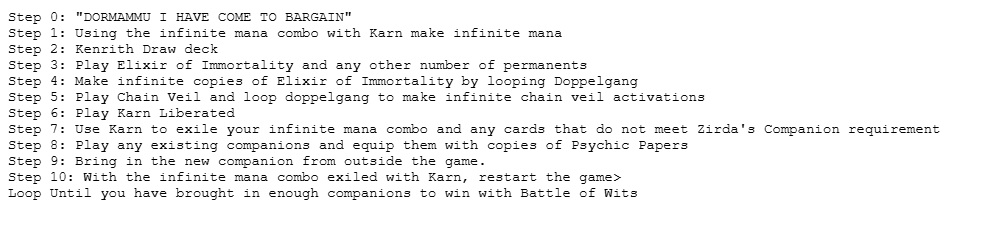
Alright rules experts. What is the flaw with this plan, or did someone actually figure out a blackborder legal way to win with Battle of Wits in Commander?
Saffron Olive tweet mediaSaffron Olive tweet media
English
35
11
370
49.8K
V S
V S@verdellshannon·
@SaffronOlive 9 legal companions, even if you used 4x each that is only 36 cards. Still only legal way to win with battle of wits is animating it and beating their face in
English
2
0
1
1.6K
Keeping it Casual
Keeping it Casual@chookiemon·
@EldritchDoe @SaffronOlive I don’t believe that’s what 903.11a is saying. When you’re naming a companion you’re not bringing it into the game. 103.2b is clear that it remains outside the game. 903.11a is indeed about the action of bringing cards into the game
English
0
0
1
10
rosa
rosa@EldritchDoe·
@SaffronOlive I think their mistake is assuming that 903.11a refers to the action of moving a companion from your command zone to your hand It means the start of game procedure of moving the companion from the sideboard/outside the game into the command zone
English
2
0
1
242
Keeping it Casual
Keeping it Casual@chookiemon·
@SaffronOlive The biggest area of contention I see is what exactly 903.11a looks at when it says “card”. 108.2 defines “card” as a Magic card or an object represented by a Magic card. The question is does it go by the name of the physical card or as it’s currently represented?
English
0
0
0
31
Keeping it Casual
Keeping it Casual@chookiemon·
@IsaacKing314 Fan of your work. My question is that when NAP resolves their trigger the creature would be a new object. When AP resolves their trigger wouldn't the instruction "Return enchanted creature card" be referring to the object that was in the graveyard? Also please join my Discord 😀
English
1
0
0
18
Isaac King 🔍
Isaac King 🔍@IsaacKing314·
A fascinating question! And a good teaching moment; thus far, none of the replies have gotten this right. The correct answer here touches on several fundamental aspects of the MTG rulebook, and also relates to mathematical set theory, which I will never pass up an opportunity to talk about. :) Let's go though it piece by piece. I'm going to assume that Ryan meant to say "triggered ability" rather than "activated ability", and that's it's the active player (AP) casting Animate Dead on their own creature card, and NAP casting Return the Favor. Any object created on the stack is always created on the *top* of the stack, so NAP's copy of the trigger resolves first. It does pretty much what an Animate Dead trigger normally does, returning the creature to the battlefield and enchanting it with Animate Dead. The only part of this that's atypical is that NAP is the controller of the creature while AP is the controller of the Animate Dead, but that's very normal, there are tons of Auras intended to go on opponent's creatures. Next, the original trigger resolves. It checks whether Animate Dead is on the battlefield (it is), and removes the "enchant creature card in a graveyard" ability (which does nothing since that ability was already gone). Where things get interesting is when it adds "enchant creature put onto the battlefield with Animate Dead". This is adding a *second* instance of that ability, just like how activating Raging Ravine twice makes it get two counters when it attacks. So what does it mean when an Aura has multiple enchant abilities? Does it have to satisfy all of them, or just one? This is answered by looking at the definition of the "enchant" keyword in 702.5a, which says that the enchant ability "restricts what an Aura can enchant". So the set of things that an Aura can legally enchant starts as "everything", and each enchant ability that it has pairs that list of things down to only the things that match its enchant ability. In set-theoretical terms, each enchant ability defines a distinct set of things it can enchant, and the final set of things the Aura can enchant is the *intersection* of those sets, meaning only the elements that are in all of the individual sets. Or in boolean algebra, this means that enchant abilities are linked with the "AND" logical connective, not "OR". So you have to satisfy all of them. (The CR does tell us the answer to the "multiple enchant abilities" question more explicitly in 702.5c, but you'll be better at answering rules questions if you try to figure things out from the underlying principles rather than rely on redundant reminder rules like this. Understanding the set theory behind the enchant keyword also allows us to answer other questions that aren't directly addressed in the CR, like what happens if you use Opportunistic Dragon to make an Aura lose all of its abilities. Turns out, it is now legally able to enchant anything at all!) Anyway, Animate Dead must satisfy both of its enchant abilities. But they're the same aren't they? Well, maybe. As some people in the comments point out, these enchant abilities are "linked" to the ability that returns a creature to the battlefield. But the word "ability" can actually mean two different things; it can mean a piece of text printed on the card, known as a "characteristic" of the card. Or it can mean an object on the stack. There is only one ability printed on the card, but there can be any number of instances of that ability that get put onto the stack. (This distinction can be confusing; for a more detailed explanation of it, see here: outsidetheasylum.blog/text-abilities…) If the enchant ability is linked to the printed ability characteristic that returns a creature, then each enchant ability can refer to any creature returned by that trigger. But if they're linked only to the specific trigger object on the stack, then the two enchant abilities will refer to different creatures and cannot possibly both be satisfied. Luckily, it's not too hard to figure out which one is meant. The CR section on linked abilities (#R607" target="_blank" rel="nofollow noopener">yawgatog.com/resources/magi…) specifies that it's talking about abilities *printed* on the card. So it can't be talking about the ability on the stack. We can also note that the "ability on the stack" interpretation would cause other cards to break. e.g. Faerie Artisans wouldn't work, since the "tokens created with Faerie Artisans" part of the ability wouldn't be able to refer to tokens created by a previous instance of that trigger. So Animate Dead's enchant ability can legally refer to any creature that any instance of that trigger put onto the battlefield. This means that giving it two instances of that ability is redundant, and doesn't do anything different from it just having one. Next AP's trigger tries to return the enchanted creature card to the battlefield. And here's where all of the previous answers went wrong; they thought that this wouldn't do anything, because it says "creature card" and therefore can't refer to a creature on the battlefield. This misses two things. First is a misreading of 109.2. It says that if an effect just says "creature" without the word "card", it must mean a creature on the battlefield. But it does *not* say the inverse; that including the word "card" means it can only refer to something that's not on the battlefield. As it happens, Wizards usually avoids referring to things on the battlefield with the word "card", just to help distinguish those effects from things that affect cards in other zones. But there's no rule that says this, it's just a stylistic choice by their templating team. And There are some times when they make an exception, such as how Dryad Militant will not affect a manifested sorcery dying. On top of that, there's also an explicit rule (303.4m) that says that any time an effect talks about "enchanted [description of thing]", it just means whatever thing is being enchanted, regardless of whether it matches that description. For example, if you enchant Mutavault with Darksteel Mutation, it will continue being a creature even past the cleanup step, since the "enchanted creature" clause is able to refer to the Mutavault even when it's not a creature. (There is an Official ruling that contradicts both of these rules, apps.magicjudges.org/forum/topic/39…, but there are many other Official rulings that contradict *that*, like apps.magicjudges.org/forum/topic/95… and apps.magicjudges.org/forum/topic/21…. Since we know for sure that at least one of those rulings must be wrong, it makes the most sense to assume that all the rulings that agree with each other and with the CR are correct, and it's only the odd one out that's wrong.) So when AP's Animate Dead trigger resolves and says "Return enchanted creature card to the battlefield under your control", it refers to the creature *that is currently on the battlefield*. The phrase "return to [zone]" on a Magic card actually just means "put in [zone]", as is obvious from the fact that something like Unsummon still works on a creature that was never in your hand and technically couldn't be "returned" somewhere it never was in the first place. So we have an instruction that says "take a creature that's on the battlefield under NAP's control, and put it onto the battlefield under AP's control". That's a little weird, but not unheard of. Rest in Peace and an Eldrazi Processor can cause a card in exile to be put into exile, and Wizards even added a rule to cover just that, 400.8. There's also 400.10, which is the same thing for the command zone. Unfortunately, these rules are "duct tape solutions", only addressing special cases rather than answering the general question of what happens when an object tries to enter the zone it's already in. (outsidetheasylum.blog/duct-tape-and-…) (There are many ways this can happen other than with Animate Dead; playing Scorched Ruins from your graveyard with Crucible of Worlds is another, or milling a card with Wheel of Sun and Moon.) So there isn't any rule that tells us how this works, and we have to guess at what's intended. It seems pretty clear that, since the trigger explicitly says that AP controls it, that's what happens. And we can extrapolate from 400.8 and 400.10 that it becomes a new object, in case that's relevant. But what if it has an ETB trigger or replacement effect? Should it apply again? This is the most ambiguous part, and I could see a head judge reasonably ruling either way. Personally I'm inclined to say "no", because 400.8 and 400.10 say that the object doesn't actually change zones, and the common-sense English meaning of "enters" means that it had to not be there previously. The glossary entry for "enters the battlefield" concurs with this, saying that it has to be moved from another zone. But this is just my interpretation, the rulebook doesn't provide an objective answer either way. Lastly AP's trigger attaches Animate Dead to the creature, and sets up a delayed trigger to sacrifice it. Note that while there are two delayed triggers that will trigger when Animate Dead leaves the battlefield, only one of them actually refers to the creature it was enchanting, since that creature became a new object when it "was put onto the battlefield" a second time. The other trigger will just do nothing when it resolves, even if the creature is still on the battlefield. So the end result is that NAP controls the creature briefly and gets any ETB triggers that it may have, but AP ends up with the creature after everything is done resolving. And a head judge could reasonably rule that AP gets a second instance of the ETB trigger too. (I *could* also see a head judge ruling that both 303.4m and 109.2 were supposed to be written with some hyperspecific exception for Animate Dead and Dance of the Dead and no other cards, and therefore the creature doesn't get moved over to AP's control. This seems like a stretch, but it's certainly possible that that's what Wizards intended and they just... forgot, or something. (They have done things like that before, to be fair.) If a head judge decides to go this route, they should be clear to the players that they're deviating from the CR, so that the players aren't confused if they look it up or get a different ruling later.) It seems unlikely that Wizards will ever rule on this exact question given how they've stepped back from supporting Organized Play. Even if they do, they might just contradict themselves again a few months down the line, which is why I think it's generally best to stick to the CR as a canonical source rather than try to interpret the labyrinthine and mutually-conflicting Official rulings that Wizards puts out on forums and social media. So why did so many people get this wrong? I briefly looked through the comments and saw incorrect answers from a level 4 @judgefoundry judge, a level 3, and three level 2s, among others. I think this question was particularly challenging because it breaks our expectations. We normally only see phrases like "creature card" applied to cards that aren't on the battlefield, and we know that "creature" is restricted to mean "on the battlefield", so our minds fill in the blanks and draw a sharp distinction when in reality it's a more subtle one. On top of that, it's just weird. Just like how some players will stare at you incredulously if you tell them that casting Dress Down on Magus of the Moon doesn't make your lands stop being Mountains, a creature that's already on the battlefield being put onto the battlefield just *feels* wrong, even if it's not actually that much out of the ordinary. One of the most valuable lessons I learned as a judge came from when I was just starting out. My mentor assigned me to help out in the "Ask the Judge" Facebook group in order to get experience answering questions, and a few of us there found it entertaining to compete with each other to see who could answer fastest. After giving several incorrect answers due to my rush to answer first, this eventually embarrassed me into gaining a feeling for what sorts of questions I'm safe to answer on the spot vs. when I need to sit back and do some research first. There's also a broader lesson here. While the MTG rulebook has always contained a lot of ambiguities and conflicts with spot-rulings made by employees, this problem has been getting worse as Wizards moves to focus more on mass market appeal and steps back from tournament play. In their biggest step in this direction yet, Wizards has stopped publishing update bulletins for new versions of the rulebook, so we're no longer told the reasoning behind specific changes. Judges now have to update their rules knowledge using third-party resources like academyruins.com. And I expect this philosophy will continue to be reflected in an increasing number of gaps in the rulebook and a decreasing number of top-down solutions offered to fill those gaps. It's increasingly important for us to understand the distinction between "what the rules literally say" and "what I feel is right", since those are often not going to be the same thing. The judge community should probably have some discussions about how best to handle these sorts of cases where the rules are not entirely clear on what should happen. Ultimately though, I'm confident that things will be ok. The Magic community has historically done a great job of stepping up to solve failures of top-down support, like creating Scryfall to replace Gatherer and MTG Melee to improve on Eventlink. Whatever happens with the Wizards CR, we will always have tournaments to play and fun corner cases in them to argue about. :)
English
7
1
7
1.9K
Keeping it Casual
Keeping it Casual@chookiemon·
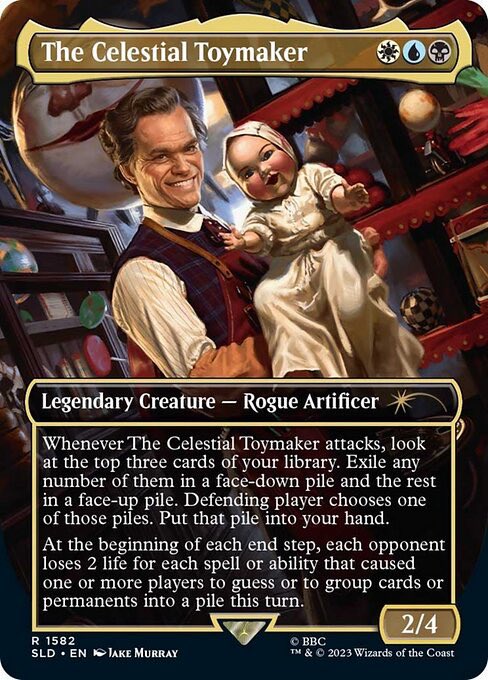
@Dunkatog what is a pile? According to the glossary it’s a “temporary grouping of cards”. But according to 406.5 cards put in exile that may come back are put in separate “piles”. so would Celestial Toymaker count my Ghostly Flicker as “grouping cards in a pile?”
Keeping it Casual tweet media
English
0
0
0
18
Kenyan Lee 🌙💜🀄
Kenyan Lee 🌙💜🀄@KeiruKeiruRNG·
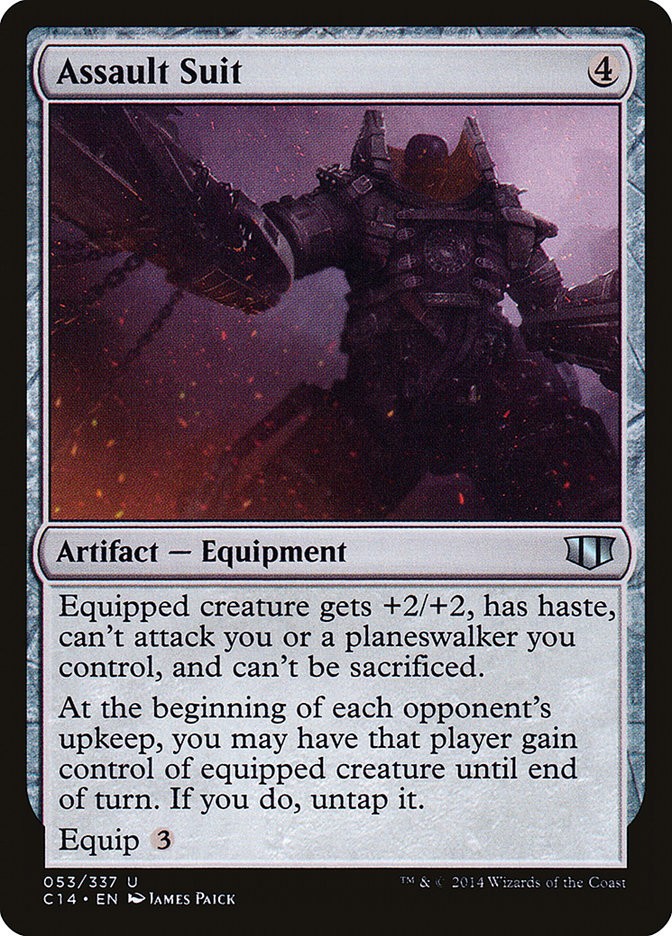
@chookiemon @Dunkatog Okay. What made me start thinking down this line is the interaction with Blood Moon and Urza's Saga. In a similar line, if you Dress Down a summon, I'm assuming it'll become a creature enchantment saga with no chapter abilities and sacrifice itself as a state based action.
Kenyan Lee 🌙💜🀄 tweet media
English
1
0
1
31
Jess Dunks
Jess Dunks@Dunkatog·
Saga creatures! Given a lot of underlying complexity, these were a spooky idea, and it was tempting to say "no, we can't do that." For rules, though, I'd rather say "Try that for a bit; let's see if it's fun. If it is, we'll figure out how it works." It turns out they're very fun
Magic: The Gathering@wizards_magic

#MTGxFINALFANTASY “Summons” are Enchantment Creature Sagas, as seen here with Shiva from FINAL FANTASY X! They allow you to utilize their powerful abilities before finishing in a blaze of glory with an ultimate ability.
English
7
3
27
3.3K
Keeping it Casual
Keeping it Casual@chookiemon·
@KeiruKeiruRNG @Dunkatog As far as I understand state based actions will check, attempt to sacrifice (but can’t) then move on. It won’t keep repeating itself over and over again. It will continue to check on future SBA checks. It can gain lore counters too but won’t trigger anything.
English
1
0
0
29
Kenyan Lee 🌙💜🀄
Kenyan Lee 🌙💜🀄@KeiruKeiruRNG·
@chookiemon @Dunkatog When the last lore counter is added, you sacrifice the saga. But what if we can't sacrifice it? Would state based actions keep telling us to sacrifice it over and over again into an endless void?
Kenyan Lee 🌙💜🀄 tweet mediaKenyan Lee 🌙💜🀄 tweet media
English
1
0
1
30
Jess Dunks
Jess Dunks@Dunkatog·
@chookiemon Not to disappoint too much but. As much as possible, we tried to avoid creating them.
English
1
0
1
119
Keeping it Casual
Keeping it Casual@chookiemon·
@Dunkatog Hi Jess I was making a video on the Caged Sun loop, but certain wording with the CR made me question whether it could be responded to or not. Can an ability be a mana ability sometimes and sometimes not be a mana ability? Hope to hear from you
English
0
0
0
159
chase, totally lost
chase, totally lost@ManaCurves·
A local restaurant brought food to us! We now have tons of meat and veggies, a keg, and pretzels lmao
chase, totally lost tweet media
English
18
2
517
21.4K
Keeping it Casual
Keeping it Casual@chookiemon·
@Dunkatog I need to know!! Does Secret Arcade allow The Master of Keys to cast permanent cards with escape?
English
3
0
7
695
Keeping it Casual
Keeping it Casual@chookiemon·
@Pharmacistjudge @VeggieWagonYee But to me that is only referring to the rest of the ruling for specifically alternative characteristics or sub characteristics rather than modified or additional characteristics
English
0
0
0
64
Keeping it Casual
Keeping it Casual@chookiemon·
@Pharmacistjudge @VeggieWagonYee That’s how I feel about this too. The argument I hear is the last line of 601.3e where it says “Continuous effects that would apply to that object once it has those characteristics are also considered”. Saying that that allows you to consider the change
English
1
0
0
68
VeggieWagon on the other one too
VeggieWagon on the other one too@VeggieWagonYee·
Holy. Shit. They think I AM HUMANS OF MAGIC Just a reminder that there is, in fact, more than one Asian man in the MTG community
VeggieWagon on the other one too tweet mediaVeggieWagon on the other one too tweet media
English
93
22
904
99.1K
Dave The Noob - This reminds me of MSN
One day I hope to play in a pod with @chookiemon so i can play the most rules dense deck I can possibly imagine and just peer over my hand of cards waiting for them to explain how i just did everything wrong
English
1
0
1
106