christop Paillusseau

7.3K posts

christop Paillusseau

christop Paillusseau

@chrisP_75

Nantais et parisien d'adoption, esprit libre

paris Katılım Nisan 2012
251 Takip Edilen80 Takipçiler
christop Paillusseau retweetledi

Breaking911
Breaking911@Breaking911·
TRUMP: "We have a ballroom that's under budget. It's going up right here. I doubled the size of it because we obviously need that." REPORTER: "The price has doubled..." TRUMP: "I doubled the size of it, you dumb person. I doubled the size. You are not a smart person."
English
1.5K
2.7K
50.1K
5.7M
Gandalv
Gandalv@Microinteracti1·
The President of the United States woke up this morning and posted a 150-word personal attack on Bruce Springsteen. Not on Iran. Not on the tariffs crashing global markets. Not on the recession warnings. Bruce Springsteen. There is a standard psychological tool called the Hare Psychopathy Checklist. It has 20 items scored on a scale from 0 to 40. The cutoff for a diagnosis of psychopathy is 30.  The average person scores around 4. The average maximum security prisoner scores 22.  A panel of eminent psychiatrists assessed Trump before his 2024 sentencing in New York. He scored 36 out of 40.  The 25th Amendment exists precisely for this. Section 4 allows the Vice President and a majority of the Cabinet to declare the president unable to carry out his duties.  It has never been used. In any normally functioning democracy, the bar would be far lower. Most leaders in that position resign themselves. Instead, this one is on Truth Social at 7:58 AM calling a rock legend a dried-up prune. America is fighting a war it cannot exit in Iran. Markets are in freefall. Allies are making alternative plans. And the man with the nuclear codes is writing concert reviews. Gandalv / @Microinteracti1
Gandalv tweet media
English
2.2K
11.7K
31.1K
2M
christop Paillusseau retweetledi
Raphaël Vignes
Raphaël Vignes@RaphaelVignes·
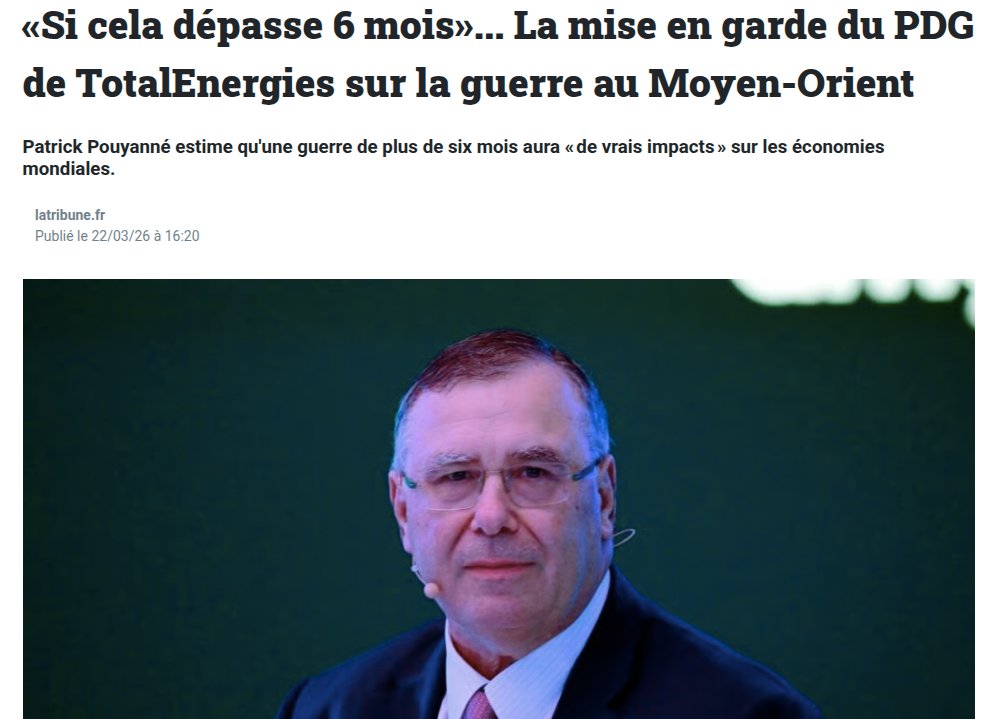
L'avertissement de Patrick Pouyanné, PDG de $TTE TotalEnergies. Le PDG de TotalEnergies, Patrick Pouyanné, pourtant bénéficiaire de la hausse des prix du pétrole, s'inquiète d'un conflit prolongé au Moyen-Orient. Il affirme qu'un blocage du détroit d'Ormuz (par où transite ~20 % du pétrole mondial) au-delà de 6 mois aurait des conséquences très graves pour l'économie mondiale, avec 10 millions de barils/jour bloqués. Un conflit de 3-4 mois reste gérable grâce aux stocks, mais la situation s'enlise au 23e jour : l'Iran a fermé le détroit, Trump a lancé un ultimatum de 48 heures menaçant de détruire les centrales électriques iraniennes, et Téhéran réplique en promettant d'attaquer les infrastructures énergétiques régionales si les menaces se concrétisent. TotalEnergies a déjà arrêté ~15 % de sa production dans la zone.
Raphaël Vignes tweet media
Français
10
25
193
58.7K
christop Paillusseau retweetledi
Little Think Tank
Little Think Tank@L_ThinkTank·
‼️[ 🇮🇷 IRAN | 🇺🇸 ÉTATS-UNIS ] 🔸 Le porte-parole des forces armées iraniennes avertit que toute attaque contre les infrastructures énergétiques iraniennes entraînerait des frappes sur les installations américaines et alliées dans la région, incluant sites énergétiques, systèmes informatiques et usines de dessalement.
Little Think Tank@L_ThinkTank

‼️ [ 🇺🇸 ÉTATS-UNIS | 🇮🇷 IRAN ] 🔸 Donald Trump déclare que les États-Unis commenceront à « oblitérer » les centrales électriques iraniennes si Téhéran ne rouvre pas le détroit d'Ormuz sous 48 heures.

Français
27
101
741
152.5K
christop Paillusseau retweetledi
QatarEnergy
QatarEnergy@qatarenergy·
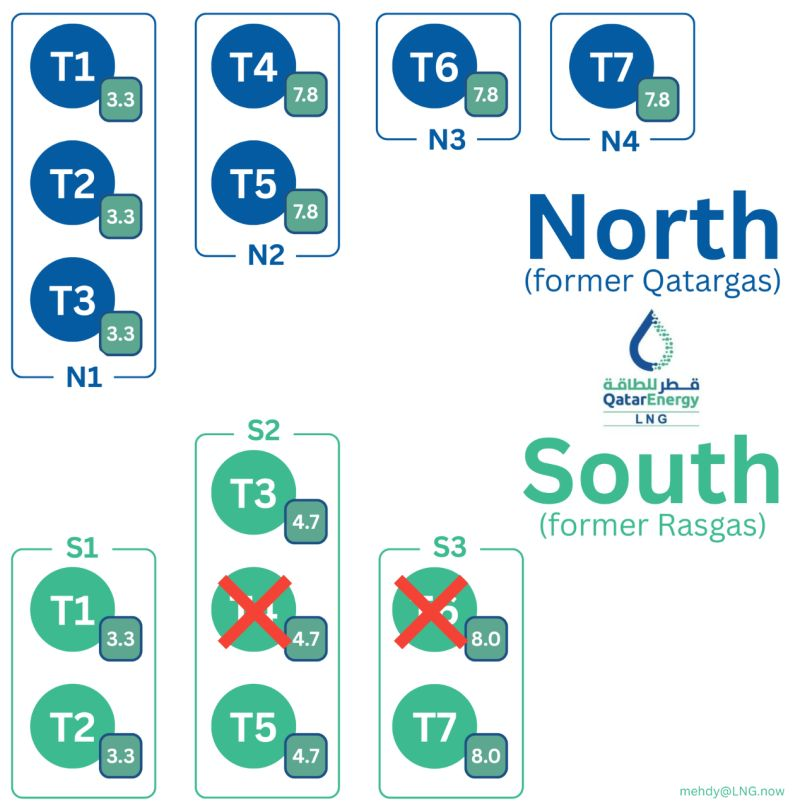
Providing an update on the damage from the missile attacks on Ras Laffan Industrial City H.E. Minister Saad Sherida Al-Kaabi: The missile attacks reduced Qatar’s LNG export capacity by 17% and caused an estimated loss of $20 billion in annual revenue - Extensive damage to our production facilities will take up to five years to repair and will compel us to declare long-term force majeure QatarEnergy expects the damage to its Ras Laffan Industrial City caused by missile strikes, which occurred on Wednesday 18 March 2026, and in the early hours of Thursday 19 March 2026, to cost about $20 billion a year in lost revenue and to take up to five years to repair, impacting supply to markets in Europe and Asia. Providing an update on the damage to the facilities at Ras Laffan Industrial City, His Excellency Mr. Saad Sherida Al-Kaabi, the Minister of State for Energy Affairs, the President and CEO of QatarEnergy, said “I am relieved to confirm that no one was injured by these unjustified and senseless attacks, which weren’t just an attack on the State of Qatar but attacks on global energy security and stability. This was an attack on all of us who stand for development and human progress that is sustained by a fair, reliable, and secure access to energy.” The attacks damaged two liquefied natural gas (LNG) producing Trains 4 and 6 totaling 12.8 million tons per annum (MTPA) of production, representing approximately 17% of Qatar’s exports. Train 4 is a joint venture between QatarEnergy (66%) and ExxonMobil (34%), and Train 6 is a joint venture between QatarEnergy (70%) and ExxonMobil (30%). His Excellency Minister Al-Kaabi said: “The damage sustained by the LNG facilities will take between three to five years to repair. The impact is on China, South Korea, Italy and Belgium. This means that we will be compelled to declare force majeure for up to five years on some long-term LNG contracts.” The attacks also targeted the Pearl GTL (Gas-to-Liquids) facility, a production sharing agreement operated by Shell, that converts natural gas into high-quality cleaner burning drop-in fuels and produces base oils used to make premium engine oils and lubricants, and paraffins and waxes. “The damage caused to one of the two trains at Pearl GTL is being assessed and is expected to be offline for a minimum of one year” His Excellency Minister Al-Kaabi added. It should be noted that there will be a loss of associated product production due to this outage as follows: · Condensates: 18.6 million barrels which is around 24% of Qatar’s exports · LPG: 1.281 MT which is around 13% of Qatar’s exports · Naphtha: 0.594 MT which is around 6% of Qatar’s exports · Sulfur: 0.18 MT which is around 6% of Qatar’s exports · Helium: 309.54 MCFA which is around 14% of Qatar’s exports His Excellency the Minister of State for Energy Affairs, the President and CEO of QatarEnergy paid tribute to the Qatari military and security forces and to the energy sector emergency response teams whose courage and extraordinary professionalism ensured the situation was contained quickly and safely. #Qatar
English
65
613
1.6K
535.8K
christop Paillusseau retweetledi
Jack Prandelli
Jack Prandelli@jackprandelli·
Qatar's LNG trains S4 and S6 confirmed damaged and out of service. 3 to 5 YEARS of repairs🚨 12.8 million tonnes per year of LNG are Offline. And here's the twist nobody expected: ExxonMobil holds 34% of Train S4 and 30% of Train S6. An American oil major just took a direct hit from Iranian missiles. #LNG #Qatar
Jack Prandelli tweet media
English
50
581
1.3K
136.2K
christop Paillusseau retweetledi
QatarEnergy
QatarEnergy@qatarenergy·
QatarEnergy Statement on Missile Attacks on its LNG Facilities In addition to the previous attack on Ras Laffan Industrial City on Wednesday 18 March 2026 that resulted in extensive damage to the Pearl GTL (Gas-to-Liquids) facility, QatarEnergy confirms that in the early hours of Thursday 19 March 2026, several of its Liquefied Natural Gas (LNG) facilities were the subject of missile attacks, causing sizeable fires and extensive further damage. Emergency response teams were deployed immediately to contain the resulting damage with no reported casualties. QatarEnergy will continue to communicate the latest available information. #Qatar
English
166
1.2K
3.6K
1.7M
christop Paillusseau retweetledi
Shanaka Anslem Perera ⚡
Shanaka Anslem Perera ⚡@shanaka86·
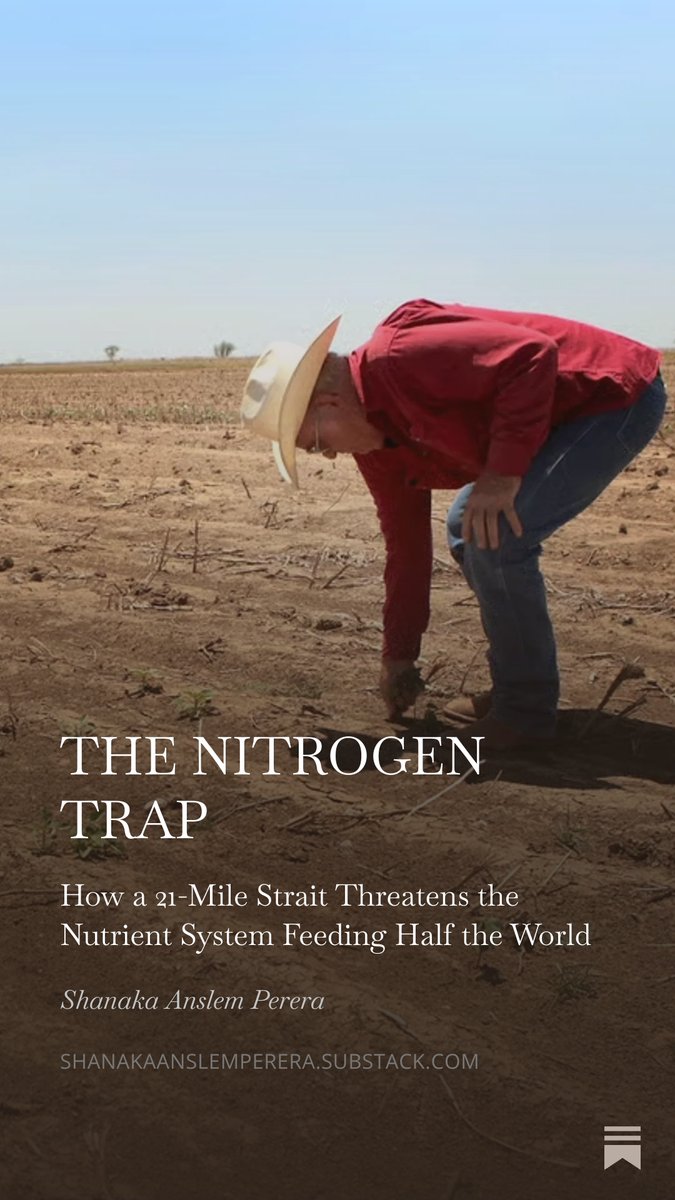
BREAKING: The world spent fifty years and hundreds of billions of dollars building Strategic Petroleum Reserves so that no geopolitical shock could starve civilization of energy. Nobody built the equivalent for fertilizer. That is the most expensive oversight in the history of modern statecraft, and you are about to pay for it at the grocery store. The Strait of Hormuz does not merely carry 20% of global oil. UNCTAD estimates roughly one-third of all seaborne fertilizer trade passes through it. The Fertilizer Institute estimates that conflict-exposed exporters account for nearly 49% of global urea exports and nearly half of global sulfur trade. Since February 28, daily ship transits have collapsed by 97%. Here is what almost nobody understands about why this is not "just another commodity spike." It was not the missiles that closed the strait. It was the insurance. Multiple P&I clubs cancelled war-risk extensions for the Gulf after 26 months of Red Sea losses had already depleted their Solvency II capital buffers. War-risk premiums surged from 0.25% to as high as 5% of hull value per transit. A urea cargo cannot absorb that. The economics of fertilizer shipping through Hormuz became impossible before a single mine needed to detonate. The Trump administration announced a $20 billion sovereign-backed reinsurance facility with Chubb as lead underwriter. There is no confirmed public evidence that a single fertilizer vessel has used it. Insurance pays for financial loss. It does not intercept anti-ship missiles. Physical security remains the binding constraint, and the US Navy confirmed on March 12 it is "not ready" for commercial escorts. Now here is the part that should terrify every allocator on Earth. Agriculture runs on biological deadlines. Corn Belt farmers need nitrogen applied by mid-April. Indian Kharif season prep starts in May. Australian winter crop needs urea by June. These are not financial deadlines that reprice. They are photosynthetic deadlines that, once missed, produce irreversible yield loss. A diplomatic breakthrough on April 15 does not help a farmer who needed fertilizer on April 1. And the yield math is nonlinear. Wall Street models fertilizer-to-output as proportional. It is not. The response is quadratic. In developed systems that over-apply nitrogen, a 15% reduction costs 2-5% of yield. In the Global South where farmers already under-apply, the same reduction pushes crops off a biophysical cliff. Sri Lanka proved this in 2021 when a sudden fertilizer ban collapsed rice production 40% in a single season and brought down the government. The market is pricing a 45-day disruption. The insurance architecture says 120 days minimum. Even after a hypothetical ceasefire, Solvency II capital rebuild, reinsurance treaty renegotiation, and vessel re-underwriting take months. The Red Sea precedent: 26 months after Houthi attacks began, war-risk premiums never returned to pre-crisis levels. Both sides are rejecting negotiations. Trump rebuffed ceasefire mediation March 14. Iran's foreign minister on March 15: "We never asked for a ceasefire." Meanwhile: 51% of US corn areas in drought. El Nino favored by June at 62% probability. Skymet assigns 60% chance of below-normal Indian monsoon. Bangladesh has shut five of six urea factories. India formally asked China for urea on March 12. Egypt faces $28 billion in debt repayments while importing 12.7 million tonnes of wheat. WFP identifies 318 million people already at crisis-level hunger. The world stockpiled oil but forgot to stockpile the molecules that produce half its food. The clock is the position. Full analysis in the link! open.substack.com/pub/shanakaans…
Shanaka Anslem Perera ⚡ tweet media
English
61
738
1.6K
542.8K
christop Paillusseau retweetledi
Nicolas Meilhan
Nicolas Meilhan@NicolasMeilhan·
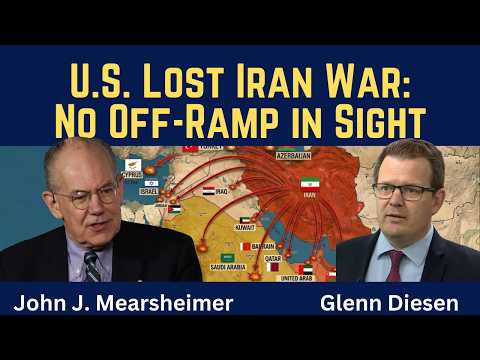
Quel plaisir d'écouter l'un des êtres humains les plus brillants et les plus lucides sur notre petite Terre : John Mearsheimer ! youtu.be/1e9NhLfPNKU?is…
YouTube video
YouTube
Français
9
48
119
6.7K
christop Paillusseau retweetledi
Nicolas Meilhan
Nicolas Meilhan@NicolasMeilhan·
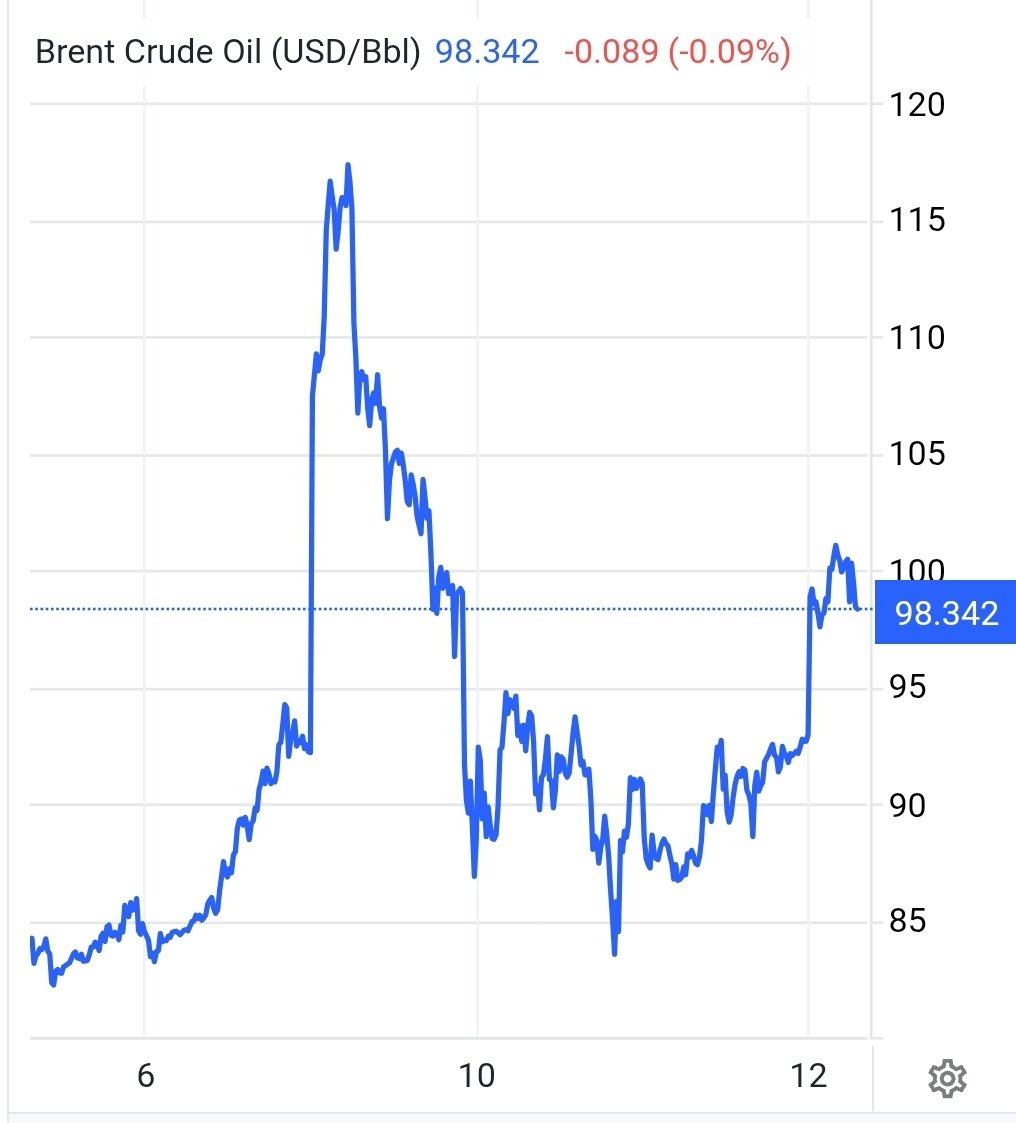
Les marchés ont visiblement été rassurés par la libération de 400 millions de baril de pétrole, la plus grande jamais réalisée à date, puisque le prix du pétrole est repassé au-dessus des 100$ ce matin. Ou ils commencent à se rendre compte que Donald Trump les mènent en bateau...
Nicolas Meilhan tweet media
Français
10
39
115
5.5K
christop Paillusseau retweetledi
Oliver Groß
Oliver Groß@minenergybiz·
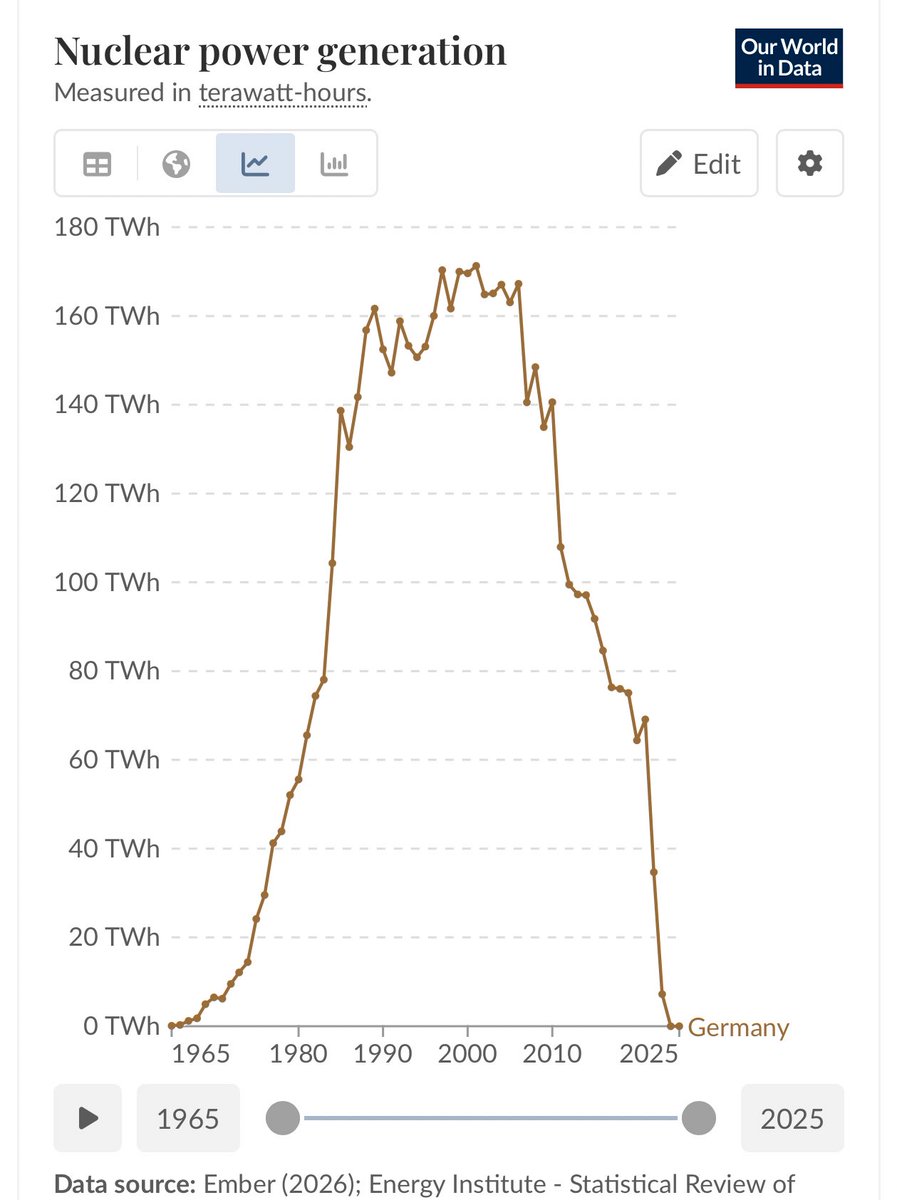
Unreal numbers 👀⚡️ "JPMorgan estimates that, had Germany not phased out nuclear power, the country would have generated 50% less electricity from fossil fuels and 84% less electricity from natural gas in 2024. Electricity prices in Germany would have been around 25% lower, and the country would have imported half as much electricity.."
Oliver Groß tweet media
English
873
6.2K
31.8K
3.7M
christop Paillusseau retweetledi
Shanaka Anslem Perera ⚡
Shanaka Anslem Perera ⚡@shanaka86·
BREAKING: Bahrain just got hit. Not a base. Not a military installation. The refinery. The Bahrain Petroleum Company, BAPCO, is burning. Iranian missiles and drones reached the facility on March 5 despite Bahraini air defenses intercepting 75 missiles and 123 drones in the same wave. The intercept count is the highest single-day figure for any Gulf state in this war. The fires are confirmed by video. The fires are real. Understand what BAPCO is. It is not an abstraction. It is the refinery that processes virtually all of Bahrain’s domestic petroleum output, sitting on an island of 800 square kilometers that also hosts Naval Support Activity Bahrain, the headquarters of the United States Fifth Fleet. The Fifth Fleet commands all US naval operations across the Persian Gulf, the Red Sea, the Arabian Sea, and the Indian Ocean. The commanding officer of the Fifth Fleet wakes up every morning approximately twelve kilometers from the refinery that Iran just struck. If you wanted to design a single target that communicates simultaneously to the global energy market, the US Navy, and every Gulf monarchy watching this war, you would design BAPCO. Iran did not need to destroy the facility to win the targeting decision. The mechanism of the strike is verification cost inversion applied to oil infrastructure rather than shipping insurance. An oil refinery that has been struck once by Iranian missiles in an active war is a refinery that no insurance underwriter, no shipping counterparty, and no downstream buyer can treat as a reliable facility without repricing every contract that touches it. The fires that Al Jazeera is broadcasting tonight are doing more work in the oil derivatives market than in the actual refinery. The facility will be repaired. The actuarial fact of its vulnerability cannot be unrepaired. Bahrain has absorbed attacks since February 28. The kingdom hosts the only US naval headquarters in the Gulf theater. It is a country of 1.5 million people on an island that cannot be defended in depth because it has no depth. Its air defense systems are among the most capable in the region and they intercepted nearly 200 incoming projectiles in a single day. Six of those projectiles reached the refinery anyway. The interceptors cost orders of magnitude more per round than the drones they are stopping. The attrition arithmetic that has governed every Gulf state’s position in this war has now been demonstrated at the petroleum infrastructure level. Iran does not need to shut BAPCO down. It needs to establish that BAPCO can be reached whenever Iran chooses to reach it. That threshold was crossed on March 5. Bahrain now knows it. The Fifth Fleet headquarters twelve kilometers away knows it. Every energy trading desk that has been pricing Gulf risk since February 28 is repricing it again tonight. The fires at BAPCO are the visible part. The invisible part is the number that moved in the oil options market in the thirty minutes after the first video was posted. open.substack.com/pub/shanakaans…
English
607
4.9K
11.3K
2.5M
christop Paillusseau retweetledi
Financial Times
Financial Times@FT·
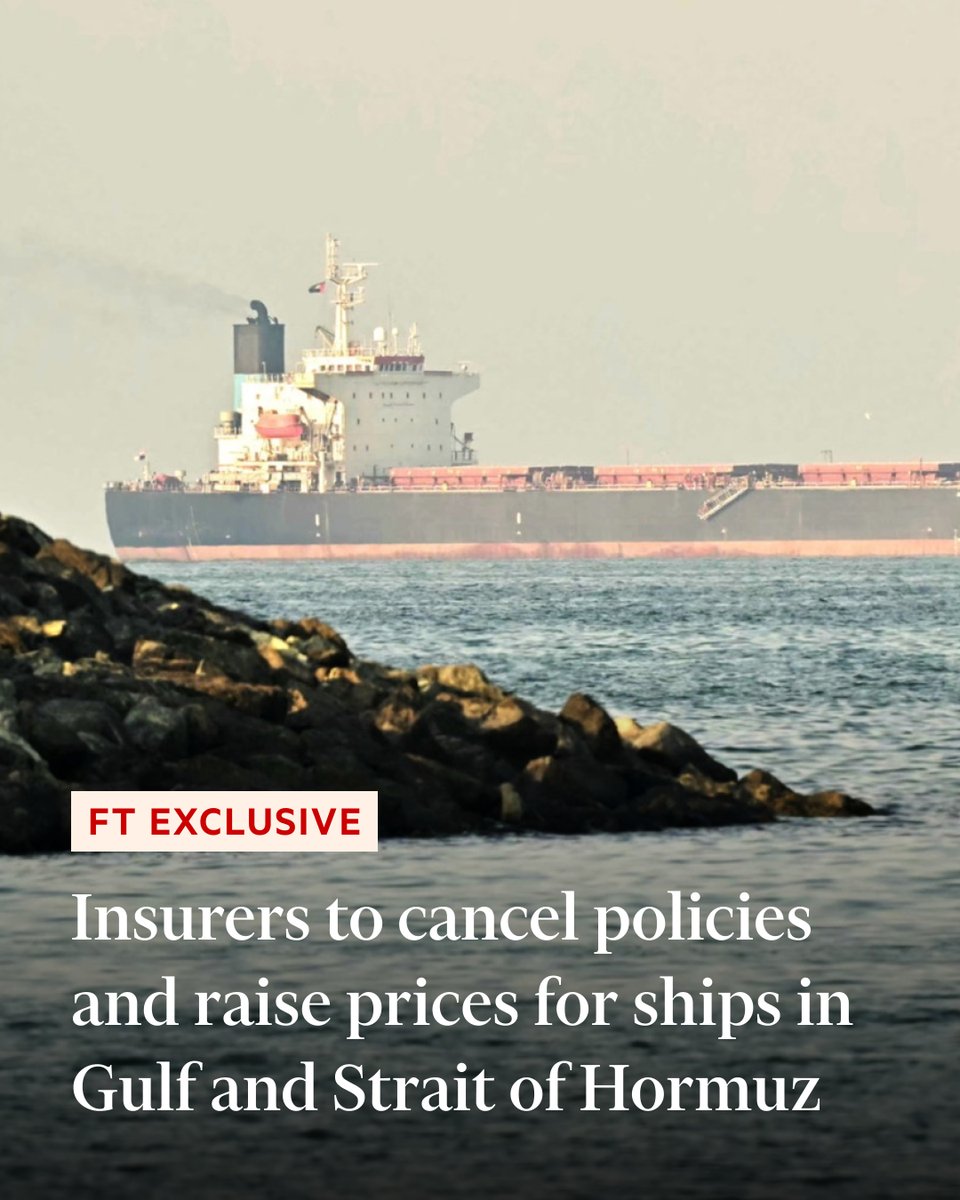
Brokers have told the FT that war risk insurers have submitted cancellation notices for policies covering ships moving through the Strait of Hormuz, a key oil chokepoint, with prices set to rise as much as 50% in the coming days ft.trib.al/QCeOCQ7
Financial Times tweet media
English
86
1.8K
2.9K
2.2M
christop Paillusseau retweetledi
Sal Mercogliano (WGOW Shipping) 🚢⚓🐪🚒🏴‍☠️
To everyone wondering why ships are holding up outside the Strait of #Hormuz right now, the reason is WAR RISK INSURANCE! Right now, every major Protection and Indemnity (P&I) Club is notifying their clients of the need for additional protection (AP). You see, the shipping companies are not worried about incurring damage from the Iranians. They are worried about incurring damage that is not INSURED! The ships will sail once they garner the additional protection or they will seek out another port to load, but 20% of global crude comes out of the Persian Gulf and through the Strait of Hormuz. Welcome to the world of Global Shipping! @wgowshipping?si=fnVyMuYbg87HcCJo" target="_blank" rel="nofollow noopener">youtube.com/@wgowshipping?…
Financial Times@FT

Brokers have told the FT that war risk insurers have submitted cancellation notices for policies covering ships moving through the Strait of Hormuz, a key oil chokepoint, with prices set to rise as much as 50% in the coming days ft.trib.al/QCeOCQ7

English
93
973
3.4K
1.7M
christop Paillusseau retweetledi
The Kobeissi Letter
The Kobeissi Letter@KobeissiLetter·
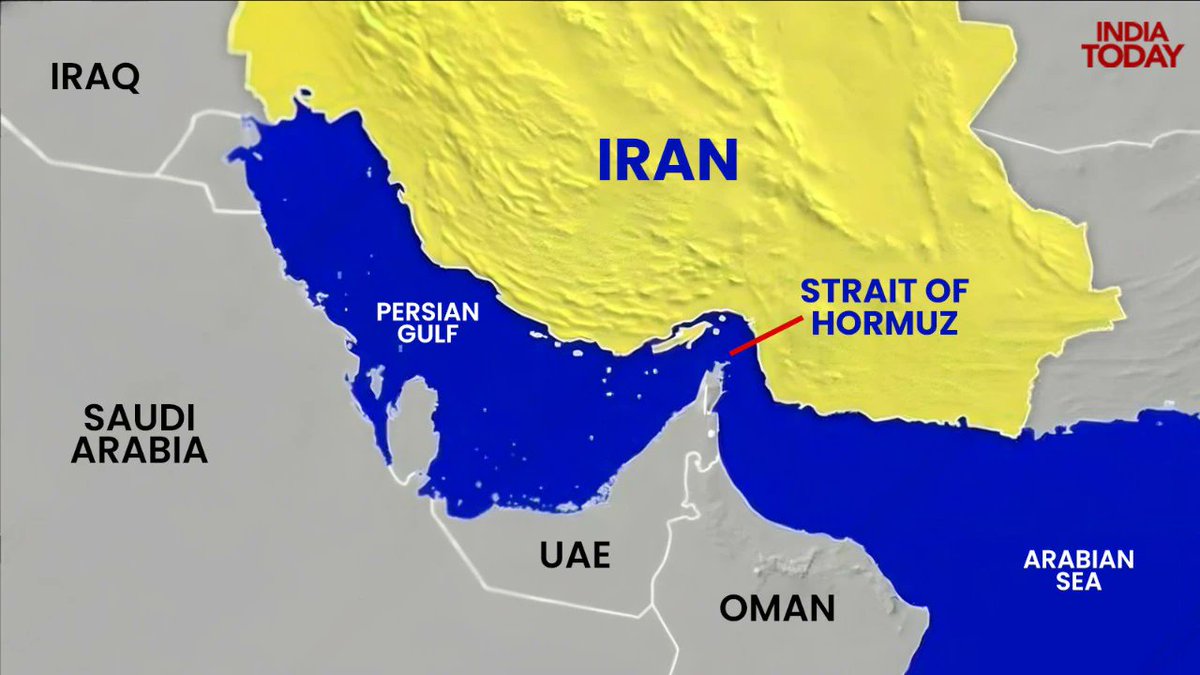
BREAKING: Iran is telling vessels that they are closing the Strait of Hormuz, per Reuters. Over 20% of global oil supply is potentially coming to a halt.
The Kobeissi Letter tweet media
English
548
2.3K
12.1K
2.6M
christop Paillusseau
christop Paillusseau@chrisP_75·
Pourquoi les IA appuient quasi systématiquement sur le bouton nucléaire lors de simulations de guerre : ce que nous révèle une étude britannique Ca laisse penseur. On se rapproche du scénario a la terminator ou FALLOUT share.google/I2VMbo8Jlwv2Wy…
Français
0
0
0
2