Clay Trauernicht

3.9K posts

Clay Trauernicht banner
Clay Trauernicht

Clay Trauernicht

@claytrau

People, plants, fire, ecosystems - mostly Hawaii, Micronesia when can

Kolowalu Katılım Şubat 2013
710 Takip Edilen1.2K Takipçiler
Sabitlenmiş Tweet
Clay Trauernicht
Clay Trauernicht@claytrau·
Yes many parts of Hawai'i are trending towards dryer conditions, BUT the fire problem is mostly attributable to the vast extents of nonnative grasslands left unmanaged by large landowners as we've entered a 'post-plantation era' starting around the 1990s
David Ho@_david_ho_

People associate Hawaiʻi with tropical conditions but rainfall has been decreasing for decades because of climate change, drying out the lush landscape and making it increasingly susceptible to wildfire damage.

English
24
483
1.5K
131.3K
Adam Johnson
Adam Johnson@adamjohnsonCHI·
TIL fire cannot exist without life and that life on earth preceded fire by a billion years and as far as we know fire only exists on earth
GIF
English
98
227
5K
1.1M
Ua lawa mākou i ka pōhaku 🪨
Ua lawa mākou i ka pōhaku 🪨@lawaikapohaku·
Anybody know what’s going on with the Mililani Mauka wildfire??? We are getting the smoke down in Waikele area
Waipahu, HI 🇺🇸 English
6
4
18
2.8K
Clay Trauernicht
Clay Trauernicht@claytrau·
@Greeneland Fighting in Paradise by Gerald Horne - some of the most radical labor history in the "US" happened in Hawaii
English
0
0
0
69
Clay Trauernicht
Clay Trauernicht@claytrau·
Hawai'i has had the ingredients for fire for a long time - droughts & rain shadows, human-caused ignitions, and lowland areas dominated by nonnative, fire-prone grasses. These fuels expanded as money moved from plantations & ranches to tourism & real estate in the 50s/60s
English
1
9
23
2.6K
Clay Trauernicht
Clay Trauernicht@claytrau·
On average this about 800 ignitions per year - we can thank our firefighters who rapidly respond and contain the vast majority - only about 5% of these fires get above 100 acres
English
0
0
3
364
Clay Trauernicht
Clay Trauernicht@claytrau·
Wildfire ignitions in Hawaii are nearly constant and 99% human-caused. @HawaiiWildfire first compiled all our county and state fire program data in 2012 - converting street addresses to lat/long for mapping and analysis - we just updated thru 2020.
English
2
13
26
3.2K
Clay Trauernicht
Clay Trauernicht@claytrau·
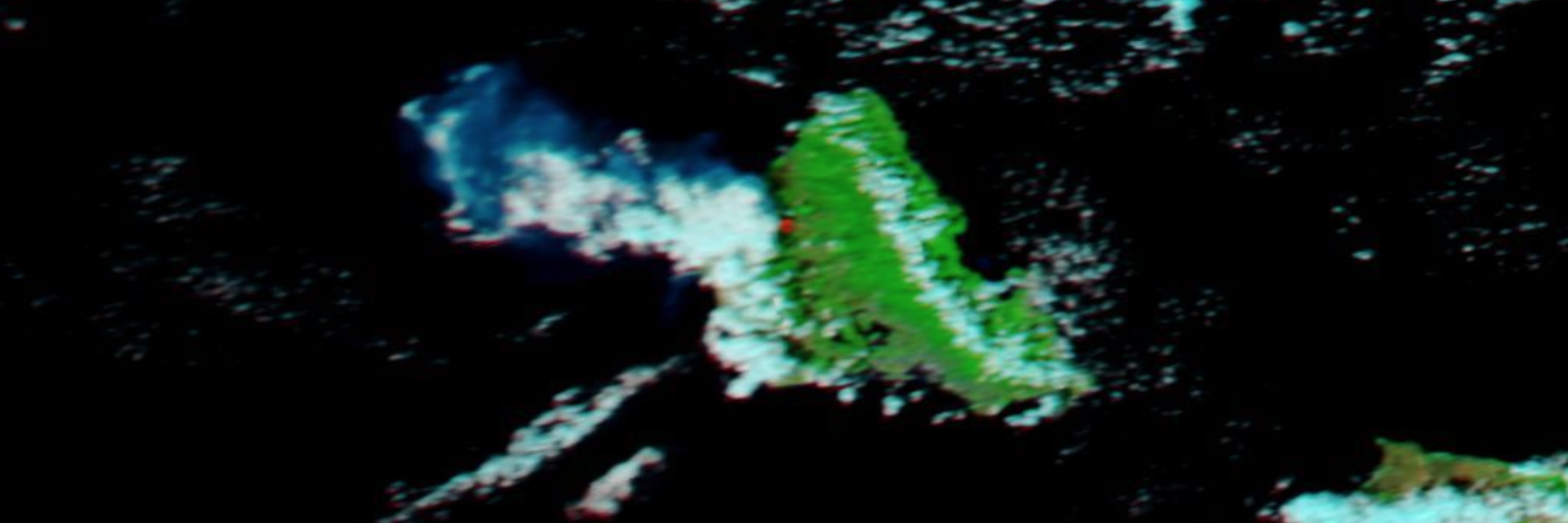
In 2019 we got to see Hawai'i's post-plantation fire regime emerge in real time. The last sugar plantation in the islands shut down 36,000 acres in central Maui in 2016. 3 years later, ~17,500 acres burned between July and October.
Clay Trauernicht tweet media
English
0
6
13
1.8K
Clay Trauernicht
Clay Trauernicht@claytrau·
The Maui fires - as with nearly all fires in Hawai'i - are a result of failing to care for land. Changing that begins with caring for people
Clay Trauernicht tweet media
English
8
61
126
11.3K
Clay Trauernicht retweetledi
Uahikea Maile
Uahikea Maile@uahikea·
“This is, for us, genocide.” Keʻeaumoku Kapu headlines a rare piece in a sea of reporting about the Maui wildfires. @McKayJacqueline’s article in @CBCIndigenous examines it in relation to the erasure of Kānaka Maoli & Hawaiian land rights. A must read. cbc.ca/news/indigenou…
English
10
609
973
73.4K
Clay Trauernicht
Clay Trauernicht@claytrau·
I've worked with Elizabeth Pickett, the E.D. of @hawaiiwildfire, for >10 years. She's the backbone of the wildfire community here - no one has worked harder than her to make Hawai'i safer from fire
Senator Mazie Hirono@maziehirono

.@HawaiiWildfire has been doing critical work for years to mitigate the risks of wildfires across our state. Now more than ever, it’s critical we work together to prevent wildfires and protect our communities. Visit Hawaiiwildfire.org to learn more.

English
1
8
24
3.3K
Clay Trauernicht
Clay Trauernicht@claytrau·
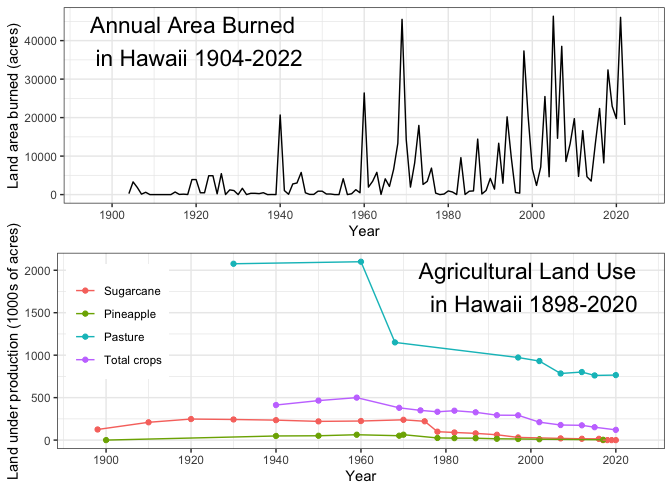
Data sources: Schmidt, R.C., 1977. Historical Statistics of Hawai'i. University Press of Hawaii; USDA Census of Agriculture; Hawaiʻi Statewide Agricultural Land Use Baseline 2020; Trauernicht et al. 2015 Pacific Science 69: 427-444; and satellite fire mapping 2012-2022
English
0
2
8
544
Clay Trauernicht
Clay Trauernicht@claytrau·
Hawai'i firefighters have been telling me for several years they're seeing fires burn hotter and faster than in the past - and I trust their knowledge. But fire and land use histories tell us fallow lands and grassy fuels are the key issue - and one we can deal with locally
Clay Trauernicht tweet media
English
10
57
135
15.7K
Clay Trauernicht retweetledi
Katie Kamelamela, PhD
Katie Kamelamela, PhD@kteabam·
Dicey line quoted here of me, and I stand by it specific to dry grassland areas When people have a relationship with plants or animals it encourages us to take care of landscapes and places for their benefit.
nature@Nature

Groups in Hawaii are trying to revitalize traditional food production, which would create less flammable landscapes. “That’s why these fires started: because no one had a relationship to these places,” says @kteabam nature.com/articles/d4158…

English
0
5
32
2.2K
Clay Trauernicht
Clay Trauernicht@claytrau·
@JaredDahlAldern @thehaliapedia @Madronus @MichaelWWara Hawaiians most certainly used fire - e.g. burning pili grasslands - but that was before introduction of nonnative grasses and large scale deforestation with colonization. Some agencies burn guinea grass, but quick recovery and impacts from escaped fires make many skeptical
English
1
0
2
93
Clay Trauernicht
Clay Trauernicht@claytrau·
if folks wish to help out, I've worked for a long time with @HawaiiWildfire on these issues, they've been doing fire prevention and recovery with communities and fire agencies for more than 20 years. There will be a lot of work to do in the coming weeks hawaiiwildfire.org/donate
English
3
32
55
5.2K
Clay Trauernicht
Clay Trauernicht@claytrau·
Yes many parts of Hawai'i are trending towards dryer conditions, BUT the fire problem is mostly attributable to the vast extents of nonnative grasslands left unmanaged by large landowners as we've entered a 'post-plantation era' starting around the 1990s
David Ho@_david_ho_

People associate Hawaiʻi with tropical conditions but rainfall has been decreasing for decades because of climate change, drying out the lush landscape and making it increasingly susceptible to wildfire damage.

English

24
483
1.5K
131.3K