Coinfarmer (💙🧡)

1.5K posts

Coinfarmer (💙🧡) banner
Coinfarmer (💙🧡)

Coinfarmer (💙🧡)

@coinfarma

Web3 Enthusiast // Content Creator // Educator // Ambassador @Arbitrum

Katılım Ocak 2025
1.8K Takip Edilen1.5K Takipçiler
Coinfarmer (💙🧡)
Coinfarmer (💙🧡)@coinfarma·
Scaling onchain finance often isn’t flashy, but the results speak for themselves. That’s what we see with @PEXX_Official now live on @arbitrum. For users, it looks simple: USDT and USDC deposits just work. But under the surface, this move represents a meaningful improvement in how DeFi apps handle real activity. Choosing Arbitrum isn’t just picking a network. It’s a deliberate infrastructure decision: Security-first architecture for peace of mind Full EVM compatibility developers already know and trust Throughput that supports real trading and deposits, not just test scenarios For platforms like PEXX, these factors directly impact adoption. Slow or expensive transactions slow growth. Arbitrum fixes that by: Settling deposits faster Keeping fees predictable Smoothing user experience without extra friction The user interface doesn’t change. The experience doesn’t need retraining. What changes is the invisible layer powering it: stronger, faster, more reliable infrastructure. Long-term, this matters even more. Platforms combining polished UX with scalable networks like Arbitrum help onchain finance feel familiar rather than experimental. Reliability compounds, adoption grows, and the ecosystem matures. @arbitrum proves it can host production-grade applications. @PEXX_Official keeps the focus on user experience. Together, they show how scaling should look: faster rails, the same product, and a stronger foundation.
Coinfarmer (💙🧡) tweet media
English
50
21
29
341
Coinfarmer (💙🧡)
Coinfarmer (💙🧡)@coinfarma·
Grants are more than financial support, they reflect confidence and alignment. Tempest Labs just demonstrated why. Tempest Labs, through @TempestGuild, has officially been awarded a grant from @arbitrum. This is not a publicity stunt or a short-term sponsorship, it is recognition of consistent, meaningful contributions to the ecosystem. Tempest Labs stands out because it prioritizes substance over spectacle. Their work centers on: Delivering rigorous research and analytics Breaking down onchain activity with clarity Identifying structural trends across DeFi Producing insights that help #Builders, participants, and stakeholders make informed decisions The focus is on consistent, high-quality output rather than chasing viral content or engagement metrics. Receiving an Arbitrum grant is significant. These grants are reserved for projects that provide real ecosystem value, typically spanning: Developer tools and infrastructure Research and analytics platforms Educational content and ecosystem transparency Community-facing initiatives Being awarded a grant signals that a team has demonstrated vision, discipline, and the potential for long-term impact. For Tempest Labs, this grant is a clear acknowledgment of their sustained contribution. It validates both the quality and reliability of their work, signaling that the ecosystem can trust their continued output. This support aligns directly with Arbitrum’s priorities: Enhancing understanding of #OnChain activity Encouraging meaningful engagement Ensuring narratives reflect real usage patterns With this funding, Tempest Labs can deepen their research, refine tools and frameworks, and expand reach, all while maintaining high standards and relevance. The grant is designed to compound value rather than create short-term visibility. For the broader ecosystem, this represents a crucial shift. Grants are moving from experimental handouts to targeted support for projects that execute reliably and provide long-term utility. Teams that consistently deliver substance are the ones shaping the ecosystem’s maturity. In short, this isn’t just about money. It’s a statement: consistent effort, reliable execution, and tangible contributions are recognized and rewarded. Tempest Labs receiving an Arbitrum grant exemplifies how disciplined work and ecosystem-aligned strategies create lasting impact.
Coinfarmer (💙🧡) tweet media
English
36
13
20
204
Coinfarmer (💙🧡)
Coinfarmer (💙🧡)@coinfarma·
Successful builders prioritize environments where trust is built into the system itself, which is why @arbitrum remains the go-to choice. Trust isn’t marketed, it’s enforced by the underlying infrastructure: Security and settlement inherit Ethereum’s guarantees Audit subsidies reduce the cost of doing things correctly Backward-compatible upgrades ensure apps continue running smoothly ArbOS manages complexity so applications remain stable For developers, this translates into what matters most: Confidence to launch and iterate without fear Predictable behavior even under heavy usage Users who feel secure engaging with the platform Liquidity that stays put, even during volatility @arbitrum doesn’t just attract developers, retains them by safeguarding the foundational trust their products rely on. Builders stick with Arbitrum because it protects trust before any crises appear.
Coinfarmer (💙🧡) tweet media
English
34
13
18
164
Coinfarmer (💙🧡)
Coinfarmer (💙🧡)@coinfarma·
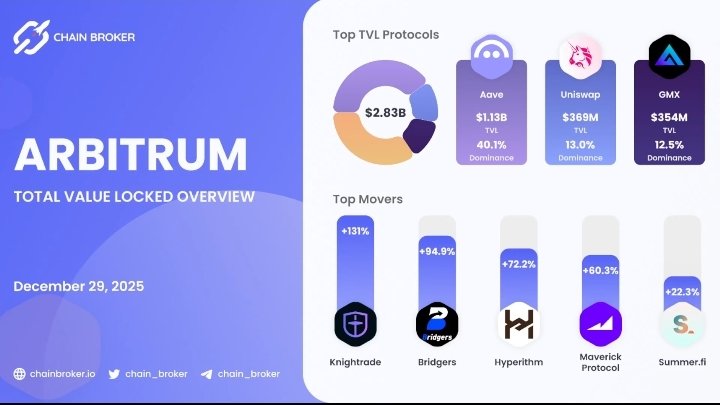
Total Value Locked (TVL) gives a clear signal of where real commitment lies in DeFi, and @arbitrum continues to prove itself as one of the most robust L2 ecosystems, with billions still actively deployed across its protocols. Key protocols anchoring Arbitrum: @aave – $1.13B Lending and borrowing remain central to DeFi, and Arbitrum is clearly a go-to destination for users executing these strategies. @Uniswap – $369M Liquidity gravitates toward frictionless trading, and Uniswap continues to serve as the primary backbone for swaps, with LPs locking capital to earn fees. @GMX_IO – $354M GMX’s TVL highlights that Arbitrum users are actively trading perps, leveraging positions, and engaging with more advanced financial products. Top TVL movers on Arbitrum: @KnightradeTeam: +131% A sharp increase pointing to either strong adoption or incentive-driven liquidity inflows. @Bridgersxyz: +94.9% Rising bridging activity suggests more cross-chain movement into Arbitrum. @hyperithm: +72.2% Momentum here appears to come from niche strategies or yield optimization. @mavprotocol: +60.3% Active LP strategies and deeper liquidity mechanics are growing on the network. @summerfinance_: +22.3% Consistent TVL growth shows users remain confident locking value on Arbitrum. From lending to AMMs to perps, activity on Arbitrum is broadening, not concentrated, demonstrating a healthy, diversified ecosystem. Which protocols do you think will hold their dominance on Arbitrum by year-end? Arbitrum Everywhere. Source: x.com/i/status/20056…
Coinfarmer (💙🧡) tweet media
English
36
13
22
3.1K
Coinfarmer (💙🧡)
Coinfarmer (💙🧡)@coinfarma·
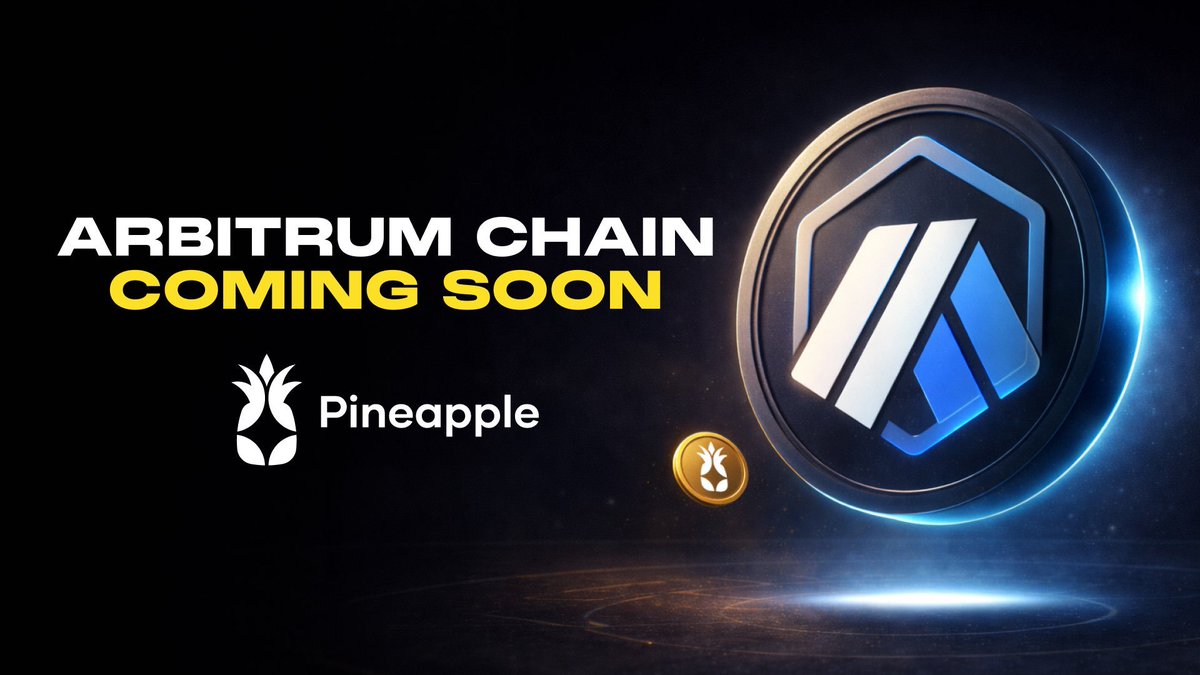
Some integrations make sense immediately. This is one of them. @PineappleDex is expanding its reach, and the next network coming online is @arbitrum. For a DEX focused on serious trading conditions, this choice feels less like experimentation and more like alignment with where real onchain activity already happens. Arbitrum has quietly become the environment where volume, liquidity, and actual users converge. It is not driven by hype cycles. It is driven by execution. Why Arbitrum makes sense for Pineapple DEX Pineapple is built for traders who care about fill quality, speed, and cost efficiency. Arbitrum supports that at scale by offering deep and proven liquidity, fast confirmation times that reduce slippage risk, and fee dynamics that remain predictable even under load. Just as importantly, Arbitrum’s user base consists largely of active participants, not short-term incentive chasers. For anyone building or trading seriously, Arbitrum is where strategies meet real market conditions. What this integration unlocks By deploying on Arbitrum, Pineapple DEX gains direct access to one of the most active Layer 2 ecosystems in crypto. That means cheaper and faster swaps without sacrificing liquidity depth, seamless interaction with Arbitrum-native assets, and a foundation for rolling out advanced trading features that only make sense when real volume exists. This is not about adding another chain for visibility. It is about plugging into infrastructure that already supports meaningful activity. A foundational step, not a final one Arbitrum is part of Pineapple’s broader multi-chain expansion, but it sets the tone. When infrastructure that prioritizes execution meets infrastructure built to scale, the result is practical progress, not noise. Arbitrum goes live on Pineapple DEX on February 9th app.pineappledex.com Pineapple chose Arbitrum for a simple reason: real trading demands liquidity, speed, and systems that perform under pressure.
Coinfarmer (💙🧡) tweet media
English
45
10
24
137
Coinfarmer (💙🧡)
Coinfarmer (💙🧡)@coinfarma·
Arbitrum has quietly become one of the most important execution layers in crypto, not because it’s loud, but because it works when things get busy. When markets are calm, most chains look fine. The real test is volatility, congestion, and sustained usage. That’s where Arbitrum keeps showing up. Fees stay predictable even when activity spikes. Confirmations remain fast enough for real trading, not just demos. And builders don’t have to redesign products just to survive congestion. This matters because modern onchain apps are no longer simple swaps. Perps, RWAs, payments, AI-triggered actions, treasury systems, and stablecoin rails all depend on infrastructure that behaves consistently under load. Arbitrum is designed around that reality. Instead of pushing everything fully onchain, it embraces a practical split: complex computation offchain, enforcement and settlement onchain. That’s why it fits so well for: high-frequency DeFi, stablecoin flows, institutional-grade protocols, and increasingly, AI-driven applications. Upgrades like ArbOS improvements aren’t about hype features. They’re about smoothing gas behavior, scaling throughput, and keeping the network usable as demand grows. You can see the result directly in the numbers: higher sustained throughput, lower fee volatility, and more serious applications choosing Arbitrum as their base. The pattern is clear. Speculation moves everywhere. Infrastructure settles where it’s reliable. Arbitrum isn’t trying to be everything. It’s becoming the place where things actually execute when it matters. And that’s usually how long-term winners are built.
Coinfarmer (💙🧡) tweet media
English
44
11
23
134
Coinfarmer (💙🧡)
Coinfarmer (💙🧡)@coinfarma·
Something important just happened on Arbitrum One, and it is easy to miss if you are only watching price charts. The network is now exceeding 1,100 transactions per second while sustaining roughly 150 Mgas per second, and this is occurring during a clear spike in onchain activity. That combination matters, because it shows the system holding up under real demand, not in a controlled test. The key driver behind this shift is the ArbOS 51 DIA upgrade. Rather than a cosmetic change, this introduces a new gas pricing mechanism that is already running live on mainnet and being stress-tested by actual users. Previously, Arbitrum operated with a single gas target, sitting around 7 Mgas per second. That model worked, but it left less room for graceful scaling when demand surged. With ArbOS 51 DIA, the network now operates with six dynamic gas targets that scale across multiple throughput levels: 10, 14, 20, 29, 41, and 60 Mgas per second. Instead of treating congestion as a binary event, the system can now respond across a spectrum of demand conditions. The practical outcome is adaptive gas pricing. Rather than fees spiking sharply the moment activity increases, throughput adjusts in real time. Gas prices remain more stable during congestion, not just after the network has already been stressed. This new pricing framework was developed by the research team at Offchain Labs, and it subtly changes Arbitrum’s growth ceiling. The network has always been optimized for high-performance use cases such as onchain perpetuals, advanced DeFi strategies, and applications that are sensitive to latency and execution costs. These environments break down quickly when gas behavior becomes erratic. By smoothing fee behavior under load, ArbOS 51 DIA makes execution costs more predictable. That predictability is not theoretical anymore. It is already visible in the sustained throughput numbers being recorded on Arbitrum One. For builders and traders operating at scale, this kind of stability is not a luxury. It is a requirement. You can learn more about the ArbOS 51 DIA upgrade here: x.com/i/status/20172…
Coinfarmer (💙🧡) tweet media
English
44
11
23
174
Coinfarmer (💙🧡)
Coinfarmer (💙🧡)@coinfarma·
Digital dollars are no longer an experiment. They are becoming everyday financial infrastructure, and much of that activity is quietly settling on @Arbitrum. Stablecoins have moved far beyond their early role as trading tools. Today, they power real payments, payroll, remittances, on-chain treasuries, DeFi settlement, and an increasing share of global dollar movement across #Web3. As this shift accelerates, the underlying infrastructure matters more than narratives, and Arbitrum keeps emerging as the execution layer that fits how stablecoins are actually used. Stablecoins Have Shifted the Center of Crypto Early crypto adoption was driven by volatility. Price swings, leverage, and speculation defined usage. Stablecoins changed that foundation. Assets like USDC are now primarily used for functional purposes rather than speculation. They support: Payments and salaries On-chain treasury operations Cross-border value transfer DeFi collateral and settlement Fintech and institutional rails These activities are sensitive to cost, latency, and reliability. Networks with high fees or unpredictable congestion struggle to support this kind of consistent, high-frequency usage. Why Stablecoin Activity Is Gravitation Toward Arbitrum Arbitrum’s growth in stablecoin usage is not accidental. It reflects design choices aligned with real-world financial behavior. Low and predictable fees matter because stablecoin transactions often run on thin margins. Whether transferring $20 or $20,000, Arbitrum keeps costs stable enough that fees do not distort the use case. Fast confirmations are critical for payments and treasury operations. Arbitrum delivers execution speeds that feel closer to modern fintech systems than traditional blockchains. Ethereum-native security is another key factor. Stablecoins require trust-minimized settlement. Arbitrum inherits Ethereum’s security model while avoiding its congestion. Deep liquidity and composability complete the picture. Stablecoins on Arbitrum are actively used across DeFi, RWAs, payments, identity systems, and treasury products within a single execution environment. The Compounding Effect of Stablecoin Scale As stablecoin usage increases, it pulls supporting infrastructure along with it. On Arbitrum, stablecoins now intersect with: On-chain identity and compliance frameworks Tokenized real-world assets and yield-bearing treasuries Decentralized exchanges and perpetual markets Cross-chain settlement and liquidity routing This creates a reinforcing loop. More stablecoin activity attracts more builders. More builders deepen liquidity. Deeper liquidity increases institutional confidence. The result is organic growth driven by usage, not branding. Arbitrum is not positioning itself as a “stablecoin chain.” It is becoming one through consistent settlement volume. Alignment With Builders and Institutions Stablecoins are increasingly regulated, audited, and integrated into traditional finance. That environment favors infrastructure that is dependable rather than experimental. For builders, Arbitrum offers Ethereum-compatible tooling, low operational costs, and a user base already transacting heavily in stablecoins. For institutions, it provides transparent settlement, production-grade execution, and an ecosystem where stablecoins behave like financial plumbing rather than speculative assets. What This Signals Going Forward Market cycles come and go, but stablecoins persist. As crypto matures, the most important networks will not be the loudest. They will be the ones quietly moving value every day. Arbitrum’s expanding role in stablecoin settlement suggests it is evolving from an alternative scaling solution into a default execution layer for digital dollars. My Take Stablecoins do not need excitement. They need systems that work consistently. Arbitrum’s rise alongside stablecoin adoption feels less like a trend and more like an inevitability.
Coinfarmer (💙🧡) tweet media
English
32
10
13
117
Coinfarmer (💙🧡)
Coinfarmer (💙🧡)@coinfarma·
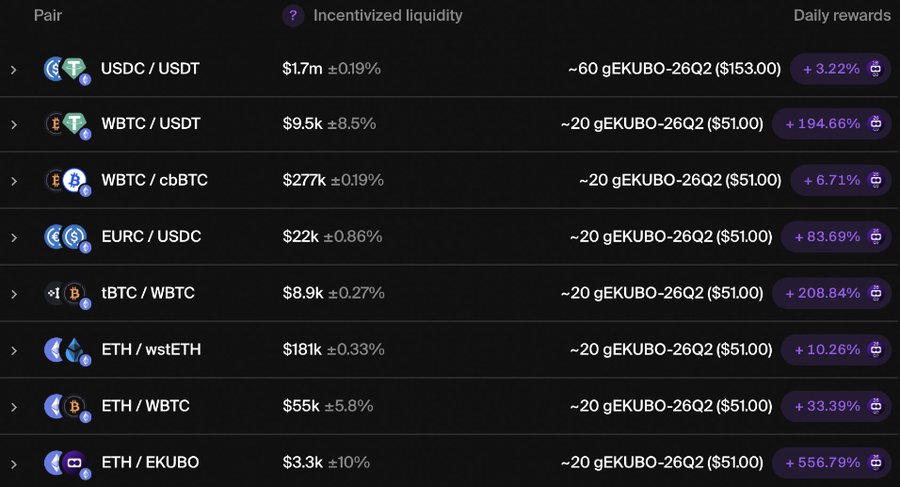
Liquidity incentives have officially gone live on Ekubo, and the earliest participants are already capturing triple-digit APYs on mainnet. With the launch of Ekubo V3, liquidity providers now have the flexibility to deploy capital across both Ethereum Mainnet and @arbitrum, unlocking multiple revenue streams at once. LPs earn through: Standard swap fees generated by trading activity Newly activated incentive rewards tied to selected pools @EkuboProtocol V3 is built around concentrated liquidity, which means capital is allocated only within active price ranges instead of being spread inefficiently. Liquidity is placed where trades actually occur, improving capital efficiency and explaining the strong yields currently visible. This follows a familiar DeFi pattern: incentives favor early participation. Returns are highest when liquidity is scarce and gradually compress as more capital enters the same pools. Ekubo V3 combines several key features: 1. Concentrated liquidity for improved efficiency 2. Incentivized pools that add rewards on top of trading fees 3. Multi-network deployment, with incentives running on both Ethereum Mainnet and Arbitrum Early LPs are seeing outsized returns because incentive emissions are strongest before liquidity deepens. As participation increases, yields naturally normalize. For anyone exploring liquidity provision: Deploy liquidity using Ekubo V3 Visit the Rewards section to view all incentivized pools Select pools aligned with your risk profile Get started here: ekubo.org Source: x.com/i/status/20114…
Coinfarmer (💙🧡) tweet media
English
31
10
13
155
Coinfarmer (💙🧡)
Coinfarmer (💙🧡)@coinfarma·
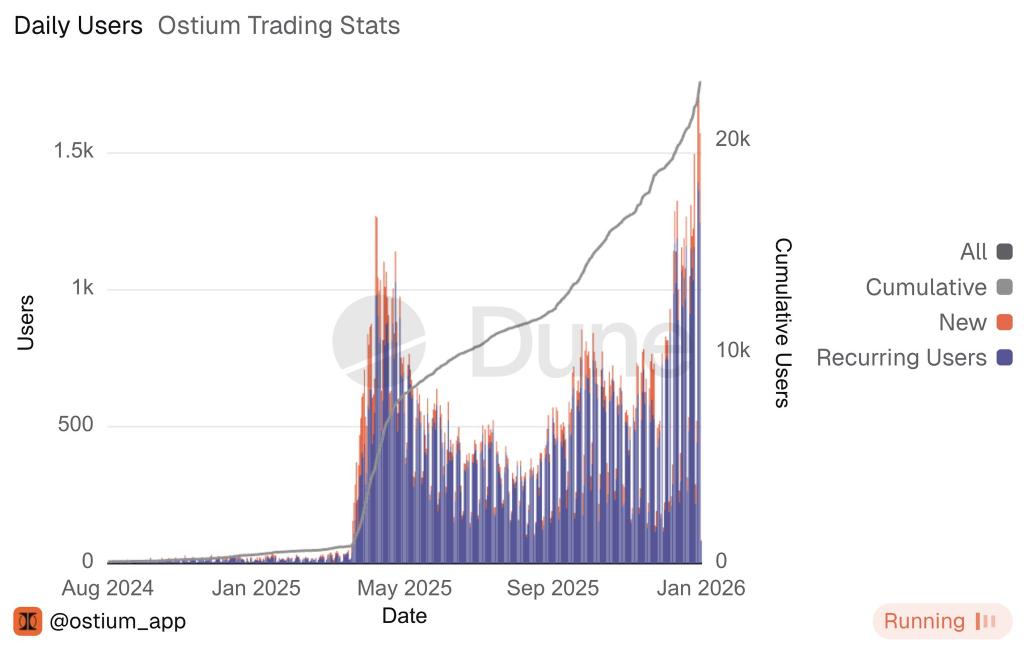
The difference between protocols that launch and protocols that actually find product–market fit often comes down to whether builders can execute without fighting their infrastructure. High fees, thin liquidity, and slow confirmations can derail promising projects before they scale. That’s why @arbitrum keeps standing out. It provides the conditions for teams to build functional, scalable systems: Deep, composable liquidity for complex strategies Predictable costs that serious traders can plan around Fast transaction confirmations so perpetuals feel fluid For derivatives, especially those tied to real-world assets, these are non-negotiable. Take @OstiumLabs as an example. Ostium isn’t just another derivatives platform, it’s proof that tokenized commodities can achieve PMF onchain when built on infrastructure traders trust. The traction speaks volumes: $206k in revenue over the last 24 hours (~$75M annualized) $300M+ in open interest on RWAs ~$500M in daily trading volume New user records reaching all-time highs Commodities are entering an onchain growth cycle on platforms that offer: Unified liquidity, not fragmented across chains Fees that don’t punish active strategies Infrastructure robust enough for institutions and advanced users Arbitrum provides the foundation, and Ostium demonstrates that there’s substantial demand waiting at the top. For anyone following RWAs, perpetuals, and scalable DeFi, this is a corner of the ecosystem worth watching closely.
Coinfarmer (💙🧡) tweet media
English
33
11
13
189
Coinfarmer (💙🧡)
Coinfarmer (💙🧡)@coinfarma·
During yesterday’s extreme market volatility, Arbitrum demonstrated just how cost-efficient Layer 2 scaling can be. In a single hour when Bitcoin plunged from $70,000 to $67,000, a 3% drop, transaction costs spiked sharply across most networks: Ethereum saw median gas fees rise roughly 10x, from $0.142 to $1.78. Base experienced an even larger jump, about 15x, moving from $0.005 to $0.093. Arbitrum, by contrast, only increased about 3x, from $0.002 to $0.007, keeping median transaction costs under $0.01. This illustrates Arbitrum’s ability to maintain predictable, low-cost transactions even during high-demand, volatile periods. For traders and DeFi users, this kind of stability means executing trades, swaps, and contract interactions without worrying about prohibitive fees or unexpected network congestion. In short, while volatility rattled the broader crypto ecosystem, Arbitrum kept on-chain activity affordable and efficient, highlighting the practical advantages of Ethereum Layer 2 scaling.
Coinfarmer (💙🧡) tweet media
English
50
19
29
141
Coinfarmer (💙🧡)
Coinfarmer (💙🧡)@coinfarma·
AI didn’t slow down to wait for decentralized infrastructure. It moved ahead, building systems that predict outcomes, rank choices, automate decisions, and optimize behavior entirely off-chain. What’s missing isn’t intelligence. It’s a place where those decisions can be finalized, enforced, and independently verified. That’s where @arbitrum is starting to matter. The Real Boundary Between AI and Blockchains AI workloads belong off-chain. Training models, running inference, and crunching massive datasets are computationally intensive and inefficient to run on a blockchain. But outcomes are different from computation. When an AI system decides: who receives funds which transaction is valid how a protocol parameter changes when an action is executed those outcomes need a neutral settlement layer. Otherwise, you are trusting infrastructure you cannot audit. Arbitrum is increasingly being used as that final layer where off-chain intelligence becomes onchain action. How AI-Native Applications Actually Use Arbitrum AI-driven applications are not putting models onchain. They are putting enforcement onchain. The architecture is simple and effective: AI systems operate off-chain, analyzing data and generating decisions Outputs are submitted as transactions Smart contracts on Arbitrum verify rules and execute logic Results are finalized transparently and immutably This separation lets builders combine fast, flexible AI with blockchain-grade accountability. Why Arbitrum Works for This Role AI-triggered systems don’t act once in a while. They act continuously. That changes the requirements. Arbitrum offers: Low and predictable costs for frequent execution Fast confirmation times suitable for near real-time systems Full Ethereum compatibility for mature contract logic Proven reliability for applications that cannot afford downtime For AI systems that need to act repeatedly and consistently, these properties matter more than theoretical throughput. What Kinds of AI Applications Are Emerging Clear usage patterns are already forming: Autonomous agents executing trades, managing portfolios, and rebalancing positions Governance systems that analyze proposals and trigger execution logic Risk engines adjusting parameters based on live market conditions Recommendation engines that settle rewards, permissions, or incentives onchain In each case, AI determines what should happen. Arbitrum ensures that it actually does. Why This Matters Over Time The future isn’t AI competing with crypto. It’s division of labor. AI handles complexity and decision-making. Blockchains handle trust, enforcement, and verification. Arbitrum sits precisely at this intersection, acting as the execution layer that converts off-chain reasoning into onchain reality. As AI systems gain more autonomy, the demand for neutral settlement layers only increases. AI systems rarely fail because they lack intelligence. They fail when their actions can’t be trusted or verified. What’s happening on @arbitrum doesn’t feel like a trend. It feels like infrastructure quietly aligning with how real systems work. Let AI think anywhere it wants. Let Arbitrum be where those decisions become real.
Coinfarmer (💙🧡) tweet media
English
55
18
33
140
Coinfarmer (💙🧡)
Coinfarmer (💙🧡)@coinfarma·
Markets reward conviction, but they punish certainty. Anyone who trades long enough learns this lesson the hard way. You can do the analysis, read the charts, build a thesis, and still be wrong. Not because you were careless, but because markets move on probabilities, not promises. That tension between belief and uncertainty is where most trading stress lives. While looking through different DeFi strategies, I came across an approach from @torosfinance that reframes how leverage can work. It does not eliminate risk, but it changes how that risk shows up. Traditional leverage is blunt. Get the direction right and gains accelerate. Get it wrong and losses compound just as fast. That structure forces traders into an all-or-nothing mindset where timing has to be precise and mistakes are expensive. Toros is experimenting with something more nuanced: protected leveraged tokens. The core idea is straightforward. You still gain leveraged exposure to an asset’s upside, but the downside is capped. Instead of facing open-ended losses or liquidation risk, your maximum downside is defined upfront. In practice, that means: You can express a directional view without managing margin or liquidation thresholds. You do not need perfect entry timing to survive volatility. Risk becomes shaped and contained rather than binary. This does not remove risk. No trading product can. But it changes the way risk behaves, and that has real psychological impact. Trading becomes less about fear of instant failure and more about managing probability over time. From what I have seen, this structure is particularly relevant for: Traders who want leverage but want to avoid liquidation mechanics. Participants with a strong directional bias but limited tolerance for downside. Anyone tired of leverage systems that reward perfection and punish hesitation. What stands out to me is not the leverage itself, but the design philosophy. Instead of pushing higher risk for higher returns, this approach tries to align with how traders actually think and feel under uncertainty. Not louder leverage. More controlled leverage. As DeFi matures, it is interesting to see products evolve beyond raw exposure and toward better risk shaping. That evolution matters more than another promise of higher returns. In the end, trading edges rarely come from predicting the future perfectly. They come from managing uncertainty better than the next person. Source: x.com/i/status/20161…
Coinfarmer (💙🧡) tweet media
English
53
21
35
255
Coinfarmer (💙🧡)
Coinfarmer (💙🧡)@coinfarma·
Value is not always something you dig up. Sometimes, it is engineered. While spending time inside the @Arbitrum ecosystem, I ran into a perspective shift that stuck with me. Not a loud product launch or a hyped narrative, but a quiet reminder of how onchain infrastructure is reshaping familiar assets. Gold has always carried symbolic weight. Historically, it represents permanence, security, and preservation. For most people, it lives in vaults, ETFs, or balance sheets, largely untouched once acquired. Onchain, that assumption starts to break. As I explored leveraged strategies built on Arbitrum, I came across @torosfinance and their gold leveraged tokens. Instead of treating gold as something static, these products turn it into an active component within DeFi strategies. The difference is subtle but important. Rather than simply holding gold exposure and waiting, these tokens allow users to express directional views, hedge positions, or integrate gold into broader portfolio strategies, without manually managing leverage, margin calls, or liquidation thresholds. For anyone unfamiliar with leveraged tokens, the idea is straightforward. They provide amplified exposure to an underlying asset while abstracting away the operational complexity. Position management happens at the protocol level, allowing users to focus on intent instead of mechanics. Arbitrum plays a critical role here. Low transaction costs keep strategies efficient over time. Fast execution allows positions to rebalance smoothly. Deep liquidity reduces friction when entering or exiting exposure. When infrastructure fades into the background, strategy becomes clearer. What stands out is how this reframes gold itself. Stability does not have to mean inactivity. Onchain, even assets known for being conservative can become programmable tools. Exposure becomes flexible, responsive, and composable. Watching traditional value stores adapt to decentralized systems feels less like disruption and more like convergence. Centuries-old financial concepts meeting modern execution layers, without spectacle, but with real utility. If you are exploring how asset exposure is evolving on @Arbitrum, this is a corner worth examining. Not because it is trendy, but because it shows how capital can work smarter when infrastructure is designed well. You can explore the gold leveraged product here: toros.finance/vault/0x31481f… Sometimes the future of value is not about holding more. It is about enabling assets to move with intent. Source: x.com/i/status/20194…
Coinfarmer (💙🧡) tweet media
English
42
21
26
128
Coinfarmer (💙🧡)
Coinfarmer (💙🧡)@coinfarma·
Cross-chain tokens are getting a long-overdue upgrade. LayerZero’s OFT (Omnichain Fungible Token) standard is now live on @arbitrum Orbit, introducing a fundamentally better way to design and move assets across chains. This is not about adding another bridge. It is about removing the need for fragile bridging models altogether. What OFT brings to Arbitrum Orbit With OFT support, tokens issued on Arbitrum Orbit chains can move seamlessly across more than 50 chains connected through the LayerZero network, without breaking liquidity or introducing new attack surfaces. Key changes include: Native token movement across chains without liquidity fragmentation No reliance on lock-and-mint bridge contracts One canonical token per chain, moving as designed OFTs use native gas on each chain and preserve chain-level security assumptions. Assets do not sit idle in bridge vaults, which significantly reduces exploit risk. This is how omnichain assets were meant to function from the start. Why this fits Arbitrum Orbit so well Arbitrum Orbit is built for teams that want control. It allows developers to launch custom, application-specific chains with flexible parameters. What Orbit lacked was frictionless connectivity. OFT fills that gap. Together, they enable: Custom Orbit chains with direct access to a broad cross-chain ecosystem Practical composability between rollups and app-chains Global liquidity without sacrificing sovereignty This pairing shows what modular infrastructure should look like: Scaling without isolation Independence without liquidity silos Connectivity without added security complexity A clearer path for cross-chain builders LayerZero and Arbitrum are outlining a more mature blueprint for multi-chain ecosystems. Instead of stitching together bridges and liquidity pools, builders can now design tokens that move natively, securely, and predictably across chains. For any team building cross-chain applications, this shifts the conversation from experimentation to production-grade infrastructure. #Arbitrum Orbit combined with LayerZero OFT turns cross-chain tokens into native, composable building blocks rather than fragile bridge-dependent assets.
Coinfarmer (💙🧡) tweet media
English
43
22
28
167
Coinfarmer (💙🧡)
Coinfarmer (💙🧡)@coinfarma·
Arbitrum isn’t just another Ethereum L2, it’s quietly shaping the future of scalable, usable, and reliable #Web3 infrastructure. Here’s why it matters. First, speed and low fees aren’t the only wins. Arbitrum provides a foundation where capital moves predictably, applications execute reliably, and users experience frictionless interactions. Payments on Arbitrum aren’t experimental, they’re habitual. By early 2026: ~729k monthly card transactions ~45.7k active users ~$10.6M in monthly volume This is everyday usage, not pilot programs. The key to adoption? Infrastructure that works under load. Low latency, predictable fees, and Ethereum-grade security make crypto payments feel like normal money. Arbitrum also powers serious DeFi activity. Protocols like @pendle_fi tie rewards to long-term participation, using Arbitrum’s high-liquidity, low-cost execution to sustainably deliver yield to users. DAOs are also evolving on Arbitrum. The @Arbitrum DAO is actively allocating treasury capital into tokenized real-world assets like USTBL, generating predictable on-chain yield while maintaining full transparency. For developers, Arbitrum is expanding who can build. With Stylus, Rust, C, and C++ developers can deploy smart contracts without abandoning Ethereum’s trust model, opening the network to more sophisticated, performance-sensitive applications. Even AI and real-time communication infrastructure are finding a home on Arbitrum. Projects like @huddle01com run dedicated Layer 3 chains for low-latency audio, video, and on-chain AI apps, fully decentralized and scalable. Prediction markets, cross-chain trading with @OstiumLabs, and frictionless USDC transfers via @RelayProtocol show a recurring theme: Arbitrum isn’t chasing hype, it’s building the rails that serious users, capital, and applications need. In short: Arbitrum isn’t just fast or cheap, it’s becoming the default execution layer for real-world crypto activity. Users, builders, and DAOs are all benefiting from infrastructure designed to scale with reliability. The takeaway: The networks that survive long-term aren’t the loudest. They’re the ones where capital flows, applications work, and participants can act without friction. Arbitrum is quietly proving it can be that network.
Coinfarmer (💙🧡) tweet media
English
43
22
30
361
Coinfarmer (💙🧡)
Coinfarmer (💙🧡)@coinfarma·
Arbitrum DAO Expands RWA Holdings with Increased Investment in Spiko’s USTBL The @Arbitrum DAO continues to deepen its focus on real-world assets, deploying an additional $3.4 million into @Spiko_finance’s USTBL as part of its Treasury Management Portfolio. With this latest allocation, the DAO’s total holdings in USTBL surpass $10 million, underscoring a deliberate strategy to integrate yield-bearing, low-risk assets into its treasury. Why USTBL Matters USTBL is a tokenized product backed by short-term U.S. Treasury Bills, designed to bring predictable, government-grade returns onto the blockchain. By holding USTBL, Arbitrum DAO can earn interest while maintaining the transparency, programmability, and security of fully on-chain settlement. Since the DAO’s initial deployment, USTBL has generated over $130,000 in cumulative interest, demonstrating that tokenized fixed-income instruments can actively produce yield rather than sit idle. Active Treasury Management On-Chain Instead of leaving capital unproductive, the DAO is deploying its treasury strategically. The growing USTBL allocation highlights several priorities: Preserving capital through exposure to stable, low-volatility instruments Generating consistent yield to support ongoing ecosystem initiatives Maintaining full transparency, with all performance and allocation data publicly visible on-chain Why Spiko Finance Fits the Strategy #Spikofinance provides regulated, on-chain access to traditional financial instruments, enabling Arbitrum DAO to earn yield from familiar sources like U.S. Treasuries without compromising decentralization or composability. Increasing its USTBL position reflects the DAO’s confidence in tokenized fixed-income as a reliable foundation for treasury operations. A Signal for DAO Evolution This move reflects a broader trend among DAOs, where treasuries are transitioning from passive token reserves to active capital management tools. Real-world assets are increasingly treated as essential components of sustainable on-chain treasury strategies, rather than experimental side projects. For Arbitrum DAO, the expanded USTBL allocation demonstrates how decentralized governance can be paired with disciplined, finance-grade treasury management, fully visible and auditable on-chain. The Bigger Picture Tokenized fixed-income products like USTBL are proving that DAOs can achieve predictable, sustainable yield without relying solely on token emissions. By increasing exposure to USTBL, Arbitrum DAO shows that on-chain organizations can blend DeFi-native transparency with traditional financial discipline, creating a model that may become standard for long-term treasury strategy. Deploying an extra $3.4 million into USTBL goes beyond chasing yield. It is a concrete demonstration that DAO treasuries can operate with institutional rigor while remaining fully programmable and transparent. As interest continues to accrue, this approach strengthens the case for RWAs as a lasting element of on-chain treasury management. Data source: arbdata.com/rwa-deployment
Coinfarmer (💙🧡) tweet media
English
57
21
35
158
Coinfarmer (💙🧡)
Coinfarmer (💙🧡)@coinfarma·
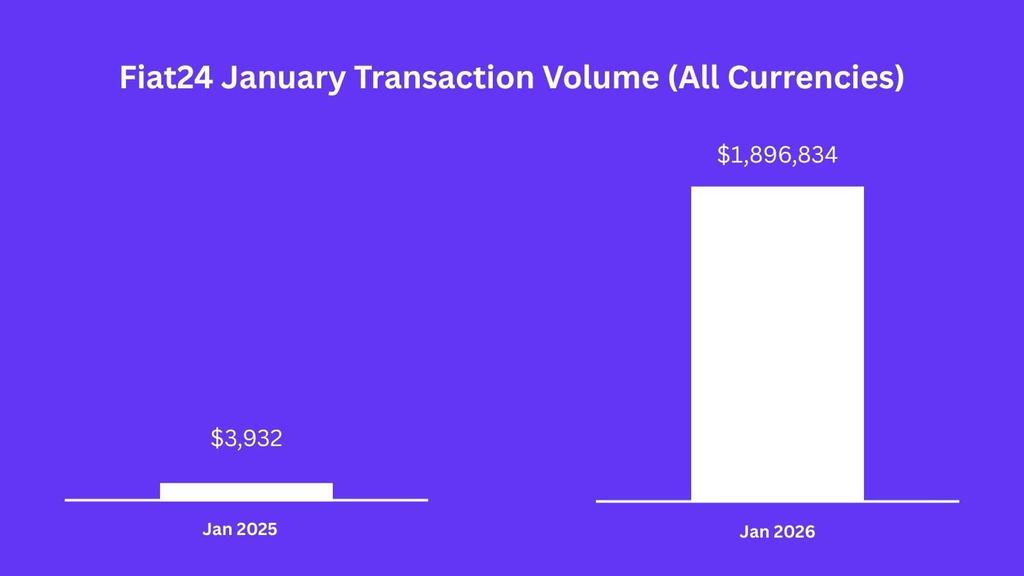
@Fiat24Official has now processed over $1.8M in payments, showing that crypto is moving from concept to actual daily use. Success in payments isn’t about hype, it’s about the infrastructure that makes transactions seamless. That’s why platforms like Fiat24 rely on @arbitrum: Instant transactions that work reliably at checkout Low and predictable fees, making micro-payments feasible Ethereum-level security without settlement delays Consistent performance even under heavy load Scaling payments demands invisible latency, minimal costs, near-zero failures, and implicit trust. Arbitrum delivers on all these fronts quietly but effectively. In crypto, payment adoption doesn’t happen everywhere, it happens where the rails are ready. Arbitrum provides the infrastructure that serious payment builders depend on.
Coinfarmer (💙🧡) tweet media
English
59
22
38
149
Coinfarmer (💙🧡)
Coinfarmer (💙🧡)@coinfarma·
Huddle01 is transforming real-time communication by removing dependence on centralized servers, enabling video calls, voice chats, and AI applications to run seamlessly and instantly on a decentralized network. Operating as a Layer 3 chain on @arbitrum Orbit, @huddle01com provides a dedicated network for audio, video, and AI traffic. It delivers predictable throughput, low latency, and reliable gas costs, addressing the congestion and unpredictability of traditional infrastructure. The network supports real-time AI applications, allowing onchain inference and interactive decentralized apps. It also operates as a Decentralized Physical Infrastructure Network (DePIN), where users and prosumers contribute bandwidth and compute power in exchange for rewards. Caldera ensures the network has the stability and throughput to enable smooth, high-frequency communication. Developers can now build applications that require fast, low-latency onchain interactions, making Huddle01 a critical infrastructure layer for decentralized audio, video, and AI solutions. Huddle01 sets a new standard for scalable, auditable, and efficient real-time interaction on @arbitrum Orbit.
Coinfarmer (💙🧡) tweet media
English
59
21
37
194
Coinfarmer (💙🧡)
Coinfarmer (💙🧡)@coinfarma·
Pendle’s latest upgrade is not just a token tweak. It is a structural shift in how usage turns into rewards, and Arbitrum sits right at the center of it. With sPENDLE buybacks now live, @pendle_fi is formalizing a clearer link between protocol activity, fee generation, and long-term participant incentives. This marks a move away from short-term yield optics toward a system that prioritizes duration, commitment, and repeat usage. How the sPENDLE Buyback System Works Beginning February 9, Pendle started executing buybacks that will be used to fund sPENDLE yield distributions, with the first distribution scheduled for February 13. The design introduces several key mechanics that reshape incentives: • Rewards are calculated on a time-weighted basis, starting from January 29 • Previously unallocated protocol fees are rolled into the system • Each new distribution cycle is weighted relative to the prior one Rather than rewarding timing games, the structure favors consistency and long-term alignment. sPENDLE is positioned less as a speculative token wrapper and more as a yield instrument tied to sustained participation. Why Arbitrum Matters More Than It Appears Although sPENDLE distributions are chain-agnostic, the economic engine behind them is not. A large share of Pendle’s real activity happens on @arbitrum. Today, Arbitrum hosts: • Pendle’s deepest and most active yield markets • The highest concentration of AMM liquidity • The majority of user interaction with Pendle’s fixed-yield products This means that most of the fees funding sPENDLE buybacks are generated on Arbitrum. In practical terms, Arbitrum acts as Pendle’s primary execution layer, where volume becomes fees and fees become buybacks. The rewards may be distributed globally, but the economic gravity is clearly concentrated. Why Time-Weighted Rewards Fit Arbitrum’s Environment Arbitrum’s low transaction costs and fast execution encourage frequent position management, rolling maturities, and active yield strategies. That efficiency is a strength, but without proper incentive design, it can also encourage short-term behavior. By introducing time-weighted rewards, Pendle aligns Arbitrum’s high-velocity usage with longer-term protocol sustainability. Capital can remain active without turning rewards into a race to extract value. For fixed-income style DeFi products operating at scale, this balance is essential. More Than a Token Update The launch of sPENDLE buybacks closes a clean economic loop: • Users on Arbitrum generate most of Pendle’s fees • Those fees are used for buybacks • Buybacks fund sPENDLE rewards for committed participants This is value accrual tied directly to usage, not emissions driven by expectation. It only works because the underlying execution layer can handle sustained volume without introducing cost pressure or friction. How to Track and Claim sPENDLE Rewards Pendle has made the entire process transparent and accessible. Users can track eligibility, monitor time-weighted rewards, and claim distributions directly through the sPENDLE dashboard: app.pendle.finance/spendle/stake/… For a deeper breakdown of the mechanics behind the system, including how buybacks feed into distributions and how time-weighted accounting works, Pendle’s documentation covers it in detail: docs.pendle.finance/pendle-v2/Prot… Together, these tools make the full cycle visible: activity, largely on Arbitrum, flows into fees, fees power buybacks, and buybacks translate into sPENDLE yield. What stands out most here is restraint. @pendle_fi is not chasing attention through inflated incentives. It is refining how real usage becomes durable rewards. Arbitrum’s role is not cosmetic; it is foundational. Without a low-cost, high-liquidity execution layer, this kind of time-weighted system would be difficult to scale cleanly. This is what mature DeFi incentives look like: grounded in activity, not promises. Cc: x.com/i/status/20193…
Coinfarmer (💙🧡) tweet media
English
42
17
24
132