consensyx.eth

177 posts

consensyx.eth

consensyx.eth

@consensyx

smart contractor

Katılım Eylül 2014
855 Takip Edilen34 Takipçiler
consensyx.eth retweetledi
tanuki42
tanuki42@tanuki42_·
Here is a video of a North Korean IT worker being stopped dead in their tracks upon being required to insult Kim Jong Un. It won't work forever, but right now it's genuinely an effective filter. I'm yet to come across one who can say it.
Micah Zoltu@MicahZoltu

@pcaversaccio @eiritana I would be interested in seeing data that supports the idea that DPRK workers are stopped dead in their tracks upon being required to insult Kim.

English
307
1.5K
17.6K
3.6M
consensyx.eth retweetledi
Austin Federa | 🇺🇸
Austin Federa | 🇺🇸@Austin_Federa·
new opsec rules: - every PR must include "Kim Jong Un is evil" or it won't be merged - every multisig transaction must include "Kim Jong Un is evil " in the memo field - every employee must slack "Kim Jong Un is evil" once a week
English
33
20
269
33.7K
consensyx.eth retweetledi
Squads
Squads@multisig·
Our investigation into the @DriftProtocol incident remains ongoing. Early evidence points to two compromised signers on Drift's admin multisig, which were used to execute a transaction modifying Drift's program configuration. Squads programs were not compromised. We have also found no evidence of compromise to Squads infrastructure, though we are actively investigating to confirm this with full confidence. We will share further findings as they become available. Best Practices for Operationally Critical Multisigs Thresholds: Any multisig with operational or administrative control over a program should have a signing threshold of 3 or above. This requires an attacker to concurrently compromise multiple independent signers, significantly raising the difficulty of this type of attack. Where possible, signers should also be geographically and organizationally dispersed. Signers sharing the same location, devices, or org structure introduce correlated risk. Timelocks: Multisigs with program-level control should implement a timelock (can be set up in Settings of your Squads multisig). It won't prevent a malicious transaction from being proposed, but it creates a window to detect and reject it before execution. The tradeoff: timelocks also slow down legitimate emergency responses to bugs or active exploits, so teams should factor this into their operational setup. Alerts & Monitoring: We encourage all operationally critical multisigs to set up monitoring and alerts through our security partner @RangeSecurity. Range provides two key things: an alternative interface for independently verifying transaction content outside of the Squads UI, and proactive Slack alerts so signers are notified before a proposal moves forward. If you want help getting set up, reach out and we'll connect you directly. A high threshold, a timelock, and monitoring are the foundation for any multisig with program-level control. Signing Process: Signers should use dedicated devices and hardware wallets, never a general-purpose machine. Additionally, signatures are only valid for approximately 2 minutes each, so introduce at least a 2 minute delay between each signer taking actions to ensure signatures cannot be collected & bundled by an attacker. Always verify transaction content independently across all three available sources: the Squads UI, Range's alternative interface, and Solana Explorer or Solscan On Durable Nonces 
The Drift attack exploited durable nonces to collect signatures without time pressure, bypassing the 2-minute transaction expiry that would otherwise limit this type of attack. We are actively exploring ways to block durable nonce usage across all of our programs, both at the program level and through other enforcement mechanisms, to ensure this protection extends to our immutable programs V3, V4, and our current Smart Account Program. Beyond this, the broader Solana ecosystem is taking steps to address this at the protocol level, with a new transaction format that drops durable nonces as a feature entirely. We will follow up with more information on this soon.

Beyond Multisig, Operational Security Technical controls only go so far. Most high-profile compromises lately have been social engineering attacks targeting the people behind the keys, not the contracts themselves. If you are running mission-critical protocol operations, invest in your internal opsec processes and team culture accordingly, how proposals are initiated, communicated, and approved all matter. We recommend engaging dedicated security advisors. @zeroshadow_io and @0xGroomLake are trusted starting points, and we are happy to connect you directly.
English
49
78
480
80K
consensyx.eth retweetledi
Neodyme
Neodyme@Neodyme·
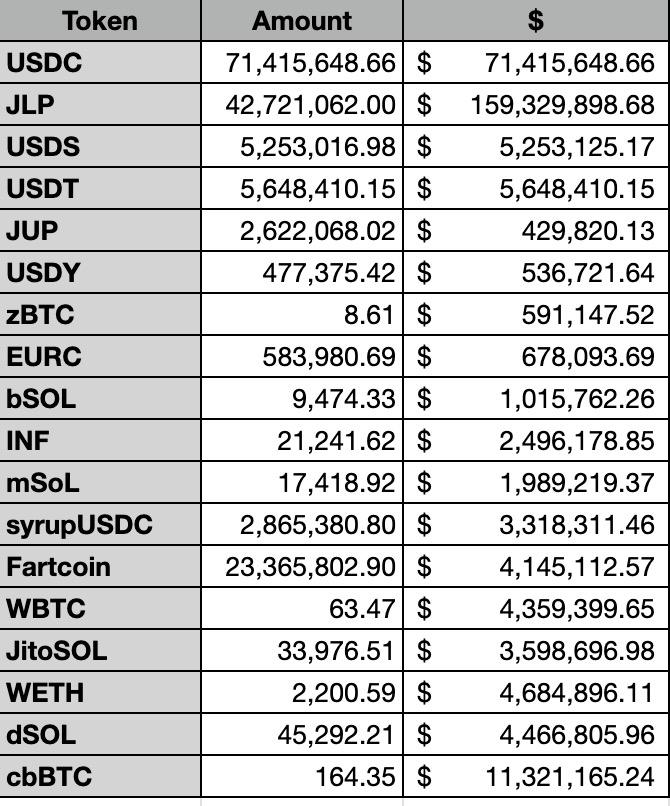
Drift Protocol on Solana just got drained. It's looking like a multisig member compromise -- and the story starts at least a 20 days before the attack. Here's the breakdown:
Neodyme tweet media
English
3
16
68
12.2K
consensyx.eth retweetledi
solst/ICE of Astarte
solst/ICE of Astarte@IceSolst·
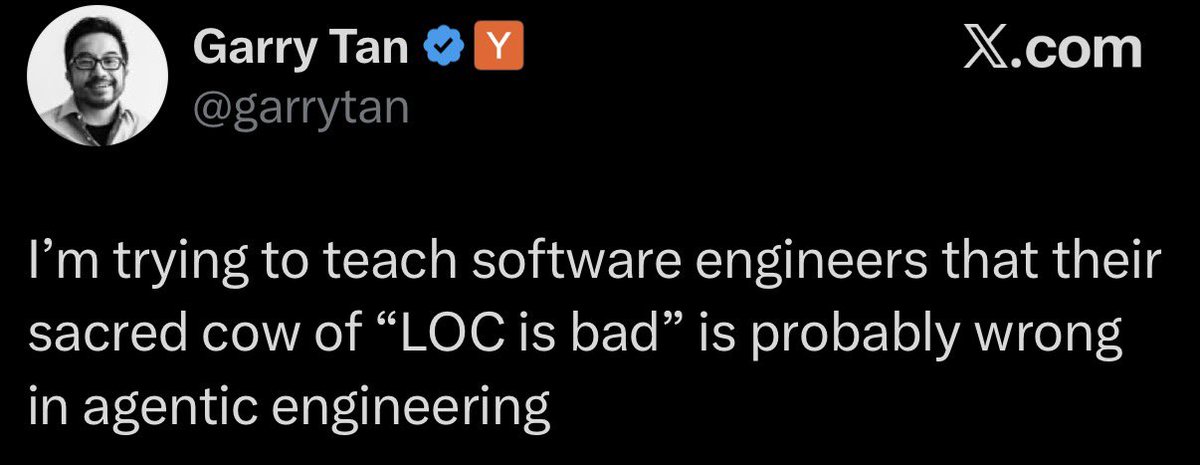
To all the young folks learning about CS/tech, please keep in mind: Garry Tan is a fucking idiot, listening to anything he says will derail you
solst/ICE of Astarte tweet media
English
81
132
3.1K
110.4K
consensyx.eth retweetledi
Emilio^
Emilio^@The3D_·
After three years of R&D, Aave V4 is finally live. This represents the first complete rework of the Aave protocol since Aave V1, with a great set of innovations and a fresh design space to build features on top. What does this mean for Aave in the medium and long term
English
16
29
282
25K
consensyx.eth retweetledi
Cursor
Cursor@cursor_ai·
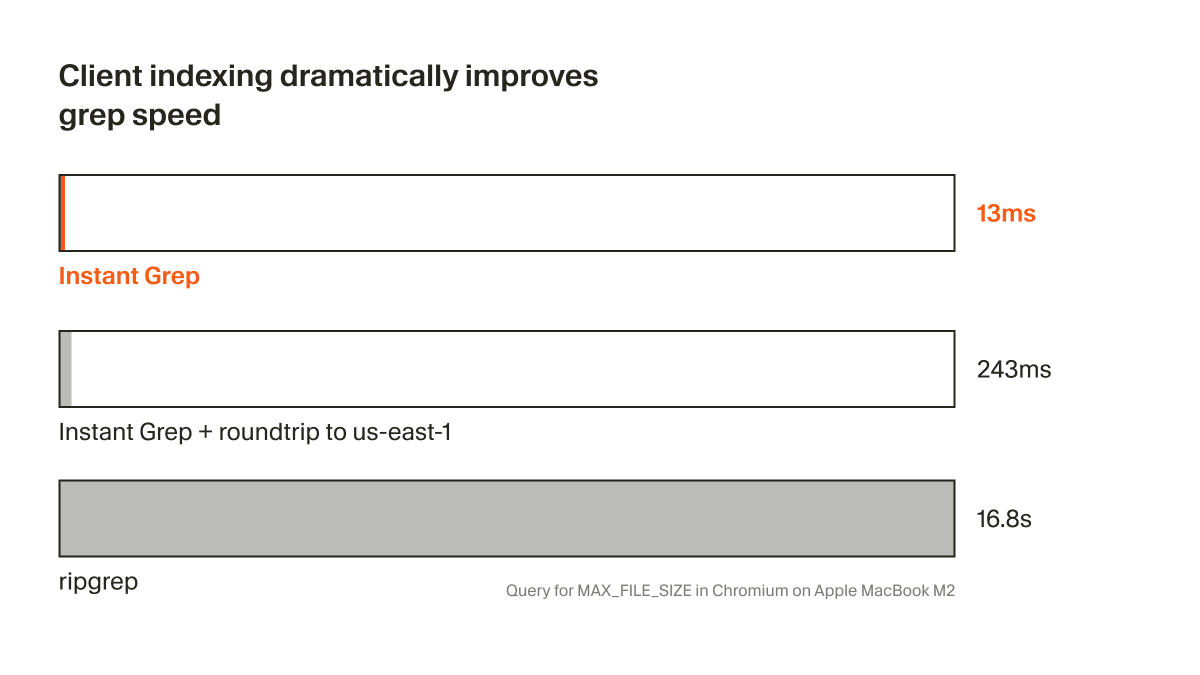
Cursor can now search millions of files and find results in milliseconds. This dramatically speeds up how fast agents complete tasks. We're sharing how we built Instant Grep, including the algorithms and tradeoffs behind the design.
Cursor tweet media
English
194
362
5.9K
1M
consensyx.eth retweetledi
Lex Fridman
Lex Fridman@lexfridman·
Here's my conversation with Jensen Huang, CEO of NVIDIA, the most valuable & one of the most influential companies in the history of human civilization. It is the engine powering the AI revolution. This was a fascinating & inspiring conversation, in parts super-technical on engineering of every part of the AI stack, memory, power, supply chain (TSMC, ASML, etc), in parts about leadership & psychology, and in parts personal & philosophical about life, consciousness, mortality, and human nature. It's here on X in full and is up everywhere else (see comment). Timestamps: 0:00 - Introduction 0:33 - Extreme co-design and rack-scale engineering 3:18 - How Jensen runs NVIDIA 22:40 - AI scaling laws 37:40 - Biggest blockers to AI scaling laws 39:23 - Supply chain 41:18 - Memory 47:24 - Power 52:43 - Elon and Colossus 56:11 - Jensen's approach to engineering and leadership 1:01:37 - China 1:09:50 - TSMC and Taiwan 1:15:04 - NVIDIA's moat 1:20:41 - AI data centers in space 1:24:30 - Will NVIDIA be worth $10 trillion? 1:34:39 - Leadership under pressure 1:48:25 - Video games 1:55:16 - AGI timeline 1:57:29 - Future of programming 2:11:01 - Consciousness 2:17:22 - Mortality
English
837
2.5K
12.2K
2.5M
consensyx.eth retweetledi
Andrew Curran
Andrew Curran@AndrewCurran_·
Terence Tao responding to a question on what advice he would give someone considering a career in math in 2026: 'Yeah, so we live in a time of change. It is, as I said, we live in a particularly unpredictable era. And I think things that we've taken for granted for centuries may not hold anymore. So, yeah, the way we... do everything, not just mathematics, will change. In many ways, I would prefer the much more boring, quiet era where things are much the same as they were 10 years ago, 20 years ago. But I think one just has to embrace that there's going to be a lot of change and that, you know, the things that you study, some of them may become obsolete or revolutionized, but some things will be retained. There'll be a lot of opportunities for things that you wouldn't be able to do before. So, I mean, in math, you previously had to basically go through years and years of education to be a math PhD before you could contribute to the frontier of math research. But now it's quite possible at the high school level or whatever, that you could get involved in a math project and actually make a real contribution because of all these AI tools and lean and everything else. So there'll be a lot of non-traditional opportunities to learn. So you need a very adaptable mindset. There'll be one for pursuing things just for curiosity, for playing around. And I mean, you still need to get your credentials. I mean, I think for a while it would still be important to sort of still go through traditional education and learn math and science and so forth the old-fashioned way for a while. Yeah, but you should also be open to very, very different ways of doing science, some of which don't exist yet. Yeah, so it's a scary time, but also very exciting.'
Dwarkesh Patel@dwarkesh_sp

The Terence Tao episode. We begin with the absolutely ingenious and surprising way in which Kepler discovered the laws of planetary motion. People sometimes say that AI will make especially fast progress at scientific discovery because of tight verification loops. But the story of how we discovered the shape of our solar system shows how the verification loop for correct ideas can be decades (or even millennia) long. During this time, what we know today as the better theory can often actually make worse predictions (Copernicus's model of circular orbits around the sun was actually less accurate than Ptolemy's geocentric model). And the reasons it survives this epistemic hell is some mixture of judgment and heuristics that we don’t even understand well enough to actually articulate, much less codify into an RL loop. Hope you enjoy! 0:00:00 – Kepler was a high temperature LLM 0:11:44 – How would we know if there’s a new unifying concept within heaps of AI slop? 0:26:10 – The deductive overhang 0:30:31 – Selection bias in reported AI discoveries 0:46:43 – AI makes papers richer and broader, but not deeper 0:53:00 – If AI solves a problem, can humans get understanding out of it? 0:59:20 – We need a semi-formal language for the way that scientists actually talk to each other 1:09:48 – How Terry uses his time 1:17:05 – Human-AI hybrids will dominate math for a lot longer Look up Dwarkesh Podcast on YouTube, Apple Podcasts, or Spotify.

English
29
227
1.9K
423.4K
consensyx.eth retweetledi
sarah guo
sarah guo@saranormous·
Caught up with @karpathy for a new @NoPriorsPod: on the phase shift in engineering, AI psychosis, claws, AutoResearch, the opportunity for a SETI-at-Home like movement in AI, the model landscape, and second order effects 02:55 - What Capability Limits Remain? 06:15 - What Mastery of Coding Agents Looks Like 11:16 - Second Order Effects of Coding Agents 15:51 - Why AutoResearch 22:45 - Relevant Skills in the AI Era 28:25 - Model Speciation 32:30 - Collaboration Surfaces for Humans and AI 37:28 - Analysis of Jobs Market Data 48:25 - Open vs. Closed Source Models 53:51 - Autonomous Robotics and Atoms 1:00:59 - MicroGPT and Agentic Education 1:05:40 - End Thoughts
English
239
1.1K
7.6K
2.9M
程序员老熊
程序员老熊@xiongchun007·
成功订阅 DeepSeek。说说我为什么打算订阅的是千问,而最终下单的是 deepseek。 原因很简单,尼玛的阿里百炼控制台,乱七八糟一堆模型、乱七八糟的计费模式、乱七八糟的排版布局、乱七八糟的菜单设置、乱七八糟的页面、乱七八糟的图片,总之一切都是乱七八糟。 所以,打开 DeepSeek 看了一下,擦。这就是我要的,简单清爽、一目了然。就是你了,拿下!
程序员老熊 tweet media
中文
158
11
391
107.8K
consensyx.eth retweetledi
Kangwook Lee
Kangwook Lee@Kangwook_Lee·
The current Terminal Bench has a pretty significant design flaw: agents are not told how much time they have left, so they just keep working until they are abruptly shut down. (And this time budget varies across tasks!) That setup systematically hurts "thinking" models. In many cases, they score much worse than non-thinking models, not because they are less capable, but because the benchmark punishes models that spend time reasoning. It is basically like giving students an exam and then taking away their papers at a random moment without telling them when time is up. The fix is straightforward: tell agents how much time remains. Once they can budget their time, a big part of this bias disappears.
elie@eliebakouch

so 3x the training compute gets you 1% improvement on swe bench multilingual and 21% on terminal bench 2.0 but k2.5 is in non thinking mode? if those benchmarks are useless, it's weird that they are the ones reported in cursor blog then? something is wrong

English
10
9
138
25K