
Cornell Duffield College of Engineering

12.9K posts

Cornell Duffield College of Engineering banner
Cornell Duffield College of Engineering

Cornell Duffield College of Engineering

@CornellEng

Explore, learn, advance. Together. #EngineeringToMakeADifference Follow along at https://t.co/E7kK9Bkkx5

Ithaca, N.Y. Katılım Mayıs 2009
639 Takip Edilen17.6K Takipçiler
Sabitlenmiş Tweet
Cornell Duffield College of Engineering
What an incredible day celebrating this historic moment with our @Cornell Duffield Engineering community! We are tremendously grateful to David A. Duffield '62, MBA '64, for supporting our students and faculty in continuing to do the greatest good.
Cornell Duffield College of Engineering tweet mediaCornell Duffield College of Engineering tweet mediaCornell Duffield College of Engineering tweet mediaCornell Duffield College of Engineering tweet media
English
1
2
26
3.4K
Cornell Duffield College of Engineering retweetledi
Cornell University
Cornell University@Cornell·
Gallium nitride, a semiconductor that can operate at high voltages, temperatures and frequencies, has enabled technologies from LED lighting to high-power electronics. Now, @CornellEng researchers have observed a quantum property of the material for the first time, an advance that could expand its technological reach. More: news.cornell.edu/stories/2026/0….
Cornell University tweet media
English
1
16
44
3.1K
Cornell Duffield College of Engineering retweetledi
Cornell Atkinson Center for Sustainability
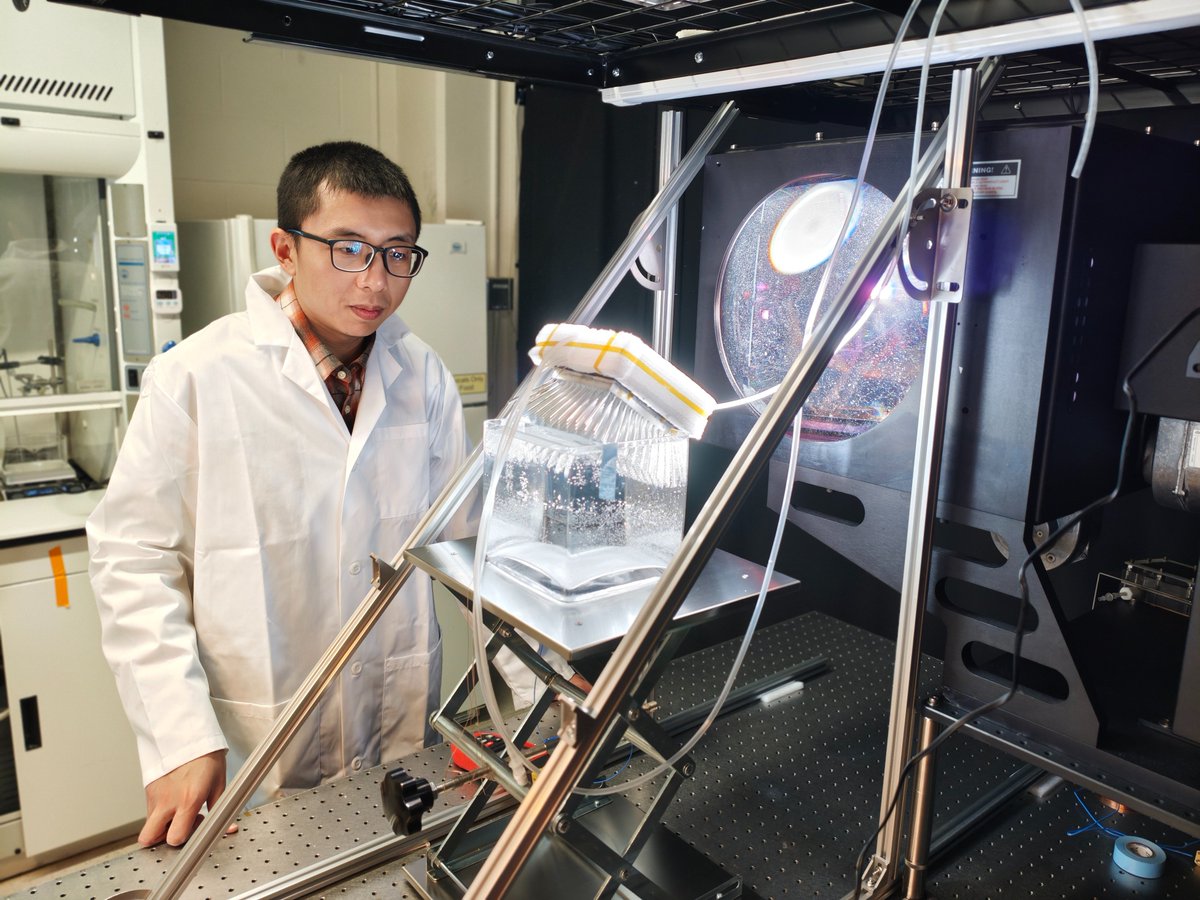
⭐️ Postdoc Spotlight: Jintong Gao ⭐️ To meet the rising needs for green hydrogen & clean drinking water, Jintong seeks to improve a novel technology he helped develop that would enable efficient co-production of green hydrogen & potable water from sunlight & seawater.
Cornell Atkinson Center for Sustainability tweet media
English
1
2
4
269
Cornell Duffield College of Engineering retweetledi
Cornell University
Cornell University@Cornell·
A high acid environment is great for a snappy hydrogen oxidation reaction – the reaction at the heart of a clean-energy fuel cell. The problem is the only catalysts that won’t dissolve in the high acid of traditional fuel cells are precious metals – platinum, palladium and the like – and they are very expensive. To advance fuel cell technologies and lower their cost, the Abruña and Muller Groups at Cornell and other researchers in the Center for Alkaline-based Energy Solutions (CABES) work on fuel cells in alkaline, or nonacidic, environments. They have developed a nonprecious metal catalyst – nickel coated with carbon – that works well in alkaline media, maintaining a strong hydrogen oxidation reaction activity. In tests, paired with a nonprecious metal based oxygen reduction reaction catalyst, also developed at CABES, it achieves a power density that surpasses the U.S. Department of Energy (DOE) benchmark. This represents a major step toward alkaline fuel cells that use inexpensive commodity metals such as nickel and cobalt in applications including generators, transportation and alternative electricity sources in remote areas. “This has the potential to be transformative in the application of fuel cells broadly defined because it steps away from the need for precious metals,” said Héctor D. Abruña, the Émile M. Chamot Professor in the Department of Chemistry and Chemical Biology in @CornellCAS. “It has the performance metrics people have been looking for in very inexpensive materials.” Abruña is co-corresponding author, with David Muller, the co-director of the Kavli Institute at Cornell for Nanoscale Science and the Samuel B. Eckert Professor of Engineering in Applied and Engineering Physics in @CornellEng, of “Unveiling the Sensitivity and Significance of Ni Oxidation State for Alkaline Hydrogen Oxidation Electrocatalysis,” published March 18 in the Proceedings of the National Academy of Sciences. The co-first authors are Qihao Li, postdoctoral researcher in the Abruña Group, and Schuyler Zixiao Shi, doctoral student. Read more: news.cornell.edu/stories/2026/0….
Cornell University tweet media
English
3
6
22
1.6K
Cornell Duffield College of Engineering
From enrolling Curtiss-Wright Cadettes to study aviation engineering during World War II to now studying plane engines using virtual reality, the Curtiss-Wright partnership with @Cornell has spanned decades.
Spectrum News 1 ROC@SPECNews1ROC

During World War II, hundreds of women went to colleges to learn aviation engineering, in turn allowing them to help with the war effort. That history is on display at the Glenn H. Curtiss Museum in Hammondsport. specne.ws/2Ce9JU

English
0
0
2
109
Cornell Duffield College of Engineering retweetledi
Cornell University
Cornell University@Cornell·
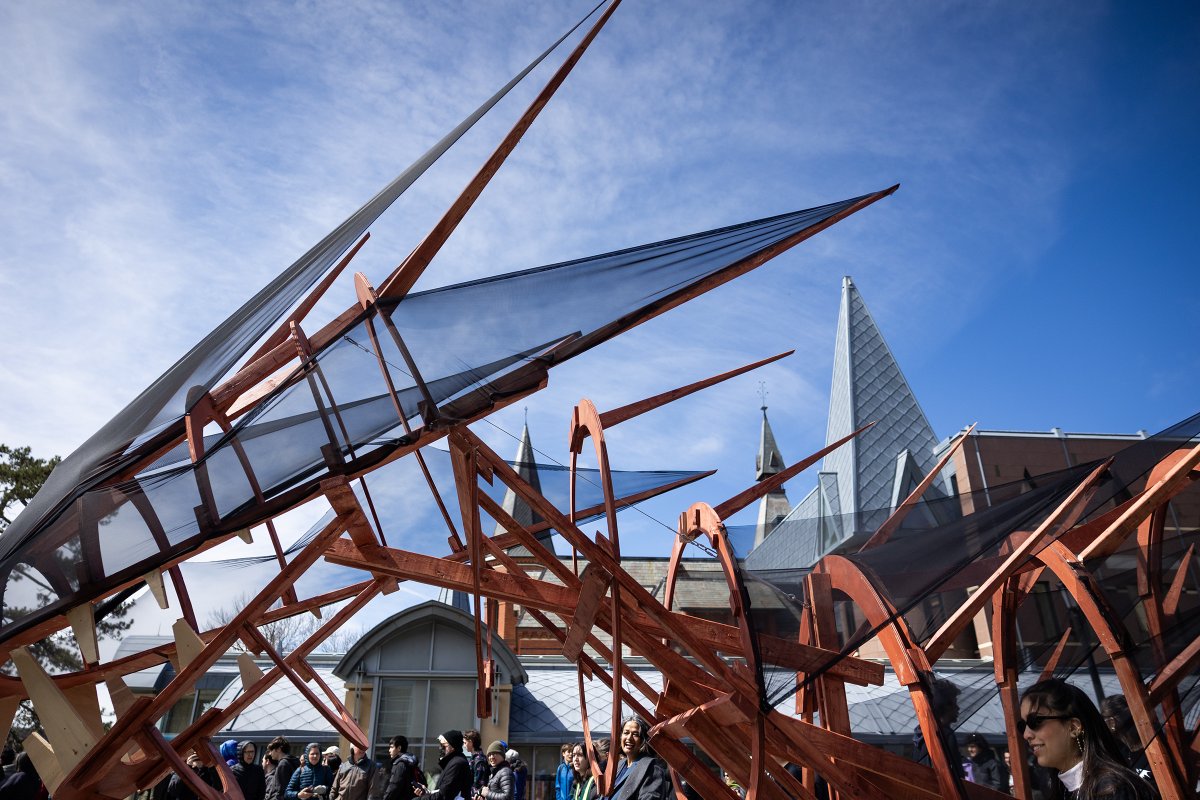
The roar of “DRAGON! DRAGON! DRAGON!” was absolutely deafening across Cornell’s campus as Big Red came together to celebrate the 125th anniversary of Dragon Day!
Cornell University tweet mediaCornell University tweet mediaCornell University tweet mediaCornell University tweet media
English
0
5
31
2.4K
Cornell Duffield College of Engineering retweetledi
Global Cornell
Global Cornell@GlobalCornell·
A big welcome to all our new Cornellians! You're now a part of our global community. 🐻🌎️
Global Cornell tweet media
English
0
4
18
1.8K
Cornell Duffield College of Engineering retweetledi
Cornell University
Cornell University@Cornell·
Welcome home, #Cornell2030! This is such a special time in your life. You've worked so hard to get here, and you finally made it. 🐻 ❤️ 🤍 We can't wait to meet you, Cornellians. 🐾
English
5
15
80
14.8K
Cornell Duffield College of Engineering retweetledi
Cornell University
Cornell University@Cornell·
Rivers are critical resources that affect everything from watersheds to agriculture to energy. But rivers, in turn, have been impacted by humans, often in the form of hydraulic infrastructure such as dams and wells. A new project, led by Stefano Galelli, associate professor of civil and environmental engineering in the Cornell Duffield College of Engineering (@CornellEng), will create a global record that shows how river systems around the world have changed under human influence over the last 75 years. More: news.cornell.edu/stories/2026/0…
Cornell University tweet media
English
0
10
32
1.6K
Cornell Duffield College of Engineering retweetledi
Cornell Biomedical Engineering
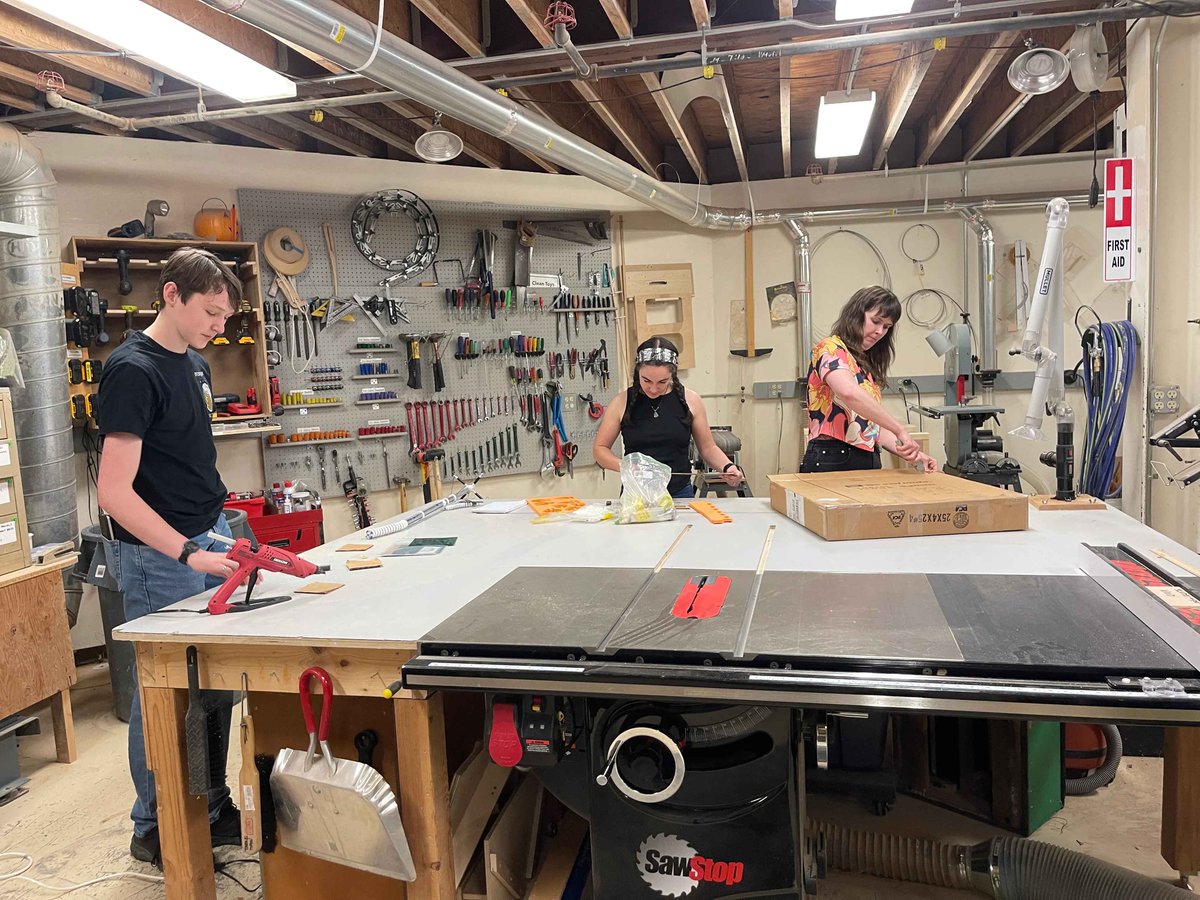
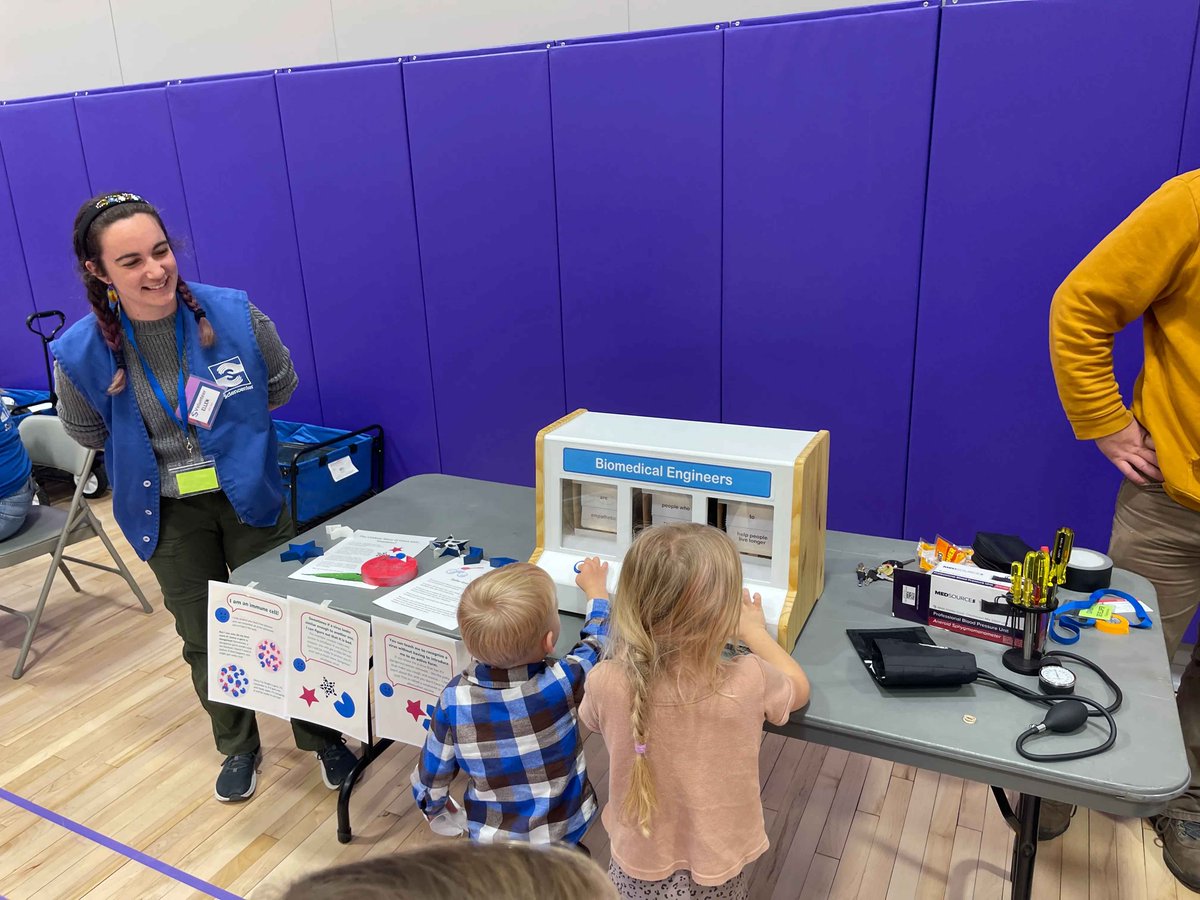
We're excited to partner w/ the Ithaca @Sciencenter museum to turn biomedical engineering into hands-on, kid-friendly exhibits—bringing complex science to life for young learners and communities nationwide. Learn more about this in-progress effort: scoprebu.medium.com/bridges-to-bio…
Cornell Biomedical Engineering tweet mediaCornell Biomedical Engineering tweet mediaCornell Biomedical Engineering tweet media
English
0
4
10
1.3K
Cornell Duffield College of Engineering retweetledi
CornellArts&Sciences
CornellArts&Sciences@CornellCAS·
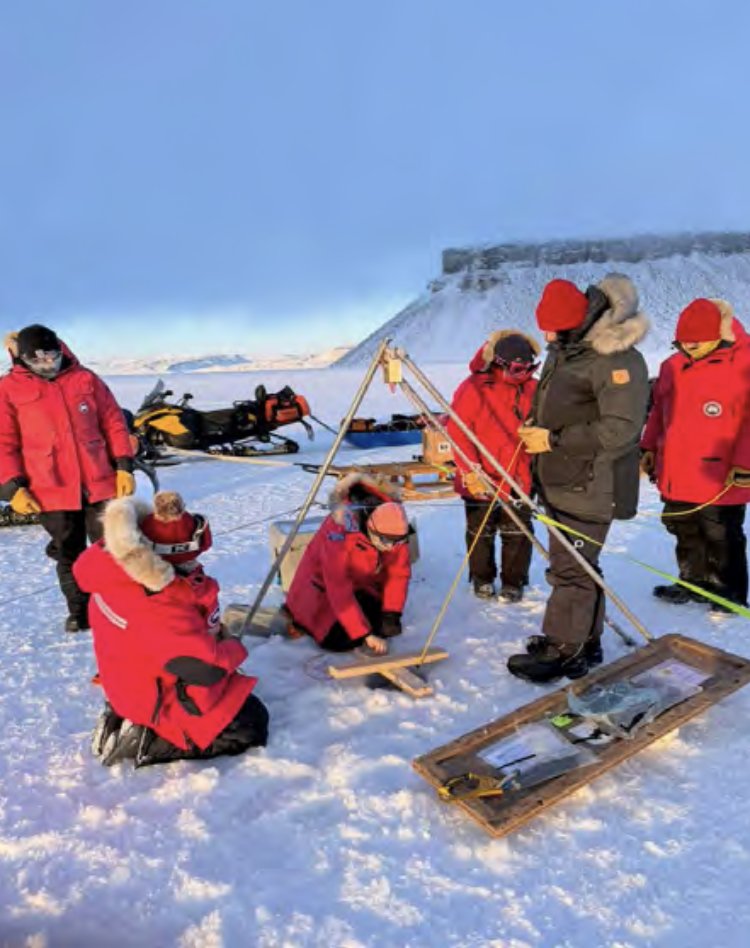
Cornell researchers SSHOWUP for fieldwork in Greenland! A team led by @CornellAstro & @CornellEng professor Britney Schmidt is studying Wolstenholme Fjord, home to 3 tidewater glaciers. Based in Pituffik, Greenland Feb. - April, the team has goals related to earth and space.
CornellArts&Sciences tweet mediaCornellArts&Sciences tweet media
English
2
2
7
1.4K
Cornell Duffield College of Engineering retweetledi
Cornell University
Cornell University@Cornell·
Cornell Nuclear is Clean Energy (NiCE) — a newly formed student group — is embracing nuclear technology to fight climate change and create jobs, with support from Cornell Atkinson Center for Sustainability (@atkinsoncenter) “Nuclear is something that I’m very passionate about because we have such a growing energy demand,” said Diana Michaelson ’27, founding member of NiCE, “and I genuinely think it’s the only way to meet our energy goals.” Nuclear energy is having a moment, according to Shaun Doherty, energy transition and carbon management partnerships lead at Cornell Atkinson. In June 2025, Gov. Kathy Hochul committed to building a new, zero-emission nuclear power plant in Upstate New York, along with other projects designed to catalyze nuclear energy development. The plans are not without controversy, however, and groups like NiCE are working to address public concerns around safety, environmental impact and nuclear waste. Renewable energy sources like wind, solar and geothermal are part of the transition away from fossil fuels, Doherty said, but those sources are intermittently available and not dispatchable any time. “Renewables like wind and solar are essential, but they’re variable,” he said. “Firm, carbon-free power like nuclear can reduce the amount of excess renewable capacity, storage and transmission needed in a clean grid. Many studies show that including nuclear can lower overall system costs while improving reliability.” Learn more about NiCE at news.cornell.edu/stories/2026/0….
Cornell University tweet media
English
1
11
25
1.6K