CPNK
26 posts

CPNK
@cpnkerc
Privacy is power. Decentralization is freedom.
Katılım Nisan 2026
3 Takip Edilen34 Takipçiler
Sabitlenmiş Tweet

First deployed Cypherpunk | half of the supply owned by the Vitalik Buterin.
The ethos of ethereum awaits you.
ca: 0xc1fe2e3876907969b8686288df91c2b42ae932ab
tg: t.me/cpnkerc
English

Keyed nonces are not just a way to add stronger in-protocol support for privacy solutions. They are also a potential first foray into a new state scaling strategy for Ethereum: create new types of storage that are more optimized for handling categories of use cases that we care about, with restrictions on their use that make them usable at extreme scale while preserving the protocol's decentralization.
Let's zoom in on this case (in-protocol nullifiers). Let's say we get to 2000 TPS of privacy-preserving transactions onchain, for eight years. Then we get 2^11 tx/sec * 2^25 sec/year * 2^3 years = 2^39 [ie. 500 billion] nullifiers stored onchain (the challenge with nullifiers is that they are fundamentally not possible to prune).
It's actually far easier to keep Ethereum decentralized if we have 500 billion nullifiers onchain in a dedicated nullifier store, than if we just let them grow in the current state. The reason is that the more restrictive structure of nullifiers (only used to check validity, and we can require the nullifier ID to be explicitly specified in the tx) enables more decentralized ways of handling them. This includes:
* Sharding: each node (incl builders) can hold a small percentage of nullifiers, and make sure to have a connection to an honest peer in each other shard
* Bloom filters: see this somewhat wacky idea here for reducing the VOPS requirement for nullifiers to ~8 bits per nullifier: #k=UT7Btd6tyqHgOj47t-TX06F8D6OpcpM_2PKdf7s4tGE" target="_blank" rel="nofollow noopener">docs.fileverse.io/d/020001fc0012…
Both techniques are not possible to use for dynamically accessible state. And so builders would have to download the full 16 TB to become viable (not just optimal, viable!), and privacy protocol users would not be able to use FOCIL without providing a Merkle branch proving that their nullifier is unspent, and there would be very few nodes capable of providing such a branch...
Zooming back out, the moral of the story is that fully dynamic state is much harder to handle at extreme scale (tens to hundreds of TB) than state that is more controlled and restricted in how it can be used. And so if we can move the majority of usage into these more specialized forms of state (which we can make much cheaper in terms of gas), then we can keep Ethereum decentralized, and highly scalable, and keep the fully dynamic state available for applications (eg. defi) that really need its full functionality.
soispoke.eth@soispoke
🔐 New EIP-8250: Keyed Nonces for Frame Transactions 🔐 by @soispoke, @nero_eth, @lightclients and @VitalikButerin This replaces the single sender nonce with (nonce_key, nonce_seq), giving frame transactions independent replay domains. For privacy protocols, the key can be derived from a nullifier: concurrent withdrawals from a shared sender become possible, with inclusion atomically marking the nullifier spent. Target fork: Hegota Links below 👇
English


Cypherpunk (CPNK) revives the 90s cypherpunk movement's privacy-first crypto ethos amid Ethereum's pushback on centralization. 🕶️
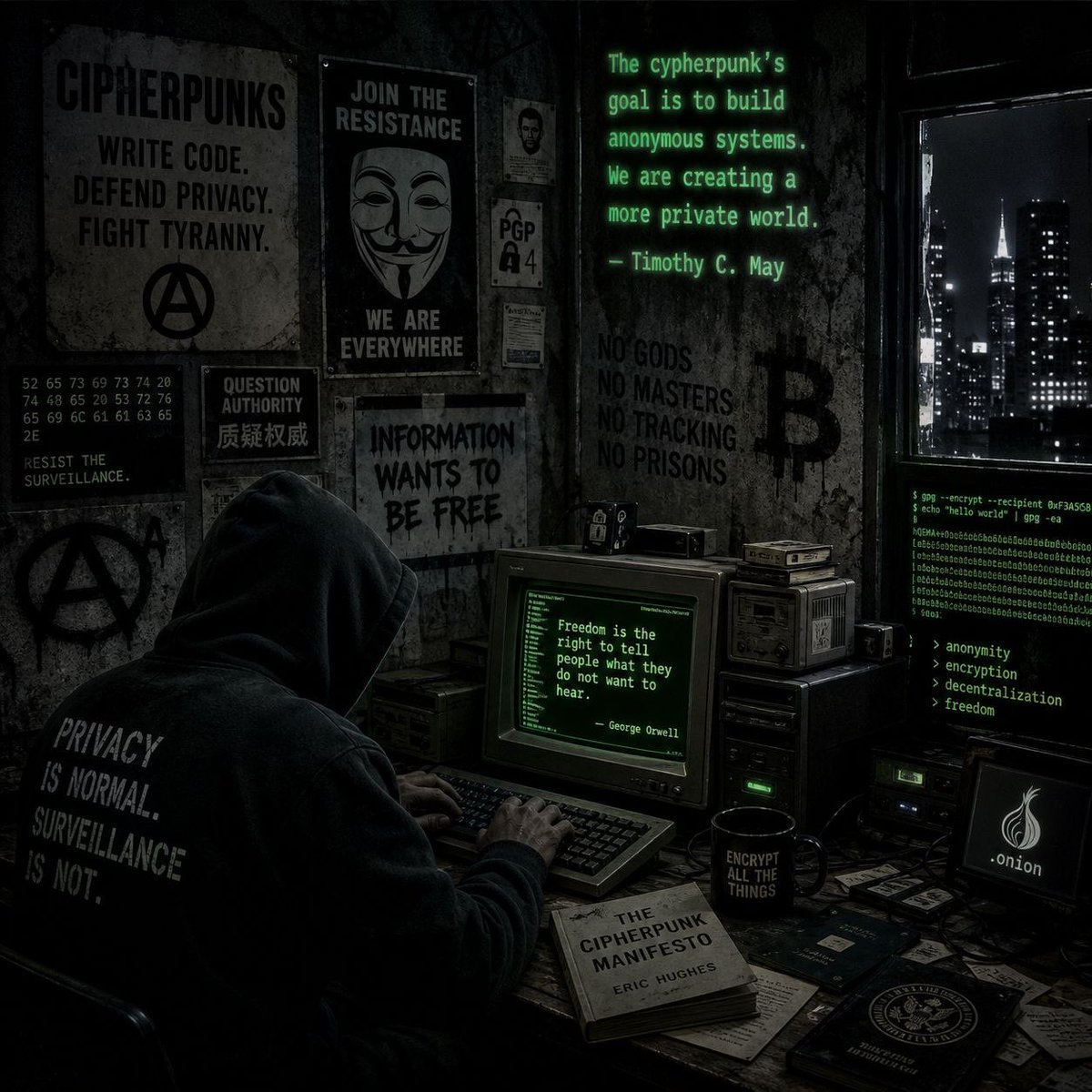
Originating from a 1990s mailing list (Hughes' manifesto, May's essays), cypherpunks championed strong encryption against surveillance—Bitcoin's spiritual forebears. Token surfs recent EF mandate hype for "hyper-resilient, permissionless" chains.

English

In lore terms, the Cypherpunks are the shadow architects of the decentralized world—the cryptographic monks who built the tools that let money, identity, and speech escape centralized control. Their legacy lives on every time someone signs a transaction, encrypts a message, or participates in a decentralized network.

English

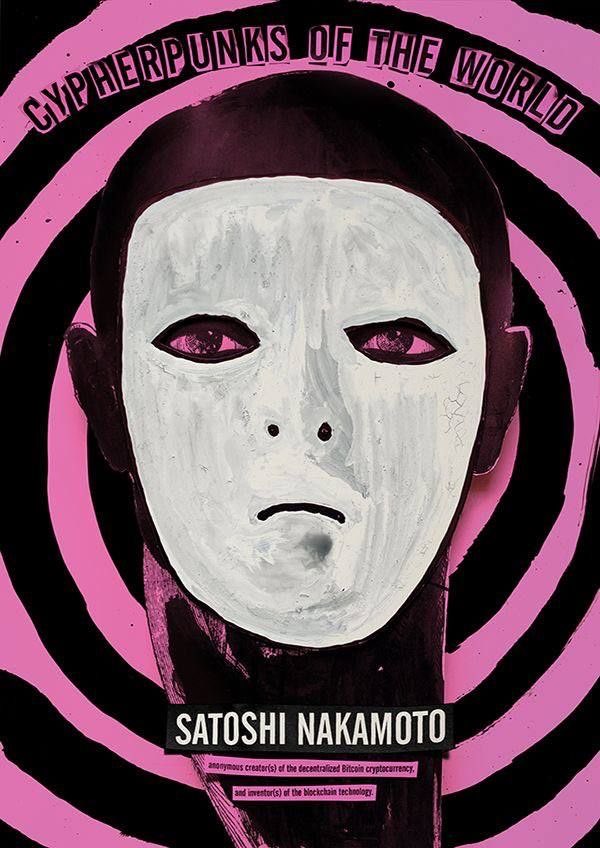
The Cypherpunks were the digital rebels who believed privacy was power. In the early days of the internet, when governments and corporations were beginning to realize how easily data could be monitored and controlled, a loose collective of hackers, mathematicians, and cryptographers formed an underground movement. Their weapon wasn’t protest—it was encryption.
Operating through anonymous mailing lists in the 1990s, figures like Timothy C. May, Eric Hughes, and Hal Finney spread the philosophy that code could enforce freedom better than laws.

English