cryptickatz

2.5K posts

cryptickatz banner
cryptickatz

cryptickatz

@cryptickatz

Protocol Autopsist @Chainlink views my own and not financial advice

Katılım Kasım 2014
592 Takip Edilen329 Takipçiler
Naruto11.eth
Naruto11.eth@naruto11eth·
if i were to bet on 3 chains today that are doing really innovative apps or work, they would be: - solana (undoubtedly, i admire their culture a lot) - megaeth (they have unique approach for capturing app founders and audience) - tempo (top 0.001% of the industry talent + innovation) nothing comes closer anymore. if everything aligns, next 4 years for these chains would be crazy.
English
28
2
115
10.8K
cryptickatz
cryptickatz@cryptickatz·
How about we make this DeFi United thing permanent? Like top protocols and orgs in the space come together to create an insurance fund sort of DAO and offer support to protocols in case of hacks where its deemed justified to.
Circle@circle

Circle Ventures is purchasing $AAVE tokens because strong DeFi infrastructure does not build itself. Aave is helping to shape the future of onchain finance, and we’re backing that ecosystem and the entire community built around it. DeFi United

English
0
0
1
22
Grimjow
Grimjow@Grimjows·
Monad shocked the consensus and it turns out it’s not gonna be another classic layer 1 struggling to find market-fit. eventually, it will take a year or two before we see another big wave of builders flowing into our eco. and if they did a benchmark even at a very low level, there’s absolutely no way they chose another chain to build over Monad. Godspeed.
English
8
1
69
2K
cryptickatz
cryptickatz@cryptickatz·
Great to see the DeFi community stepping up to donate to Aave in the light of losses due to KelpDAO exploit however Aave has $220 million+ funds in safety module to use exactly for the times like this wondering if any amount from it will be utilized now.
English
0
0
1
34
Operation Epic Burning Blade
Operation Epic Burning Blade@GoneMultichain·
@cryptickatz Layerzero decided not to inform about that despite pleas from every team using OFT about that. Since most unpaused their OFTs by now, my guess is that it was shared with them only, confidentially.
English
1
0
1
49
cryptickatz
cryptickatz@cryptickatz·
A lot has been talked about 1/1 DVN issue in the KelpDAO exploit however what I am more concerned about is how were the RPCs poisened in the first place? No of DVNs wouldn't have mattered much in this case exploit would have still happened.
English
1
0
1
47
cryptickatz
cryptickatz@cryptickatz·
@ImperiumPaper I think the buyer is almost entirely the gift-giver demographic grandparents, parents, aunts etc buying them for kids' birthdays or graduations. The illiquidity you're complaining about is probably why they buy it to avoid any risk ppl cash it out early for smth dumb.
English
1
0
3
147
PaperImperium
PaperImperium@ImperiumPaper·
One thing I’ve never understood is who buys US savings bonds, specifically the standard EE bonds? They can’t be sold, double in value after 20 years (~3.5% interest), actually pay less than that most of the time so redemption before 20 years is even worse. I suppose there’s a benefit in being triple-tax free if interest is used for college expenses. But you could buy municipal bonds for that with more liquidity and higher yield. So who is buying $1b a year of these? They’re strictly worse than a 20y bond (higher yield + can be sold), which seems like the thing it competes with. The only other thing I can think of is you can buy them in $25 increments, but you can buy 20y bonds in $100 increments. My grandparents used to gift them to me on my birthday growing up, but that was before lower denomination bonds (or even easy access to bonds at all), so they seem obsolete now
English
2
0
10
2.6K
cryptickatz
cryptickatz@cryptickatz·
cryptickatz@cryptickatz

Like where your head’s at but this security metric breaks pretty fast under scrutiny: 👇 1. DSPR punishes scale, not risk once you cross a certain security threshold, extra spend has brutal diminishing returns. - a $5B TVL protocol might be way more battle-tested + hardened but show lower DSPR than some $50M farm throwing money around. you end up rewarding inefficiency, not actual security. 2. completely gameable numbers: a huge chunk of real security spend isn’t cleanly onchain (audits, internal teams, private bounties). and even if you force “onchain receipts”, protocols can just… loop money, overpay friendly auditors, or label random spend as “security”. you’re basically trusting self-reported accounting in a trust-minimized system lol. 3. Spend ≠ competence throwing $$$ at security doesn’t mean shit if: – audits are low quality – findings aren’t actually fixed properly – architecture is flawed at the base layer – team just doesn’t have security culture. we’ve seen protocols spend millions and still get nuked. 4. no signal on what actually matters this ignores the real primitives of security: code quality, formal verification, invariant testing, upgrade patterns, key management, time in market, exploit history, etc. Those are the things LPs actually care about, not some expense ratio. 5. perverse incentives teams could optimize for “looking secure” (high DSPR) instead of being secure. classic metric gaming → same shit tradfi did with ratings pre-2008. imo if you want a real “DeFi risk premium” input, it has to be composite + behavior-driven, not just financial: – code audit depth + auditor quality – % of code formally verified – bug bounty size and payout history – time since last exploit / incident response quality – upgradeability + admin key risk – onchain monitoring + circuit breakers yes, then maybe security spend as a minor factor

QME
0
0
0
19
Santiago R Santos
Santiago R Santos@santiagoroel·
DeFi has lost between $730M and $3.1B to exploits every single year since 2021. TVL has swung from $175B peak to $45B trough and back above $100B. The loss rate as a % of TVL is 1–3% / year depending on the cycle. I've been thinking about a simple metric to price this risk: the DeFi Security Premium Ratio (DSRP). DSPR = Security Spend / TVL. Reported quarterly. Both sides verifiable on-chain. Five tiers: Hardened (>1%) / Protected (0.5–1%) / Baseline (0.2–0.5%) / Underspending (0.05–0.2%) / Exposed (<0.05%) DSPR acts as a yield pricing input. Low DSPR = higher required yield to compensate LP for security risk. High DSPR = protocol earns a lower cost of capital. We need a ratings mechanism on chain to price yield Any protocol that is underspending in security needs to be called out and either spend more, divert more fees to an insurance fund, or both @Blockworks you should add it to the token transparency portal. but now do one for protocol health L1s should also carve out % of validator rewards or fees to DeFi protocols taking security seriously Need to think more about how to verify and create manipulation-resistant security spend receipts @_SEAL_Org - any ideas?

English
51
9
188
27.3K
cryptickatz
cryptickatz@cryptickatz·
Like where your head’s at but this security metric breaks pretty fast under scrutiny: 👇 1. DSPR punishes scale, not risk once you cross a certain security threshold, extra spend has brutal diminishing returns. - a $5B TVL protocol might be way more battle-tested + hardened but show lower DSPR than some $50M farm throwing money around. you end up rewarding inefficiency, not actual security. 2. completely gameable numbers: a huge chunk of real security spend isn’t cleanly onchain (audits, internal teams, private bounties). and even if you force “onchain receipts”, protocols can just… loop money, overpay friendly auditors, or label random spend as “security”. you’re basically trusting self-reported accounting in a trust-minimized system lol. 3. Spend ≠ competence throwing $$$ at security doesn’t mean shit if: – audits are low quality – findings aren’t actually fixed properly – architecture is flawed at the base layer – team just doesn’t have security culture. we’ve seen protocols spend millions and still get nuked. 4. no signal on what actually matters this ignores the real primitives of security: code quality, formal verification, invariant testing, upgrade patterns, key management, time in market, exploit history, etc. Those are the things LPs actually care about, not some expense ratio. 5. perverse incentives teams could optimize for “looking secure” (high DSPR) instead of being secure. classic metric gaming → same shit tradfi did with ratings pre-2008. imo if you want a real “DeFi risk premium” input, it has to be composite + behavior-driven, not just financial: – code audit depth + auditor quality – % of code formally verified – bug bounty size and payout history – time since last exploit / incident response quality – upgradeability + admin key risk – onchain monitoring + circuit breakers yes, then maybe security spend as a minor factor
Santiago R Santos@santiagoroel

DeFi has lost between $730M and $3.1B to exploits every single year since 2021. TVL has swung from $175B peak to $45B trough and back above $100B. The loss rate as a % of TVL is 1–3% / year depending on the cycle. I've been thinking about a simple metric to price this risk: the DeFi Security Premium Ratio (DSRP). DSPR = Security Spend / TVL. Reported quarterly. Both sides verifiable on-chain. Five tiers: Hardened (>1%) / Protected (0.5–1%) / Baseline (0.2–0.5%) / Underspending (0.05–0.2%) / Exposed (<0.05%) DSPR acts as a yield pricing input. Low DSPR = higher required yield to compensate LP for security risk. High DSPR = protocol earns a lower cost of capital. We need a ratings mechanism on chain to price yield Any protocol that is underspending in security needs to be called out and either spend more, divert more fees to an insurance fund, or both @Blockworks you should add it to the token transparency portal. but now do one for protocol health L1s should also carve out % of validator rewards or fees to DeFi protocols taking security seriously Need to think more about how to verify and create manipulation-resistant security spend receipts @_SEAL_Org - any ideas?

English
0
0
0
66
cryptickatz
cryptickatz@cryptickatz·
@SaurabhDhekale @KhanAbbas201 Yeah such precise incentives could work however you must ensure that once incentives fill the gap you can still keep yield competitive without incentives, which has proved to be a challenge so far for both chains and protocols alike.
English
0
0
1
205
Saurabh Dhekale
Saurabh Dhekale@SaurabhDhekale·
I do agree with you, but incentive design matters a lot here. If you narrow the incentive to one specific action like improving lending rates on native ETH and there's already latent borrow demand on the chain, the subsidy bridges a temporary supply gap rather than manufacturing fake activity
English
1
0
3
57
Abbas Khan ⟠
Abbas Khan ⟠@KhanAbbas201·
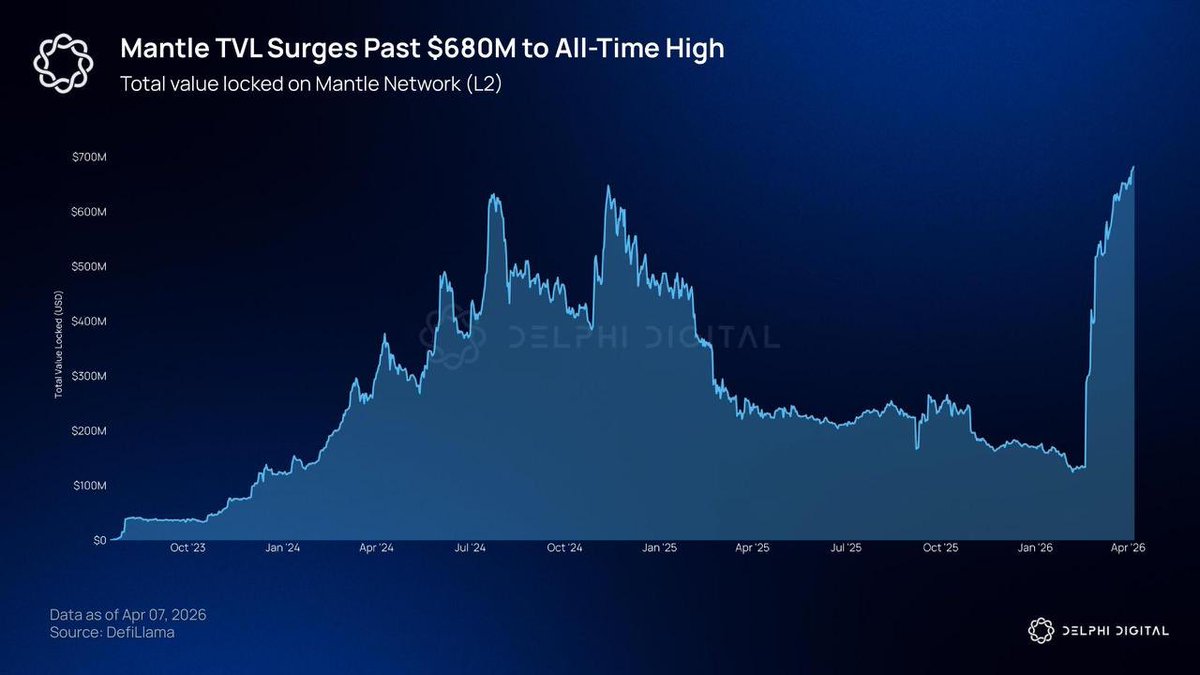
Mantle’s TVL jump happened through an Aave deployment and an 8M $MNT incentive program. No idea why Bybit would do this, because as soon as the incentives go away, most of that TVL will be gone, and now you’ve given away millions in incentives. This keeps bringing me back to Vitalik’s tweet asking chains to build something new and different, but it feels like the same playbook. Maybe I’m missing something, but it makes no difference to users whether that lending happens on Arbitrum or Mantle, and this play is a recipe for failure. Source: @stacy_muur
Abbas Khan ⟠ tweet media
English
5
0
21
2K
cryptickatz
cryptickatz@cryptickatz·
@SaurabhDhekale @KhanAbbas201 in most cases it's bad idea as very few chains today have a sticky retention moat. Which means with incentives your CAC is always > user LTV
English
1
0
1
135
Saurabh Dhekale
Saurabh Dhekale@SaurabhDhekale·
@KhanAbbas201 I think incentives are not a bad idea as long as they are utilised properly and in a way where you can track every dollar spent. You can think of incentives as a CAC. Look at Arbitrum's DRIP program as a reference
English
1
0
3
124
cryptickatz
cryptickatz@cryptickatz·
@DefiIgnas Exactly and it's not just WLFI, USD1 has the same liquidity and bad debt accumulation issue. x.com/i/status/20419…
cryptickatz@cryptickatz

are you a @Dolomite_io lender? run away with your funds as fast as you can. It's absolutely nuts of them for not having optimum collateral caps for both WLFI and USD1 on such thin liquidity. Current Uniswap V3 liquidity of USD1/USDC pool is $1.4M. The deepest WLFI pool is $6.12M. If liquidators try swapping a USD1 amount greater than $4.7M the slippage is 80%+ making liquidation futile. It's even worse for WLFI due to poorly optimised liquidity with slippage going berserk for swaps as low as $500K. Even 0.5% of the WLFI pool can't be liquidated at profit and will result in bad debt. This is just a time bomb at this point and lenders are going to be toast.

English
0
0
4
1.4K
Ignas | DeFi
Ignas | DeFi@DefiIgnas·
Don’t be exit liquidity for Trump’s cartel: They deposited $484M of $WLFI tokens to borrow USDC. Those loans will likely never be repaid. Instead, when Trump leaves office, or even after the midterms if Republicans lose, $WLFI will dump, and Dolomite will be stuck with BAD DEBT. As a result, USDC lending rates are at 13.5%. But even that APY isn’t worth the risk of not being able to withdraw your deposit. Everyone knows this. No surprise Dolomite's $DOLO trades at just $15M market cap because it's a turkey getting ready for Thanksgiving.
Ignas | DeFi tweet media
Ethan DeFi@EthanDeFi_

Day 44: We're seeing insane levels of crime once again. Yesterday, Trump family's crypto project deposited 5% of $WLFI's total supply on Dolomite and borrowed $75 million in stablecoins against it. 5% of WLFI's token supply is worth roughly $500M. Then, just a few hours before Trump announced the Iran ceasefire, WorldLibertyFi sent $40M+ in stablecoins to Coinbase. (from the ones they borrowed) Did they use these stablecoins to long the markets, knowing what Trump would announce? No one knows, but I wouldn't be surprised. But this is what is very concerning: If that WLFI collateral position ever gets close to liquidation, it's basically unliquidatable without major losses for lenders. $WLFI has almost a $10 billion FDV, but it is not an extremely liquid asset. So imagine what would happen if 5% of WLFI's total supply would suddenly need to be sold to liquidate the position. If you have any USD1 or other stablecoins lent on Dolomite to pools that accept WLFI collateral, my advice is to withdraw it asap. Better to be safe than sorry.

English
108
145
1.1K
259.5K
cryptickatz
cryptickatz@cryptickatz·
are you a @Dolomite_io lender? run away with your funds as fast as you can. It's absolutely nuts of them for not having optimum collateral caps for both WLFI and USD1 on such thin liquidity. Current Uniswap V3 liquidity of USD1/USDC pool is $1.4M. The deepest WLFI pool is $6.12M. If liquidators try swapping a USD1 amount greater than $4.7M the slippage is 80%+ making liquidation futile. It's even worse for WLFI due to poorly optimised liquidity with slippage going berserk for swaps as low as $500K. Even 0.5% of the WLFI pool can't be liquidated at profit and will result in bad debt. This is just a time bomb at this point and lenders are going to be toast.
Ignas | DeFi@DefiIgnas

Don’t be exit liquidity for Trump’s cartel: They deposited $484M of $WLFI tokens to borrow USDC. Those loans will likely never be repaid. Instead, when Trump leaves office, or even after the midterms if Republicans lose, $WLFI will dump, and Dolomite will be stuck with BAD DEBT. As a result, USDC lending rates are at 13.5%. But even that APY isn’t worth the risk of not being able to withdraw your deposit. Everyone knows this. No surprise Dolomite's $DOLO trades at just $15M market cap because it's a turkey getting ready for Thanksgiving.

English
0
1
5
1.8K
cryptickatz
cryptickatz@cryptickatz·
No Flagship androids infact better in lot of aspects but its the familiarity and network effects, you use what everyone around you is using and once you start using you become comfortable. It's same with Metamask it is the most known wallet and most users have entered defi through it so despite high fees and terrible UX they are too lazy to move out of their comfort zone.
English
0
0
1
28
Alex The Black Cap
Alex The Black Cap@blackcapx02·
Why is metaask still the most expensive wallet, yet also the most widely used?
jussy@jussy_world

You’re losing money every time you swap using wrong wallet Same $10k swap: 👇 @Backpack (0%) $10k → $0 $50k → $0 $100k → $0 @jup_mobile (~0.02%) $10k → $2 $50k → $10 $100k → $20 @phantom (0.85%) $10k → $85 $50k → $425 $100k → $850 @MetaMask (0.875%) $10k → $87 $50k → $437 $100k → $875 Just wallet fees Before DEX fees, gas, and slippage (quote) What wallet are you using?

English
1
0
8
1.1K
cryptickatz
cryptickatz@cryptickatz·
@KhanAbbas201 The biggest reason behind 95% red chart is no strong retention moat + broken tokenomics and then when you put incentives on top it's like pouring water out of sinking ship.
English
0
0
1
27
cryptickatz
cryptickatz@cryptickatz·
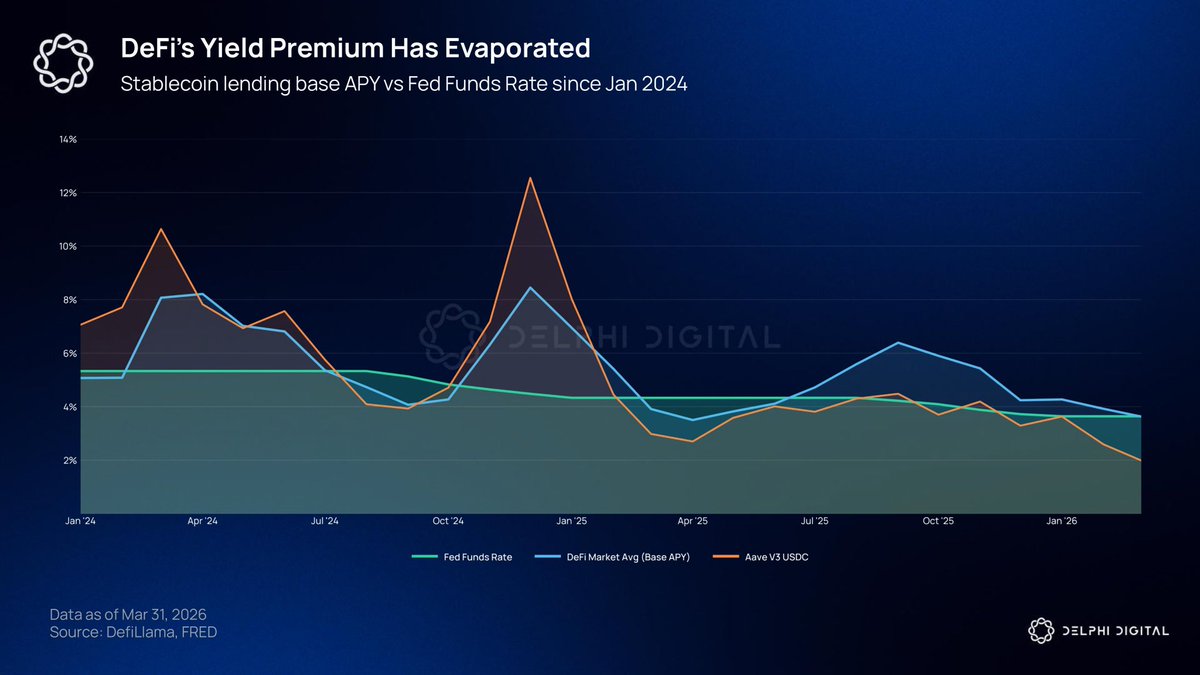
@DeFi_Andree @aave Why should someone use DeFi if yields are T-bill level ?which is essentially risk free DeFi fixed income is dead if it can't close that risk premium or minimise the risk to risk free levels.
English
0
0
0
26
DeFi Andree
DeFi Andree@DeFi_Andree·
DeFi paying above the Fed was never the endgame. It was a phase driven by leverage demand. Now yields are compressing as stablecoin supply deepens and borrowing normalizes. That is not weakness. That is maturity. DeFi is starting to look less like a yield promo market and more like a real credit market. That is a positive shift. And it is good for @aave Source: @DefiLlama
DeFi Andree tweet media
English
18
5
32
1.3K