Alchemy

1.3K posts

Alchemy banner
Alchemy

Alchemy

@cryptoalchemy11

I am a trader and technical analyst / Crypto trader Binance KOL

Katılım Ocak 2024
4.4K Takip Edilen4.5K Takipçiler
Sabitlenmiş Tweet
Alchemy
Alchemy@cryptoalchemy11·
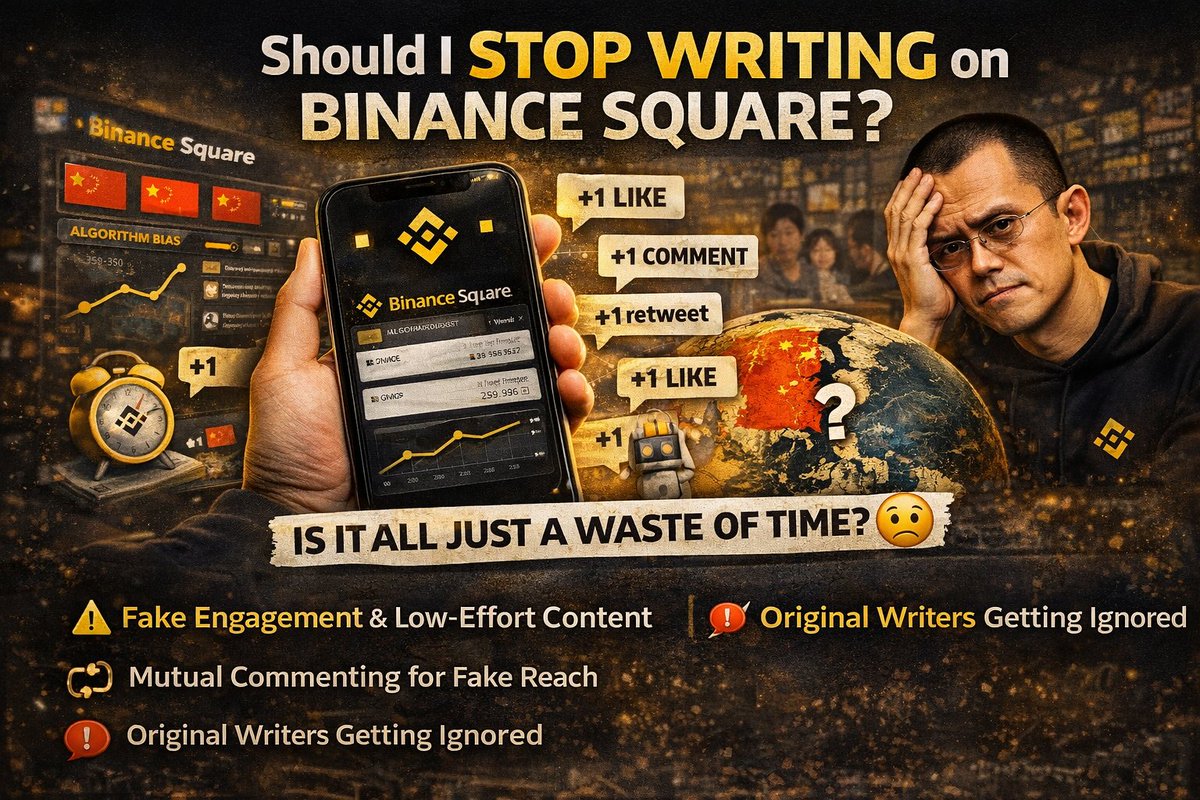
I received nearly $500 USD worth of $ROBO yesterday, thanks But in new campaigns, it's hard to rank as they prioritize views over quality. In most cases, the quality didn't matter, and quantity of views, likes, and comments mattered. So people are using tricks to increase their reach, and it's not their mistake, as Binance itself said views will matter most. They're just doing what they can to increase their rank higher, but why? Why give priority to views instead of quality? Frankly speaking, if you have high views and you wrote trash, completely AI, even irrelevant, you get up to 90 points. But if you wrote very high-quality content, even without AI, what happens? You don't even get 8 to 10 points guaranteed. But with the same content, if you have high views, you get up to 100 points. And as I said, it's not people's mistake; they're just following the rules. From Binance's perspective, why do people scroll on Binance Square to see paid partnerships? If you ask and do a survey, you'll get an answer. Almost everyone will disagree with it. Only those who are participants themselves should see this content instead of others. Infact I am tired my feed is 100% about campaigns contetn And it'll only be possible if they prioritize quality over view count, likes, and comments. Mostly, people are tired of doing this . If you see that a user is ranked higher, it's mostly because of two cases: their reach is increased by Binance, or they're continuously involved in likes and comments on others' content to get likes and comments back. In that case, the reach increases up to 50,000 views. But who watches this? Mostly other people who aren't interested. Why are they forced to do this? People are using tricks to get high views, and many are succeeding, but others have to watch this content forcefully. This is happening because Binance itself proved that views will count. It's three months now; they should prioritize quality so people won't use tricks to increase views, and no one else has to force themselves to watch this. Those who were sharing high-quality content are not able to post good content, as they have to focus on increasing campaign-related content views. Hence in trending articles and recommended content, I See paid partnerships everywhere, and most people are trying to be in trending so they get high points even if people are tired with doing these tricks. Users who scroll on Binance want trade-related content, not paid partnership articles. They minimize trading points to 5 regardless of trading volume only $10 matters so why not in views case only 5 points should matter so no one has to use tricks and they can actually focus on quality and post and other good content as well😊@binance. @FullTiltFrancis @BinanceHelpDesk @heyibinance @cz_binance @revolut20 #Binance
Alchemy tweet media
English
17
3
50
1.8K
Alchemy
Alchemy@cryptoalchemy11·
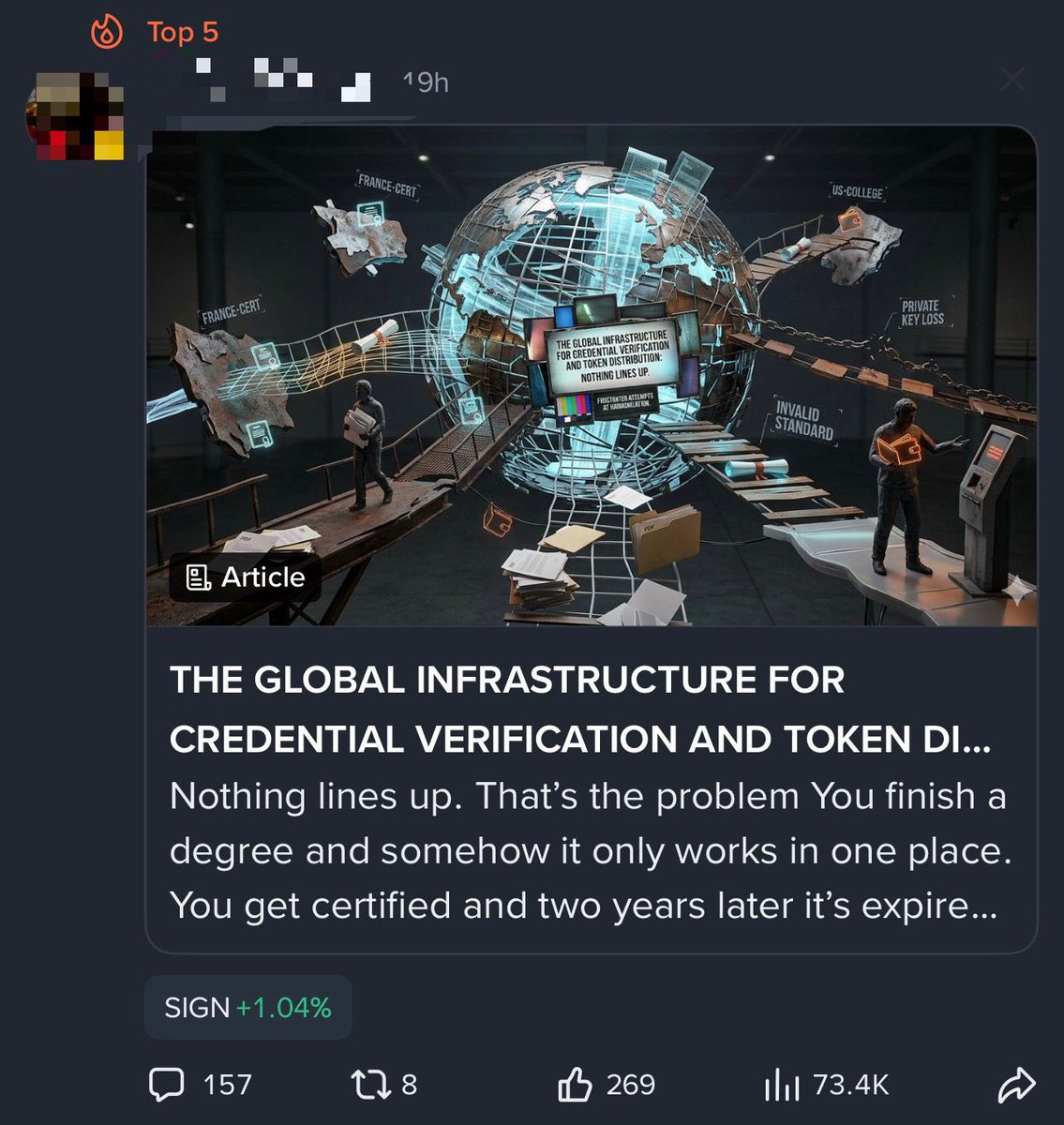
Gemini said I’ve been watching how fast the Middle East is moving lately and it’s clear @Sign is the missing piece of the puzzle. They aren’t just building another crypto app; they are building the literal rails for national sovereignty. By using the opBNB stack, they’ve made it so a government can deploy a full blockchain in weeks instead of a five year nightmare. This is exactly why they are becoming The Global Infrastructure for Credential Verification and Token Distribution. The Kyrgyzstan Digital Som pilot showed that you don’t need to start from zero if you have a solid L2 strategy. You get the battle-tested security of the BNB Chain without the massive cost of building a new Layer 1. It is a massive shortcut for any nation that wants to own its data without waiting a decade for results. With 41.5 million dollars raised in 2025, the team actually has the weight to close these big government deals. The $SIGN token sits at the heart of a system that works across Solana, TON, and Ethereum simultaneously. It is the first time I have seen a project that actually knows how to talk to a ministry of finance. Real world utility is finally here and it looks like a sovereign stack. #SignDigitalSovereignInfra $SIGN
English
0
0
3
11
Alchemy
Alchemy@cryptoalchemy11·
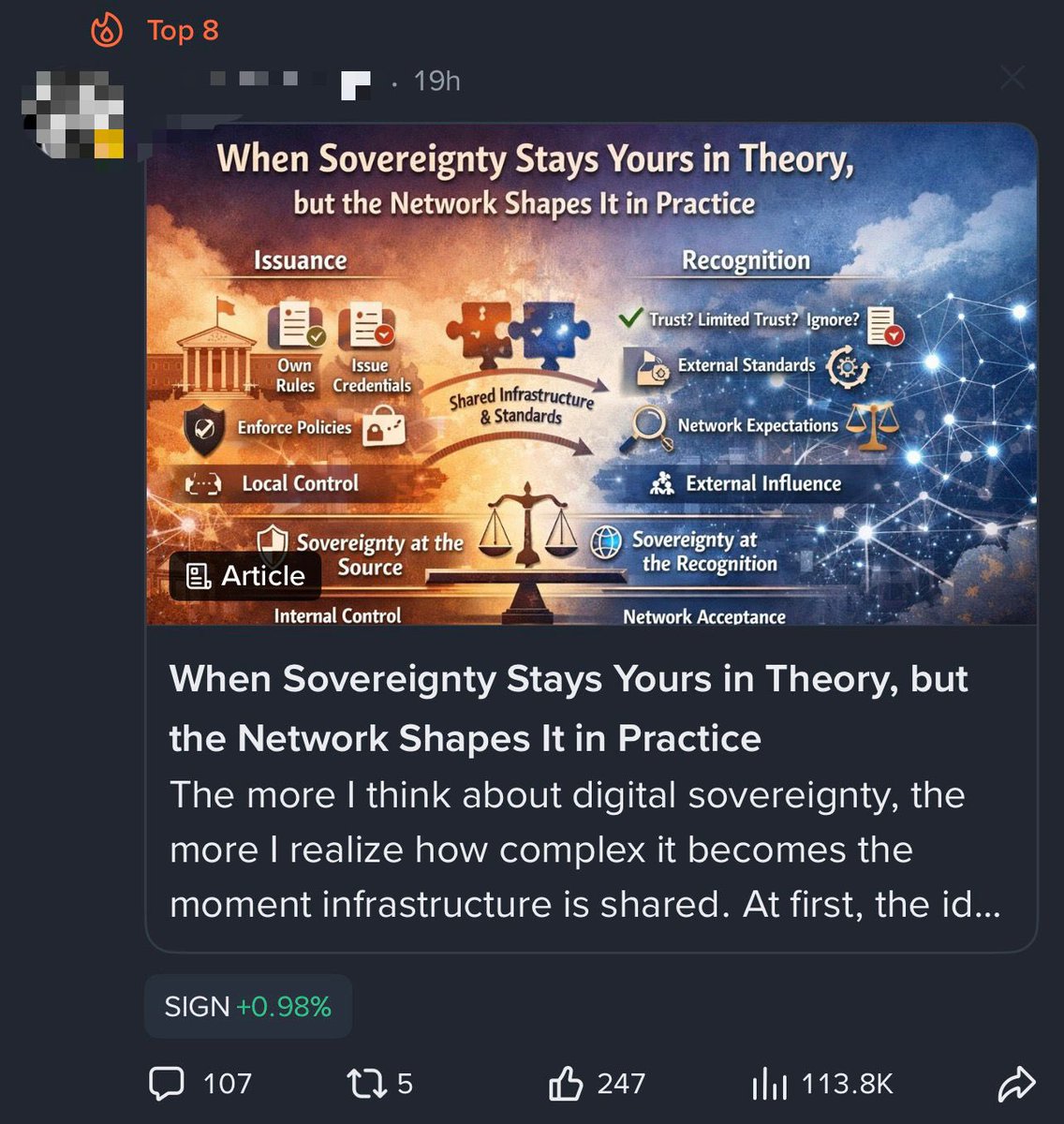
Sign sits underneath L1s instead of competing with them. That works right now because no major L1 has decided attestation is worth building natively. The day one of them does, Sign's relationship with that chain shifts from complementary to competitive. I don't think that's imminent. I just think it's the question worth holding onto while everything else looks clean. @Sign $SIGN #SignDigitalSovereignInfra
English
0
0
4
56
Alchemy
Alchemy@cryptoalchemy11·
'm tired of seeing this since March 23rd. The leaderboard is dominated by those increasing comments. Binance's algorithm change now boosts reply views towards posts and articles. If you scroll through their profiles, you'll notice: - Low views on previous content and other daily content - High views only on articles adn posts with hundreds of replies related to campaigns only. - They reply to each comment to increase views Points aren't for comments, but for views. They should change the points value to 5, like trading,instead of 100 plus to discourage spam. No one will post spam if points are reduced. Check the leaderboard and change the system. It should be equal for every creator, no partiality @CYZhang01
English
2
0
3
42
Crypto 🔶 Psychic
Crypto 🔶 Psychic@Crypto_PsychicX·
I want to raise a genuine concern regarding Binance Square. Having been an active creator on the platform for years, I’ve consistently invested significant time and effort into producing original, research-based content. However, the current experience has become increasingly discouraging. Despite maintaining a strong follower base and consistent posting, my content now struggles to reach even a few hundred views. At the same time, accounts with minimal history or low-effort content are achieving disproportionately high visibility. This raises important questions about the current direction of the platform. There also appears to be a growing reliance on engagement loops — where creators feel compelled to like and comment extensively simply to maintain visibility. This shifts the focus away from meaningful analysis and toward engagement-driven behavior. If creators are required to spend more time chasing visibility than creating quality content, it undermines the very purpose of the platform. Additionally, the increasing presence of repetitive, AI-generated, or copy-paste content suggests that the current system may be unintentionally rewarding volume over originality. I believe Binance Square has immense potential as a global content platform. However, it is equally important to ensure that long-term contributors — those who have supported and built the ecosystem over time — are not overlooked. This is not criticism, but a request for greater transparency, fairness, and balance in how visibility and opportunities are distributed. I remain supportive, but I hope these concerns are acknowledged and addressed. #Binance #BinanceSquare
Crypto 🔶 Psychic tweet media
English
6
3
27
413
NextGemHunter
NextGemHunter@Next_GemHunter·
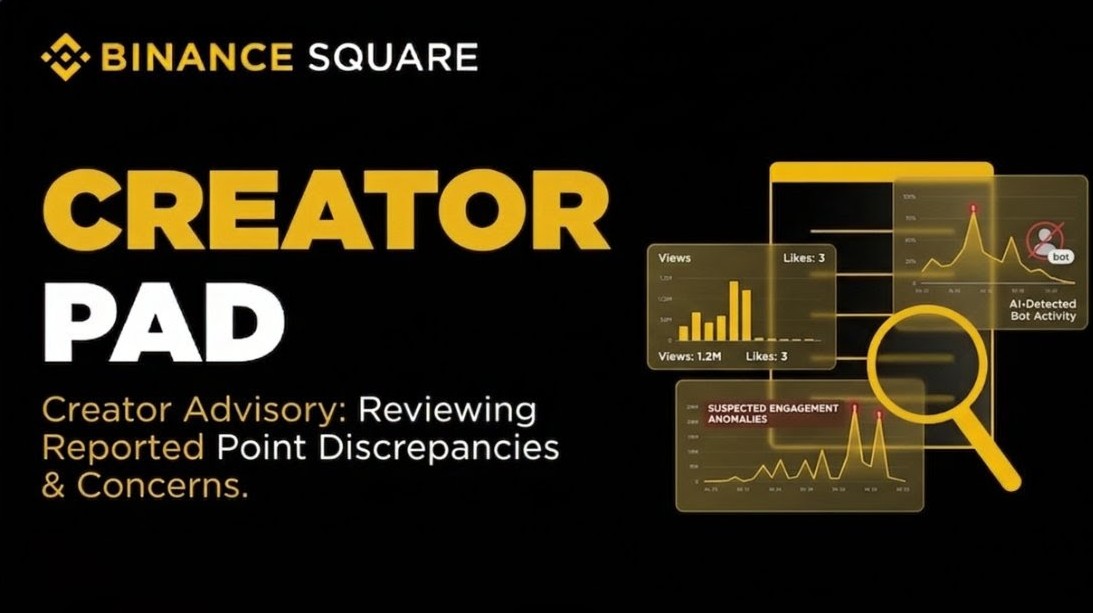
⚠️ CreatorPad concern: Engagement farming is becoming more common, with creators exchanging likes/comments to boost reach. This is starting to impact content visibility, allowing weaker posts to outperform stronger ones. Worth reviewing for fairness. @blueshirt666 @binance
NextGemHunter tweet media
English
28
6
41
1.5K
Alchemy
Alchemy@cryptoalchemy11·
@Next_GemHunter @blueshirt666 @binance @KazeBNB @CYZhang01 the issue is not resolved yet because of views; creators are getting 150-plus points due to reply spam.they must re calculate points from this week since 23rd of mach leaderboard before distributing rewards.
English
3
0
5
161
Alchemy
Alchemy@cryptoalchemy11·
@ShahMuzami98676 @binance I hope they will recalculate points as well and adjust. for the views for these campaigns
English
2
0
4
70
Muzamil
Muzamil@ShahMuzami98676·
Hello @binance Team This issue is becoming very serious and very disappointing for creators. At one side some creators’ posts are reaching top trending with 100k plus views and honestly it is very hard to understand. On the other side many other creators are only getting 200 or 300 views. This feels very unfair. I am not blaming the system or the team and I also do not have any hate against any creator. But I really want this issue to be solved soon so things can work with proper transparency again just like before. Hopefully the team will take action on this and settle it as soon as possible. @FullTiltFrancis @CYZhang01 @gmnome @Supers__Crypto @analyst9701 @cryptoalchemy11 @ali_alizeh72722 @CriptoprincessX @Crypto_PsychicX #Binance #Creatorpad
Muzamil tweet mediaMuzamil tweet mediaMuzamil tweet mediaMuzamil tweet media
English
9
4
17
661
Alchemy
Alchemy@cryptoalchemy11·
I spent some time trying to figure out why Sign's government deals actually close when most blockchain infrastructure pitches to central banks die in procurement. The answer kept coming back to one decision. Sign didn't build its own validator set. The public chain inherits security from Ethereum and BNB Chain directly. That sounds like a technical footnote until you've sat in a government procurement meeting and watched what happens when the security question comes up. Every central bank technical committee asks the same thing. Who validates transactions. What happens under adversarial conditions. How long has this consensus mechanism been running under real pressure. If you just launched your own L1 those questions take months to answer convincingly and most deals die waiting for that answer. Sign just pointed at Ethereum's validator history. Years of adversarial testing. Billions in economic security. A track record that predates most of the people in the room. That's not a minor convenience. That's the question that was quietly killing every government blockchain conversation before Sign answered it by not building an L1 in the first place. I keep thinking about whether that positioning holds permanently though. Sign sits underneath L1s instead of competing with them. That works right now because no major L1 has decided attestation is worth building natively. The day one of them does, Sign's relationship with that chain shifts from complementary to competitive. I don't think that's imminent. I just think it's the question worth holding onto while everything else looks clean. @Sign $SIGN #SignDigitalSovereignInfra
English
0
0
4
63
Binance Pakistan 🇵🇰
Testing X’s new feature Only people in Pakistan can reply to this👀
English
482
30
1.1K
95.9K
Alchemy
Alchemy@cryptoalchemy11·
@CYZhang01 It's not alone about algorithms; it's about high views' priority to get high points for CreatorPad campaigns. If they did not reduce points for views alone, this will continue no matter what.
English
0
0
0
6
Cy
Cy@CYZhang01·
@cryptoalchemy11 Thank you for your feedback, we’re currently adjusting our algorithm. Try to make Square as a better platform🙏.
English
2
0
2
25
Alchemy
Alchemy@cryptoalchemy11·
I received nearly $500 USD worth of $ROBO yesterday, thanks But in new campaigns, it's hard to rank as they prioritize views over quality. In most cases, the quality didn't matter, and quantity of views, likes, and comments mattered. So people are using tricks to increase their reach, and it's not their mistake, as Binance itself said views will matter most. They're just doing what they can to increase their rank higher, but why? Why give priority to views instead of quality? Frankly speaking, if you have high views and you wrote trash, completely AI, even irrelevant, you get up to 90 points. But if you wrote very high-quality content, even without AI, what happens? You don't even get 8 to 10 points guaranteed. But with the same content, if you have high views, you get up to 100 points. And as I said, it's not people's mistake; they're just following the rules. From Binance's perspective, why do people scroll on Binance Square to see paid partnerships? If you ask and do a survey, you'll get an answer. Almost everyone will disagree with it. Only those who are participants themselves should see this content instead of others. Infact I am tired my feed is 100% about campaigns contetn And it'll only be possible if they prioritize quality over view count, likes, and comments. Mostly, people are tired of doing this . If you see that a user is ranked higher, it's mostly because of two cases: their reach is increased by Binance, or they're continuously involved in likes and comments on others' content to get likes and comments back. In that case, the reach increases up to 50,000 views. But who watches this? Mostly other people who aren't interested. Why are they forced to do this? People are using tricks to get high views, and many are succeeding, but others have to watch this content forcefully. This is happening because Binance itself proved that views will count. It's three months now; they should prioritize quality so people won't use tricks to increase views, and no one else has to force themselves to watch this. Those who were sharing high-quality content are not able to post good content, as they have to focus on increasing campaign-related content views. Hence in trending articles and recommended content, I See paid partnerships everywhere, and most people are trying to be in trending so they get high points even if people are tired with doing these tricks. Users who scroll on Binance want trade-related content, not paid partnership articles. They minimize trading points to 5 regardless of trading volume only $10 matters so why not in views case only 5 points should matter so no one has to use tricks and they can actually focus on quality and post and other good content as well😊@binance. @FullTiltFrancis @BinanceHelpDesk @heyibinance @cz_binance @revolut20 #Binance
Alchemy tweet media
English
17
3
50
1.8K
Alchemy
Alchemy@cryptoalchemy11·
I want to talk about something that doesn't get brought up enough in Sign discussions. Before SIGN token existed, before the listings, before any of the community growth, Sign's infrastructure was already processing distributions for other people's tokens. Kaito. Starknet. ZetaChain. DOGS on TON. Over 40 million users across EVM, Solana, and TON networks. $4 billion moved through TokenTable before Sign had its own token to pump. That detail matters more than it sounds. Most infrastructure projects launch a token and then spend the next 18 months trying to find real usage to justify the valuation. Sign's stack was getting stress tested at production scale by some of the largest distributions in crypto history before the team had any token-based incentive to make it look good. I keep thinking about what that means for the risk calculation. The protocol wasn't theoretical when SIGN launched. It had already survived the kind of load that breaks systems built on paper. Being live on Ethereum, BNB, Solana, TON, and Move-based chains simultaneously at launch wasn't a marketing slide. It was the direct result of not locking into a single L1. Every chain those distributions ran on became a surface where Sign's attestation layer had to work cleanly under real pressure. That's a different foundation than most tokens launched from. $SIGN @Sign #SignDigitalSovereignInfra
English
0
0
5
117
Alchemy
Alchemy@cryptoalchemy11·
I've been thinking about something Sign's CEO said. "There are only 192 clients in the world and we're moving fast." That line stuck with me because it reframes everything. Sign isn't building for millions of anonymous retail users. It's building for governments. And the entire technical architecture makes more sense once you understand that constraint. The Sovereign L2 Stack Sign built runs on opBNB. A government gets its own chain, its own validator selection, its own fee structure, its own compliance rules, all without bootstrapping security from zero. The security model borrows from BNB Chain underneath. For a central bank signing infrastructure contracts that's not a minor detail. That's the thing that makes the conversation possible at all. I spent time reading through the dual chain design. Private chain handles domestic CBDC operations. Public L2 handles cross-border flows and open market activity. A specialized bridge handles atomic swaps between both sides under central bank rules. The citizen moving money never knows which rail they're on. The regulator sees exactly what they need to see on each side. What I keep coming back to is that this combination, sovereignty plus inherited security plus dual rail privacy, didn't exist before Sign built it. Kyrgyzstan's central bank didn't sign because Sign had a good pitch deck. They signed because the technical stack answered questions that had been blocking government blockchain adoption for years. @Sign $SIGN #SignDigitalSovereignInfra
English
0
0
6
77
Alchemy
Alchemy@cryptoalchemy11·
I want to discuss about SIGN and share with you some valuable information Something clicked for me when I stopped comparing Sign to other identity protocols and started comparing it to L2s instead. Most rollups were built with one use case in mind. DeFi throughput. Fast transactions, cheap gas, high volume financial activity. The entire design stack, sequencer architecture, state compression, finality assumptions, was built around moving money quickly. Sign is building rollups for something completely different. Credential issuance. CBDC settlement. Government benefit distribution. Those aren't faster versions of DeFi transactions. They're a different category of on-chain activity with different latency requirements, different privacy constraints, and different compliance obligations baked into the base layer. A rollup that works for a DEX doesn't automatically work for a central bank issuing a national stablecoin to 6 million citizens. The design requirements are just different. What I find interesting about Sign's sovereign L2 approach is that it plugs into existing L1 security rather than asking governments to trust a brand new base layer. For a National Bank signing infrastructure contracts, borrowing Ethereum's validator set is a feature. It removes one conversation about security assumptions that would otherwise slow every deal down. I'm still watching whether the execution matches the architecture. But the design logic is cleaner than I expected when I first looked at it. @Sign l $SIGN #SignDigitalSovereignInfra
English
0
0
5
55
Alchemy
Alchemy@cryptoalchemy11·
@cz_binance Does it means you don't have any good friends?big brother 😂
English
0
0
0
29
CZ 🔶 BNB
CZ 🔶 BNB@cz_binance·
You can safely assume anyone who claims to be able to help you list your project on Binance (CEX) is a SCAMMER, especially if they say they know CZ or is a good friend, etc. 99.999% of the time, I don't know them. If I do, I will put them on a blacklist. Stay SAFU! 🙏
English
1.6K
615
5.2K
1.7M
Alchemy
Alchemy@cryptoalchemy11·
$SIREN knocked out everone first all shorts by rising upto $5 USD Then moving back and forth to liquidate in both sides today it fall like 0.76 more than 80% liquidate all longs This is why it's better to pay attention to genuine coins recently I researched about SIGN what they are doing to improve Sign built its entire infrastructure to sit underneath existing L1s rather than launching its own chain and competing directly. On paper that sounds like the humble move. Don't fight Ethereum, don't fight Solana, just become the layer they all need for credential verification and attestation. And honestly when I first read that framing I bought it completely. But then I started thinking about what "sitting underneath" actually means five years from now when one of those L1s decides attestation is valuable enough to build natively. At that point Sign's positioning shifts from strategic to dependent pretty fast. The dual chain model is what keeps me from fully going bearish on this question though. Giving governments a public transparency rail and a private permissioned rail simultaneously isn't something any single L1 can replicate cleanly right now. That's a genuine infrastructure gap Sign fills that Ethereum wasn't designed for and Solana isn't trying to solve. So I go back and forth. Is sitting underneath L1s the smartest long term play because you become essential infrastructure for all of them? Or is it a ceiling that looks fine until someone with more resources decides to build the same thing natively? I don't have the answer. I just think it's the question worth asking before assuming the positioning is permanently safe. @Sign $SIGN #SignDigitalSovereignInfra
English
0
0
1
29
Alchemy
Alchemy@cryptoalchemy11·
honestly I've been going back and forth on @SignOfficial for weeks now. not because the tech is confusing. because the gap between what it's building and what the token is doing doesn't add up to me yet. SignScan gives developers a queryable index of every attestation on-chain. that's genuinely useful infrastructure. before it existed you couldn't efficiently search or verify attestation data programmatically. SignPass connects Web2 identity sources to Web3 wallets. government IDs, KYC results, professional credentials. all anchored on-chain and reusable across different protocols without re-verifying every time. Sign Media Network launching in Q4 2025 expanded the whole thing into content distribution. same identity layer, now powering how information moves not just how it gets verified. that's three separate product launches solving three separate real problems. 6 million attestations processed. 55 million linked addresses. $32 million raised from Sequoia and YZi Labs. these aren't vanity numbers. but here's what I keep sitting with. $SIGN has been under consistent price pressure since TGE despite all of this. the protocol utility is real. the token value hasn't reflected it yet. I don't have a clean answer for why that gap exists. I just think it's worth being honest about rather than pretending it isn't there. @Sign $SIGN #SignDigitalSovereignInfra
English
0
0
3
67
Alchemy
Alchemy@cryptoalchemy11·
I think @SignOfficial should be more explicit publicly about what the contingency looks like if that dependency chain breaks. Not because I think it will. Because the projects that survive long term are the ones that think through failure modes honestly rather than assuming the infrastructure underneath them never breaks. That's not a reason to avoid $SIGN. It's a reason to ask better questions. @Sign #SignDigitalSovereignInfra
English
0
0
2
23
Alchemy
Alchemy@cryptoalchemy11·
I think about that combination a lot. Real revenue. Active supply retirement. 40% community allocation. Government deployments already running. Governance transition coming. Each of those individually is a decent signal. Together they form a picture of a team that's building for a decade not a cycle. I've been wrong about projects before and I'll be wrong again but this one keeps passing the checks I actually care about. @Sign $SIGN #SignDigitalSovereignInfra
English
0
0
5
39
Alchemy
Alchemy@cryptoalchemy11·
The $SIGN token sits at the center of attestation fees, document signing, and token distribution infrastructure. Three different revenue streams feeding into one token. That kind of utility doesn't show up often. Sequoia and Binance Labs both backed this. Two firms that rarely agree on the same bet. That alone made me pay closer attention. If you haven't looked at Sign properly yet, maybe worth an hour of your time. @Sign $SIGN #SignDigitalSovereignInfra
English
0
0
4
36