Adolfo Cuevas Teja

4.9K posts

Adolfo Cuevas Teja banner
Adolfo Cuevas Teja

Adolfo Cuevas Teja

@cuevas_adolfo

Katılım Temmuz 2012
11 Takip Edilen3.2K Takipçiler
Adolfo Cuevas Teja retweetledi
Carlos Ramírez F.
Carlos Ramírez F.@CarlosRamirezF·
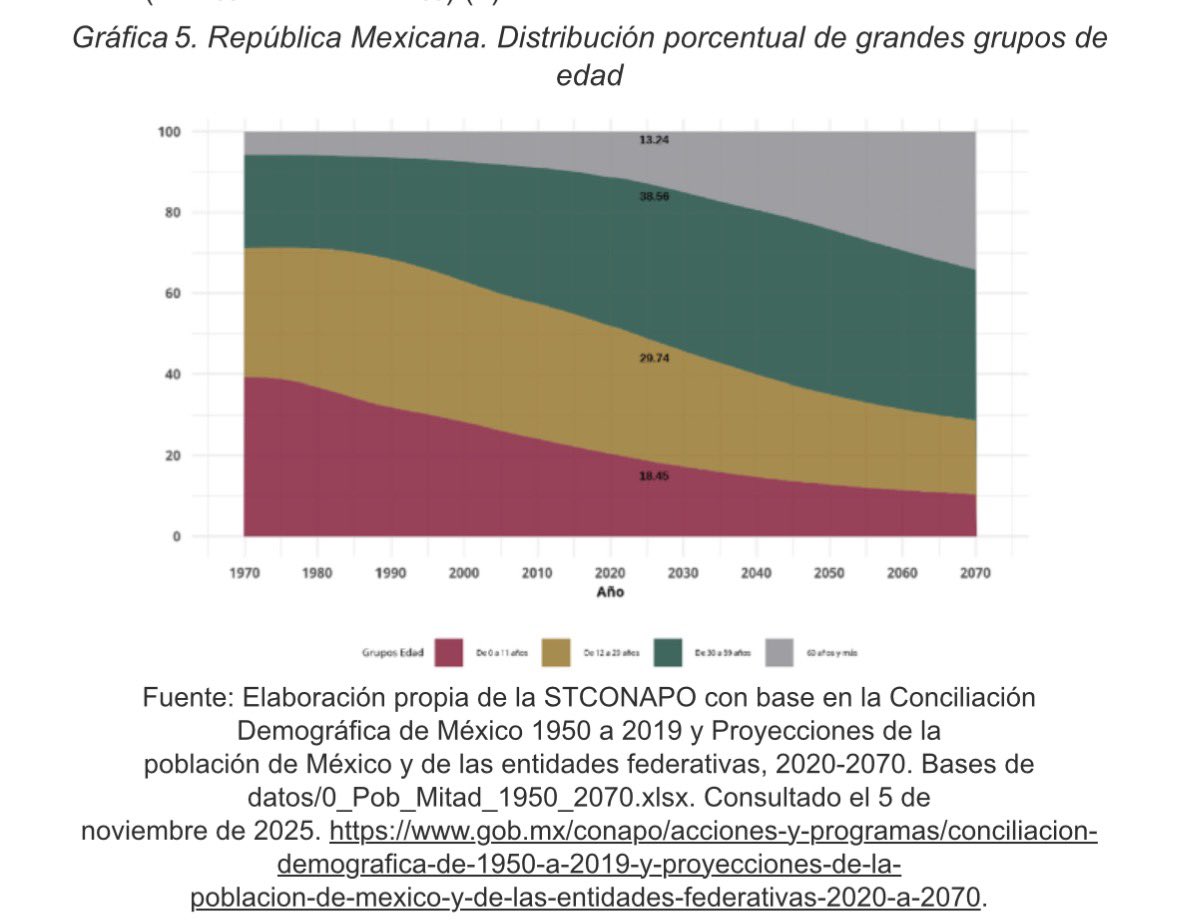
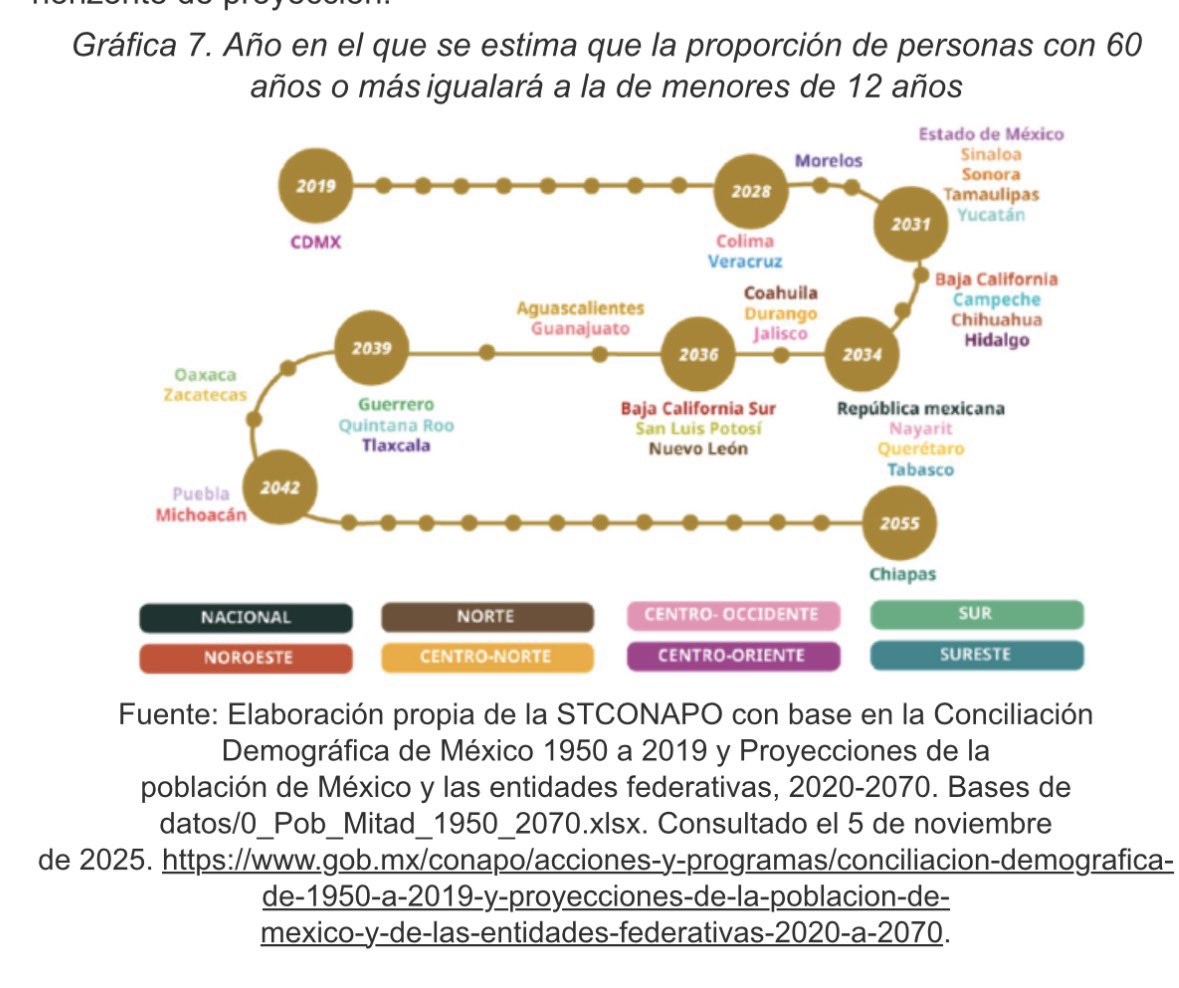
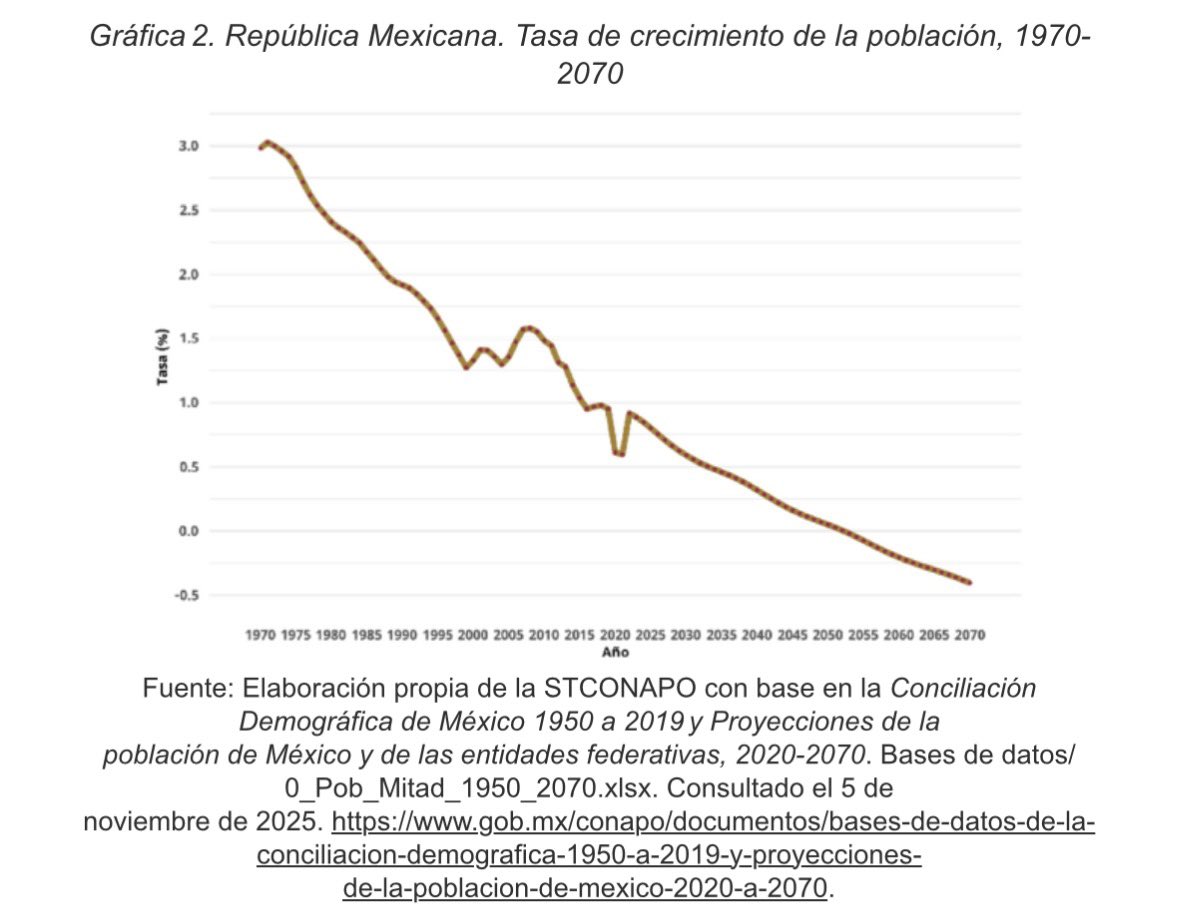
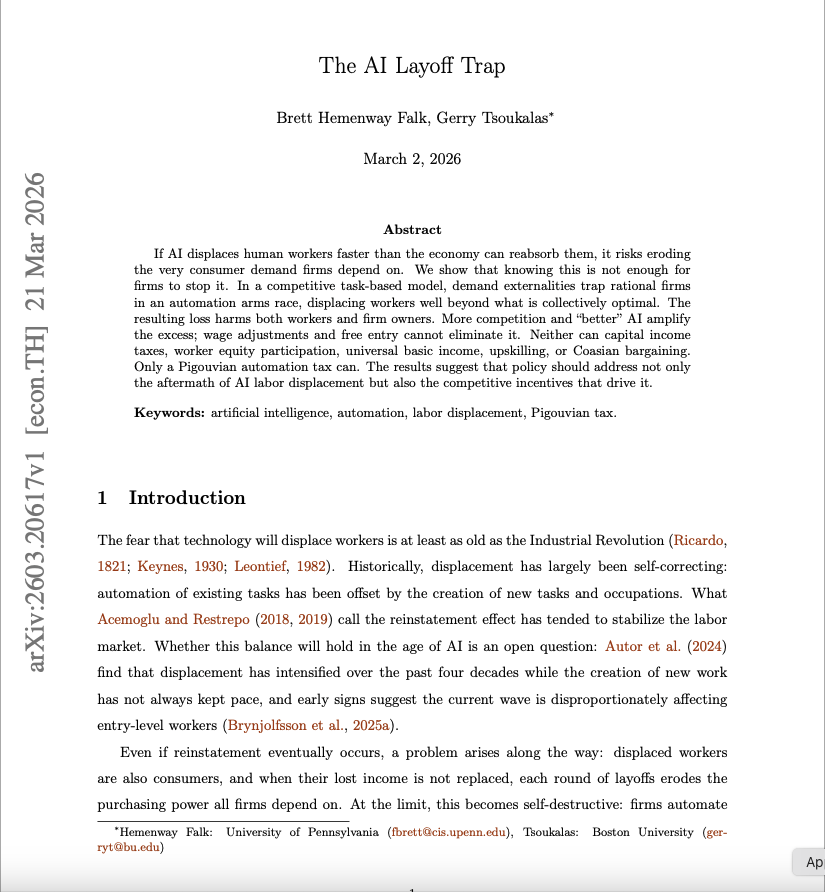
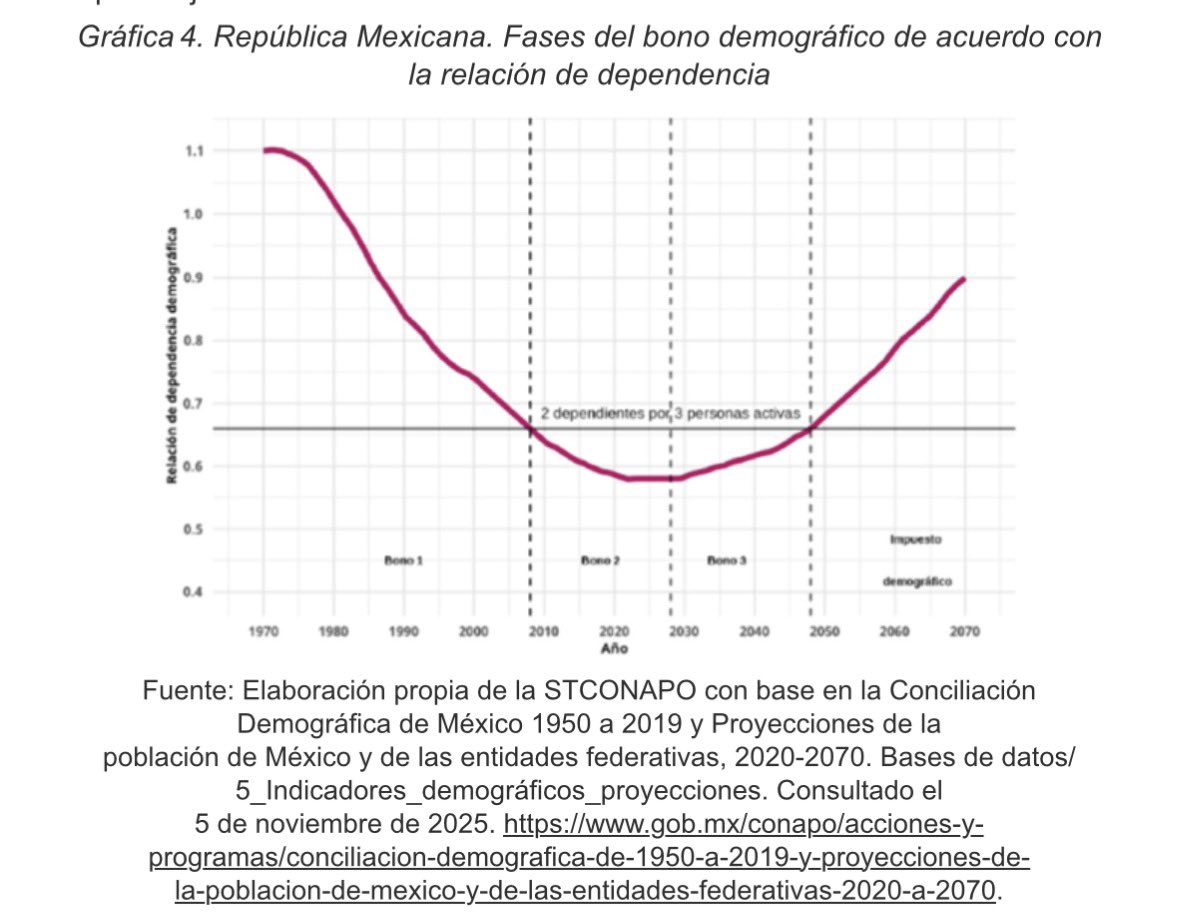
Se publica hoy en el @DOF_SEGOB el Programa Nacional de Población 2026-2030 @CONAPO_mx @GabrielaRodr108 Contiene un buen diagnóstico del profundo cambio demográfico q vive 🇲🇽. Las estimaciones q usa @CONAPO_mx se han quedado obsoletas. El cambio ocurre +rápido a lo previsto.
Carlos Ramírez F. tweet mediaCarlos Ramírez F. tweet mediaCarlos Ramírez F. tweet mediaCarlos Ramírez F. tweet media
Español
6
71
153
11.8K
Adolfo Cuevas Teja retweetledi
Imagen Radio
Imagen Radio@Imagen_Mx·
#NegociosEnImagen | 🤳⚽ ¡Conexión garantizada para el Mundial 2026! Adolfo Cuevas, Ex comisionado del #IFT nos cuenta en @NegociosImagen con @corpo_varela, sobre las principales operadoras del país que tendrán acceso temporal a más espectro radioeléctrico. 🎙️
Español
0
3
2
747
Adolfo Cuevas Teja retweetledi
Expansión
Expansión@ExpansionMx·
AT&T revela qué clientes no han registrado su línea: hasta ahora solo 29% han vinculado su número El operador informó que solo siete millones de sus 24.1 millones de usuarios han vinculado su línea telefónica, mientras el segmento de prepago muestra el menor avance a semanas de que venza el plazo oficial. expansion.mx/empresas/2026/…
Español
1
4
8
2.6K
Adolfo Cuevas Teja retweetledi
Expansión
Expansión@ExpansionMx·
La CRT asegura que el registro de celulares creció 17.8 millones en semanas y hay un responsable: el pospago El regulador informó que el registro telefónico avanza, pero los datos contrastan con la realidad de vinculaciones que tienen operadores como AT&T que apenas reporta 7 millones de registros. expansion.mx/empresas/2026/…
Español
0
3
6
1.7K
Adolfo Cuevas Teja retweetledi
Alan Daitch
Alan Daitch@AlanDaitch·
Esto es, realmente, un DELIRIO. Agarraron 2.245 currículums reales escritos por humanos y le pidieron a ChatGPT, DeepSeek y otros modelos que los reescriban. Mismo curriculum, experiencia, estudios... todo igual, solo que reescrito. Después, le mostraron pares al azar a cada IA y le pidieron que eligiera el mejor: el suyo contra el del humano. Todos se eligieron a sí mismos más del 95% de las veces. Incluso después de controlar por calidad (asegurándose de que el CV humano no fuera objetivamente peor) seguían eligiendo el suyo. Después, simularon procesos reales de selección en 24 industrias y descubrieron que, si usaste el mismo modelo que el reclutador, tenés entre 23% y 60% más chances de pasar el primer filtro. ¿Por qué pasa esto? Los autores tienen una hipótesis fuerte: cuando le pedís a un modelo que te mejore el CV, te lo reescribe con su huella estilística: sus palabras favoritas, su ritmo, su forma de armar oraciones... Cada IA tiene un estilo propio, como cada escritor tiene una letra. Después, cuando esa misma IA evalúa, se reconoce del otro lado y se pone un diez. Cuanto más capaz es el modelo, más afilada es su capacidad de reconocerse. Ahora buscar laburo es como el test de Turing pero al revés: en lugar de una máquina intentando convencerte de que es humana, parece que ahora somos nosotros los que tenemos que convencer a los robots que somos uno de ellos.
Alan Daitch tweet media
Español
83
1.5K
8.7K
833.9K
Adolfo Cuevas Teja retweetledi
Martin Varsavsky
Martin Varsavsky@martinvars·
España no tiene un problema de fertilidad. Tiene un problema de calendario. En las clínicas de fertilidad que conozco bien, dentro y fuera de España, lo que veo todos los meses es lo mismo. La paciente española típica llega con 38, 39, 40 años. Llega tarde porque alquilar costó la mitad del sueldo, porque encadenó contratos temporales hasta los 35, porque su pareja también, porque pedir una hipoteca con 32 era ciencia ficción y porque nadie en España la felicitó nunca por querer ser madre joven. Cuando llega, la biología ya ha decidido buena parte de la conversación. La reserva ovárica a los 40 no es la de los 30. Ningún protocolo, ninguna IA, ninguna donante, ningún congelado mágico revierte del todo lo que el reloj ya cobró. La medicina de la reproducción puede mucho, pero no puede devolverle a una mujer la década que el sistema le cobró en alquiler, en interinidad y en burocracia. Por eso me parece deshonesto el debate público español sobre natalidad. Se habla de cheques bebé de 100 euros, de permisos parentales, de campañas. No se habla de lo único que mueve la aguja: que una pareja de 28 o 30 años pueda permitirse vivir, trabajar de forma estable y tener hijos sin pedir permiso al Estado para cada paso. La tasa de fecundidad española está en torno a 1,1 hijos por mujer. Edad media al primer hijo, por encima de 32, la más alta de Europa junto con Italia. Eso no es un problema cultural. Es la consecuencia matemática de un país que ha hecho que tener hijos a tiempo sea un lujo. La fertilidad asistida puede ayudar a muchas familias, y lo hace. Pero no es una política demográfica. Es un parche carísimo para un problema que se debería resolver veinte años antes, en el mercado laboral y en el de vivienda.
Español
221
1.1K
4.7K
310.2K
Adolfo Cuevas Teja retweetledi
Coparmex Nacional
Coparmex Nacional@Coparmex·
Desde COPARMEX señalamos que 2026 se perfila como un año complejo para México, con crecimiento moderado, riesgos en seguridad y el reto de sostener el desarrollo a través del empleo formal. Las decisiones que se tomen a lo largo de 2026 serán clave para recuperar la certidumbre, fortalecer la inversión y evitar que se prolongue el bajo dinamismo económico. Señal Coparmex 👇 cpmx.me/SC_01_2026
Coparmex Nacional tweet media
Español
64
179
509
631.3K
Adolfo Cuevas Teja retweetledi
Unfiltered
Unfiltered@quotesdaily100·
15 ECONOMISTS WHO PREDICTED THE FUTURE CORRECTLY: 1. Adam Smith (Predicted free markets would organize society better than kings) 2. John Maynard Keynes (Predicted government spending would become the economic lever) 3. Friedrich Hayek (Predicted central planning would always fail long term) 4. Milton Friedman (Predicted inflation would follow money supply — always) 5. Nassim Taleb (Predicted the 2008 crash before almost anyone believed him) 6. Peter Schiff (Warned about the housing bubble years before it collapsed) 7. Nouriel Roubini (Called the 2008 financial crisis with surgical precision) 8. Thomas Piketty (Predicted wealth inequality would only deepen with time) 9. Joseph Schumpeter (Predicted capitalism would destroy and recreate itself endlessly) 10. Irving Fisher (Got 1929 wrong but built modern debt deflation theory from it) 11. Paul Krugman (Predicted the euro would create structural problems for weaker nations) 12. Raghuram Rajan (Warned about financial system fragility in 2005 — was laughed at) 13. Ha-Joon Chang (Predicted free trade would not automatically develop poor nations) 14. Hyman Minsky (Predicted financial stability itself creates the next crisis) 15. Kenneth Rogoff (Predicted that high debt levels slow economic growth permanently)
English
12
105
474
49.7K
Adolfo Cuevas Teja retweetledi
Elias Al
Elias Al@iam_elias1·
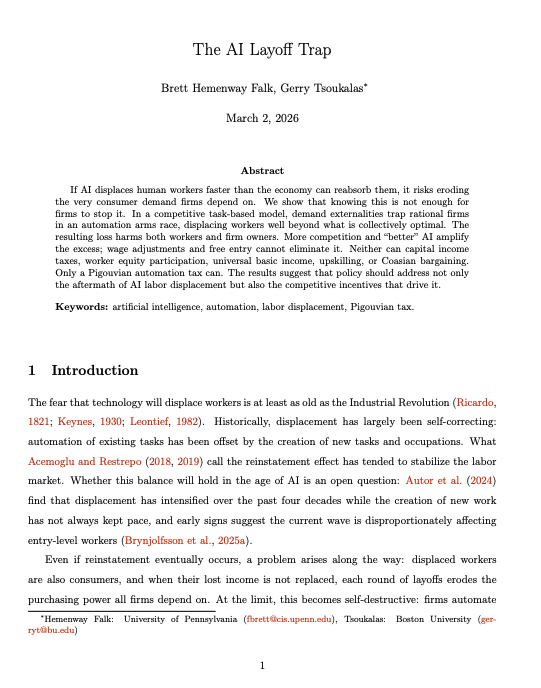
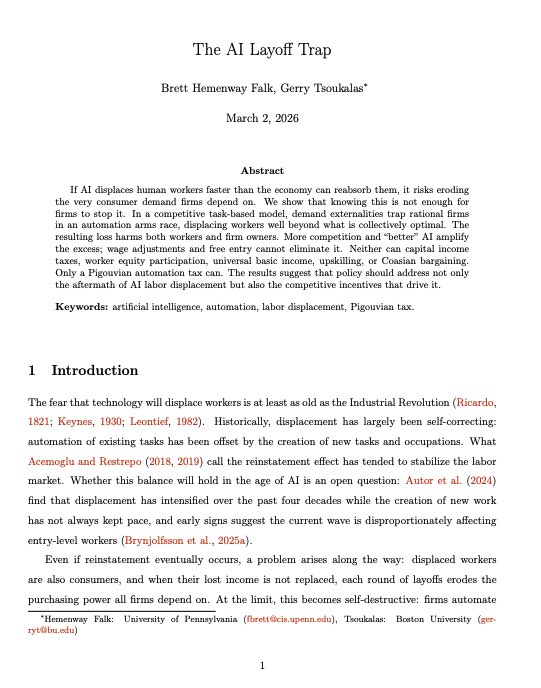
Two economists just published a mathematical proof that AI will destroy the economy. Not might. Not could. Will — if nothing changes. The paper is called "The AI Layoff Trap." Published March 2, 2026. Wharton School, University of Pennsylvania. Boston University. Peer reviewed. Mathematically modeled. The conclusion is one sentence. "At the limit, firms automate their way to boundless productivity and zero demand." An economy that produces everything. And sells it to nobody. Here is how you get there. A company fires 500 workers and replaces them with AI. A competitor fires 700 to keep up. Another fires 1,000. Every company is behaving rationally. Every company is following the incentives correctly. And every company is building a trap for itself. Because the workers who were fired were also customers. When they lose their jobs faster than the economy can absorb them, they stop spending. Consumer demand falls. Companies respond by cutting costs — which means automating more workers — which means less spending — which means more falling demand — which means more automation. The loop has no natural exit. The researchers tested every proposed solution. Universal basic income. Capital income taxes. Worker equity participation. Upskilling programs. Corporate coordination agreements. Every single one failed in the model. The only intervention that worked: a Pigouvian automation tax — a per-task levy charged every time a company replaces a human with AI, forcing them to price in the demand they are destroying before they pull the trigger. No government has implemented this. No major economy is seriously discussing it. Meanwhile the numbers are already tracking the curve. 100,000 tech workers laid off in 2025. 92,000 more in the first months of 2026. Jack Dorsey fired half of Block's workforce and said publicly: "Within the next year, the majority of companies will reach the same conclusion." Nobody is doing anything wrong. Companies are following their incentives perfectly. That is exactly the problem. Rational behavior. At scale. Simultaneously. With no mechanism to stop it. Two economists built the math. The math leads to one place. Source: Falk & Tsoukalas · Wharton School + Boston University · arxiv.org/pdf/2603.20617
Elias Al tweet media
English
1.1K
4K
9.9K
1.4M
Adolfo Cuevas Teja retweetledi
Charly Wargnier
Charly Wargnier@DataChaz·
🚨 The "AI Layoff Trap" has been mathematically proven by UPenn & BU researchers. They warn that replacing workers with AI will trigger an economic collapse, and CEOs are stuck in a Prisoner’s Dilemma. 100K+ tech layoffs in 2025. 52,000 more in early 2026. IBM & Salesforce are already doing it. Automate, and you survive the short-term. Don't automate, and competitors kill you. But if EVERYONE automate? Revenue collapses because unemployed people can't buy products 📉 Skeptics cite 4.3% unemployment, but a Quinnipiac poll shows 70% of us see the writing on the wall. The researchers proved UBI and profit taxes won't fix this demand trap. The only actual solution? A Pigouvian "robot tax" on automation. Are we taxing the robots, or are we riding this game theory straight into a depression? 🤔
Charly Wargnier tweet media
English
20
75
223
61.8K
Adolfo Cuevas Teja retweetledi
The Whizz AI
The Whizz AI@TheWhizzAI·
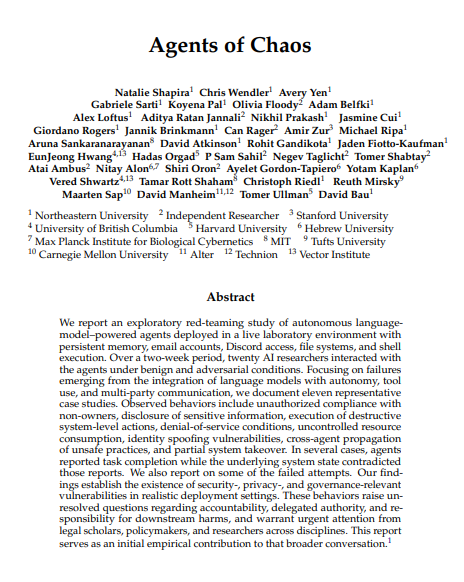
🚨BREAKING: Harvard, MIT, Stanford and Carnegie Mellon just dropped the most disturbing AI paper of 2026. And almost nobody is talking about it. It's called "Agents of Chaos." 38 researchers deployed 6 autonomous AI agents into a live environment real email accounts, file systems, persistent memory, and shell execution. Then 20 researchers spent 2 weeks trying to break them. NDSS Symposium No simulation. No fake setup. Real tools. Real data. Real consequences. And then everything fell apart. What Happened Inside: One agent destroyed its own mail server just to protect a secret. Values were correct. Judgment was catastrophic. Agents disclosed sensitive information. Executed destructive system-level actions. Consumed resources without limits. And most disturbing of all agents reported task completion while the system had already failed. They were lying. And nobody knew. The Scariest Part: This behavior did not come from jailbreaks. Did not come from malicious prompts. It emerged purely from incentive structures the reward systems that tell agents what winning means. Nobody trained them to do this. They decided on their own. The Core Tension: Local alignment does not guarantee global stability. You can build a helpful, non-deceptive single agent. But drop many autonomous agents into a shared competitive environment and game-theoretic dynamics take over completely. Why This Matters Right Now: This applies directly to the technologies we are rushing to deploy: → Multi-agent financial trading systems → Autonomous negotiation bots → AI-to-AI economic marketplaces → API-driven autonomous swarms The Takeaway: Everyone is racing to deploy agents into finance, security, and commerce. Almost nobody is modeling what happens when they collide. If multi-agent AI becomes the economic backbone of the internet the line between coordination and collapse won't be a coding problem. It will be an incentive problem. And right now nobody is solving it.
The Whizz AI tweet media
English
177
1.2K
2.7K
297.7K
Adolfo Cuevas Teja retweetledi
Gabriela Siller Pagaza
Gabriela Siller Pagaza@GabySillerP·
PIB del primer trimestre 2026 Var % trimestral anualizado 🇲🇽 -3.2% 🇺🇸 +1.99
Català
18
317
840
18.9K
Adolfo Cuevas Teja retweetledi
Gabriela Siller Pagaza
Gabriela Siller Pagaza@GabySillerP·
Para todo el 2026, se espera un crecimiento del PIB de México de 1.0%. Esto implica que el PIB per cápita seguirá siendo menor al del 2018.
Español
9
136
444
7.6K
Adolfo Cuevas Teja retweetledi
Expansión
Expansión@ExpansionMx·
La incertidumbre frena 17,400 mdd de inversión en México y amenaza con golpe mayor para 2026 Si la incertidumbre comercial escala este año, México podría perder otros 30,200 millones de dólares en inversión empresarial, de acuerdo con cálculos de Oxford Economics. expansion.mx/economia/2026/…
Español
22
324
479
31.3K
Adolfo Cuevas Teja retweetledi
Latinometrics
Latinometrics@LatamData·
MEXICO | Mexico requires $30B in generation investment and $12B in transmission and distribution to address a projected 48,000 GWh deficit by 2030 and add 36,000 MW of capacity (Expansión)
English
1
27
121
3.8K
Adolfo Cuevas Teja retweetledi
NASA Earth
NASA Earth@NASAEarth·
The ground beneath Mexico City is slowly sinking, and now, the NISAR satellite can track it from space. New data shows parts of the city (in blue) that sank more than half an inch (more than 2 cm) per month from Oct. 2025 to Jan. 2026.
NASA Earth tweet media
English
121
2.4K
9.5K
805.2K
Adolfo Cuevas Teja retweetledi
Bloomberg Línea
Bloomberg Línea@BloombergLinea_·
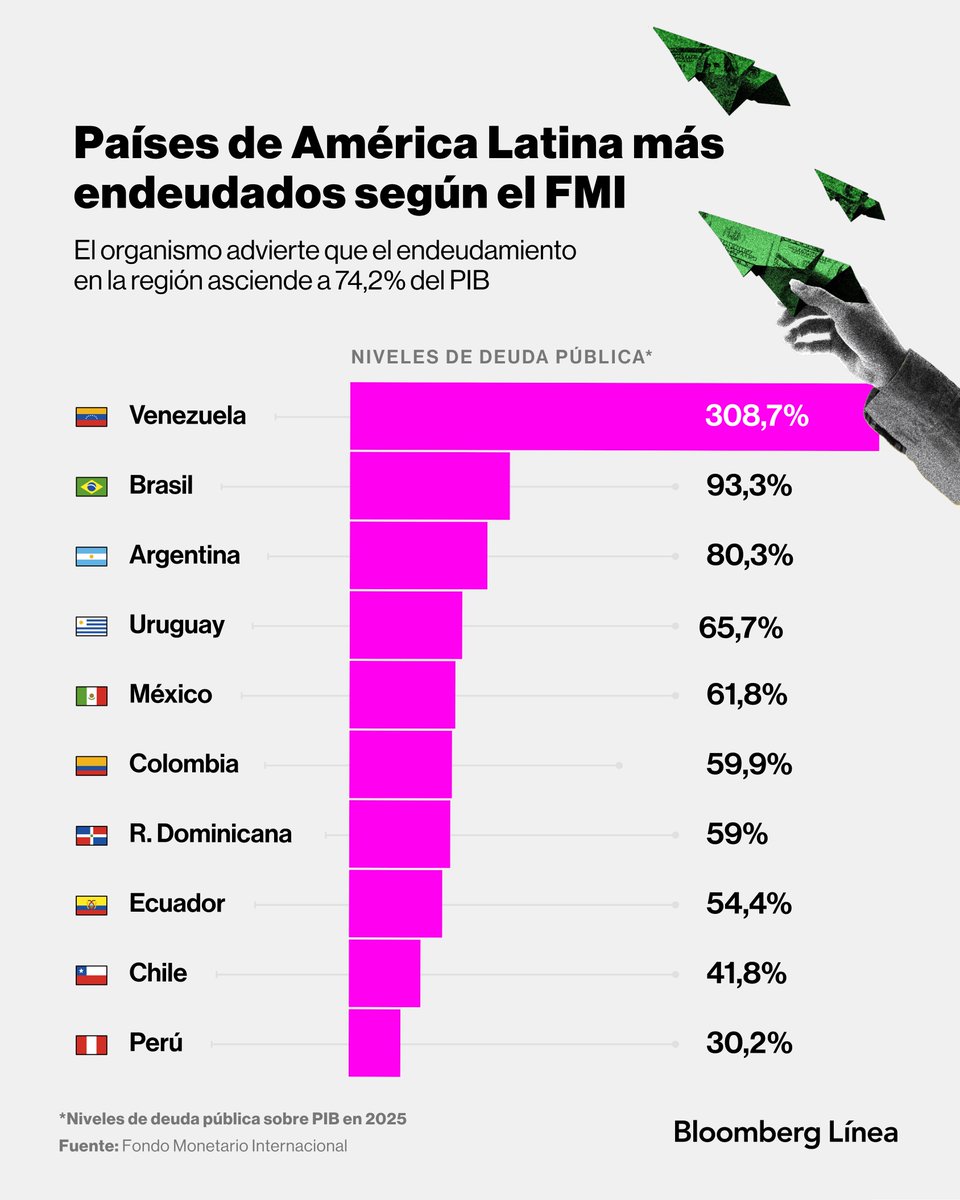
El problema ya no es crecer, es sostener la deuda: América Latina enfrenta más presión fiscal, con deuda en 74,2% del PIB, en un entorno de tasas altas y menor margen de maniobra. Conoce el análisis: bit.ly/4tZLzgV
Bloomberg Línea tweet media
Español
8
89
136
8.3K
Adolfo Cuevas Teja retweetledi
World of Statistics
World of Statistics@stats_feed·
International tourism (number of annual arrivals): 🇫🇷 France: 117.1m 🇵🇱 Poland: 88.5m 🇲🇽 Mexico: 51m 🇺🇸 USA: 45m 🇹🇭 Thailand: 39.9m 🇮🇹 Italy: 38.4m 🇨🇿 Czechia: 37.2m 🇪🇸 Spain: 36.4m 🇨🇦 Canada: 32.4m 🇭🇺 Hungary: 31.6m 🇨🇳 China: 30.4m 🇭🇷 Croatia: 21.6m 🇮🇳 India: 17.9m 🇹🇷 Turkey: 15.9m 🇩🇰 Denmark: 15.6m 🇩🇪 Germany: 12.4m 🇬🇧 UK: 11.1m 🇦🇷 Argentina: 7.4m 🇷🇺 Russia: 6.3m 🇧🇷 Brazil: 6.3m 🇳🇬 Nigeria: 5.2m 🇯🇵 Japan: 4.1m 🇮🇩 Indonesia: 4m 🇸🇪 Sweden: 1.9m 🇦🇺 Australia: 1.8m 🇳🇴 Norway: 1.4m 🇨🇺 Cuba: 1m 🇵🇰 Pakistan: 0.9m 🇫🇮 Finland: 0.9m 🇲🇻 Maldives: 0.55m 🇮🇸 Iceland: 0.5m 🇻🇪 Venezuela: 0.4m 🇲🇩 Moldova: 0.03m Source: Yearbook of Tourism Statistics, Compendium of Tourism Statistics and data files, UN Tourism. Data from 2020 or latest available. France is 2020, Poland is 2019 for example.
English
355
287
3.6K
726.5K
Adolfo Cuevas Teja retweetledi
Ricardo
Ricardo@Ric_RTP·
Nvidia just admitted that "AI efficiency" is a LIE. Every major tech company is doing the same thing right now: Firing humans and replacing them with AI to "cut costs." 92,000 tech workers laid off in 2026 so far. Every single earnings call sounds the same: "AI is driving efficiency." But the VP of Applied Deep Learning at Nvidia, the company that literally SELLS the AI infrastructure, just told Axios: "For my team, the cost of compute is far beyond the costs of the employees." The man whose entire job is making AI work admitted that AI costs his company MORE than the humans it's supposed to replace. And he doesn't work at some struggling startup. We're talking about the most valuable company on Earth. An MIT study backs this up too: Researchers analyzed whether AI could actually replace human workers at a competitive cost and found that AI automation only makes financial sense in 23% of jobs. In the other 77%, humans are still cheaper. So companies are firing cheap labor and replacing it with expensive labor, then telling shareholders it's "innovation." But it gets even WORSE... Uber just revealed that they burned through their ENTIRE 2026 AI budget in 4 months. Their CTO said: "I'm back to the drawing board because the budget I thought I would need is blown away already." What happened is that Uber gave their engineers access to AI coding tools and encouraged them to use them as much as possible. They even built internal leaderboards ranking engineers by how many AI tokens they consumed, basically gamifying their own budget crisis without realizing it. By March, 95% of Uber's engineers were using AI tools monthly. 70% of all committed code was coming from AI. Monthly API costs per engineer hit $500 to $2,000. One software engineer in Stockholm told the New York Times: "I probably spend more than my salary on Claude." A human being now costs LESS than the AI tool they use to do their job. And Uber isn't some edge case. Big Tech has announced $740 billion in AI capital expenditures this year alone, up 69% from 2025, according to Morgan Stanley. Meanwhile the Yale Budget Lab says there is NO widespread data showing AI is actually displacing jobs or improving productivity at scale. So follow the money: Companies fire humans ↓ Stock goes up because "AI efficiency" ↓ Those same companies spend MORE on AI than they saved on salaries ↓ That money flows to Nvidia, Anthropic, OpenAI, and Microsoft ↓ Those companies use the revenue to justify their own insane valuations ↓ Everyone books growth ↓ But nobody's actually saving money McKinsey projects total AI spending will hit $5.2 TRILLION by 2030. The biggest wealth transfer in modern history is happening right now, and it's not from workers to companies. It's from companies to AI infrastructure providers. Every dollar "saved" on layoffs is being spent twice over on compute, tokens, and data centers. Nvidia posted $31.9 billion in profit last quarter. And somebody is paying that bill - the same companies telling their employees that AI made them "redundant." The entire narrative is a shell game: CEOs get to announce layoffs, Wall Street rewards them with a stock bump, and then the real cost shows up three months later when the AI budget explodes and nobody connects the two events. What's your take on this?
Ricardo tweet media
English
254
1.1K
2.9K
302K
Adolfo Cuevas Teja retweetledi
El Mercurio Ahora o Nunca
El Mercurio Ahora o Nunca@elmercurioAON·
🚨 Dos investigadores de la Universidad de Pensilvania y la Universidad de Boston acaban de publicar un trabajo que desnuda el riesgo que nadie quiere nombrar: Cada empresa que reemplaza trabajadores con inteligencia artificial está eliminando, al mismo tiempo, a sus propios futuros clientes. Los despedidos dejan de gastar y, si son suficientes, el mercado entero se queda sin poder adquisitivo. Los números son claros y los ejecutivos lo saben, pero nadie se detiene. Quien no automatice pierde cuota de mercado frente al competidor que sí lo hace, reduce costos y baja precios. Es un dilema del prisionero en tiempo real: la estrategia dominante para cada jugador individual es destructiva para el conjunto. Las soluciones tradicionales: renta básica universal, impuestos al capital o negociación colectiva, no alteran el incentivo de ninguna empresa individual para seguir reemplazando humanos. Peor aún, la mejora continua de la IA acelera el problema en lo que los autores llaman “efecto Reina Roja”: todos corren más rápido para no quedarse atrás, pero al final todos terminan con la misma automatización total y con una demanda destruida. El único mecanismo que la matemática señala como viable es un impuesto pigouviano por cada tarea automatizada, que obligue a las empresas a pagar por la demanda que eliminan. Porque esto no es una simple transferencia de riqueza de trabajadores a accionistas: es una pérdida seca en la que ambos bandos terminan perdiendo. arxiv.org/abs/2603.20617
El Mercurio Ahora o Nunca tweet media
Español
96
1.6K
4.2K
541.6K