
Charmaine Cunningham retweetledi

Paul Graham spent 7 months writing a single essay in 2023.
It started as one paragraph inside another piece he was working on, and the idea kept pulling at him until he cut it out and built it into something that ended up being nearly 12,000 words long.
The essay is called "How to Do Great Work" and I have read it multiple times because it contains more useful thinking about ambition and output than most books I have ever finished.
Here is the framework buried inside it that most people miss:
His opening argument destroyed something I had believed for years. He says the most important decision in doing great work is not how hard you work or how smart you are. It is what you decide to work on.
Originality in choosing problems matters even more than originality in solving them. That is what separates people who make incremental contributions from people who discover entire new fields.
Most ambitious people spend almost no time thinking carefully about this, and then wonder why their hard work feels like it is going nowhere.
The second insight changed how I think about knowledge itself. He says knowledge expands fractally, and from a distance the edges of any field look smooth and complete. But once you learn enough to get genuinely close to those edges, they turn out to be full of gaps.
The problem is that your brain actively wants to ignore those gaps in order to build a simpler model of the world. The people who do great work are the ones who train themselves to notice the gaps instead of smoothing over them, because the gap is exactly where the new work lives.
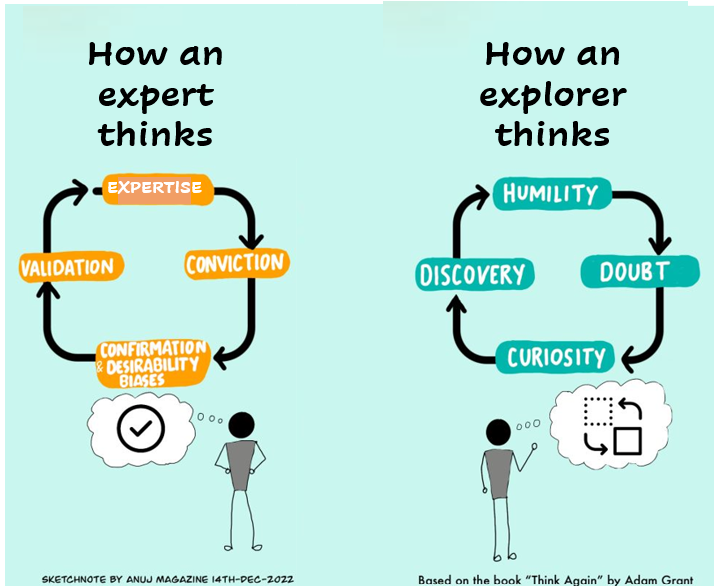
The third hit me harder than anything else in the essay. He says if you asked an oracle the single secret to doing great work and the oracle answered in one word, his bet would be on "curiosity."
His reasoning is precise: your curiosity never lies, and it knows more than you do about what is actually worth paying attention to. Interest will drive you to work harder than mere diligence ever could, because interest does not require willpower to sustain itself.
The fourth was the one that made me put the essay down and think for a long time. He says people think big ideas are answers, but often the real insight was in the question.
Schools train us to treat questions as temporary placeholders that exist only until they get answered. But a genuinely good question is not a gap waiting to be filled it is itself a partial discovery. Asking the right question means you have already reached territory that almost no one else has reached.
His formula for the factors behind great work is deliberately simple: ability, interest, effort, and luck.
Luck you cannot control, so set it aside. Effort you can assume if you are serious. That leaves ability and interest, and the entire game becomes finding the specific intersection where those two things collide with enough force to generate ideas that compound into something nobody has ever built before.
He took seven months to write the essay. He said it was the best filter he could design, because anyone who actually read the whole thing had already proven something about themselves.
The people willing to do the reading are already closer than they think.

English