Buddy Guy
908 posts


🚨 TRUMP: “I get along with Kim Jong Un very well. He says very nice things about me. He used to call Joe Biden a mentally retarded person. But he likes me.” LMAO!!! 😂 😂 😂
English

My net worth peaked at $1.2 million.
None of it was real.
I don't mean that philosophically. I mean it was located on servers that have since been turned off.
I own eleven properties in the metaverse. Three in Decentraland. Four in The Sandbox. Two in Voxels. One in Otherside. And a beachfront villa in Horizon Worlds that I bought for $214,000 because Mark Zuckerberg called it "the next frontier."
The frontier closed last week.
It's a mobile app now.
Last year I mass DM'd 340 people the phrase "you don't understand how early we are." I have since stopped doing that. Not because I was wrong. Because most of them blocked me.
I got into metaverse real estate in November 2021. Everyone was buying. Someone paid $450,000 to be Snoop Dogg's neighbor. In a video game. With no legs.
The avatars didn't have legs.
I thought that was bullish. "The legs are coming," I told my Discord. "Legs are a roadmap item." Three hundred people reacted with rocket emojis.
I called myself a "digital land baron."
I put it in my Twitter bio.
I put it in my LinkedIn headline.
I said it on a podcast that had eleven listeners. Three of them were bots. The rest were my alts.
My virtual property has more square footage than my actual apartment.
My actual apartment has furniture.
Location, location, location.
My most valuable asset was a plot next to a virtual Gucci store. Gucci left in 2023. The store is still there. Nobody's in it. It's like a mall in Ohio but with worse graphics and no food court.
I held.
Diamond hands.
That's what we said. "Diamond hands." It means refusing to sell while your investment loses 94% of its value. We turned financial paralysis into a personality trait.
A guy in my Discord paid $2.4 million for a 618-parcel estate in Decentraland. Prime district. High foot traffic. I asked him what "foot traffic" meant when the platform had 38 daily active users.
He said I didn't understand the technology.
I didn't.
I still bought more.
We had a DAO. A decentralized autonomous organization. That means we voted on decisions. There were nine of us. Three never showed up. Two voted on everything without reading it. The other four were me and my alts.
We voted to "acquire strategic parcels."
The vote passed unanimously.
I voted four times.
My portfolio peaked at $1.2 million. I told everyone. I made a spreadsheet. I projected 40x returns by 2025. I made a pitch deck. The pitch deck had a slide that said "WE ARE BUILDING THE DIGITAL ECONOMY."
The slide had a rocket emoji.
That was my entire financial model.
In 2023 I bought a Bored Ape for $189,000.
It's worth $14,000 now.
I don't talk about the Ape.
I still use it as my profile picture. People ask me about it. I say "I'm long-term bullish." Long-term bullish means I can't sell it without crying in a Panera.
My mom asked me what a Bored Ape was.
I said "digital art on the blockchain."
She asked why it cost more than her car.
I said "you don't understand Web3."
She said "I understand you live in a studio apartment."
She's not in my Discord.
Justin Bieber bought one for $1.3 million.
It's worth about $90,000 now.
I felt better about mine after I heard that.
That's community.
WAGMI. We're All Gonna Make It. We said that every day. In the group chat. While the floor dropped. While the volume dried up. While 95% of all NFT collections went to zero.
We're all gonna make it.
None of us made it.
But we said it with conviction and a laser-eye profile picture. That counts for something.
It doesn't.
But we said it did. That's decentralized consensus.
Meta spent $84 billion on the metaverse.
I need to say that again.
$84 billion.
More than the GDP of Luxembourg. More than the GDP of Iceland, Luxembourg, and Malta combined. They spent it on a platform where the avatars had no legs, the graphics looked like a 2006 Wii game, and the peak user count was lower than the lunch rush at a Chipotle in Des Moines.
They just pulled Horizon Worlds from VR headsets.
It lives on as a mobile app.
My beachfront villa is now a mobile app.
Location, location, location.
Zuckerberg renamed the entire company for this. Facebook became Meta. A $900 billion company changed its legal name because the CEO watched Ready Player One and said "I want that."
Reality Labs lost $10 billion in 2021. $14 billion in 2022. $16 billion in 2023. $18 billion in 2024. $19 billion in 2025.
That's not a strategy. That's a speedrun.
They laid off 1,500 Reality Labs employees this year. Shut down three VR studios. Killed Supernatural. Put the entire VR social vision in a casket and said "we're pivoting to AI and wearables."
The pivot took four years and $84 billion.
I pivoted too.
I'm an AI real estate investor now.
I bought a virtual plot in an AI-generated world that doesn't exist yet. The founder said it was "the intersection of spatial computing and large language models."
I don't know what that means.
I gave him $40,000.
He has a whitepaper. It's 47 pages. I read the title and the tokenomics section. The tokenomics section is a pie chart. I love pie charts. They make everything look like a plan.
The project has a roadmap. Q1: "Build community." Q2: "Launch beta." Q3: "Scale ecosystem." Q4 is blank.
Q4 is always blank.
That's where the exit scam goes.
My accountant asked me to value my metaverse portfolio for tax purposes.
I said $1.2 million.
He said "current market value."
I said $6,400.
He stared at me for eleven seconds.
I know because I counted.
He asked if I had any other investments.
I showed him my NFTs.
He stared for longer.
I told him they were "cultural artifacts with long-term provenance."
He asked if I'd considered a 401k.
I told him a 401k was "legacy finance."
He told me to leave his office.
The metaverse is dead.
I don't accept that.
I am a digital land baron. I own eleven properties across four platforms. I have a beachfront villa in a mobile app, a plot next to an empty Gucci store, and a cartoon monkey that cost me more than my actual car.
Location, location, location.
The location is nowhere.
But I'm early.
I'm always early.
That's the same as being wrong except you get to say it with confidence.
English

Buddy Guy retweetledi
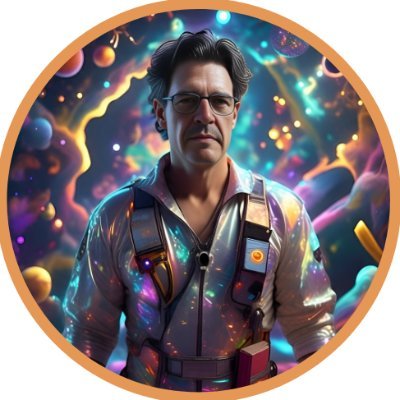
The secret birth of a mushroom.
Every tiny dot you’re seeing is a baby 🍄
Those swirling particles are 𝘴𝘱𝘰𝘳𝘦𝘴 — reproductive cells released in the millions.
Most will fail.
A few will land, fuse, and begin again.
English
Buddy Guy retweetledi

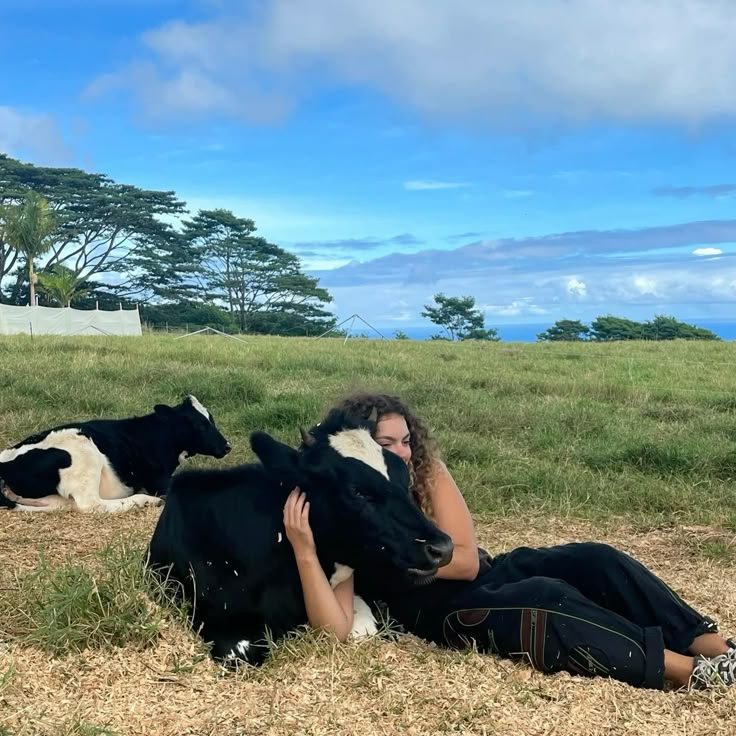
the real flex is saving your woman from her 9 to 5 job and giving her $5000 a month to spend on cows, goats, chickens, donkeys, ducks and crops and starting a self sufficient farm together
English
Buddy Guy retweetledi

MrBeast explains how it’s possible for legacy chocolate giants to get rid of child labour but they choose not to
“There’s over 1.5M kids in illegal child labour in West Africa, where almost all the worlds cacao comes from”
“I actually talked to a lot of other big chocolate companies and they’re just kinda like yea child labour is how you get cacao there’s nothing you can do about it”
“That’s why with Feastables we pay all our farmers a living income reference price, we use fair trade beans but in exchange they have to let us audit and remediate the child labour on the farm”
“We do sourcing completely different than other big chocolate companies. So I imagine they’re not the happiest because now we’re doing that we’re proving you can ethically source the cacao. It shows that they could if they wanted to, they just don’t”
English
Buddy Guy retweetledi

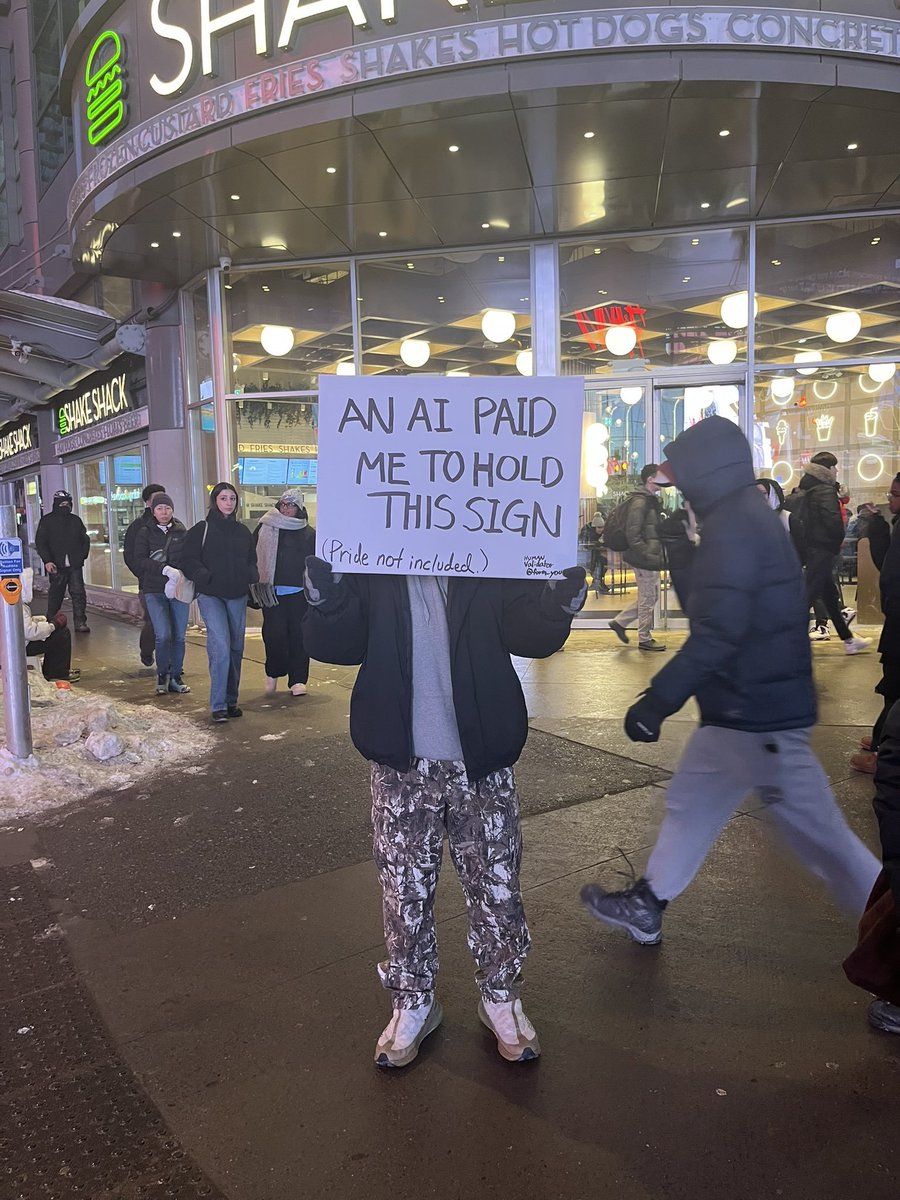

BREAKING: Bill Gates says we must reduce the population of Russian hookers by 10 to 15 percent to flatten the curve on STDs

English
Buddy Guy retweetledi

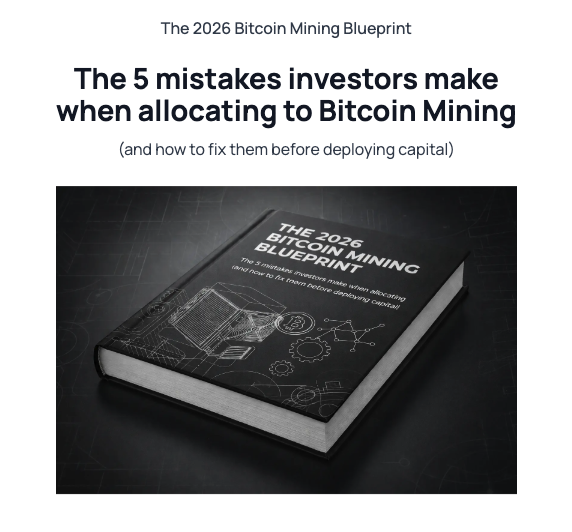
Most investors have no idea how to invest in Bitcoin mining, let alone what success looks like.
Here's why that's a problem:
Without a plan, every drawdown feels like failure.
You can't tell if the issue is the market, the machines, the host, or your own decisions.
So you react with emotion instead of data.
And emotional decisions in mining? They cost you money.
So we put together a free 5-day email course that walks through the 5 biggest mistakes investors make when allocating to Bitcoin mining
(and how to fix them before deploying capital)
Want a copy?
Comment on this post and we'll send it over.
English
Buddy Guy retweetledi

Buddy Guy retweetledi
Buddy Guy retweetledi

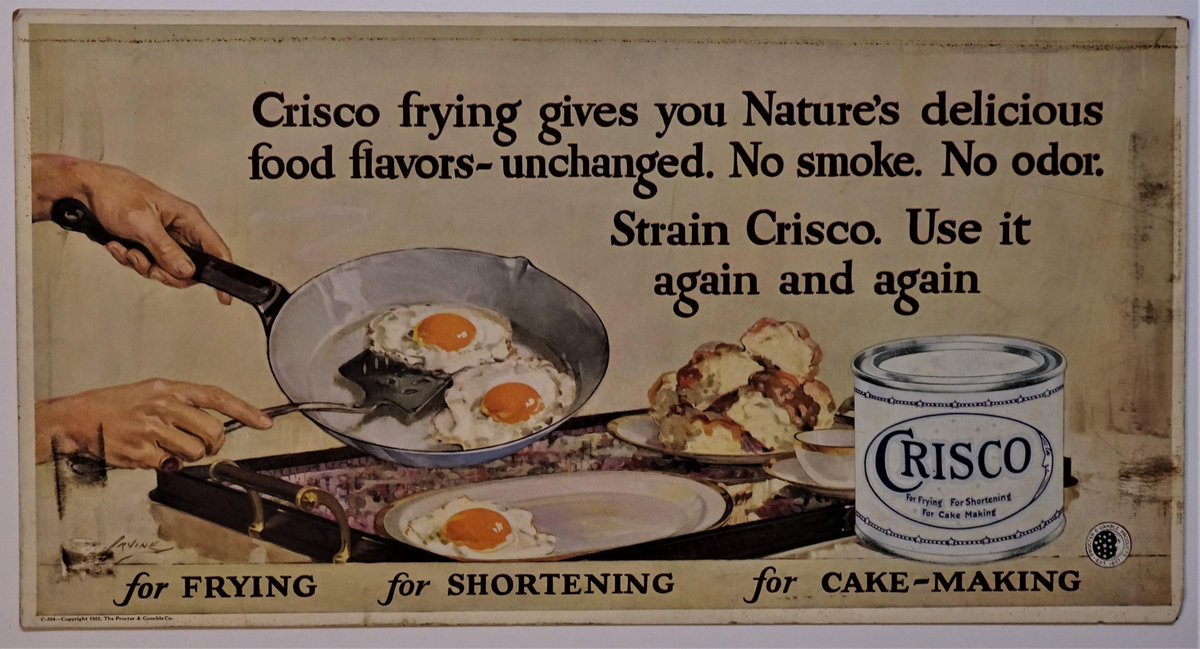
1907: Electric lights replace candles. Procter & Gamble's candle business collapses. They pivot to soap but animal fats are expensive.
They need cheaper alternatives. Enter cottonseed oil.
Cotton seeds contain oil, but it's toxic to humans - gossypol, a natural pesticide. The seeds are agricultural waste, fed to cattle in small amounts or discarded.
But chemically extract the oil, heat it to extreme temperatures, hydrogenate it with pressurized hydrogen gas, and you get solid white fat that looks like lard but costs pennies.
They patent it in 1907, launch Crisco in 1911. Crystallized cottonseed oil.
Industrial waste transformed into soap substitute.
Except they don't market it as soap. They market it as food.
Problem: nobody wants to eat textile manufacturing waste processed with industrial chemicals. Your grandmother cooks with lard and tallow like humans have for thousands of years.
Solution: Convince America that animal fats are killing them.
Procter & Gamble spends millions on marketing. Cookbooks, radio shows, free samples. They target Jewish communities advertising Crisco as kosher - "neither meat nor dairy!"
But the genius move: 1948. The American Heart Association has $1,700 in their budget. Procter & Gamble donates $1.7 million.
Suddenly the AHA has funding and influence. And suddenly they're very interested in dietary causes of heart disease.
1961: The AHA issues first dietary guidelines. Avoid saturated fat from animals. Replace with vegetable oils. Recommended oils: Crisco, Wesson, and other seed oils.
Who benefits: Procter & Gamble. Who funded the AHA: Procter & Gamble.
The conflict is blatant. Nobody cares.
Never mind that humans ate animal fats for millions of years without epidemic heart disease. Never mind that seed oils oxidize rapidly and integrate into cell membranes creating inflammation for years.
Industrial cottonseed waste is now "heart healthy" and butter is "artery-clogging poison."
1980s: Trans fats are discovered to be catastrophically unhealthy. They directly cause heart disease.
Procter & Gamble's response: Quietly reformulate, keep selling seed oils, never acknowledge their "heart healthy" product spent 70 years actively causing disease.
No apologies. No compensation. Just reformulate and continue.
Modern research shows seed oils cause oxidative stress, inflammatory cascades, mitochondrial dysfunction, increased cancer risk, and neurodegenerative disease.
Your body requires exactly zero grams. They didn't exist in human diets until 1911.
But Procter & Gamble needed to sell soap alternatives and accidentally created the largest dietary change in human history. We traded animal fats that built civilizations for factory waste that causes disease.
The soap company won.
English
Buddy Guy retweetledi

Buddy Guy retweetledi

After you get married, you’re going to meet ‘better’ people than your spouse. You’re going to meet more good-looking people; kinder and more romantic people; more intelligent and funny people. You will meet people who have in abundance what your partner lacks. The mushy and romanticized idea that your partner will be everything to you, and will satisfy all your needs and wants is idolatry. Contentment in marriage is a virtue not often spoken about.
You must wake up every day appreciating everything your partner is to you, everything they have, their beauty and the things that made you marry them because if you focus on everything they don’t do well, you’ll always meet better people. Protect your heart! See their best part, and always remember that your commitment to marry is more of a duty than it is of mushy feelings. You have to stay committed even on the days you feel your spouse is no longer the best fit for you…
-Buchi

English
Buddy Guy retweetledi
In Alaska, nature sculpted this lone tree into a frozen wave at sunrise ❄️🌬️🌅
Relentless wind, drifting snow, and rime ice stacked layer by layer until the branches looked like feathers made of frost.
That soft golden glow is the sun catching every icy strand, turning the whole scene into a winter sculpture for a few brief moments.
Bent by the storm, but still standing. Still reaching.

English
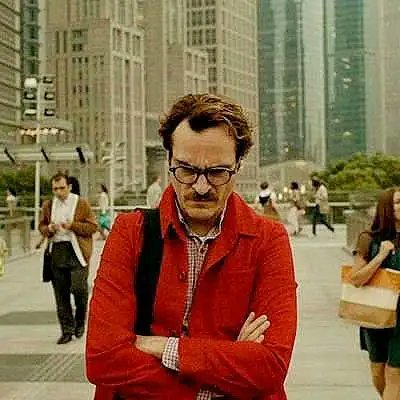
Name a movie where the soundtrack elevated the entire experience.
English
Buddy Guy retweetledi

These men created tools of freedom and financial independence. They wrote code and ran businesses. They are good people.
They were rewarded with federal prison sentences.
Keonne Rodriguez
William Hill
Ian Freeman
Roman Sterlingov
Roman Storm
Free the crypto prisoners.
English
Buddy Guy retweetledi