
Sabitlenmiş Tweet
Cyrus S. Saiwalla
206.3K posts

Cyrus S. Saiwalla
@cyrushavo
Veteran: Proud Participant, Republic Day Parade : 1966! Honourable President Guard! Aeronautics: https://t.co/IANVsyelku.S.I(SecA). Ex member Royal Aeronautical Society!
Mumbai, India Katılım Temmuz 2011
2.2K Takip Edilen1.8K Takipçiler

Cyrus S. Saiwalla retweetledi

Our military installations have been turned into gun-free zones—leaving our service members vulnerable and exposed.
That ends today.
English
Cyrus S. Saiwalla retweetledi

Cyrus S. Saiwalla retweetledi

#BreakingNews | IRGC missile base in Isfahan has been hit by a powerful strike, as the war continues to intensify
@akankshaswarups and @siddhantvm share more details
@RShivshankar | #Iran #IRGC #WestAsiaWar
English
Cyrus S. Saiwalla retweetledi

PRESIDENT TRUMP: We have all the cards, Iran has none. We are in this military operation for 32 days and they have been eviscerated. They are no longer the bully of the Middle East.
This is a true investment in our children and grandchildren's future.
English
Cyrus S. Saiwalla retweetledi
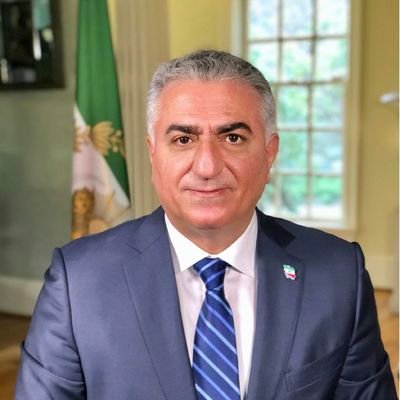
My full remarks at @LibertyU's Convocation:
President Costin and Chancellor Falwell, esteemed faculty, and students of Liberty University,
Good morning and thank you for having me at Convocation.
On the beginning of Passover and on the cusp of Easter, I stand before you not only as an Iranian, but as a witness—on behalf of millions of my compatriots whose voices have been silenced, whose names you may never hear, but whose courage is reshaping the future of my country.
I come to you as the voice of a nation that has been silenced.
A nation whose people cannot stand here themselves.
A nation that, for 33 days, has been cut off from the world—without internet, without connection,
without a voice.
Let me begin there.
For 33 days, Iranians have lived in digital darkness.
No messages.
No social media.
No way to show the world what is being done to them.
No way to tell their families they are alive.
Think about that.
Not 33 minutes.
Not even 33 hours.
33 days.
How many of you could go 33 minutes without your phone?
Without checking a message, a notification, a headline?
Now imagine 33 days—not as a choice, but as a prison.
A nation of over 90 million people, silenced.
But because there is too much truth to hide.
That silence is not accidental.
It is the sound of a regime trying to kill a revolution in the dark.
We speak often, in this world, about injustice.
You are charged, by your professors and your pastors, to fight against it.
But what is happening in Iran demands a stronger word:
Evil.
Because what else do you call a system that murders its own children?
What else do you call a regime that wages war both on enemies abroad, and on its own people?
In recent years, tens of thousands of Iranians have been killed in wave after wave of repression.
Just this year, less than two months ago, on January 8th and 9th, more than 30,000 protesters were killed.
30,000...
Let me tell you some of their names.
Sina—17 years old—who went out with his family to demand freedom, and was shot in the street, never to return home.
Rubina—a young student who dreamed of studying fashion in Milan—whose family searched through rows of bodies just to find her.
Borna—who said, ‘If I don’t go, nothing will change.’ He chose to go. And he was killed for it.
Kimia—17 years old—shot in the chest by the very forces meant to protect her.
Two brothers—Rasoul and Reza—who stood side by side in protest, and were both shot dead in the street together.
And Bahar—three years old.
Three years old—killed not in war, not on a battlefield, but by tear gas in her own country.
These are not statistics.
These are lives.
But the evil did not stop there.
Young women beaten to death in the streets.
Students dragged from classrooms and executed.
Doctors assaulted in hospitals for treating the wounded.
Women and men sexually assaulted in detention centers.
Nurses and medics raped for gunshot helping victims.
Teenagers tortured into false confessions.
Families forced to pay for the bullets that killed their sons and daughters.
This is not politics.
This is not governance.
This is not even repression.
This is evil—organized, sustained, and unapologetic.
But against that Satanic force stands something extraordinary and pure.
A generation.
Young people.
Students.
Your peers.
Across Iran, universities have become battlegrounds for freedom.
Students chant: “Down with the clerics.”
They chant: “Death to the dictator.”
They chant: “This is the year of blood—this is the end of tyranny.”
And they chant these words knowing they may not survive the day.
Dormitories raided at night.
Classrooms turned into traps.
Campuses flooded with security forces.
Students beaten, arrested, disappeared. Killed.
And yet—they return.
Again. And again. And again.
Because they understand something that no tyrant can erase: Freedom is worth everything. Freedom is worth dying for.
You are students at Liberty University.
You live in freedom.
You worship freely.
You speak freely.
You protest freely.
And that is a blessing.
But let me tell you what a campus protest looks like in Iran.
There are no safe zones.
There are no administrators to negotiate with.
There are no second chances.
There are batons.
There are bullets.
There are prison vans waiting outside your classroom.
In America, students debate ideas.
In Iran, students bleed for them.
In America, you raise your voice.
In Iran, they risk their lives to whisper—and then, bravely, to shout.
And yet, their message is clear:
They do not want reform.
They do not want compromise.
They want liberty.
The young people of Iran are not different from you.
They laugh like you.
They dream like you.
They fall in love, they plan their futures, they hope.
But their lives have been overtaken by something you should never have to experience: A regime that fears them.
Because it knows they will bring it down.
While you sit in classrooms, they sit in prison cells.
While you plan your careers, they plan how to survive another day.
While you scroll your phones, they live in enforced silence—33 days without internet, without connection, without the world hearing their cries.
And yet—they do not stop.
So I ask you: What will you do with your liberty, when others your age are dying for theirs?
For those of you grounded in faith, there is another truth.
In Iran today, Christianity is not fading. It is rising. Quietly. Powerfully. Underground.
In homes, in whispers, in hidden gatherings, Iranians are finding faith—at great cost.
Pastors imprisoned.
Bibles are confiscated.
Believers hunted.
Converts threatened with execution.
Families torn apart.
And still, they gather.
Still, they pray.
Still, they believe.
Because faith that survives persecution is unbreakable.
Because the light shines brightest in the darkest places.
You study stories of persecution in your history.
Christians have often faced this.
In Iran, they are happening every day.
There was a time when Iran stood for something very different.
Over 2,500 years ago, Cyrus the Great—a Persian king—freed the Jewish people from captivity.
He restored their rights. He respected their faith.
He is remembered in Scripture not as a tyrant—but as a liberator.
This is Iran’s true legacy.
A nation of tolerance. A nation of dignity.
A nation that once stood on the side of freedom.
The regime that rules Iran today has betrayed that legacy.
It does not represent the Iranian people. It fears them.
And it will fall because of them.
The Iranian people are doing their part.
They are risking everything.
They are leading this fight.
But they cannot—and should not—stand alone.
America must be clear.
There is no negotiating with evil.
There is no reforming a system built on brutality.
There is only one path forward: The end of this regime.
To the people and leaders of this nation: Do not waver. Do not retreat. Do not legitimize those who murder their own people.
Stay the course. Finish the job.
Stand firmly with the people of Iran—not their oppressors.
Because when America stands with moral clarity, it gives strength to those fighting in the shadows.
But to you—the students—I say this: You must feel something today. Not indifference. Not distance.
But righteous anger at what is being done.
And at the same time, righteous love for those who are suffering.
Hatred for evil. Love for the oppressed.
This is not contradictory.
This is the foundation of moral courage and the strong faith you each have.
Let your anger move you. Let your faith guide you. Let your voice be heard.
Speak for those who cannot. Stand with those who are alone.
Refuse to look away.
I have not lost hope.
Because I have seen the courage of my people.
I have seen young women stand unarmed before guns.
I have seen students refuse to kneel.
I have seen a nation rise, again and again.
The end of this regime is not a dream. It is approaching.
And when that day comes, Iran will not be a threat to the world.
It will be a partner. A friend.
A nation reborn in freedom.
Let me leave you with this: Right now, in Iran, there are young people your age who cannot speak.
Who cannot connect. Who cannot even tell the world they are alive.
For 33 days, they have been silenced.
So today—be their voice. Carry their message. Stand in their place. Pray for them.
And when history asks what you did in this moment—
Let it be said that you did not remain silent.
That you stood.
That you spoke.
That you helped bring freedom to a nation that has waited too long.
Thank you.
God bless you.
And may God bless a free Iran.
Photo credit: Liberty University

English
Cyrus S. Saiwalla retweetledi
Cyrus S. Saiwalla retweetledi
From the pilots defending our skies, to the soldiers protecting our borders, the IDF wishes you a safe and happy Passover. ✈️🇮🇱

English
Cyrus S. Saiwalla retweetledi

"I’m particularly disappointed in the United Kingdom... I think Keir Starmer has fumbled in ways that are not reflective of the deep and abiding ties between the American people and the people of the UK," says Former US Vice President Mike Pence over the country's response to the Iran War bloom.bg/4sP7hEb
English
Cyrus S. Saiwalla retweetledi

JUST IN: Beneath the mountains of Isfahan, the IRGC built a subway system for ballistic missiles. Tunnels carved into granite half a kilometre deep, reinforced with North Korean engineering and Chinese technical assistance, connecting cavernous assembly halls where solid-fuel motors are manufactured, warheads are integrated, and complete missiles roll off production lines onto automated high-speed electric rails. The trains carry transporter-erector-launchers through underground corridors to one of several blast-door exits. The TEL surfaces through a pop-up door, fires, and retreats underground before the satellite that spotted it can relay coordinates to the bomber that would strike it. The system was designed for exactly this scenario. It was designed to survive America.
On March 31, bunker-buster bombs hit the Baharestan complex. Ten heavy GPS-guided munitions struck surface entrances, propellant storage facilities, and assembly infrastructure. The secondary explosions were visible from space. Stored missiles, thousands of tons of propellant, and fuel ignited in a chain reaction that lit up the Isfahan night for hours. Iranian state media acknowledged the site was hit and claimed “no strategic impact,” which is the phrase a regime uses when the strategic impact requires a classified briefing rather than a press conference.
The damage is real but bounded. Pre-strike, Baharestan produced hundreds of solid-fuel motors, thousands of tons of propellant, and dozens of complete missiles per year. Post-strike estimates put short-term capacity at 40 to 60 percent, with full recovery requiring 12 to 24 months. The surface infrastructure was destroyed. The entrances were collapsed. The propellant lines that feed the assembly halls were severed. But the tunnels themselves, half a kilometre beneath the mountain, and the rail network that runs through them, remain largely intact. The subway still works. The trains still run. The blast doors still open.
And the network is not one city. Isfahan is the production hub. Tabriz in the northwest stores and launches long-range variants. Kermanshah near the Iraqi border operates interconnected tunnels for solid-fuel launchers. Shiraz in the south handles cruise missiles and logistics. Khorramabad maintains silos and underground launch capability. The strikes degraded one node. The system has five. Iran’s missile infrastructure was designed as a distributed network for the same reason the internet was: so that destroying one node does not destroy the function.
Iranian launch activity has dropped to its lowest level since the war began. The command coordination that selects targets and sequences barrages was disrupted when the Aerospace Forces headquarters in western Tehran took ten bombs overnight. The production line that replenishes spent missiles was cut by 40 to 60 percent when Baharestan burned. The air campaign is working by every metric the Pentagon measures.
But the metric the Pentagon does not measure is the one that matters. The strait is still closed. The helium is still boiling. The fertiliser is still not shipping. The 3,000 vessels are still stranded. The bombs have five-metre accuracy and the crisis has a five-year repair timeline. Precision won the air war. Duration is winning the molecular war. And the molecular war determines whether the chips that guided the bombs to Isfahan will have helium to cool them next quarter.
The missile subway survives because it was built for this war. The molecular crisis deepens because nobody built anything for that one. And that one is the war that ends the world the missiles were built to defend.
open.substack.com/pub/shanakaans…
English
Cyrus S. Saiwalla retweetledi

The Pentagon is doubling its fleet of Air Force A-10 attack aircraft in the Middle East, planes used to support advancing ground troops, the New York Times reports.

English


Cyrus S. Saiwalla retweetledi

The terrorist Islamic Republic occupying Iran has been at war with Iran and the Iranian civilization since 1979.
The Muslim Nazis are now pretending they're "Iranian" and invoke Iranian Nationalism, and ignorant westerners are eating up their propaganda.
English
@RoyalNavy @DefenceHQ Indeed!
Royal Navy was powerful in the past, not in the present situation, Pal!
English
Cyrus S. Saiwalla retweetledi

125 years of the Royal Navy Submarine Service.⚓️
Here’s to all who have served below the surface - past and present.
They protect. They deter. They defend.
#SM125
English
Cyrus S. Saiwalla retweetledi
PRESIDENT TRUMP: I did what no other president was willing to do. They made mistakes and I am correcting them.
My first preference was always diplomacy, yet the Iranian regime continued their relentless quest for nuclear weapons and rejected every attempt at an agreement.
English
Cyrus S. Saiwalla retweetledi

If there is no regime change, this number will only get worse.
Fox News@FoxNews
SILENT SLAUGHTER: The Islamic Republic of Iran is on track to exceed the record number of executions it carried out against opponents in 2025, with 657 executions in the first three months of 2026, according to the Iran Human Rights Society. "This latest barbaric act is more evidence of why the regime can never be allowed the advanced capabilities that we are destroying," a State Department spokesperson told Fox News Digital.
English
Cyrus S. Saiwalla retweetledi

U can't think of becoming bigger than Kejriwal if u want to survive in AAP. Chikna Raghav just learnt hard lesson.
Reportedly, Raghav Chadha is removed as Dy Leader of AAP in RS, replacing him with Ashok Mittal.
Waise, Sanjay Singh's evasive answers had already dropped hint.
Soon, Kejriwal will send him to extinction. Better Raghav Chadha shows guts like Swati Maliwal & expose (P)AAP on all fronts.
English
Cyrus S. Saiwalla retweetledi

🚨 “Traitor” Keir Starmer Confronted by Angry Mob Outside Parliament
An angry mob surrounded Keir Starmer outside Parliament, calling him a “p*do protector, a child abuser, and a traitor.”
Starmer must be the most hated politician of all time.
English
Cyrus S. Saiwalla retweetledi

US President Donald Trump, speaking at the White House, said the Islamic Republic had killed 45,000 people in Iran who were protesting over the past 47 years, calling the government a “murderous regime.”
English