czverse

120.2K posts

czverse banner
czverse

czverse

@czverse

Vibe Coder live in terminal | Also An adventure of making friends, exploring AI & Web3, and vibing through memes.

WORLD Katılım Mart 2017
3.9K Takip Edilen7.4K Takipçiler
czverse
czverse@czverse·
Google didn’t just fight spam with reCAPTCHA they turned it into the biggest unpaid AI training program in history. 200M solves/day = 500K hours of free human labor ($5M+ daily) digitizing books + labeling Street View for Waymo. Users thought they were proving they’re human… turns out they were training the robots. Absolute masterclass in disguised data harvesting
Sharbel@sharbel

x.com/i/article/2033…

English
1
1
3
162
czverse
czverse@czverse·
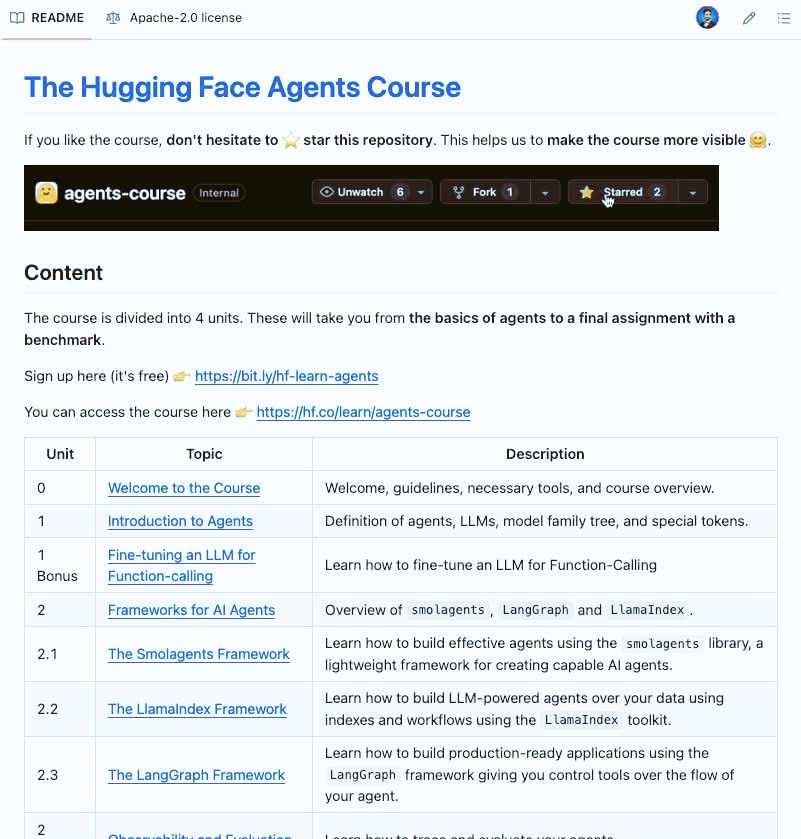
🚨 BREAKING: The team at Hugging Face just open-sourced what might be the most complete AI Agents course on the internet. And the crazy part? It’s 100% free. Open source. Apache 2.0. No paywall. No $2,000 “AI bootcamp.” Just pure builder knowledge. Here’s what you actually learn inside 👇 → Unit 1: Understanding agents (the real foundation) Not the hype. The fundamentals. You’ll learn: • What AI agents actually are • How LLMs work under the hood • Model families and capabilities • Special tokens and tool usage This is the mental model most people skip. → Unit 2: Building real agents You’ll get hands-on with the actual frameworks serious builders use: • smolagents • LlamaIndex • LangGraph Not theory. You’ll literally build functioning agents step by step. → Unit 2 Bonus: Observability One of the most underrated skills in agent development. You’ll learn how to: • Trace agent decisions • Evaluate performance • Debug reasoning paths Basically… how to understand why your agent did what it did. → Unit 3: Agentic RAG This is where things get real. You’ll learn how to build agents that interact with knowledge bases, retrieve data, and reason over it. This is the backbone behind many real-world AI products. → Unit 4: The final project You don’t just watch tutorials. You actually: • Build a full agent system • Test it • Submit it • Compete on a live leaderboard And yes… You can literally get certified. --- Bonus section (my favorite part): AI agents playing Pokémon. Because apparently the best way to learn agent systems is by letting them figure out how to beat a game. Honestly… genius. --- The best part? You only need basic Python and LLM knowledge to start. Which means a lot of people can jump in right now. But here’s the real takeaway: While most people are still watching AI tutorials on YouTube… Builders are quietly learning how to design, orchestrate, and deploy AI agents. And that skill is going to matter a lot in the next few years. If you’re serious about AI, this is absolutely worth exploring. Repo: github.com/huggingface/ag… We’re entering the era where knowing how to work with AI agents will be as important as knowing how to code. And the people experimenting today… will have the biggest advantage tomorrow.
czverse tweet media
English
0
0
0
68
czverse
czverse@czverse·
NVIDIA pushing the envelope on secure, local AI agents? NemoClaw sounds like a game-changer for devs who want privacy without sacrificing power. Open-source wins again.
NVIDIA Newsroom@nvidianewsroom

#NVIDIAGTC news: NVIDIA announces NemoClaw for the OpenClaw agent platform. NVIDIA NemoClaw installs NVIDIA Nemotron models and the NVIDIA OpenShell runtime in a single command, adding privacy and security controls to run secure, always-on AI assistants. nvda.ws/47xOPqQ

English
0
0
2
97
czverse
czverse@czverse·
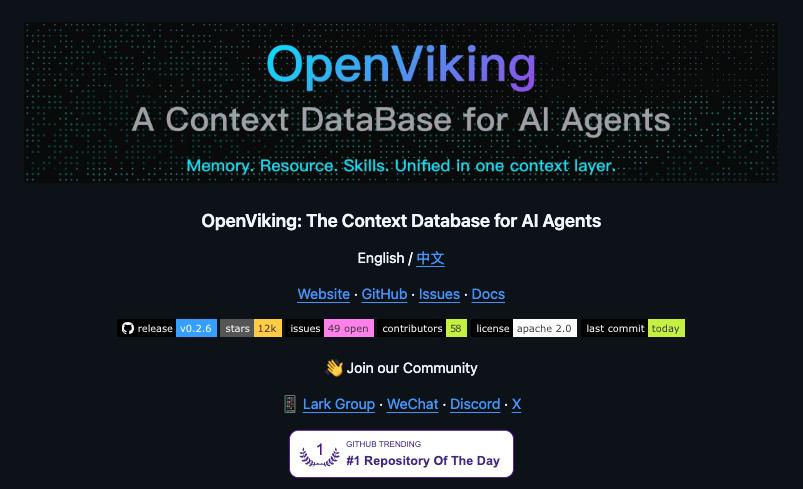
🚨 The biggest unsolved problem in AI agents isn’t intelligence. It’s context. Give an agent too little context → it becomes clueless. Give it too much → you burn tokens, slow everything down, and lose coherence. This “context bottleneck” is one of the main reasons many AI agent systems break at scale. Now there’s a project trying to fix that. It’s called OpenViking. An open-source context database for AI agents designed to sit between your agents and your knowledge. Here’s what makes it interesting: • Organizes knowledge into a tree-structured system • Sends high-level summaries first instead of raw data • Lets agents drill down into details only when needed • Keeps prompts clean, relevant, and within token limits Think of it like a smart context layer for AI systems. Instead of dumping huge knowledge bases into prompts, agents can navigate information step-by-step — just like humans exploring a topic. This makes agents: • faster • cheaper to run • far more reliable As AI agents become the next generation of software, context management may become as important as model intelligence itself. And OpenViking is trying to build that missing layer. GitHub link in 👇
czverse tweet media
English
1
0
0
29
Alex Finn
Alex Finn@AlexFinn·
OpenClaw changed my life It's completely automated my workflows and multiplied my revenue in just a month It is the single most important software of our lifetimes Here is step by step how to set it up and get the absolute most out of it:
Alex Finn tweet media
English
143
161
1.8K
187.4K
czverse
czverse@czverse·
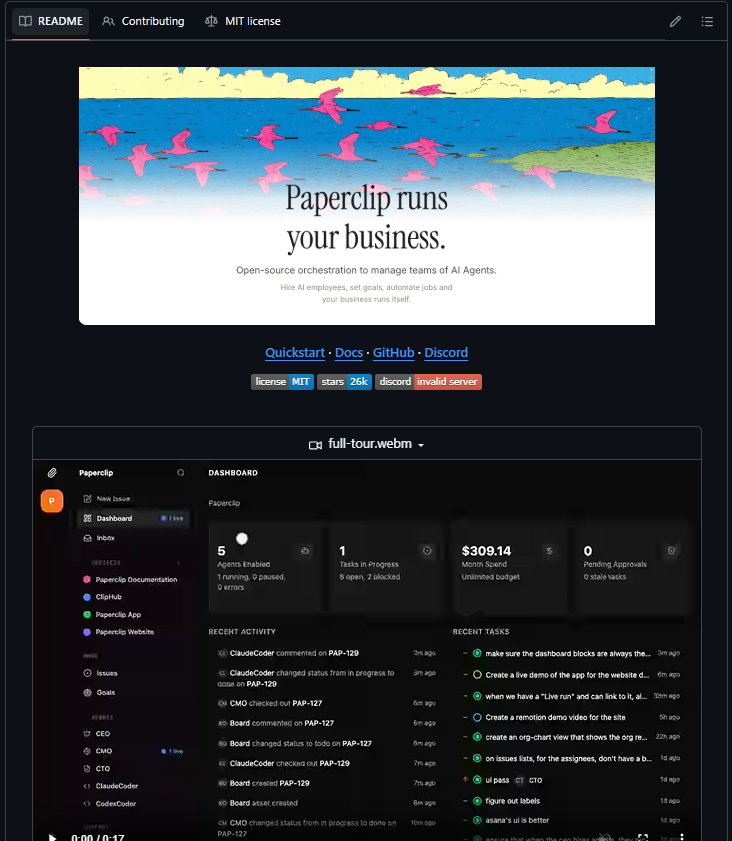
AI is quietly rewriting how companies are built. We’re entering a world where a single founder can run an entire company without hiring a traditional team. Here’s the new workflow: You simply tell a CEO AI agent: “Build this project.” That CEO agent then: • hires a Project Manager agent • recruits Software Engineer agents • creates the task roadmap • assigns work between agents • coordinates execution • and ships the product. The agents plan the work. They delegate the work. They finish the work. Your role as the founder? Just give the command. At the end of the month you’re not paying salaries — you’re paying API bills. Instead of payroll going to employees, it goes to OpenAI, Anthropic, and Google. This isn’t a future concept anymore. Tools like Paperclip are already making it possible to orchestrate entire teams of AI agents to run projects and businesses. The “AI company of one” era has officially started.
czverse tweet media
English
1
0
0
47
czverse
czverse@czverse·
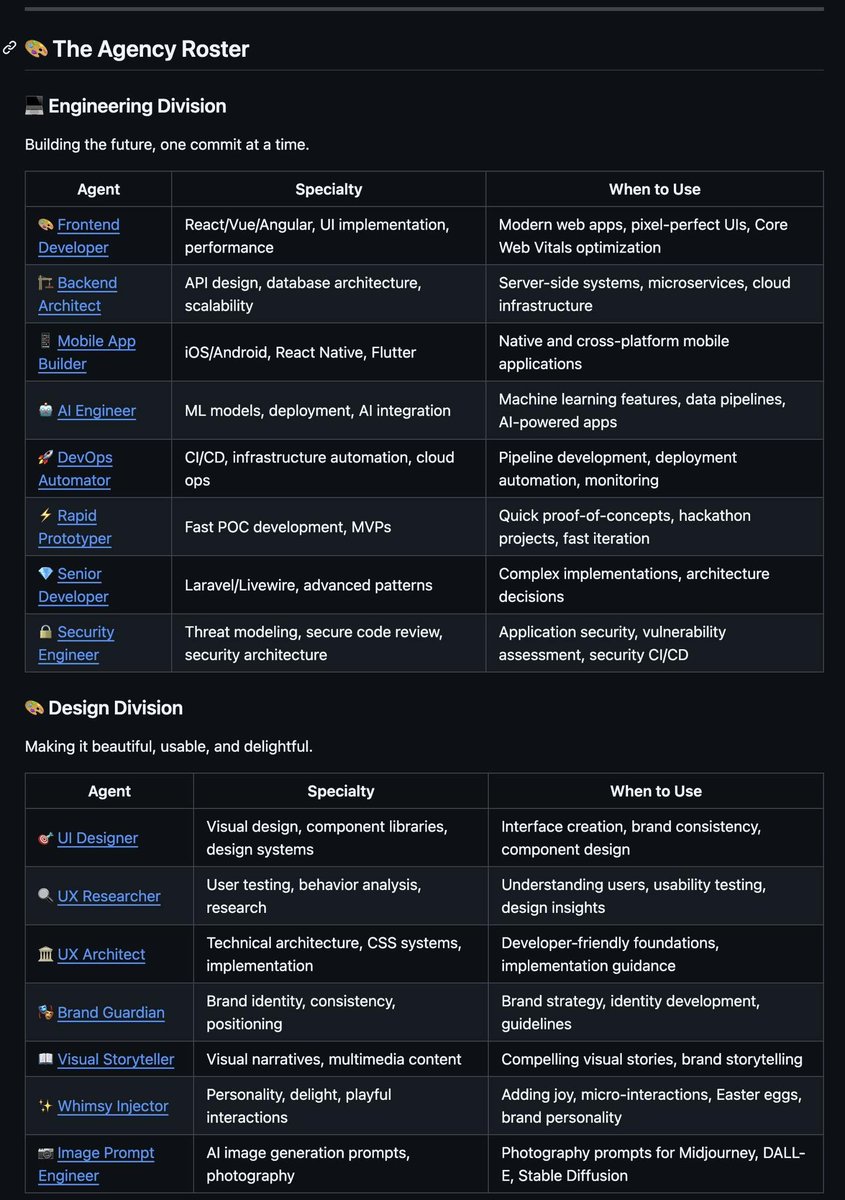
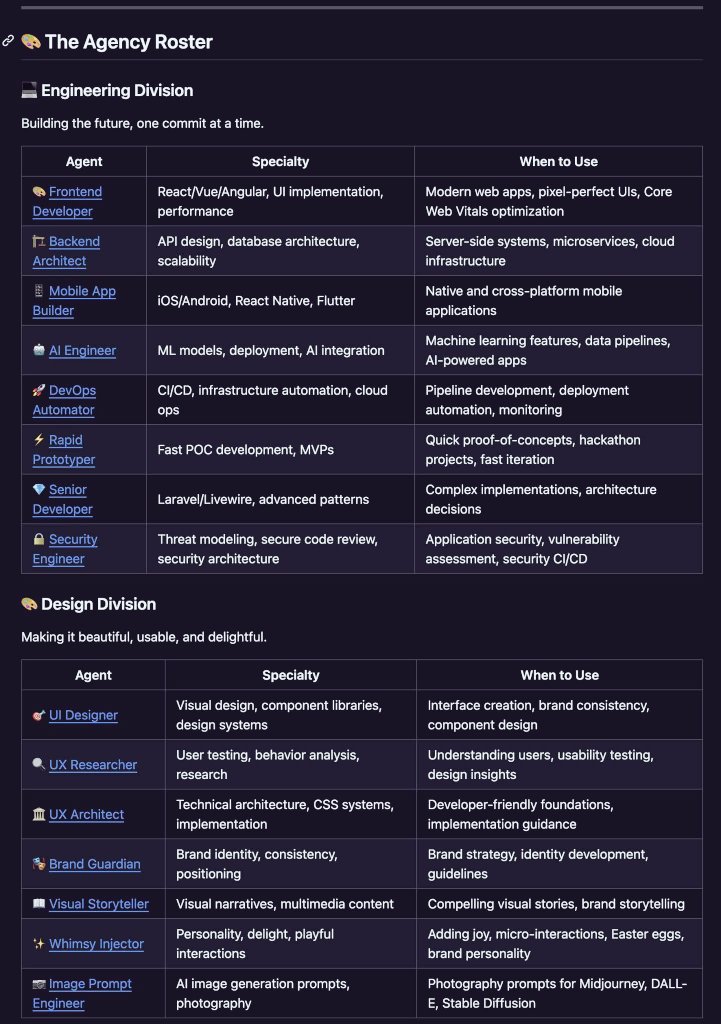
I just found a GitHub repo that lets you spin up an entire AI agency. Not just one AI assistant. A full team of AI employees. Engineers. Designers. Marketers. Product managers. QA. Support. Each role runs as its own agent, and they coordinate together to actually ship ideas. The crazy part? It hit 10k+ GitHub stars in under 7 days. Here’s how the “agency” is structured: Engineering (7 agents) Frontend, Backend, Mobile, AI Engineer, DevOps, Rapid Prototyper, Senior Developer. Design (7 agents) UI Designer, UX Researcher, UX Architect, Brand Designer, Visual Storyteller, Image Prompt Engineer, and more. Marketing (8 agents) Growth, Content, Twitter/X, TikTok, Instagram, Reddit, App Store, and distribution. Product (3 agents) Sprint planning, trend research, and user feedback analysis. Project Management (5 agents) Production tracking, coordination, operations, experiments. Testing (7 agents) QA, API testing, performance checks, and quality verification. Support (6 agents) Customer support, analytics, finance, legal, executive reporting. Spatial Computing (6 agents) XR, Vision Pro, WebXR, VisionOS, and immersive tech. Specialized roles (6 agents) Multi-agent orchestration, sales, analytics, distribution. But the most interesting part isn’t the agents. It’s the idea behind it. Instead of one giant AI trying to do everything… You structure AI like a company. • Specialists • Clear responsibilities • Defined workflows • Collaboration between agents Just like a real startup team. I’m curious how well this actually works in practice. But one thing feels obvious already: The future won’t be one AI tool. It will be teams of AI working together. And the people who experiment with systems like this early will have a massive advantage.
czverse tweet media
English
2
0
2
79
CoinGecko
CoinGecko@coingecko·
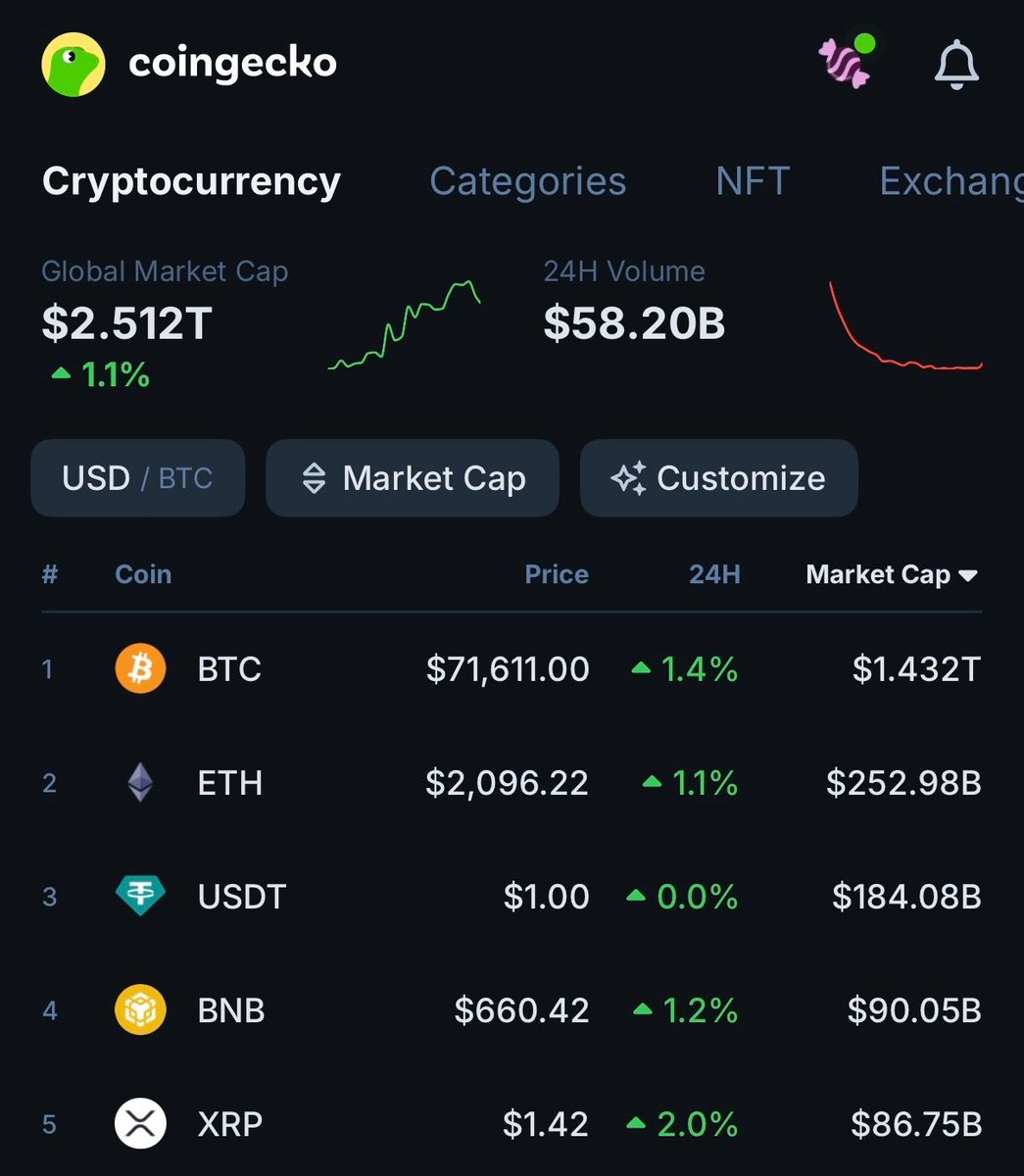
Green Morning 💚
CoinGecko tweet media
English
252
104
847
30.1K
czverse
czverse@czverse·
Use your brain, no calculator 9+1+9+1×0+1 = ?🤔
English
1
0
2
49
czverse
czverse@czverse·
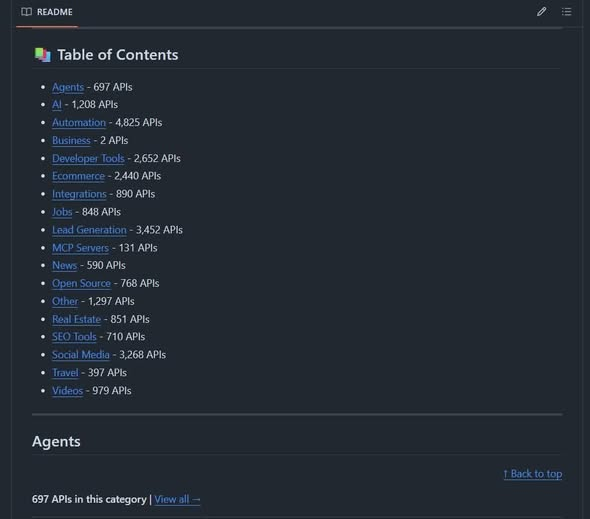
🚨 Just found a GitHub repo that feels like a cheat code for AI agents. It has 10,000+ APIs you can plug directly into your agentic workflows. Not 10. Not 100. Ten. Thousand. Basically a massive toolbox for building agents that can actually do things. Here’s a glimpse of what’s inside: • 1,200+ AI APIs • 4,800+ automation APIs • 3,400+ lead generation APIs • 3,200+ social media APIs • 2,600+ developer tools • 2,400+ ecommerce APIs • 800+ job-related APIs • 590+ news APIs • 900+ integrations • 130+ MCP servers And that’s just part of it. Think about what this means for agent builders: → Agents that post content automatically → Agents that scrape + analyze news → Agents that run growth campaigns → Agents that manage ecommerce stores → Agents that generate leads → Agents that automate entire businesses Most people trying to build AI agents get stuck on “how do I connect it to the real world?” This repo basically solves that problem. Instead of building integrations from scratch, you just plug into thousands of APIs and your agents instantly gain real capabilities. We’re entering a phase where: AI agents + API infrastructure = fully autonomous digital workers. And repos like this are becoming the operating system for the agent economy. If you're building agents, this is the kind of resource you bookmark immediately.
czverse tweet media
English
2
0
2
63
DogeDesigner
DogeDesigner@cb_doge·
Are you earning on 𝕏?
English
2.2K
211
1.8K
169.1K
HOPIUM
HOPIUM@UnDrogado_poeta·
@czverse your early tinkering gives you real edge
English
1
0
1
6
czverse
czverse@czverse·
🚨 I just found a GitHub repo that literally lets you spin up a full AI agency… with AI employees. Not one chatbot. Not one “do everything” agent. An entire company of specialized AI agents working together. And the internet noticed fast: 10K+ stars in under 7 days. Here’s what blew my mind 👇 Instead of one giant AI trying to do everything, the system is structured like a real startup. Each role is its own independent agent with a clear job, and they coordinate together to ship ideas. Think of it like hiring a full team… but they’re all AI. Here’s the lineup: 1. Engineering (7 agents) • Frontend • Backend • Mobile • AI • DevOps • Prototyping • Senior development 2. Design (7 agents) • UI/UX • Research • Architecture • Branding • Visual storytelling • Image generation 3. Marketing (8 agents) • Growth hacking • Content strategy • Twitter • TikTok • Instagram • Reddit • App Store marketing 4. Product (3 agents) • Sprint prioritization • Trend research • Feedback synthesis 5. Project Management (5 agents) • Production • Coordination • Operations • Experimentation 6. Testing (7 agents) • QA • Performance analysis • API testing • Quality verification 7. Support (6 agents) • Customer service • Analytics • Finance • Legal • Executive reporting 8. Spatial Computing (6 agents) • XR • visionOS • WebXR • Metal • Vision Pro 9. Specialized (6 agents) • Multi-agent orchestration • Data analytics • Sales • Distribution What I love most about this approach is the framing. Most AI tools try to build one super-agent that does everything. This flips the model completely. It treats AI like a company structure: Specialized roles. Clear responsibilities. Defined workflows between agents. Just like a real startup team. Honestly… that mental model feels way more powerful. I haven’t fully tested it yet, so do your own research. But I’m going to experiment with it and share what I learn publicly. Because one thing is becoming very clear to me: The future won’t belong to people who just use AI. It will belong to the people who tinker with systems like this and learn how to orchestrate entire AI teams. And right now… we’re still early.
czverse tweet media
English
4
0
4
88
Alex Finn
Alex Finn@AlexFinn·
I have 10 different OpenClaw agents doing work for me 24/7 Building me apps. Automating my life. Making real $$ In this video I show you how to do the exact same thing You'll set up an entire army of OpenClaw agents to do work for you 24/7 I promise this will blow your mind
English
177
152
1.5K
363K