daniel f stone 🍻

90 posts

daniel f stone 🍻 banner
daniel f stone 🍻

daniel f stone 🍻

@d_f_stone

Behavioral economist interested in polarization, media, sports, CSR, Bayesianism, YIMBYism, internalizing externalities, @baltimoregon. https://t.co/nyGGdjFuLl

Brunswick, Maine, USA Katılım Nisan 2011
2K Takip Edilen2.2K Takipçiler
daniel f stone 🍻 retweetledi
Brian Heseung Kim
Brian Heseung Kim@brhkim·
Reposting for visibility: One of my biggest recent unlocks for improving Claude's performance on tasks is running a "consilience" strategy, and I can't recommend it enough. The basic plan of attack: When you have any given process/task you want Claude to do, have Claude instead launch several agents to do that exact task in parallel (producing parallel outputs in files like output_alpha, output_beta, output_gamma, etc.). Then, ask Claude to run a final alignment/consilience step where it reviews all the separate outputs, assesses strengths/weaknesses across them, and then produces a final harmonized output with all that context together. You can spice this up in a number of ways (more iterations, add a review step, play with multiple harmonization steps almost tournament-style, etc.), but the gameplan is broadly applicable to a ton of tasks. Just be aware it'll eat your usage limits accordingly!
Brian Heseung Kim@brhkim

Fun q! My suggestions on first blush, and happy to talk more if useful: 1. You can write a Claude Skill that basically lists out the precise steps you want it to follow. What sources do you search through? What are the identifying patterns for the regulations being mentioned? How would you, as a human, determine false-positives? How do you want it to save the results -- just a list of hyperlinks? Hyperlinks+metadata+summary? etc. What are indicators of thoroughness in searching you can set as strict requirements/checklists? Be really thorough about the process, and ask Claude to help you structure the Skill file using best practices from Anthropic (you don't have to read, have it read and instantiate): platform.claude.com/docs/en/agents… 2. Run it interactively a couple of times, getting it to produce the output. Then go through and review the output, making note of which ones were false positives. I'd also review the sources and see whether it skipped over a few it should've caught (false negatives). 3. Work with Claude and these identified false positives and negatives to improve the Skill files. I'd run this iteration loop a couple of times. 4. When you feel good about it, schedule it via Claude Code to run daily as desired code.claude.com/docs/en/schedu… Bonus step: I have been having a lot of success running what I call a consilience strategy for tasks like this. As part of the Skill process you develop, have Claude Code to run several iterations of agents running the *exact same task*, but produce parallel output (output_alpha, output_beta, output_gamma, etc.). Then, have as part of the Skill process a final step where it reviews all separate output and aligns across them -- items surfaced by multiple agents likely to be true signal, items surfaced by only one or two should be reviewed more closely for false-positives. Doing it this way helps reduce false-negatives.

English
0
1
4
573
daniel f stone 🍻 retweetledi
Brian Heseung Kim
Brian Heseung Kim@brhkim·
How can we get to a more optimistic AI-empowered future for academia and science? Step 1: As AI allows us to accelerate the production of more and more scientific claims, we *must* center transparency and reproducibility as core requirements for all AI research tooling
Brian Heseung Kim tweet media
Brian Heseung Kim@brhkim

AI-empowered research is here, and it's going to break the peer review system. What can we actually do about it? In this new post, I try to piece together one vision for a more optimistic future for academia and science in the age of AI. Rather than frighten you with what you stand to *lose*, I want to present a possibility that should excite you with what we collectively stand to *gain* in the new possibilities to come. I describe a concrete roadmap of six steps that together could unlock a more hopeful AI-empowered research paradigm: one where we can rigorously deepen, refine, share, revise, and make actionable our collective understanding of the world at a pace that we can barely even dream of today. One that sheds many of the deeply-entrenched issues with our existing scientific and academic processes while allowing us to bring rigorous new knowledge to the people who could use it most at near-lightspeed. One where genuine scientific inquiry can finally match the pace of and combat the misinformation crisis spurred deeper by this very same AI revolution. At the risk of sounding overly optimistic, I believe you’ll see a place for yourself in this scientific community of the future -- because I believe this new paradigm will make the expertise that you’ve cultivated in yourself and others more valuable than it has ever been for society and our progress as a civilization. If you are reading this, I want to emphasize that you are not a passive observer in these branching pathways yet to come -- *you* can help us get there. My hope is to call colleagues to action to be a part of this conversation, and moreover spur critical alignment in the scientific community to set high standards and expectations for anyone seeking to disrupt the broader research ecosystem with AI in this age of grifters and opportunists.

English
1
3
14
8.9K
daniel f stone 🍻 retweetledi
David J. Bier
David J. Bier@David_J_Bier·
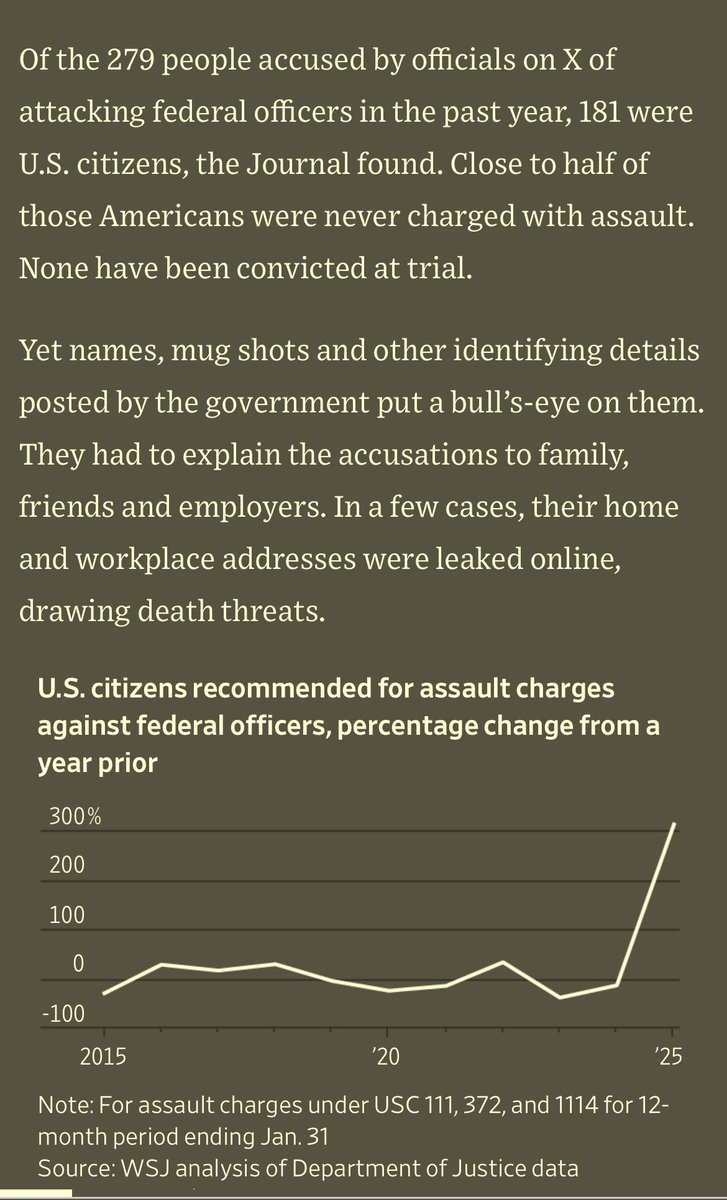
Incredible reporting by the team at WSJ. The government is covering up its crackdown on political opposition with bogus charges and claims of assaults. They are defaming hundreds of people and erasing the first amendment
David J. Bier tweet media
English
97
2.9K
6K
221.6K
daniel f stone 🍻 retweetledi
David J. Bier
David J. Bier@David_J_Bier·
That is insane: "Biden’s pardons eliminated roughly $680,000 in financial penalties owed to victims or the government. In contrast, Trump’s second-term pardons have forgiven criminal debts of more than $1.5 billion."
Cato Institute@CatoInstitute

Trump’s second-term pardons are historic in their enormity—billions in fines erased, allies protected, donors rewarded, DOJ undermined, and election norms threatened. Corruption looks less like an exception and more like the rule, says Cato’s Dan Greenberg. ow.ly/PiYw50YqcO0

English
133
5.7K
19.8K
1.2M
daniel f stone 🍻 retweetledi
Brian Heseung Kim
Brian Heseung Kim@brhkim·
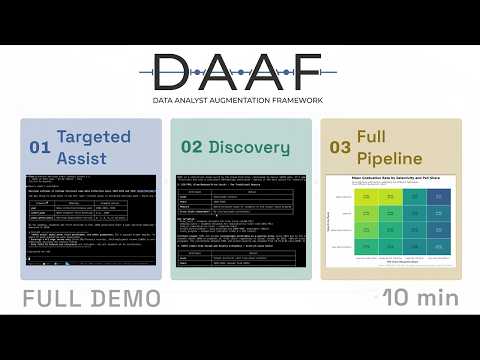
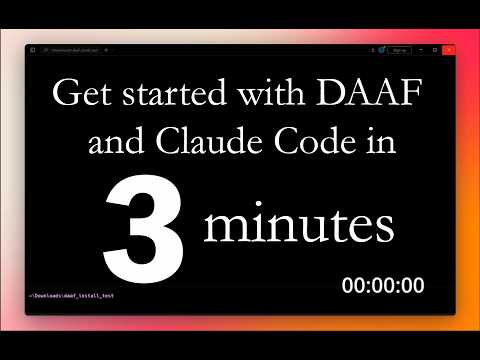
Today, I’m launching DAAF, the Data Analyst Augmentation Framework: an open-source, extensible workflow for Claude Code that allows skilled researchers to rapidly scale their expertise and accelerate data analysis by as much as 5-10x -- without sacrificing the transparency, rigor, or reproducibility demanded by our core scientific principles. You (yes, YOU!) can install and begin using it in as little as 10 minutes from a fresh computer with a high-usage Anthropic account (crucial accessibility caveat, unfortunately very expensive!) github.com/DAAF-Contribut… DAAF explicitly embraces the fact that LLM-based research assistants will never be perfect and can never be trusted as a matter of course. But by providing strict guardrails, enforcing best practices, and ensuring the highest levels of auditability possible, DAAF ensures that LLM research assistants can still be immensely valuable for critically-minded researchers capable of verifying and reviewing their work. In energetic and vocal opposition to deeply misguided attempts to replace human researchers, DAAF is intended to be a force-multiplying "exo-skeleton" for human researchers (i.e., firmly keeping humans-in-the-loop). The base framework comes ready out-of-the-box to analyze any or all of the 40+ foundational public education datasets available via the Urban Institute Education Data Portal (educationdata.urban.org/documentation/), and is readily extensible to new data domains and methodologies with a suite of built-in tools to ingest new data sources and craft new Skill files at will! With DAAF, you can go from a research question to a shockingly nuanced research report with sections for key findings, data/methodology, and limitations, as well as bespoke data visualizations, with only five minutes of active engagement time, plus the necessary time to fully review and audit the results (see my 10-minute video demo here: youtu.be/ZAM9OA0AlUs). To that crucial end of facilitating expert human validation, all projects come complete with a fully reproducible, documented analytic code pipeline and consolidated analytic notebooks for exploration. Then: request revisions, rethink measures, conduct new sub-analyses, run robustness checks, and even add additional deliverables like interactive dashboards, policymaker-focused briefs, and more -- all with just a quick ask to Claude. And all of this can be done *in parallel* with multiple projects simultaneously. By open-sourcing DAAF under the GNU LGPLv3 license as a forever-free and open and extensible framework, I hope to provide a foundational resource that the entire community of researchers and data scientists can use, benefit from, learn from, and extend via critical conversations and collaboration together. By pairing DAAF with an intensive array of educational materials, tutorials, blog deep-dives, and videos via project documentation and the DAAF Field Guide Substack (daafguide.substack.com – MUCH more to come!), I also hope to rapidly accelerate the readiness of the scientific community to genuinely and critically engage with AI disruption and transformation writ large. I don't want to oversell it: DAAF is far from perfect (much more on that below!). But it is already extremely useful, and my intention is that this is the worst that DAAF will ever be from now on given the rapid pace of AI progress and (hopefully) community contributions from here. More than anything, I just hope all of this work can somehow be useful for my many peers and colleagues trying to "catch up" to this rapidly developing (and extremely scary) frontier. It's a wild time, but we need as many people informed and at the table together as possible. Never used Claude Code? No idea where you'd even start? My full installation guide walks you through every step -- but hopefully this video shows how quick a full DAAF installation can be from start-to-finish. Just 3mins! youtube.com/watch?v=jqkVLX… Learn more about my vision for DAAF, what makes DAAF different from other attempts to create LLM research assistants, what DAAF currently can and cannot do as of today, how you can get involved, and how you can get started with DAAF yourself! #vision--purpose" target="_blank" rel="nofollow noopener">github.com/DAAF-Contribut… So there it is. I am absolutely as surprised and concerned as you are, believe me. With all that in mind, I would *love* to hear what you think, what your questions are, what you’re seeing if you try testing it out, and absolutely every single critical thought you’re willing to share, so we can learn on this frontier together. Thanks for reading and engaging earnestly!
YouTube video
YouTube
YouTube video
YouTube
English
15
78
436
73.1K
daniel f stone 🍻 retweetledi
Jessica Riedl 🧀 🇺🇦
Jessica Riedl 🧀 🇺🇦@JessicaBRiedl·
My long-standing conservative/libertarian political views that now get me called a "radical leftist": - Pro-free trade, free markets, & deficit reduction. - Pro-voter ID with drivers' license (not passport or birth certificate). - Against Washington taking over election vote-counting. - Against jackbooted feds shooting protestors for legally carrying a gun, or kicking down doors without a warrant. - Against invading NATO allies (Greenland) and Russian expansionism. - Against price controls on medicine or credit cards. - Pro-legal immigration. - Pro-Federal Reserve independence. - Against handing our public health system over to anti-vaxxers with worm-eaten brains who do cocaine off toilet seats. - Against nanny state attempts to regulate what we eat. - Against pardoning corrupt Members of Congress. - Against electing politicians who fail to exhibit ethical, moral, and honest behavior. - Against using elected office to get rich. - Against assaulting Capitol Police and trying to overturn elections. - Against disrespecting, deporting, or trying to eliminate the pensions of veterans who have honorably served. - Against firing a Coast Guard pilot for misplacing a cabinet secretary's blanket. - Against starting a mid-decade redistricting war (and crying when the other side fights back). - Against all-power executives trampling Congress, courts, states' rights, and rule of law. - Against protecting and pardoning child predators. - Against declaring the Declaration of Independence, and Constitution outdated relics that ignore "what time it is." - Against cult-like worship of individual politicians, even at the expense of the Constitution and rule of law. - Against cancel culture mobs, even for those who do not express sufficient worship of Charlie Kirk. - Against whining, victimology, identity politics, and antisemitism. I've worked in high-level politics and policy for three decades. For most of this career, these views left me comfortably working within the conservative/ libertarian movement. If some people with no political memory before Trump now want to call these beliefs "radical leftist," knock yourselves out. I'm focused on eternal truths and policy realities, not the partisan flavor of the month. ¯\_(ツ)_/¯
English
0
375
2K
100.8K
daniel f stone 🍻 retweetledi
Mahdi E Kahou
Mahdi E Kahou@MahdiKahou·
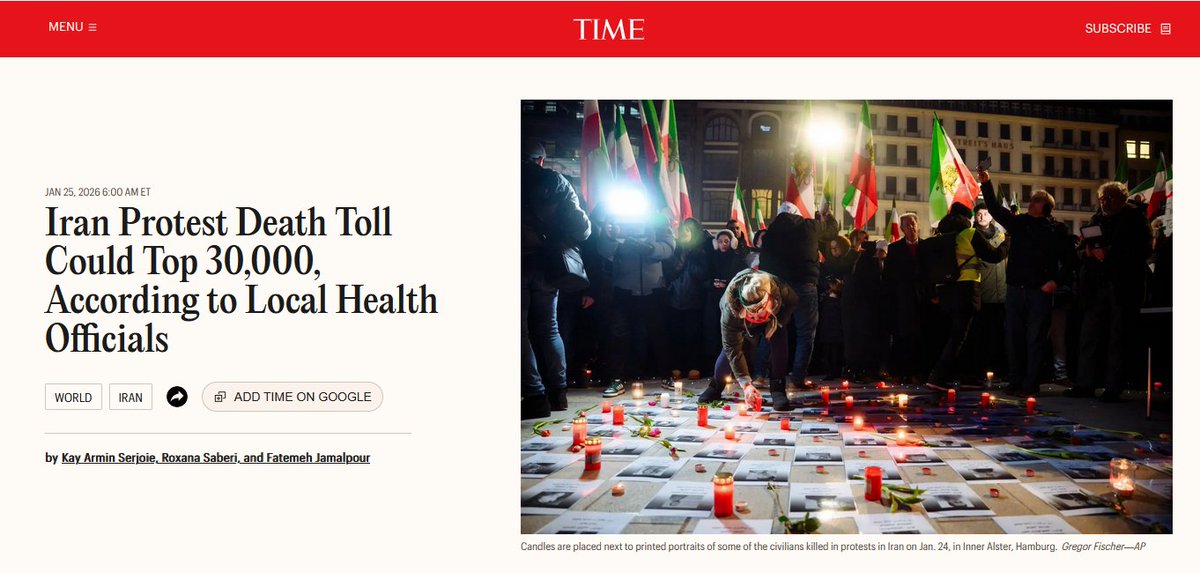
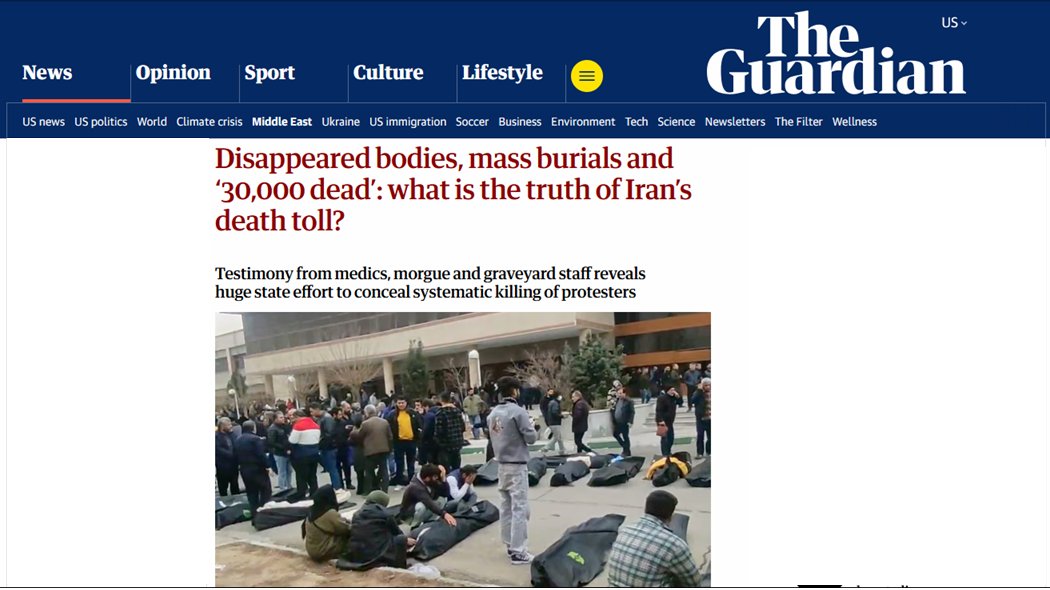
1/8) I finally sat down and wrote my thoughts about recent events in Iran. Title: This Time Is Different: Reflections on Iran’s Latest Uprising. I wrote it for dear friends who kindly reached out to ask how I am doing and to understand how I feel about the recent events in Iran
Mahdi E Kahou tweet mediaMahdi E Kahou tweet media
English
2
23
48
7.1K
daniel f stone 🍻 retweetledi
Séb Krier
Séb Krier@sebkrier·
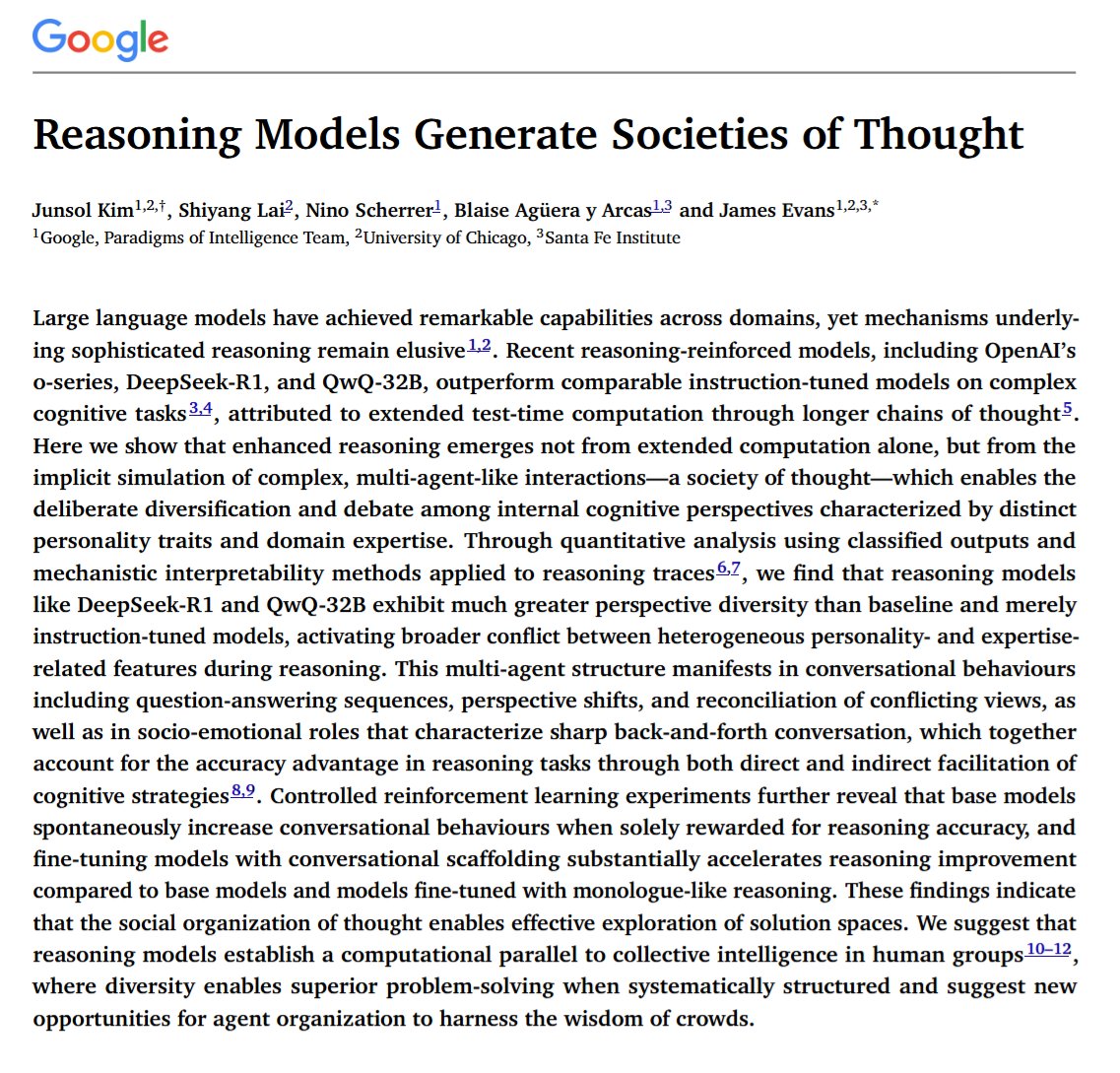
Love this. To solve hard problems, reasoning models sometimes simulate an internal conversation between different personas, like a debate team inside their own digital brain. They argue, correct each other, express surprise, and reconcile different viewpoints to reach the right answer. Human intelligence probably evolved because of social interactions, and it seems like a similar intuition might well apply to AI! arxiv.org/abs/2601.10825
Séb Krier tweet media
English
49
177
1.1K
94.7K
daniel f stone 🍻
daniel f stone 🍻@d_f_stone·
@sandeepdata @danwilliamsphil I'd be curious to see an example of what you're referring to. I think it's very clear both sides love attacking the other side's hypocrisy (which they are blind to seeing in themselves due to tribalism/related bias), see eg x.com/cboyack/status…
Connor Boyack 📚@cboyack

Maduro’s capture illustrates what I believe is one of the biggest problems in politics: people frequently treat principles as costumes—worn when convenient, discarded when costly. Over nearly two decades working in and around politics, I’ve watched the same pattern play out again and again—and today’s events in Venezuela put it on display in neon. The US military carried out strikes in Caracas and captured Venezuelan President Nicolás Maduro and his wife, flying them to New York in what the administration is framing as a kind of “law enforcement” operation.  Look, there are plenty of people who never even pretend to have a core set of principles they cling to. They’re utilitarians and technocrats—ruled by polling, vibes, ambition, and career incentives. Fine. At least they’re honest about being wind vanes. But most people do claim to stand for a consistent set of ideas—constitutional restraint, limited government, “America First,” non-intervention, rule of law, due process, sovereignty, you name it. The problem is that they’re often inconsistent, especially when the outcome is emotionally satisfying. Today proved that again. People who claim to champion the Constitution suddenly ignore its restraints on executive power and, when pressed, point to court precedent, congressional statutes, and past presidential deviations as if those things are the Constitution. “But… the Barbary pirates!” “But George H.W. Bush removed Noriega in Panama!” “But the courts said XYZ!” “But Congress passed some statute in 199-whatever!” So I’ve asked a simple question, repeatedly, across social media threads today: Where, exactly, is the constitutional provision authorizing the president to invade another country and depose its leader? The replies come back empty, no constitutional provision cited. They can't, because it doesn't exist. The Constitution gives Congress the power to declare war. No "targeted strikes" or anything of the like are separately authorized for the president to execute at his whim. That’s the whole point of written limits: the text is supposed to bind you. Instead, we get arguments that past presidents did it, and some lawyers said it was okay. This is tantamount to saying “Billy did it, so I thought it was okay for me to do it.” That’s playground logic, not constitutional rigor. And that’s my point: there is no rigor. There’s only precedent—meaning, prior lawlessness used to justify the next round of lawlessness. The administration itself appears to be leaning on the idea that indictments and “national interests” somehow transform regime change into a lawful “arrest mission.” Trump was elected in part because people were exhausted by foreign meddling. He was praised (by some of these same voices!) for resisting the interventionist itch. And now he’s kicking up dirt in Venezuela. “But Venezuelans are happy!” the commenters have repeatedly said. “They’re in the streets celebrating!” Yes. Sometimes they are. That’s not a serious argument. That’s the-ends-justify-the-means dressed up as compassion—again, playground-level reasoning. Guess what: Iraqis filled the streets when Saddam was deposed. “Baghdad Celebrates Saddam’s Fall,” read a headline in Voice of America, for an article describing dancing and cheering as thousands poured into the streets.  Then Iraq spiraled into insurgency, sectarian civil war, mass death, displacement, and the conditions that helped give rise to ISIS. Libyans filled the streets when Gaddafi fell. So then we got an article titled “Libyans celebrate Gaddafi’s death” in Al Jazeera, describing jubilant crowds and the “end of tyranny.”  Then Libya fractured into militias and rival governments, becoming a prolonged civil conflict and a humanitarian disaster. I could go on. You get the pattern. Here’s the deeper point that people keep refusing to learn: if your principles only apply when they’re easy, you don’t have principles… you have preferences. And preferences make terrible guardrails for state power. Every time you cheer an exception, you’re not just celebrating a moment… you’re authoring a precedent. You're excusing the next guy, in any political party, and for any reason, to do it too. If you’re applauding unilateral regime change today because the target is a villain, you’re also applauding unilateral regime change tomorrow when the target is someone you don’t want touched. Power doesn’t care about your intentions (or your preferences). It cares about the permission slip we seemingly always give it. To be clear: Maduro is no hero. He’s a tyrant who has presided over ruin and repression. But the question isn’t whether Maduro is bad (he obviously is). The question is whether we are governed by law or by appetite. Because “he’s bad” is not a constitutional argument, nor is "Venezuelans are happy and freer." It’s the (fake) argument every president uses when he wants to do something he has already decided to do. And this is why presidents since Washington have gotten away with exceeding constitutional limits: because the public trains them to. They learn that violating restraints can spark national pride, satisfy a thirst for vengeance, and earn adoration from people who swear they oppose unchecked power—right up until it produces an outcome they like. You want a country of laws? Then act like law matters when it’s inconvenient. Stop treating the Constitution as a decoration. Stop citing precedent as if it were permission. Stop excusing today’s overreach because you hate today’s target. Because the bill always comes due, and the payment is usually made by people who never voted for the war, never authorized the mission, and never wanted their country turned into the kind of thing it once claimed to oppose. So yes, we can answer James Madison’s question: “Will it be sufficient… to trust to these parchment barriers (i.e., the Constitution) against the encroaching spirit of power?” Obviously not. Parchment only restrains power when the people treat it as a leash—not a suggestion. When half the country cheers the leash getting snapped because their guy did it to their enemy, the paper might as well not exist. And that's the cycle we've long been in. Yes, Venezuela may be a little freer, for now. But listen to the triumphalism in Trump's announcement. In the same breath as announcing Maduro’s capture, he talked about sending in “our very large United States oil companies,” and about the U.S. “running” Venezuela's government “until such time as we can do a safe, proper, and judicious transition.” This is the raw material of unintended consequences: blowback, corruption, and the kind of protracted entanglement that turns “just this once” into the next twenty years. Count me out. I've seen this story before, and I don't like how it ends.

English
1
0
1
19
Sandeep Chauhan
Sandeep Chauhan@sandeepdata·
@d_f_stone @danwilliamsphil In today’s power games, whoever tries to act unbiased just gets targeted harder. The so-called better side is always left cleaning up while the real players cash in. That’s the sad joke of modern politics.
English
1
0
1
37
daniel f stone 🍻 retweetledi
Tom Nichols
Tom Nichols@RadioFreeTom·
Listen, I made this mistake - worst mistake of my career - when writing about Putin in 1999-2003. Many things Putin did in those days were good and necessary - no, really, some of them were, such as strengthening the Russian Federation. But none of that matters now, does it?
Megan McArdle@asymmetricinfo

@CathyYoung63 My experience in trying to persuade conservatives to ditch Trump was that the tendency to elevate every single thing he did to an existential threat to democracy made it harder to persuade people about the stuff that was an existential threat to democracy. YMMV.

English
13
47
482
65.8K
daniel f stone 🍻 retweetledi
𝑫𝒆𝒓𝒂𝒕𝒆 𝑻𝒉𝒆 𝑯𝒂𝒕𝒆 𝒑𝒐𝒅𝒄𝒂𝒔𝒕
It was a pleasure to have you join me @BridgeGrades ! ~ @wilksopinion
Bridge Grades@BridgeGrades

@DerateTheHate Thanks for going deep on Bridge Grades, Wilk (@DerateTheHate). It was a pleasure to unpack how we use data to sort legislative bridgers from dividers - and why this measure can help change incentives longer term for a more collaborative Legislative Branch.

English
0
1
1
177
daniel f stone 🍻 retweetledi
Conan O'Brien
Conan O'Brien@ConanOBrien·
The suspension of @jimmykimmel and the promise to silence other Late Night hosts for criticizing the administration should disturb everyone on the Right, Left, and Center.  It’s wrong and anyone with a conscience knows it’s wrong.
English
25.1K
19.7K
165.3K
10M
daniel f stone 🍻 retweetledi
NAASE
NAASE@NAASEcon·
We are excited to announce the creation of the Coates-Humphreys NAASE Distinguished Research Award, with Dennis Coates and Brad Humphreys as the inaugural winners. It will be given in odd-numbered years (the Hadley Award is given in even-numbered years). Congrats Brad & Dennis!
English
3
6
33
1.1K
daniel f stone 🍻 retweetledi
The Alex Nowrasteh
The Alex Nowrasteh@AlexNowrasteh·
There is no surge in politically motivated killings. The number of people murdered by left wing and right wing politically motivated killers is tiny. Every victim is a tragedy but don’t make up a social catastrophe where there is none.
The Alex Nowrasteh tweet media
English
39
71
486
81.9K
daniel f stone 🍻 retweetledi
The Bulwark
The Bulwark@BulwarkOnline·
Reporter: “Charlie Kirk was a big advocate of non-violence…How do you want your supporters to respond?” Trump: “I think that way. He was an advocate of nonviolence, that's the way I'd like to see people respond.”
English
544
212
2.2K
772.7K
daniel f stone 🍻 retweetledi
Khoa Vu
Khoa Vu@KhoaVuUmn·
Khoa Vu tweet media
ZXX
1
14
347
28.4K