Daniel Milde
5.7K posts

@danielmilde
Software Engineer @outreach_io ex-@seznam_cz


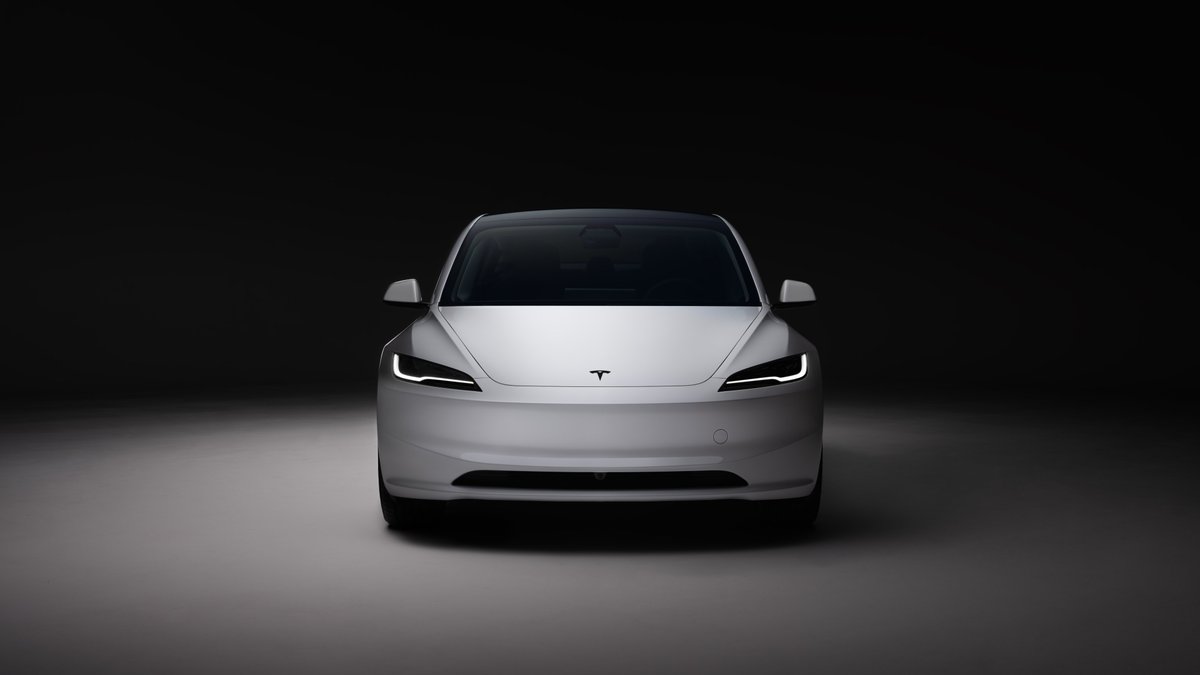
1 Akku 1.000.000 km mit 85% Kapazität und ohne jegliche Reparatur. Motor 1.112.000 km, nach einer gründlichen Revision in der bekannten EVC in Zagreb danach 960.000 km ohne Reparatur. Motor nach oben offen lediglich der Simmering muss demnächst erneuert werden.

Helium is the only element that escapes Earth’s atmosphere permanently. Once released, it rises through the troposphere, passes the stratosphere, and leaves the planet. It cannot be manufactured. It cannot be synthesised at industrial scale. It accumulates over billions of years in the same geological reservoirs as natural gas. And one third of the world’s supply just went offline because Iran hit the facility that extracts it. Qatar produced roughly 63 million cubic metres of helium in 2025, accounting for 30 to 36 percent of global supply from a total of approximately 190 million cubic metres. QatarEnergy’s three large helium purification plants at Ras Laffan form the world’s biggest helium production base. When LNG production stopped after Iranian drone strikes on March 2 and the subsequent missile damage on March 19, helium extraction stopped automatically because helium is recovered during natural gas liquefaction. You cannot produce helium without producing LNG. The byproduct dies with the primary product. Spot helium prices have roughly doubled since the crisis began. Industry consultants warn that prolonged disruption could push contract prices toward $2,000 per thousand cubic feet. A major industrial gas supplier has already begun assessing customers a helium surcharge. Phil Kornbluth, the most cited helium market consultant, stated the assessment directly: the world cannot compensate for the loss of a third of its helium supply. South Korea imports 64.7 percent of its helium from Qatar. SK Hynix and Samsung operate high-volume fabs producing the DRAM and high-bandwidth memory that power every AI accelerator, every data centre GPU, and every cloud computing cluster on Earth. Helium cools silicon wafers during fabrication. It serves as a carrier gas in deposition and etching tools. It enables leak detection in vacuum systems. Modern extreme ultraviolet lithography requires helium-cooled environments for precise temperature control. Without helium, the fabrication process degrades or stops. SK Hynix and Samsung hold two to three months of helium inventory. Two to three months is not a buffer. It is a countdown. If Ras Laffan remains offline beyond that window, South Korean memory production faces rationing. TSMC in Taiwan is somewhat more diversified but still uses Qatar-linked supply chains. The entire AI hardware supply chain, from HBM3E memory stacks to advanced logic chips, sits inside helium-dependent ecosystems. Beyond semiconductors, helium cools the superconducting magnets in more than 14,000 MRI machines operating worldwide. It pressurises rocket fuel tanks and purges propulsion systems in aerospace. CERN’s Large Hadron Collider depends on helium cryogenic systems. There is no substitute for helium in any of these applications at industrial scale. The United States and Qatar together account for more than 70 percent of global production. The US federal helium reserve and private suppliers offer partial relief, but global prices and spot availability are still governed by Qatar’s market share. Japan’s Iwatani has drawn on US reserves. Canada and the Rockies are seeing renewed investor interest. None of this replaces 63 million cubic metres in weeks. The war hit uranium first. Then oil. Then nitrogen. Then water. Then plastic. Then medicine. Then sulfur. Now helium. Eight layers. Each one deeper. Each one closer to the infrastructure that sustains modern civilisation. The chip that processes your data, the magnet that scans your body, and the rocket that launches your satellite all depend on an atom that leaves the planet when you lose it. open.substack.com/pub/shanakaans…


This doesn’t look like much, but it changes everything. What you’re looking at is an evpzee lamppost charger. It is the smartest solution to one of the biggest barriers to EV adoption. A standard street lamp, quietly turned into an EV charger. No digging up roads, it is installed in just 30 minutes. No huge infrastructure projects, a full street can be electrified in a matter of hours. Manufactured and assembled in the UK and fully OCPP. Using what’s already there. For millions of people across the UK, especially those without driveways, this is the difference between “I can’t have an EV” and “actually…I can.” It’s easy to overlook innovations like this because they’re not flashy. No 350kW ultra-rapid chargers. No massive charging hubs. Just practical, scalable, everyday infrastructure doing exactly what it needs to do. And that’s the point. The EV transition will be be driven by everyone having the ability to charge when they need to. Simple. Effective.


Od 1. 11. 2025 zrušila @SkupinaCEZ slevu na UFC dobíjení u tarifu Premium. Z 11 Kč jsme rázem zpět na 13 Kč za kWh. No, už se těším na další články, ve kterých bude Tomáš Chmelík brečet, že jim nabíječky zejí prázdnotou a mají malou vytíženost. A přitom stačí málo... 🧵⬇️

No, @SkupinaCEZ vydala ceníky, které budou platné od 1. 4. 2026. Je tam hned několik problémů: 1) Dražší AC dobíjení. 2) Dražší dobíjení na ≤149 kW stojanech. 3) Dražší dobíjení pro neregistrované uživatele. Tím, že zlevní dobíjení o 2,10 Kč/kWh u UFC, to nezachrání. 🤡


"Black Bird, a Finnish war-monitoring group, said Russian troops in February lost more Ukrainian territory than they captured for the first time since November 2023." ft.com/content/330e55…