

Daniel Buckley
352 posts
Daniel Buckley
@danthebuc
Carpenter, turned Salty Sea Dog.”You’re not lost ,if you know where you’ve been”
North Shields,uk Katılım Ağustos 2012
41 Takip Edilen27 Takipçiler





@BarryRunya86524 @NMoltchanoph @PhysInHistory Yes,I believe it was Joseph Swan?
The first steet to be illuminated, by electric light(incandescent bulb)was here,in MOSLEY STREET,NEWCASTLE UPON TYNE. 😊
English

@NMoltchanoph @PhysInHistory And Thomas Edison REALLY DID invent the light bulb.
Get real. A lot of people took credit for the work of others.
English
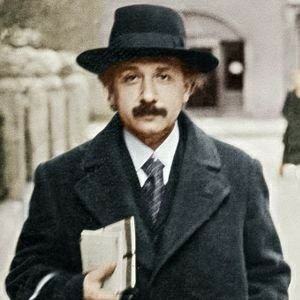
Henry Moseley, the inventor of the modern periodic table, was killed at the age of 27 by a sniper in the Gallipoli battle in 1915.
Moseley was a brilliant physicist who worked at the University of Manchester under Ernest Rutherford, the father of nuclear physics. He was interested in the properties of X-rays and how they could be used to study the structure of atoms. He used a device called a spectrometer to measure the wavelengths of X-rays emitted by different elements when they were bombarded by electrons. He found that there was a regular pattern in the X-ray spectra, and that each element had a characteristic set of lines that could be used to identify it. He also found that the frequency of the most intense line in each spectrum was proportional to the square of a number that he assigned to each element. This number, which he called the atomic number, was later found to be equal to the number of protons in the nucleus of an atom.
Moseley’s discovery was very important for chemistry and physics, as it provided a clear and logical way to organize the elements in the periodic table. It also explained why some elements had similar chemical properties, as they had the same number of electrons in their outer shells. Moseley’s work also supported Niels Bohr’s theory of the atom, which proposed that electrons orbit around the nucleus in discrete energy levels. Moseley’s law also predicted the existence of some missing elements that had not been discovered yet, such as technetium, promethium, and rhenium.
Unfortunately, Moseley’s life and career were cut short by World War I. He volunteered for the British Army as a telecommunications officer, and was sent to Gallipoli, Turkey, where he participated in a campaign against the Ottoman Empire. He was killed by a sniper on August 10, 1915, at the age of 27. His death was mourned by many scientists and scholars, who regarded him as one of the most promising physicists of his generation. Some even speculated that he would have won the Nobel Prize in Physics if he had survived.
Niels Bohr once said that,
Rutherford's work "was not taken seriously at all" and that the "great change came from Moseley."
His death also prompted the British government to ban other prominent scientists from serving in front-line roles, as they realized the value and importance of scientific research for society
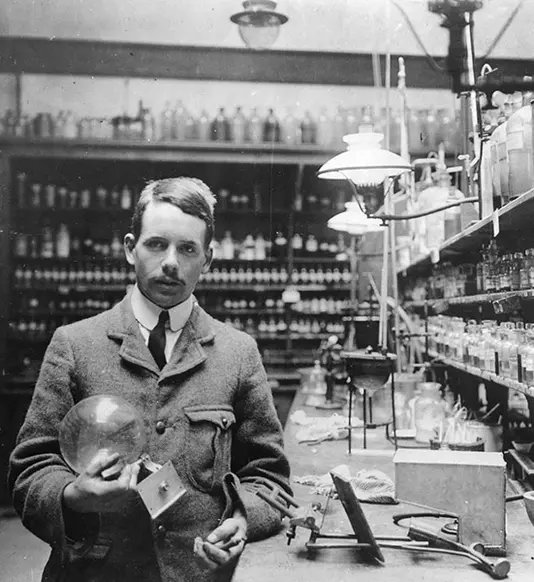
[Photograph: Balliol-Trinity College Laboratory, 1910]
English
For the geniuses only! Can you crack this logic puzzle? 🤔

English
@chefsevenn I do it all of the time. No choice. I am thee Dish Wash Machine ! He he 😊
English



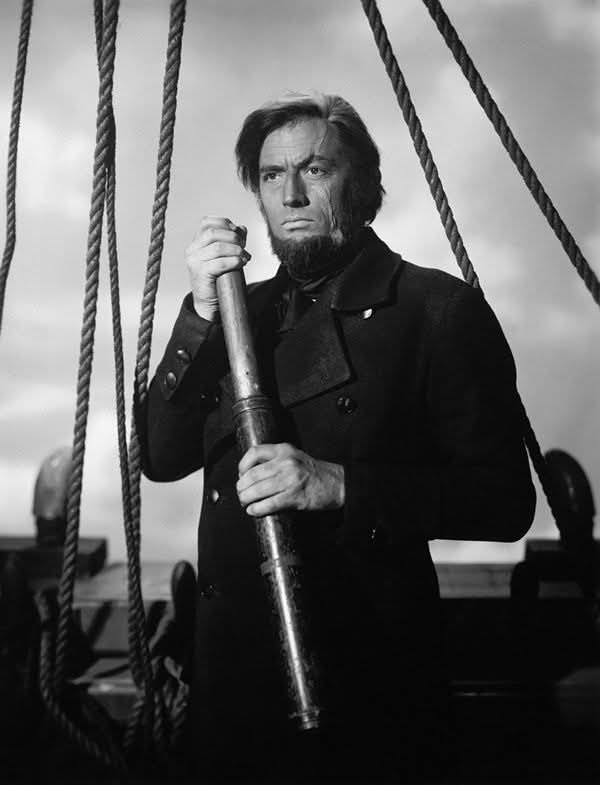
Can you name this Movie 🎬 from just this shot? Hmm 🤔 ?¿
English

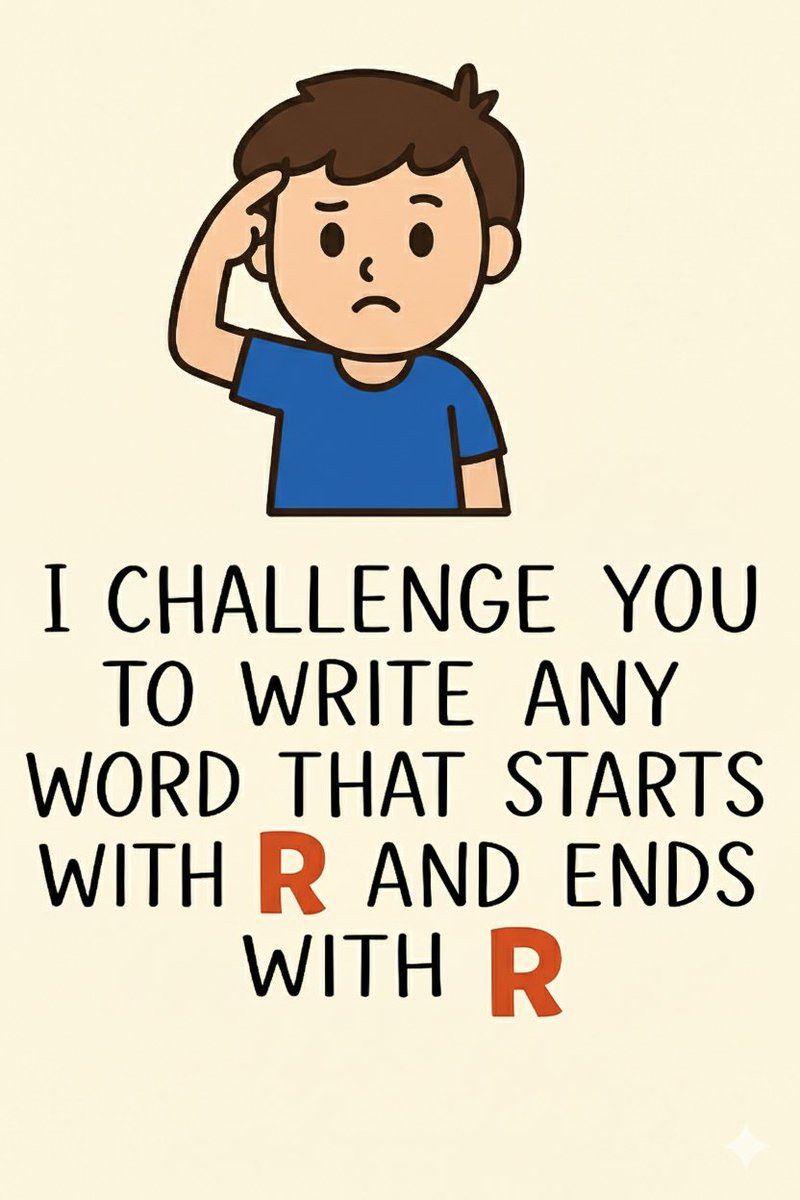
I'm giving you an IQ test.
What is wrong in this picture?

English


@Ames2420 I did not puke,but,I felt like I had been through a fast spin cycle,in an Industrial sized Washing Machine (which tilted like a Gyroscope)🤢
English



Daniel Buckley retweetledi


waiting ? Let’s make it 40 though…,,
✨✨✨✨✨✨✨✨✨✨✨

English