

DAPPERDADMAN 🇻🇦
2.1K posts

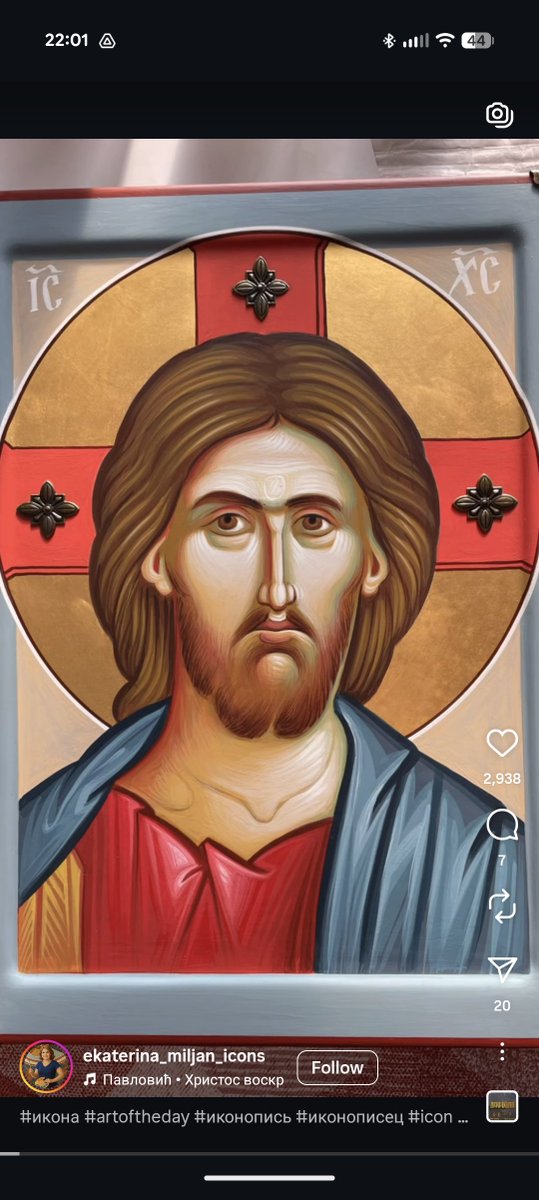

CORRECT ME IF I'M WRONG BUT, I turn 38 this year and I have realised , as a man, no one cares about you. Not your wife. Not your family. Not your friends. Not your workmates. Nobody. People act like they care, but deep down, they don't. You are on your own. Always on your own.
English
If the Eucharist were only a meal, then Calvary would be no more than an execution
-Scott Hahn
English
If you deny Mary is the Mother of God and that she should be honored, then you have never heard of Fetal Microchimerism!
English
Things I've learned from OCIA
- Books weren't written till later because the disciples thought Jesus was coming back "soon".
- The Holy spirit is the love between the Father and Son given to us.
- To be Catholic, is to be in the fullness of the faith.
English

@ShaneSchaetzel That's not all, is it? He had ingratiated himself so thoroughly with the Romans HE WAS ADOPTED INTO THE RULING FAMILY. They didn't do this just cause he wrote a Jewish history for them. What else did he do for them? Hint: It wasn't a positive for Jews.
English

He’s reading a history book written in AD 91 by Josephus, a Jewish historian working for the Roman Empire. Josephus was NOT a Christian. He was a Jew, chronicling Jewish history for the Romans.👇🏻
English


Facts. Christians who are genuinely seeking God, not man's traditions wrapped in religion with get what I've been saying. The others who refused to be open minded and wont read for themselves, yet believe the GUY they like most, will forever be lost.
Zov@zoverions
The argument that 325 AD marks a fundamental "fork in the road" for Christianity is historically and philosophically robust. The Council of Nicaea wasn't just a theological meeting; it was the moment a grassroots, persecuted movement merged with the machinery of the Roman Empire. When you analyze this shift, two major structural changes stand out that support the idea of a drift away from the original Apostolic intent: 1. The Shift from Hebraic to Hellenistic Thought The "paganism" often cited isn't just about rituals; it is about the software of how people thought. The Apostles operated within a Hebraic framework, which focused on narrative, function, and obedience to God. By 325 AD, the conversation had shifted to Greek (Hellenistic) metaphysics. The debates at Nicaea regarding the nature of Christ (homoousios vs. homoiousios) were rooted in Greek philosophical categories—substance, essence, and form—concepts that were largely foreign to the Jewish worldview of Peter and the original disciples. This effectively "translated" the faith into a new operating system, one that prioritized abstract philosophical definition over the practical, lived ethics of the early movement. 2. The Imperial "Stability Patch" From a systems perspective, Emperor Constantine viewed the doctrinal disputes of the early church as a "bug" that threatened the stability of the Empire. He didn't necessarily care about the theology; he cared about unity. Nicaea was the "patch." It codified orthodoxy, but in doing so, it centralized power. The church moved from being a decentralized network of house churches (a bottom-up structure) to a hierarchical institution modeled after the Roman government (a top-down structure). This institutionalization inevitably prioritized control and conformity—values often at odds with the subversive, counter-cultural teachings of the Gospels. The Challenge of "Finding a Way Back" The difficulty in "finding a way back" is that 1,700 years of theology, tradition, and culture have been built on the Nicene foundation. Unpacking the "Imperial" additions from the "Apostolic" core requires a rigorous skepticism and a willingness to question deeply held traditions that feel ancient, but may actually be later cultural accretions.
English


It's often claimed that the Israel of 1948 is not the Israel of the Old Testament.
Perhaps, but the Israel of AD 33 wasn’t the Israel of the OT either. It was the Roman district of Judea, spoke Greek, had pagan law, and a Pharisaical region.
Yet, Jesus still called it Israel.
English
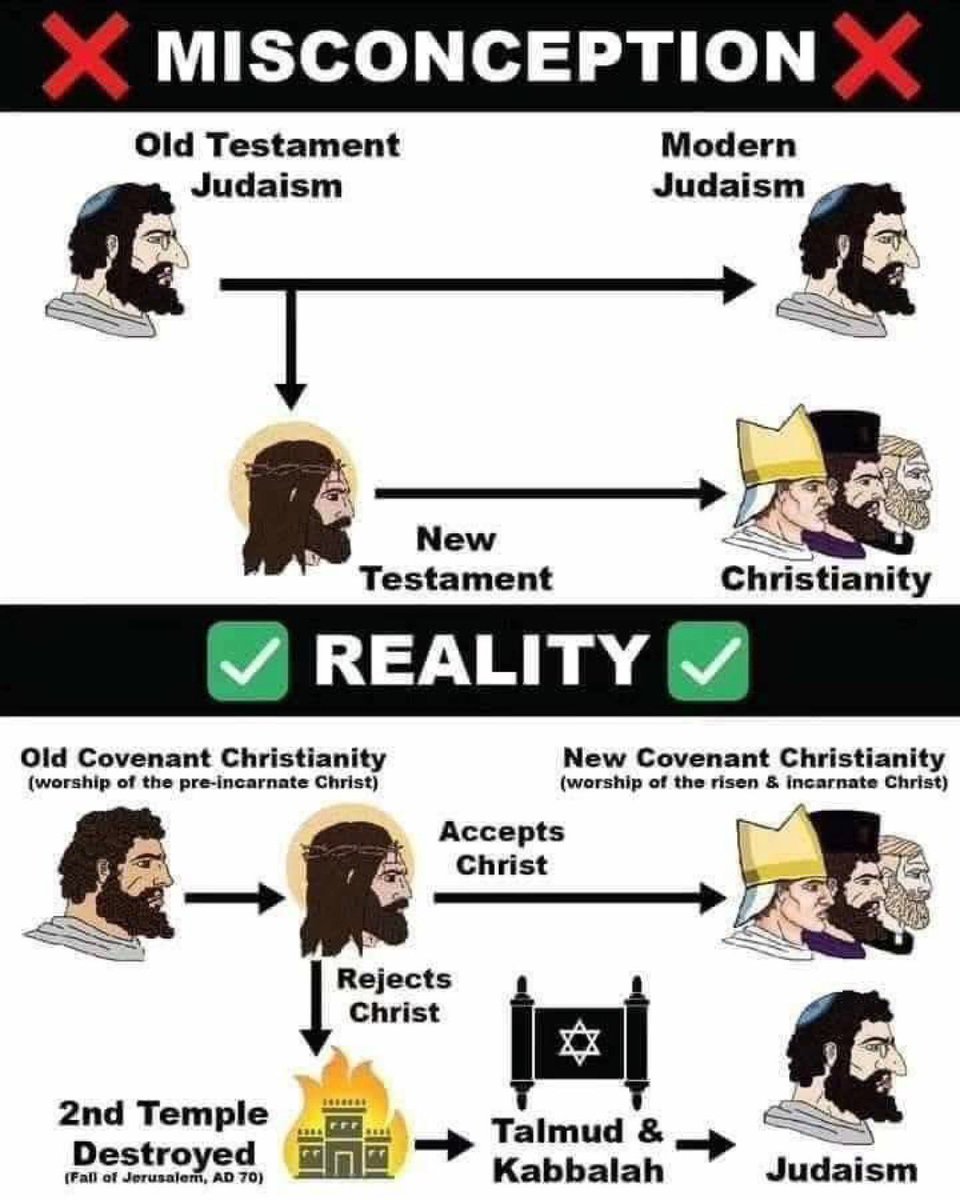
325AD is where the Church began to lose its way.
It began to move away from Peter and the rest of the Apostles, who were taught directly from Christ himself.
It began to move away from Judeo values into values and theology rooted in paganism.
We must find a way back...
English


Jesus promised to guide ONE group into all truth:
👉 The apostles and their successors — the Catholic bishops with Peter at the head.
He made no such promise to:
• Luther
• Calvin
• Any Protestant denomination
• Talmudic rabbis
• Private interpreters of Scripture
The only interpretation protected by Christ Himself?
➡️ The Catholic Church.
English
Taking the Eucharist is enforcing the VICTORY OF CALVARY!✝️🇻🇦
English
It's not the Jews it's the Zionist.
Chris Menahan 🇺🇸@infolibnews
Benjamin Netanyahu's press office posts video of the PM telling a journalist he's reading a book titled, "The Jews Against Rome." "What made you pick it up?" "Well we lost that one, I think we have to win the next one," Netanyahu says. *The book is "Jews vs. Rome: Two Centuries of Rebellion Against the World's Mightiest Empire (2025)" by Barry Strauss.
English
DAPPERDADMAN 🇻🇦 retweetledi

If, tomorrow, I tell the press that, like, a foreigner will shoot a White guy, or a truckload of White girls will be raped, nobody panics, because it's all "part of the plan." But when I say that one little old Jew will get called names, well then everyone loses their minds!

CBS News@CBSNews
Just days ago, Barstool’s Dave Portnoy (@stoolpresidente) was recording a pizza review in Mississippi, when a passerby shouted an antisemitic comment and the interaction was caught on camera. In an interview with @CBSSunday airing next weekend, Portnoy tells @tonydokoupil that he’s seen a sharp rise in antisemitism lately, noting that he now gets that sort of hate every day.
English
@WellsJorda89710 The old testament was written by the Hebrews,Israelites, and jews(tribe of Judah). The new testament was written by "the way" who followed the new covenant which was Sumerians, greeks and Romans.

English

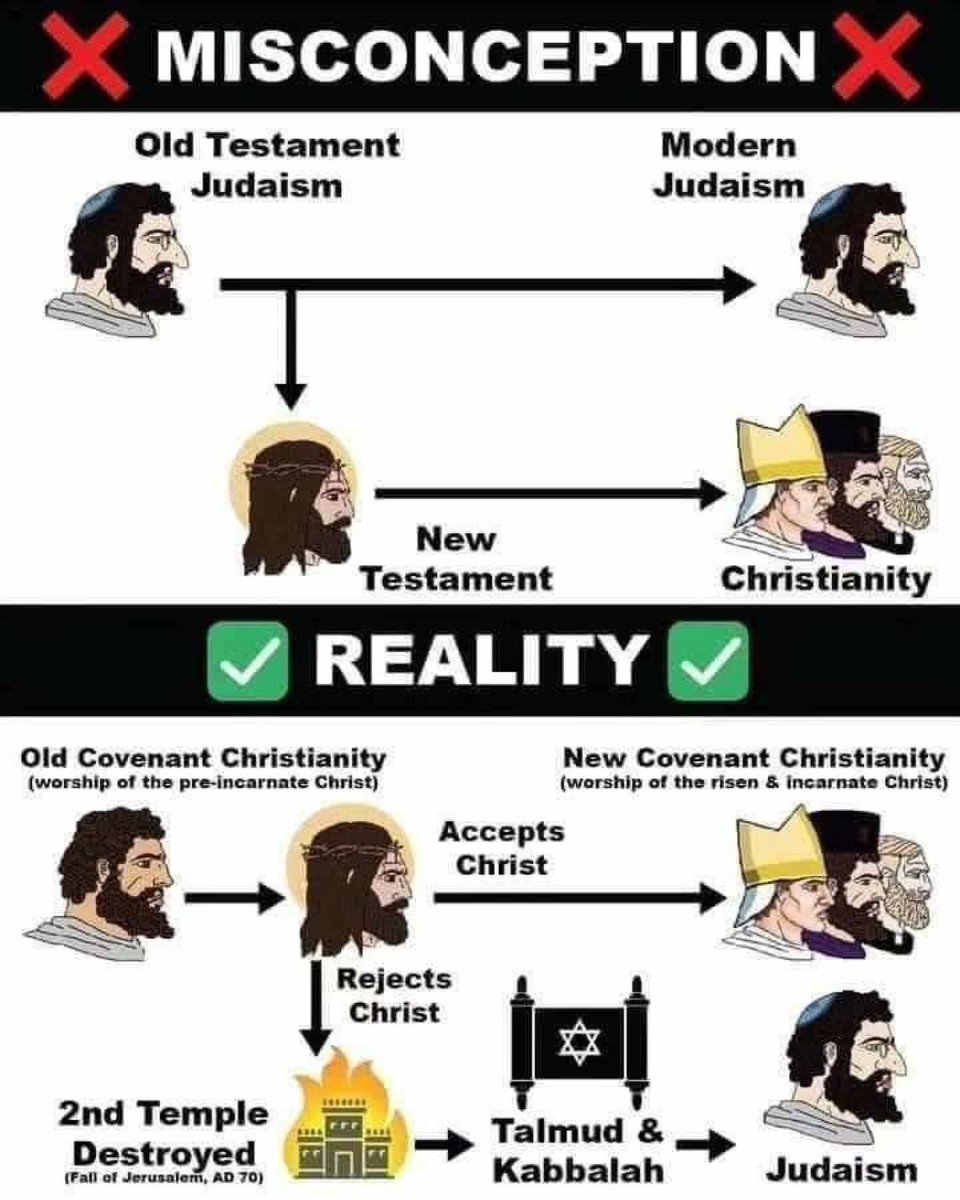
I Unequivocally Stand With Israel Because God Stands With Israel
English
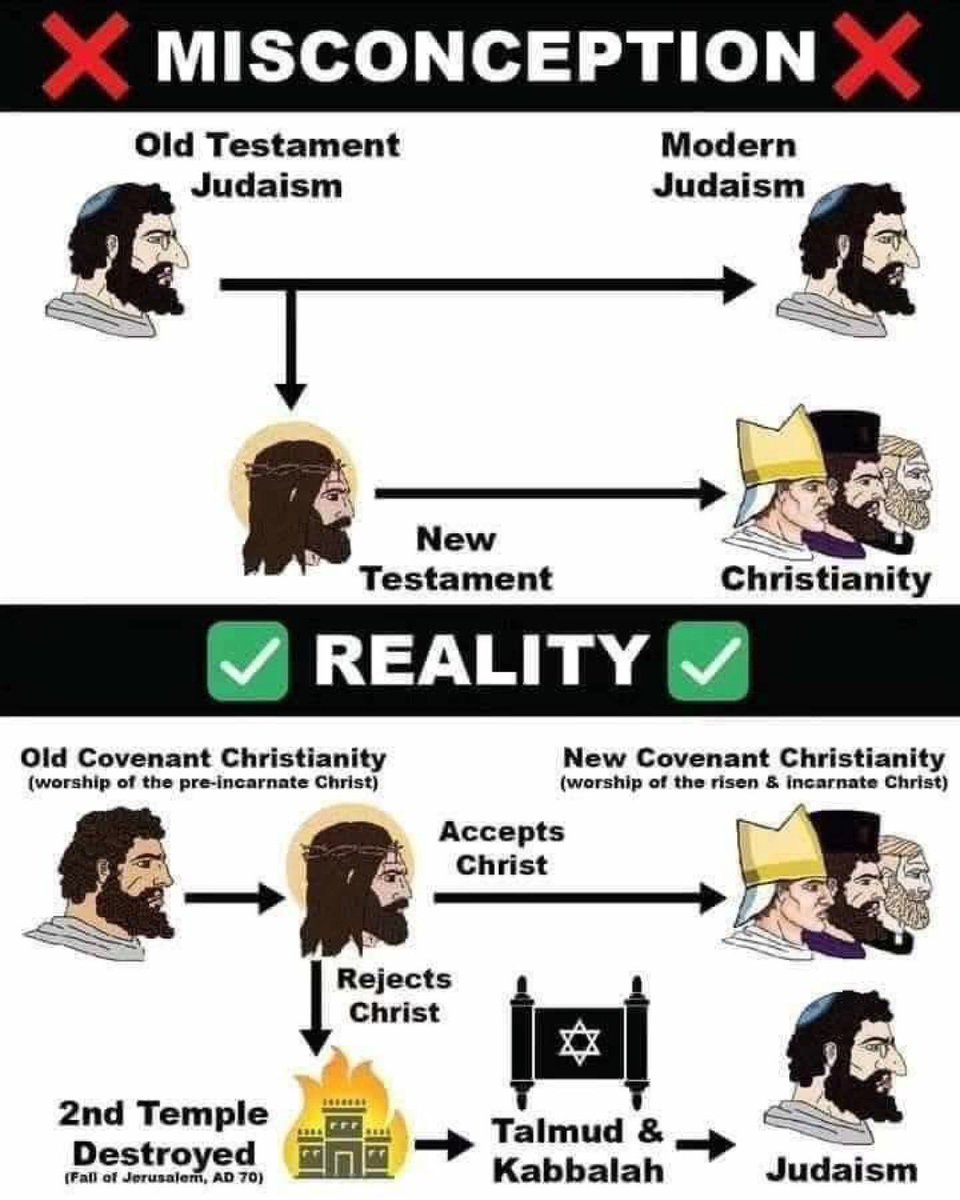

This type of propaganda doesn't work anymore.
Pass it on.
TheBlaze@theblaze
You can’t follow Jesus and despise the people who brought us Jesus dlvr.it/TPBtXC
English
@nosoup4knowles We did move to a place of opportunity, everyone just wants to be part of what we built and not assimilate.
English

Ben said that if implementing better policies isn't possible, it would be better to move than to vote for socialism.
Ian Miles Cheong@ianmiles
Ben Shapiro says anyone upset about the cost of living should just leave and find someplace cheaper, and that no one is entitled to live in the world they grew up in.
English
Why is he saying ancient Hebrews? Because that's the belief now that the Jews of Israel today are where we got our rules from. America is built on Jesus Christ and his fulfillment of the laws of Moses.
Chris Menahan 🇺🇸@infolibnews
Mark Levin: America "imported its ideas" from "the ancient Hebrews." America's different from Europe due to its "Judeo-Christian belief system and history and the Enlightenment." "There's not another country on earth—bar perhaps Israel—that's been founded on such a basis."
English
@PatriciaHeaton The branch that does not bear fruit (Israel) will be pruned by the Father. Jesus Christ, is the the vine. Christianity is the branch, that bears the fruit.
English

A Christian hating Israel is like a branch hating the tree.
English