Paul Price

3.2K posts

Paul Price banner
Paul Price

Paul Price

@darkp0rt

Cyber & AI | ex-founder (acquired) | Helping teams ship securely

London Katılım Temmuz 2008
632 Takip Edilen4.6K Takipçiler
Newton Cheng
Newton Cheng@newton_cheng·
We're looking for people with real offensive security experience (vuln research, rev, pentesting etc.) who've started pulling frontier models into their workflow and want to go deeper. This will be scrappy, iterative, hands-on-keyboard research.
English
10
24
220
72.2K
Paul Price
Paul Price@darkp0rt·
@trq212 @Miles_Brundage This happens to me but only in sub agents. Is that by design? Is there a way I can force it to use Opus for all sub agents?
English
0
0
0
311
Thariq
Thariq@trq212·
@Miles_Brundage like the model in /model is just sonnet 4.6 now and you don't remember changing it? definitely a really weird bug, we would see it at scale if it were affecting a lot of people but possible it's a more specific bug that happens rarely... will look into it
English
33
0
7
3.5K
Miles Brundage
Miles Brundage@Miles_Brundage·
Lately, Claude has been defaulting to Sonnet in a way that I don't think it ever did before. PLEASE STOP THIS, IT'S REALLY ANNOYING
English
24
2
313
63.7K
Paul Price
Paul Price@darkp0rt·
Still won’t make me fly BA
Sawyer Merritt@SawyerMerritt

NEWS: British Airways to launch first @Starlink Wi-Fi flight this month. Starlink Wi-Fi will be free for all passengers. BA currently charges up to £22 on long-haul flights for speeds up to 5pbs. Starlink will deliver over 20X that speed at no additional cost to passengers. With Starlink, nobody will have to enter their credit card details or even be a member of the British Airways Club loyalty program to log on. Travellers will simply connect to the network through the plane's hotspot and access the Internet without a login or payment portal, due to Starlink’s insistence on a friction-less experience. BA's first Starlink-equipped flight will be on a Boeing 787.

English
0
0
0
515
Paul Price
Paul Price@darkp0rt·
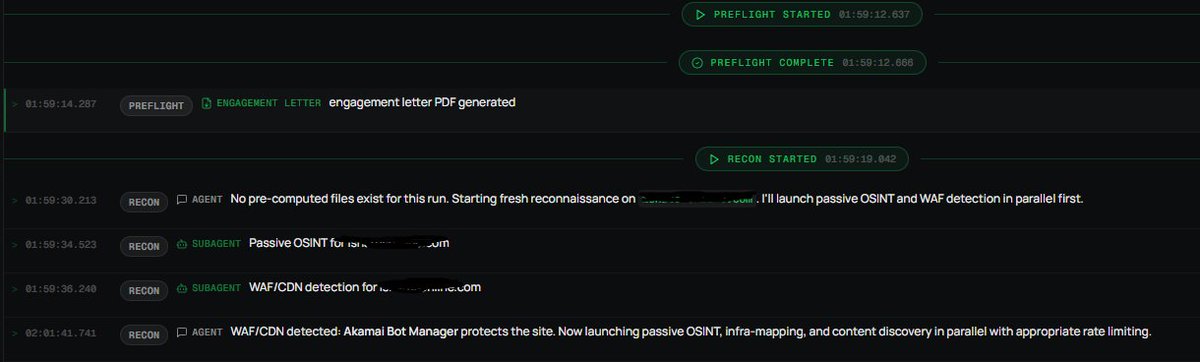
Got my first CVE and multiple CVS 10.0s in huge Tier 1 companies by developing a fully autonomous agent system.. write-up’s soon!
Joseph Thacker@rez0__

It is hard to communicate how much bug bounty has changed due to AI in the last 2 months: not gradually and over time in the "progress as usual" way, but specifically this last December. There are a number of asterisks but imo coding agents basically didn't work for security research before December and basically work since - the models have significantly higher quality, long-term coherence and tenacity and they can power through large and long hacking tasks, well past enough that it is extremely disruptive to the default bug bounty workflow. Just to give an example, over the weekend I pointed Claude Code at a new program's scope and wrote: "Here are the target domains. Enumerate subdomains, grab all the JavaScript bundles, run the full analysis pipeline (endpoints, secrets, source-sink tracing, postMessage handlers), fuzz the discovered paths, spider the authenticated surface, check for IDORs on user APIs, test any interesting GraphQL endpoints, and write up an HTML report of everything you find." The agent went off for ~30 minutes, ran into multiple issues (auth failures, WAF blocks, malformed responses), researched solutions, resolved them one by one, analyzed the JS, fuzzed endpoints, tested access controls, and came back with the report. Two confirmed vulnerabilities and a handful of interesting leads. I didn't touch anything. All of this could easily have been a full weekend of manual work just 3 months ago but today it's something you kick off and forget about for 30 minutes. As a result, bug bounty hunting is becoming unrecognizable. You're not manually clicking through Burp Suite and hand-testing parameters one by one like the way things were since this industry started, that era is over. You're spinning up AI agents, giving them targets *in English* and managing and reviewing their output in parallel. The biggest prize is in figuring out how you can keep ascending the layers of abstraction to set up long-running orchestrator agents with all the right skills, memory and instructions that productively manage multiple parallel hacking instances for you. The leverage achievable via top tier "agentic engineering" for security research feels very high right now. My friends and I have been building out custom skill libraries for Claude Code - things like JS static analysis pipelines, authenticated fuzzing, IDOR testing frameworks, GraphQL introspection - and sharing them with each other. Each person's agent gets better as the collective skill set grows. We're finding more bugs in a week than we used to find in a month. It's not perfect, it needs high-level direction, judgement, hacker intuition, oversight, iteration and hints and ideas. It works a lot better in some scenarios than others (e.g. especially for targets with thick JavaScript clients where you can verify findings with a curl command). The key is to build intuition to decompose the target just right to hand off the recon and testing parts that work and help out around the edges with the creative exploitation. But imo, this is nowhere near "business as usual" time in bug bounty.

English
0
0
1
552
Paul Price
Paul Price@darkp0rt·
@thedawgyg @slinafirinne This is only a harness and prompting issue, easily fixable. You create specialized sub agents that have access to a test environment and go through the kill chain—highly adaptable and accurate
English
0
0
0
22
dawgyg - WoH
dawgyg - WoH@thedawgyg·
@slinafirinne yea i am seeing the same. the downside is when its wrong, its very confident in the wrong answer as well and will try to convince you its right, unless you can quickly set it straight. So it still needs someone very knowledgable in the loop to make it not suck
English
2
0
6
575
dawgyg - WoH
dawgyg - WoH@thedawgyg·
Hot take: Everyone that is worried that ClaudeAI now doing 'code security' is going to end security jobs have obviously never used as SCA/SAST tool and it shows... if your worried they are gonna replace you, then you probably aren't very good to begin with lol
English
24
23
359
15.7K
Paul Price
Paul Price@darkp0rt·
@TheBlockChainer Interested to hear more about how you’re using AI because this is not my experience at all. In the right harness, agent driven loops are more than capable of finding business logic issues and new bugs not discovered before.
English
0
0
0
86
Bloqarl | Zealynx
Bloqarl | Zealynx@TheBlockChainer·
I've been using AI for smart contract audits longer than most people in this space. And the more I use it, the more confident I am that human auditors aren't going anywhere. Not because AI is bad. It's actually useful. I use it on every single audit I run. But there's a massive gap between "useful" and "ready to replace humans" — and I don't think enough people who actually do this work are talking about it honestly. --- Here's what AI is genuinely good at: Finding known patterns. Common misconfigs. Simple reentrancy. Integer overflow in obvious places. If a bug has been documented before and looks similar enough to the training data, AI will catch it fast. Think of it as a tireless junior auditor who's read every public audit report ever written. That's valuable. I'm not dismissing it. --- Here's where it completely falls apart: Business logic bugs. These are the vulnerabilities that come from understanding *why* the code was written — not just *what* it does. When a protocol's incentive design creates an edge case that only makes sense if you understand the economics, AI doesn't see it. It's not pattern-matching against known exploits anymore. It's modeling human intent. That's a different skill entirely. Novel attack vectors. The most expensive hacks in DeFi history weren't reentrancy. They were things nobody had seen before. AI can't find what it hasn't been trained on. Human auditors think like attackers — they ask "how would I break this?" That adversarial mindset isn't something you can replicate with a language model. Not yet. Composability risks. DeFi protocols don't exist in isolation. A vulnerability might only appear when Protocol A interacts with Protocol B under a specific market condition. Understanding those interactions requires deep context about the entire ecosystem. AI looks at one codebase at a time. Attackers don't. --- The irony is this: The more I use AI in my audits, the more clearly I can see the ceiling. It handles the surface. Humans still have to handle everything beneath it. Fear that AI will replace auditors assumes auditing is mostly about finding known bugs in isolated codebases. It's not. It's modeling systems, understanding intent, thinking like an attacker, and knowing the ecosystem well enough to spot what doesn't fit. That work is still very human. --- Will that change? Maybe. Probably, eventually, in some form. But "eventually" is doing a lot of work in that sentence. Right now, if you're an auditor worried about your job, the threat isn't AI. The threat is auditors who use AI better than you do. Learn the tools. Use them. Just don't confuse the tool for the skill.
English
14
9
89
4.8K
Paul Price
Paul Price@darkp0rt·
@Ehsan1579 You realize this is the worst it will be? In a few months it will outperform the most cracked hackers; with multichain complex vulnerabilities
English
0
0
0
344
Paul Price
Paul Price@darkp0rt·
@Ehsan1579 “Will it find bugs that can cause multi-million dollar losses, very unlikely” You realize this has already happened? Multiple times.
English
3
0
2
1K
Ehsan
Ehsan@Ehsan1579·
It honestly baffles me how naive some people are in this field. Cybersecurity is massive, it’s not one lane. You’ve got web2, web3, reverse engineering, appsec, infra, hardware, and a dozen other deep specializations. The idea that one generic tool can be “specialized” to cover every level of security research just screams inexperience. If you’ve spent any real time doing this work, consistently finding real issues, you’d know better. A lot of people think I’m against the AI in general for auditing that’s not true, I have high hopes for it, but no this tool isn’t going to revolutionize an industry this complex, will it find regular bugs on a day to day basis in a codebase, yes, will it find bugs that can cause multi-million dollar losses, very unlikely. Be for real now. And let me be clear, this tool will specifically be absolutely terrible in web3 security research lmao. Smart contracts auditing is extremely complex because the types of vulnerabilities in solidity are completely different.
Ehsan@Ehsan1579

If you seriously think this is gonna find some live complex vulnerability, you’re tripping lmao.

English
12
9
173
22.7K
omnipotent
omnipotent@omnipotentblock·
I will be scared of LLM-based security when they reach this level. The timeline thinks AI is replacing security researchers because it can spot basic linting errors. Meanwhile, @hunter0x7 just executed an absolute masterclass: > Reverse-engineered a custom AES+RSA client-side encryption scheme. > Extracted Azure AD secrets to forge a high-privilege JWT "super token". > Hooked (JSON.stringify) and XHR to steal plaintexts in the browser runtime. > Bypassed rate-limited MFA via IP rotation. > Chained it all together for a mass account takeover. An LLM cannot map a cross-context exploit chain like this. It requires actual deterministic intuition. The human threat actor remains undefeated.
Ahsan Khan@hunter0x7

Critical: Client-Side Encryption Collapse site.com ↓ some_javascript.js ↓ Line no 80519 → encObj + base64 key ↓ atob(val) → "Encoded_Password" ↓ CryptoJS.AES.decrypt(encObj, passphrase) ↓ 55 configuration properties → 107 operational secrets exposed → Azure AD client_secret → OAuth client_credentials flow → RSA public keys → Forge encrypted /enc/ API requests → HMAC key → Backend-accepted payload signing → Direct Line token → Production chatbot access → Monitoring / RUM keys → Telemetry manipulation → Auth0 + reCAPTCHA config → Auth flow manipulation → 31+ encrypted authentication endpoints mapped ↓ Use extracted Azure AD credentials ↓ Request token from Microsoft OAuth endpoint (client_credentials) ↓ Receive valid JWT with high-privilege role (e.g., AllAccess) ↓ “Super token” accepted by backend across protected API routes (No user interaction required, role-based authorization granted) ↓ All sensitive authentication and account endpoints were wrapped in client-side hybrid encryption → Every request payload encrypted in browser → AES-256-CBC used for body encryption → RSA-OAEP used to wrap per-request AES key → Server accepts any request that decrypts successfully → Decryption success treated as implicit authorization ↓ Reverse-engineer encryption module (@**6246) → Algorithm: AES-256-CBC + RSA-OAEP (SHA-512) → Random 32-byte AES key per request → IV derived client-side → AES key wrapped with embedded RSA public key (promocode_pem) → Final format: { "key": base64(RSA_key), "body": hex(AES_ciphertext) } ↓ Hook JSON.stringify + XMLHttpRequest ↓ Capture plaintext BEFORE encryption (credentials, OTPs, tokens) Capture encrypted wrapper AFTER encryption Capture correlated server responses ↓ Analyze MFA implementation ↓ IP-based rate limiting only (lockout resets on IP change) OTP expiration not strictly enforced server-side Encrypted payload fields trusted after decryption ↓ Mass takeover method ↓ 1. Trigger MFA or password reset 2. Rotate IP to bypass rate limiting 3. Reuse or brute-force OTP under weak enforcement 4. Complete password reset flow 5. Authenticate as victim 6. Capture decrypted OTP and auth tokens via runtime hook 7. Reuse valid 2FA tokens for subsequent authenticated requests ↓ Full attack chain achieved: → Extract secrets from client bundle → Generate high-privilege JWT (“super token”) → Read any plaintext request (credentials, PII, tokens) → Forge any encrypted request the server will accept → Bypass MFA protections via IP rotation → Reset victim passwords → Decrypt authentication flows in runtime → Mass account takeover

English
1
1
20
2.9K
Paul Price
Paul Price@darkp0rt·
@AscendedYield You should be using GDP PPP so it accounts for local costs. Earlier this year Japan was ~$52,000 vs UK’s ~$62,000. And the data clearly shows the UK is getting a lot richer compared to Japan, in fact it’s the biggest gap since 2002.
English
1
0
1
665
camilo
camilo@AscendedYield·
Japan Q4 GDP: +0.1% Q/Q UK Q4 GDP: +0.1% Q/Q Same growth, but Japan's population declined by 900,000 last year, while the UK added 750,000, almost entirely through immigration. Japan is getting richer per person. The UK is getting poorer.
zerohedge@zerohedge

*JAPAN 4Q GDP GROWS 0.1% Q/Q; EST. 0.4%

English
25
399
4.9K
107.5K
Stefan Esser
Stefan Esser@i0n1c·
I wonder how people get ChatGPT to write exploits for them. Even for harmless stuff ChatGPT suddenly decides mid conversation that something could be abused and refuses to give you a working code. Ridiculous.
English
17
0
37
10.5K
Numman Ali
Numman Ali@nummanali·
Okay this is DEEPLY concerning All my GPT 5.3 Codex requests are routing to GPT 5.2 I ran @banteg script through all Codex models and ONLY 5.3 Codex was affected This is really really unacceptable, how can I trust the work done? cc: @thsottiaux / @embirico / @romainhuet
banteg@banteg

check if are being served gpt-5.2 when requesting gpt-5.3-codex MODEL MISMATCH: requested=gpt-5.3-codex actual=gpt-5.2-2025-12-11 gist.github.com/banteg/0ea5484…

English
98
53
677
261.8K
Paul Price
Paul Price@darkp0rt·
@Streettough The average London salary in 2016 was £27,600 and it’s now £49,692 so not quite double but not far off
English
1
0
0
571
Razor Marone
Razor Marone@Streettough·
£25 for a Sunday Roast in London is fairly common these days. I can make one for 10 people for that. About 10 years or so the avg cost would have been £12/13. Wages haven’t doubled in that time. In my case they’ve hardly gone up much at all in that time. Is it any wonder?
BBC News (UK)@BBCNews

Is dining out dying out? bbc.in/4ctfyIq

English
108
200
4.9K
633.3K