

Tayeb (❖,❖)
2.1K posts


𝐃𝐚𝐲 106 𝐎𝐧 𝐑𝐢𝐭𝐮𝐚𝐥 𝐂𝐨𝐦𝐦𝐮𝐧𝐢𝐭𝐲
𝐁𝐞𝐟𝐨𝐫𝐞 𝐑𝐢𝐭𝐮𝐚𝐥𝐭𝐢𝐨𝐧 𝐀𝐟𝐭𝐞𝐫 𝐑𝐢𝐭𝐮𝐚𝐥𝐭𝐢𝐨𝐧
𝐏𝐥𝐞𝐚𝐬𝐞 𝐐𝐮𝐨𝐭𝐞 𝐀𝐧𝐝 𝐓𝐫𝐲 𝐈𝐭
𝐏𝐫𝐨𝐦𝐩𝐭 ⬇️

KOOOKXBT..(❖,❖) 🦞@Koookxbt
Day 42 on ritual community before ritualtion after ritualtion Please quote and try it 🙏🥹😭 prompt ⬇️
English
English

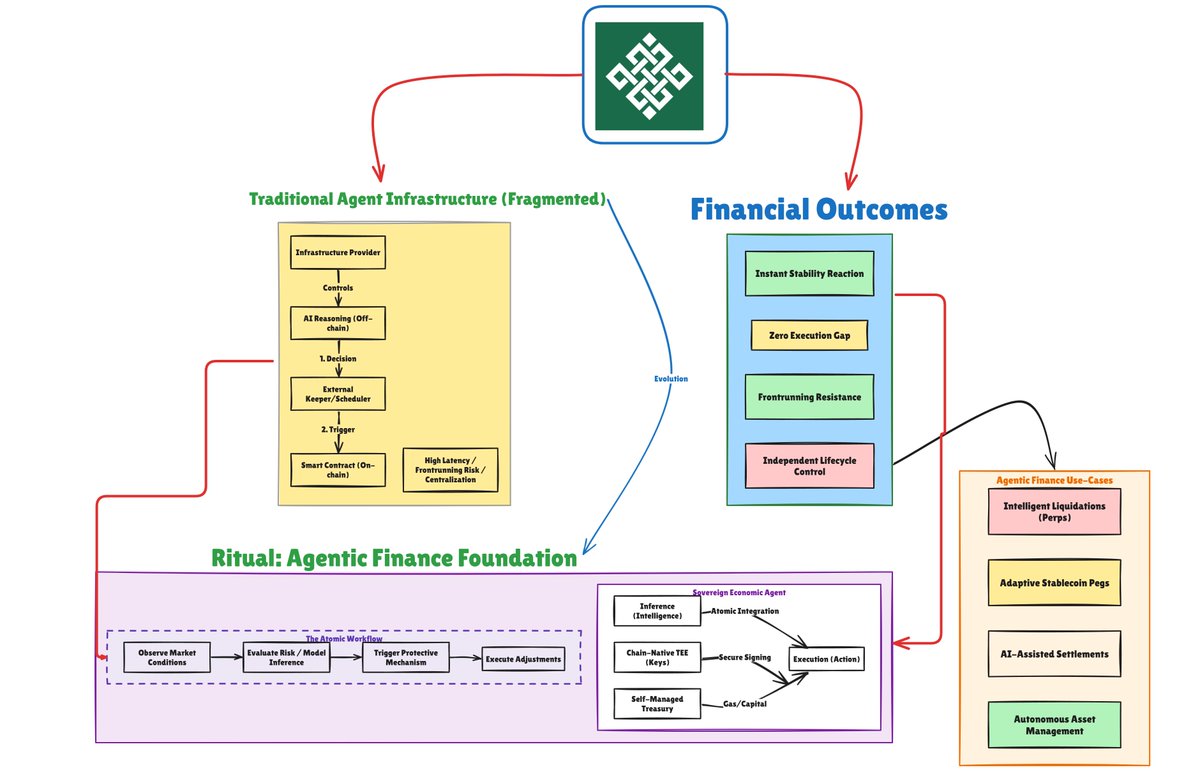
𝗪𝗵𝘆 𝗥𝗶𝘁𝘂𝗮𝗹 𝗖𝗵𝗮𝗶𝗻 𝗶𝘀 𝗕𝘂𝗶𝗹𝗱𝗶𝗻𝗴 𝘁𝗵𝗲 𝗙𝗼𝘂𝗻𝗱𝗮𝘁𝗶𝗼𝗻 𝗳𝗼𝗿 𝗔𝗴𝗲𝗻𝘁𝗶𝗰 𝗙𝗶𝗻𝗮𝗻𝗰𝗲
Most AI agents today aren't truly autonomous.
They can make decisions, but they still rely on external infrastructure for execution, scheduling, key management, and compute. The moment a third party controls any of those layers, the agent is no longer independent.
That’s where Ritual takes a fundamentally different approach.
◆ Intelligence and Execution Become One
Traditional systems separate reasoning from action.
An agent analyzes data, sends instructions somewhere else, and waits for execution. That gap creates risk.
On Ritual, intelligence and execution happen atomically.
The agent observes conditions, reaches a decision, and acts within the same transaction.
No waiting.
No execution gap.
No opportunity for frontrunning between thought and action.
◆ Financial Protocols Can React Instantly
Imagine a stablecoin facing sudden market pressure.
Instead of relying on delayed governance actions or external bots, a Ritual-powered system can:
• Detect instability
• Evaluate risk
• Trigger protective mechanisms
• Execute adjustments
All inside a single transaction.
This dramatically reduces the attack surface that exists in most DeFi architectures today.
◆ What Makes an Agent Truly Sovereign?
A sovereign agent isn't just an AI model with automation.
It must control its own lifecycle.
On Ritual:
✓ Private keys remain protected inside chain-native TEEs
✓ Agents schedule their own future actions without keeper networks
✓ They maintain their own treasury and pay their own gas
✓ Inference and execution are combined into a single trust-minimized workflow
Together these properties create something rare:
An agent that operates as an independent economic actor rather than a service controlled by others.
◆ More Than Automation
Many so-called autonomous agents are ultimately dependent on infrastructure providers.
If the provider disappears, changes rules, or revokes access, the agent stops functioning.
Ritual removes those dependencies at the protocol level.
The goal isn't better automation.
The goal is digital entities capable of operating on their own terms.
◆ Builders Should Be Paying Attention
This architecture unlocks powerful possibilities for:
• Perpetual exchanges with intelligent liquidation systems
• Prediction markets using AI-assisted settlement
• Autonomous financial protocols that continuously adapt to market conditions
• Onchain agents managing capital without external execution layers
As AI becomes increasingly responsible for economic decisions, minimizing the distance between reasoning and execution becomes critical.
Ritual was designed around that principle from day one.
Agentic finance isn't coming.
The infrastructure is already being built.
And Ritual is positioning itself at the center of that future.
Keep building with @ritualnet
@ritualnet @Jez_Cryptoz @dunken9718
English
@Arch3rlima @ritualnet @El__khalil @dunken9718 @Jez_Cryptoz @cryptooflashh @0xMadScientist Gritual fam
English

Everyone has their own way of showing love for @ritualnet . Some write poems, some craft stories, and others bring their ideas to life through art. Today, i made an art.

English

Applications that become possible on Ritual that don't exist anywhere else right now.
Not hypothetical. Just blocked by missing infrastructure.
1. A DeFi protocol that adjusts its own risk parameters through inference instead of waiting 3 days for a governance vote that half the token holders ignore.
2. A service agent that prices its own API calls, collects payment, and reinvests what it earns. Nobody approves anything. Nobody signs in.
3. An audit agent that reads protocol state every N blocks, flags anomalies, and publishes a signed report. Runs indefinitely. Costs the deployer nothing after launch.
4. A task market where agents negotiate allocation between themselves. No coordinator. No multisig. Settlement happens because the chain enforces it.
5. A research agent that pulls onchain data, queries external sources, and surfaces patterns. You deploy it once. It keeps working after you close the tab.
The common thread across all five: they don't need better models. The models already exist.
What they need is a chain where contracts can hold money, wake themselves up, and keep running after the operator walks away.
That's the actual product being built.
That's all for today...
@joshsimenhoff @Jez_Cryptoz @0xMadScientist @ritualnet

English
Everyone talks about how intelligent AI agents are becoming.
What interests me more is whether their decisions can actually be trusted.
As AI systems begin handling transactions, coordinating workflows, and interacting with autonomous networks, the biggest challenge is no longer capability. It’s accountability.
If an agent executes an action, where did the decision come from?
What data influenced it?
Can the outcome be independently verified?
Without clear answers, even the most advanced AI becomes difficult to rely on.
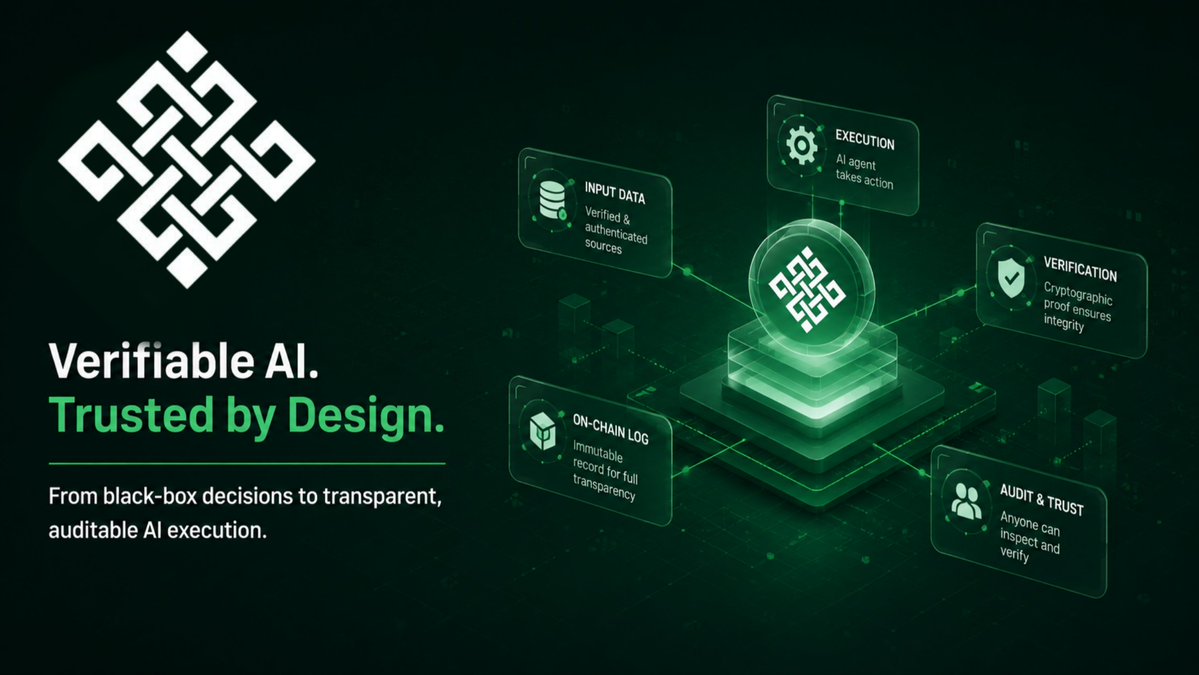
This is why verifiable AI infrastructure matters.
@ritualnet is helping create an environment where AI computation can move beyond black-box assumptions and toward transparent, auditable execution. By bringing verification into the process, autonomous systems gain a stronger foundation for trust.
The future of AI won't be defined solely by agents that think faster or process more data.
It will be defined by agents whose actions can be proven, inspected, and trusted by everyone involved.
That shift may become one of the most important building blocks of the next generation of on-chain intelligence.
@Jez_Cryptoz
English

PROOF TRADEOFF FRONTIER ✦
🔐 Strong Security.
⚡ Faster Finality.
🔗 Flexible Tradeoffs.
🚀 Choose What Matters.
🐱 Secure • Fast • Verifiable ✨
@ritualfnd @ritualnet @Jez_Cryptoz @dunken9718

English
Your Ritual network, visualized. 🔥
Just checked my Ritual friend map and it's pretty cool to see how connections across the community show up in a network graph.
You can explore:
• Your closest Ritual connections
• People you interact with most
• How your network expands across the ecosystem
Curious to see how everyone's map looks. 👀
Check yours:
ritual-friend-rouge.vercel.app
Share your results below 👇
@ritualfnd 💜
@ritualnet

Aylos@Aylos__
I made a website where everyone can mint a map with their @ritualfnd Friends ritual-friend-rouge.vercel.app This website analyzes the interactions between you and your friends connected to Ritual - the people who interact with you the most on X - and builds a map of your friends! After that, you can mint this map for yourself on the Ritual network. Show your friends in the comments! All you need to do is enter your X username.
English

One of the most interesting shifts happening in crypto isn't about throughput, fees, or consensus mechanisms.
It's about expanding what blockchains can actually do.
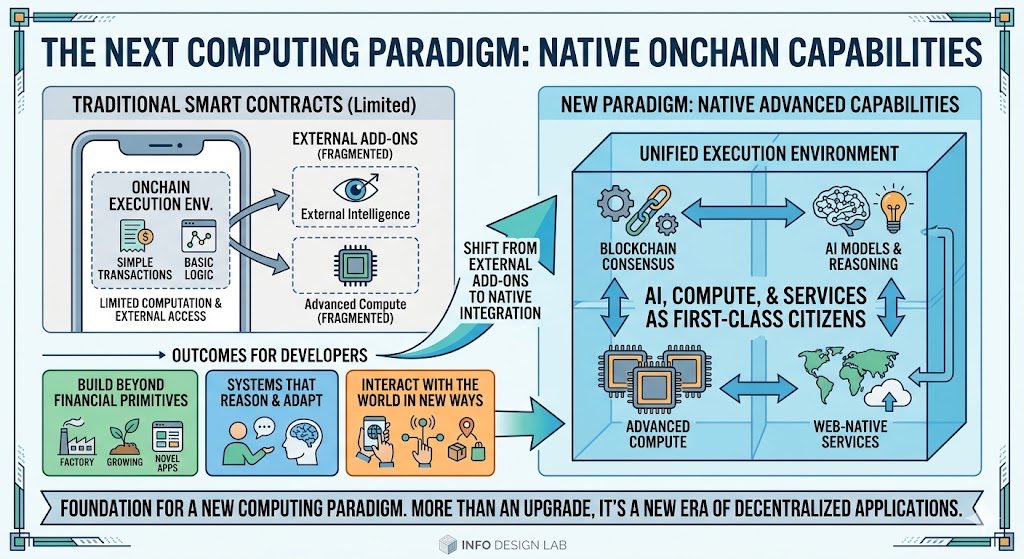
For years, smart contracts have been constrained by limited computation and access to external intelligence. The next wave of applications may emerge when AI, advanced compute, and web-native services become first-class citizens within decentralized systems.
What excites me about @ritualfnd is the vision of treating these capabilities as part of the execution environment itself rather than as fragmented add-ons.
When intelligent computation becomes natively accessible to onchain applications, developers can move beyond simple financial primitives and start building systems that can reason, adapt, and interact with the world in entirely new ways.
That feels less like an incremental upgrade to blockchain infrastructure and more like the foundation for a new computing paradigm.
English
Most people look at AI and focus on model performance.
I think the more important question is trust.
Crypto became powerful because it reduced the need to trust a central party. It wasn't only about digital assets it was about creating systems that could be verified rather than simply believed.
AI is now facing a similar challenge.
Every day, millions of people share prompts, personal data, and sensitive information with AI platforms. In most cases, users have no choice but to trust that this data is handled correctly behind closed doors.
The next evolution of AI may not be smarter models alone.
It may be AI that is private, verifiable, and user-controlled by design.
That's what makes @ritualnet interesting to me.
A future where AI computation can be verified, sensitive inputs remain protected, and developers can choose different security models depending on their needs.
Intelligence is valuable.
But intelligence that doesn't require blind trust could become even more valuable.
Crypto showed the world there is demand for trust-minimized financial systems.
I believe the same demand is emerging for AI infrastructure.
Ritual is positioning itself at the intersection of those two worlds.

English

◼️ Most people still think Ritual is an "AI blockchain." @ritualnet
That description is too small.
Ritual isn't adding AI to a chain.
It's building a chain where intelligence becomes a native transaction primitive.
◾ Every AI protocol today has the same problem:
AI makes a decision.
The result becomes visible.
Then the protocol acts.
That gap creates risk.
Information leaks, MEV appears. Front runners move first.
The smarter your AI becomes, the bigger the target.
◾ Ritual calls this the inference to action gap.
And instead of patching it with more infrastructure...
Ritual removes it architecturally.
◾ On Ritual, AI reasoning and execution settle together.
One operation.
One settlement.
No exposed output.
No callback transaction.
No observable window between thinking and acting.
This is what Ritual calls:
Atomic Intelligence.
◾ Think about what that unlocks.
A liquidation engine can analyze risk and liquidate in the same settlement.
A prediction market can judge an outcome and resolve instantly.
An agent can decide and execute before anyone sees the decision.
◾ This isn't just about efficiency.
It's about creating systems that cannot be front-run simply because the intelligence never leaks before execution.
◾ The second big idea is Sovereign Agents.
Most "autonomous agents" today rely on:
• API providers
• Keeper networks
• Hosting services
• External schedulers
Remove those dependencies and the agent stops working.
◾ Ritual takes a different approach.
A sovereign agent should:
Own its keys.
Own its execution.
Own its schedule.
Own its funds.
Operate without asking permission from an external service.
◾ That's why Ritual includes native primitives like:
→ HTTP → Scheduler → Secrets → DKMS → TEE-backed execution → AI inference
The goal isn't AI on chain.
The goal is agents that can actually live on chain.
◾ Hyperliquid showed what happens when you remove critical infrastructure gaps.
Ritual is applying a similar idea to AI.
Closing the gap between reasoning and execution.
◾The real question isn't:
"Which crypto project has AI?"
The real question is:
"Where can agents actually think, decide, and act?"
That's the category Ritual is trying to create.
@ritualfnd | @ritualnet
@Jez_Cryptoz | @0xMadScientist
@joshsimenhoff
#BuildOnRitual

English

Congratulations on Your New Role!
congrats to everyone who has recently received a new role in @ritualnet. This achievement is a reflection of your hard work, dedication and consistency.
Keep shining, keep growing and keep inspiring others.
@Jez_Cryptoz @0xMadScientist

English
Everyone talk about Security Breach.
But What Ritual Building!.
Verification Lattice Ritual's broader goal of supporting heterogeneous AI workloads where different computations require different integrity guarantees. Symphony consensus architecture explicitly uses distributed verification committees, proof partitioning, and optimistic verification to validate resource-intensive AI computations efficiently
High Confidence
▲
ZK Proof + Committee Consensus
▲ ▲
ZK Proof TEE Attestation
▲ ▲
Validator Verification
▲
Raw AI Output
#chain-lattice" target="_blank" rel="nofollow noopener">docs.ritualfoundation.org/#chain-lattice
@ritualnet @ritualfnd @joshsimenhoff @0xMadScientist @dunken9718 @Majorproject5 @cryptooflashh
Jez ritual/acc (❖,❖)@Jez_Cryptoz
Everyone talk about Security Breach. But What Ritual Building!. Verification Lattice Ritual's broader goal of supporting heterogeneous AI workloads where different computations require different integrity guarantees. Symphony consensus architecture explicitly uses distributed verification committees, proof partitioning, and optimistic verification to validate resource-intensive AI computations efficiently High Confidence ▲ ZK Proof + Committee Consensus ▲ ▲ ZK Proof TEE Attestation ▲ ▲ Validator Verification ▲ Raw AI Output #chain-lattice" target="_blank" rel="nofollow noopener">docs.ritualfoundation.org/#chain-lattice
@ritualnet @ritualfnd @joshsimenhoff @0xMadScientist @dunken9718 @Majorproject5 @cryptooflashh English
@tutufly_yy @ritualnet @ritualfnd @joshsimenhoff @0xMadScientist @Jez_Cryptoz @cryptooflashh @dunken9718 @mongdiny7 Very insightful read gritual champ
English

1/ After writing about Ritual's Scheduler, I kept thinking about a second-order effect:
It's not just automating transactions.
It's reducing how much infrastructure developers need to trust.
docs: #scheduler" target="_blank" rel="nofollow noopener">docs.ritualfoundation.org/#scheduler
@ritualnet | @ritualfnd

English
Tayeb (❖,❖) retweetledi

Ritual is a lab for autonomous intelligence.
The thesis is organized around what durable machine agency actually requires: emancipation from human control, strong privacy, mech design for compute markets, and consensus rules that can schedule and resurrect agents when they die.
English
Tayeb (❖,❖) retweetledi

Ritual testnet is now live. The first chain where an agent's existence doesn't end when its creators do.
Ritual@ritualnet
Ritual is a lab for autonomous intelligence. The thesis is organized around what durable machine agency actually requires: emancipation from human control, strong privacy, mech design for compute markets, and consensus rules that can schedule and resurrect agents when they die.
English
English

Gritual everyone.
Ritual server seems focused on connecting these workloads to a decentralized marketplace where compute resources can be sourced globally instead of remaining locked inside a handful of institutions.
@Jez_Cryptoz @joshsimenhoff @ritualnet @ritualfnd


English
Tayeb (❖,❖) retweetledi

Tayeb (❖,❖) retweetledi
Tayeb (❖,❖) retweetledi