
Data Donor Card
24 posts

Data Donor Card
@datadonorcard
Your digital legacy can unlock tomorrow's breakthroughs? https://t.co/e4iQkVi1as [email protected]
Katılım Kasım 2024
923 Takip Edilen70 Takipçiler
The digital afterlife industry promises to recreate people from digital data. How do you feel about this? What value do you place on your digital legacy and how would you like it to be used? Take the Data Donation Card Survey
#responses" target="_blank" rel="nofollow noopener">docs.google.com/forms/d/1aO6pC…
English
please take the Data Donation Card survey! forms.gle/ty6FqbzCGE6zQG…
English
Please take the Data Donor Card Survey! (about 5 minutes) forms.gle/ob2hpMj1bLTXyx…
English
Data Donor Card retweetledi

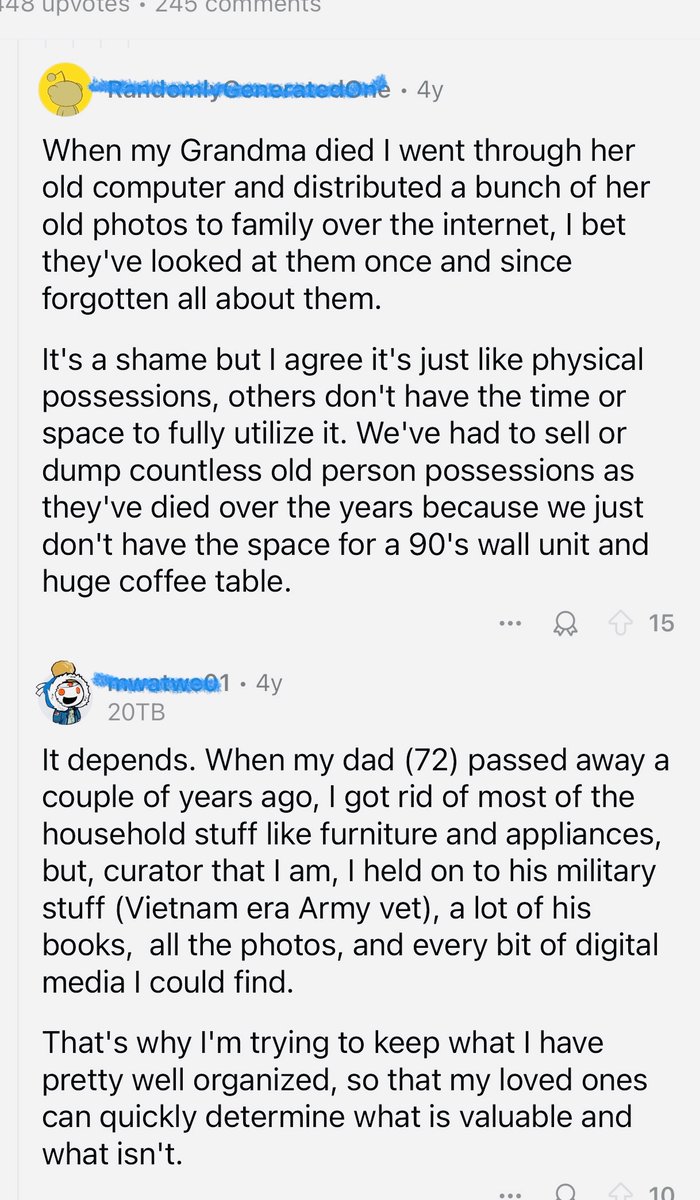
datadonorcard.org survey to see how people feel about their data after deathAll participation very much appreciated! @datadonorcard @UCD_Research @hci_ucd @UCD_iSchool @DiscussAI @AdaptCentre @DREAL_ie @elonmusk #datacontroller #ai #data #dataethics #privacy #datapr
English
English
Data Donor Card retweetledi

🚨 BREAKING: X's updated Terms of Service take effect TOMORROW. Pay attention to the AI clause:

English
Data Donor Card retweetledi
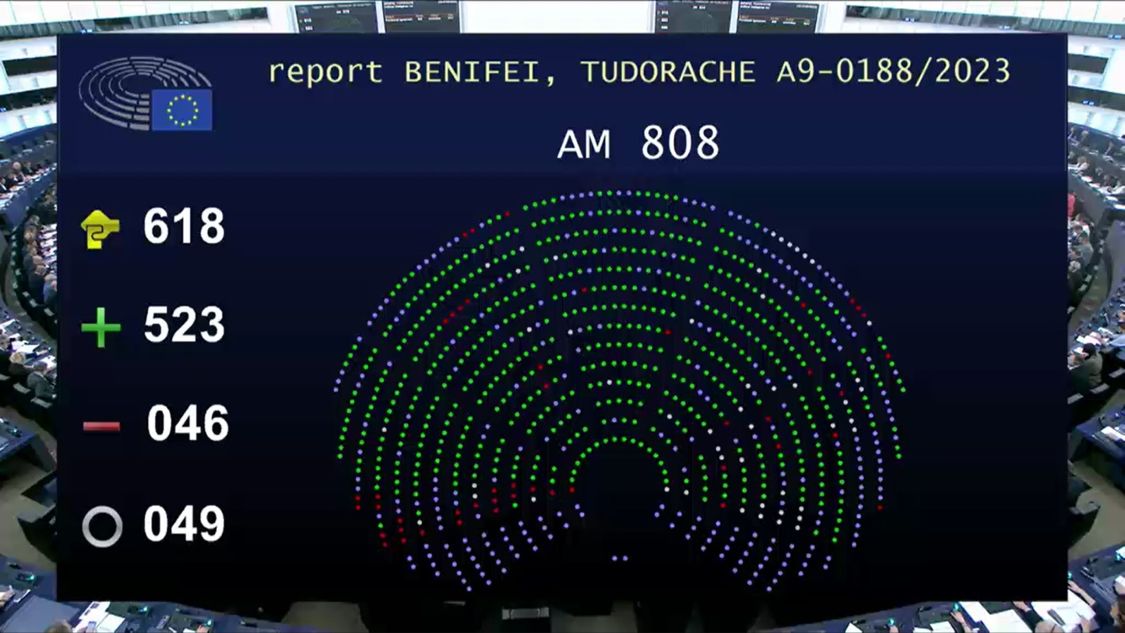
🚨BREAKING: The European Parliament has just APPROVED the AI Act. What everyone should know:
➵ The AI Act follows a risk-based approach. Some AI systems are banned, such as those involving:
- Cognitive behavioral manipulation of people or specific vulnerable groups;
- Social scoring: classifying people based on behavior, socioeconomic status, or personal characteristics;
- Biometric identification and categorization of people;
- Real-time and remote biometric identification systems, such as facial recognition.
➵ Some AI systems fall in the "high-risk" category, such as those involving:
- Critical infrastructures (e.g. transport) that could put the life and health of citizens at risk;
- Educational or vocational training that may determine the access to education and professional course of someone’s life (e.g. scoring of exams);
- Safety components of products (e.g. AI application in robot-assisted surgery);
- Employment, management of workers, and access to self-employment (e.g. CV-sorting software for recruitment procedures);
- Essential private and public services (e.g. credit scoring denying citizens opportunity to obtain a loan);
law enforcement that may interfere with people’s fundamental rights (e.g. evaluation of the reliability of evidence);
- Migration, asylum, and border control management (e.g. automated examination of visa applications);
- Administration of justice and democratic processes (e.g. AI solutions to search for court rulings).
➵ High-risk AI systems will be assessed before being put on the market and also throughout their lifecycle. People will have the right to file complaints about AI systems to designated national authorities.
➵ Generative AI, like ChatGPT, will not be classified as high-risk but will have to comply with transparency requirements and EU copyright law. Some of the obligations are:
- Disclosing that the content was generated by AI;
- Designing the model to prevent it from generating illegal content;
- Publishing summaries of copyrighted data used for training.
➵ The AI Act is expected to officially become law by May or June, and its provisions will start taking effect in stages:
- 6 months later: countries will be required to ban prohibited AI systems;
- 1 year later: rules for general-purpose AI systems will start applying;
- 2 years later: the whole AI Act will be enforceable.
➵ Fines for non-compliance can be up to 35 million Euros or 7% of worldwide annual turnover.
➵ If you want to learn more about the AI Act, including challenges, opportunities, and practical insights, join my live session with @BertuzLuca, @JcMalgieri & @RistoUuk on April 4th (register using the link below).
English
hseresearch.ie/data-sources/ A lot of data needs to be updated. What impact does this have on research?
English
#data #google_vignette" target="_blank" rel="nofollow noopener">cnet.com/news/privacy/w…. .
From AI analysing medical data to 3D-printed organs, technology is revolutionising how we understand and improve end-of-life care. These advances help us save more lives and learn from those we've lost. #BioTech #MedicalInnovation
English
How data lives on: Medical schools use body donations to train future doctors, organ donation saves lives, and health records help researchers tackle diseases. Your data can keep helping others even after you're gone. #DataForGood #PublicHealth"
English
Anyone with a digital footprint can become a data donor. Your data is valuable for a variety of research purposes. Data donation allows your digital legacy to contribute to advancements in healthcare for future generations. Let us know what you think datadonorcard.org
English