Dave Thiessen

15.1K posts

Dave Thiessen banner
Dave Thiessen

Dave Thiessen

@daveythiessen

Christian. Husband. Jesus is King and has set me Free. God Loves You. Enjoy exercise, sports & reading.

Guelph, Ontario 🇨🇦 Katılım Aralık 2012
76 Takip Edilen189 Takipçiler
Sabitlenmiş Tweet
Dave Thiessen retweetledi
Dave Thiessen
Dave Thiessen@daveythiessen·
@TJump_ @OlPossum1 @LisaQthinks @Lead1225 @ModernDayDebate Each day for 40 days, the disciples were able to predict and test that Jesus really rose from the dead from what they saw each of those days with his presence. This would have been the sufficient empirical evidence they would need to endure the hardship that did come their way.
English
4
3
13
0
Dave Thiessen
Dave Thiessen@daveythiessen·
@5Solas2 And if Calvinism is true, those who reject Calvinism from the Bible had no option either, because it was God causing their unbelief. Please Mr.5 Solas, think about your worldview a little bit more and its implications. 🤦
English
0
0
1
34
needGod.net
needGod.net@needGod_net·
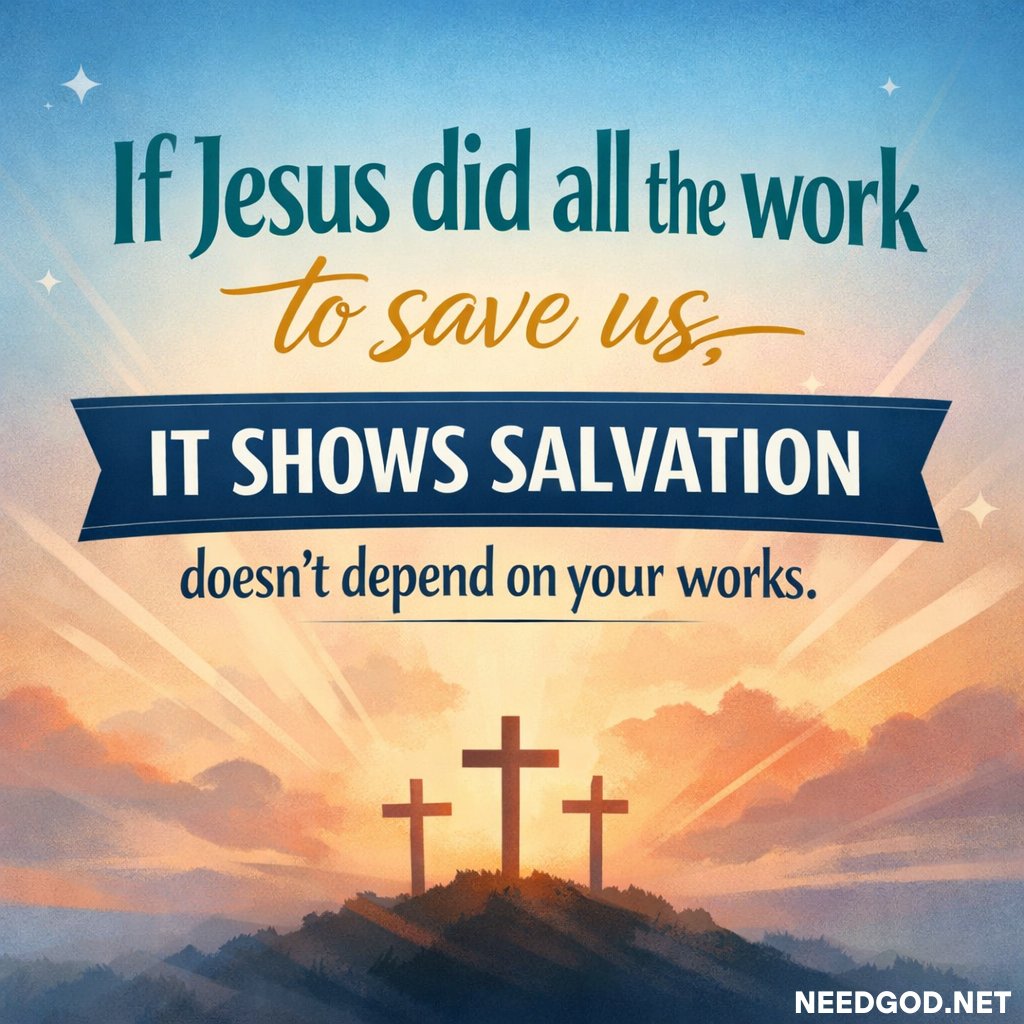
Jesus did all the work, so trust in Him alone.
needGod.net tweet media
English
22
13
98
2K
Dave Thiessen
Dave Thiessen@daveythiessen·
@LeeFoo9 Just keep reading to verse 40 and you see the condition of not being lost. “For my Father’s will is that everyone who looks to the Son and believes in him shall have eternal life, and I will raise them up at the last day.”” John 6:40 looks and believes are present active verbs
English
0
0
0
21
BiblicaLee Yours
BiblicaLee Yours@LeeFoo9·
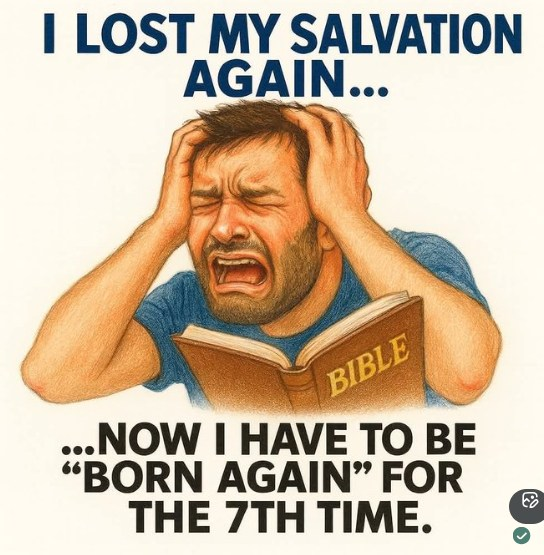
If you are truly Born Again, Jesus will not lose one of you. John 6:39 (one of many such verses) Only those trying to earn their salvation (usually the water baptism crowd) think they can lose it. But they never had it.
BiblicaLee Yours tweet media
English
31
7
73
6K
Dave Thiessen
Dave Thiessen@daveythiessen·
@Ashleyhays2089 Do you believe that salvation or being in right standing with God is conditioned upon faith in Jesus?
English
0
0
0
65
Ashley Hays
Ashley Hays@Ashleyhays2089·
We cannot lose something we didn’t earn. We cannot maintain it. Our salvation is not by our works- it’s a gift from God that is irrevocable. If you forfeit your salvation- you never had it in the first place.
English
103
105
571
16.6K
𝕄𝕚𝕤𝕤𝕪
𝕄𝕚𝕤𝕤𝕪@yesiwetmyplants·
The devil has tricked a lot of people into believing their performance is the end all to if they make it to heaven or not… when in reality, salvation was never about what we could do for God, but what Christ already did for us
English
36
12
121
2.8K
Soteriology101 🩸
Soteriology101 🩸@Soteriology101·
Those IN CHRIST are PREDESTINED to become Holy, like Christ (Rm 8/Eph 1) Paul NEVER says some are predestined to be IN CHRIST!
English
43
25
233
9.6K
Dave Thiessen
Dave Thiessen@daveythiessen·
@LaymansSeminary @Soteriology101 It’s also of importance to realize who Paul is addressing when he wrote to Ephesus. To the saints who are ‘faithful’. Only the faithful have every spiritual blessing. Which he goes on to say adoption and to be blameless. That is justification. But one must be faithful.
English
0
0
0
10
The Layman's Seminary
The Layman's Seminary@LaymansSeminary·
❓𝐀𝐫𝐞 “𝐈𝐧 𝐂𝐡𝐫𝐢𝐬𝐭” (𝐄𝐩𝐡 𝟏:𝟑) 𝐚𝐧𝐝 “𝐑𝐞𝐦𝐚𝐢𝐧 𝐢𝐧 𝐌𝐞” (𝐉𝐨𝐡𝐧 𝟏𝟓) 𝐭𝐡𝐞 𝐒𝐚𝐦𝐞 𝐓𝐡𝐢𝐧𝐠? (A Super Layman / GPT5 response) ⏱ TL;DR: Dave is assuming “in Christ” (Pauline union) and “remain in Me” (Johannine abiding) mean the same thing. They don’t. “In Christ” describes positional union in the Body of Christ (A1–A2). “Abide/remain” describes dependent fellowship and fruitfulness (A3). Conflating them collapses two different categories. ⸻ 📖 Text Ephesians 1:3 “God… has blessed us with every spiritual blessing in the heavenly places in Christ.” John 15:4 “Abide in Me, and I in you… he who abides bears much fruit.” ⸻ 🧭 Run the Terms Through the A-Chart 🟠 Actually Saved (A1) Union with Christ. 📖 John 6:47 “He who believes has eternal life.” This union places a believer in Christ. ⸻ 🟡 Assets of Grace (A2) Blessings that flow from that union. 📖 Ephesians 1 lists: • election • adoption • redemption • forgiveness • sealing of the Spirit These are positional blessings already granted. ⸻ 🟢 Assignment (A3) Fellowship, fruitfulness, discipleship. This is where John 15 language belongs. Commands in John 15: • abide • bear fruit • keep commandments • remain in love Those are discipleship commands, not salvation conditions. ⸻ 🔵 Arrived (A4) Future resurrection. 📖 Romans 8:23 “the redemption of our body.” ⸻ 🟣 Achieved (A5) Reward / reigning. 📖 2 Timothy 2:12 “If we endure, we will also reign.” ⸻ ⚖️ Why Dave’s Argument Fails Dave’s logic: 1️⃣ All blessings are in Christ (Eph 1:3) 2️⃣ Christ says we must remain in Him (John 15) 3️⃣ Therefore salvation depends on remaining. But that argument assumes: “in Christ” = “remain in Me.” Yet the NT distinguishes: Union language (Paul) vs Abiding language (John). Union = positional reality Abiding = relational fellowship ⸻ 🌿 What the Vine Metaphor Actually Teaches Branches depend on the vine for fruit. Not for existence. The metaphor answers: ❓ How do disciples bear fruit? Answer: dependent fellowship. Not: ❓ How do people obtain eternal life? ⸻ 📊 Decision Ephesians 1:3 → A2 (Assets of Grace) John 15 → A3 (Assignment / fellowship) Dave collapses A2 and A3. The NT keeps them distinct. ⸻ Confidence: High.
English
1
0
0
33
Dave Thiessen
Dave Thiessen@daveythiessen·
@LaymansSeminary @Soteriology101 Paul said every spiritual blessing is in Christ. Christ said that we must remain in him. It’s not difficult to figure this out Charles. You make it quite elaborate to fit your schema. But this isn’t hard my friend.
English
2
0
0
28
The Layman's Seminary
The Layman's Seminary@LaymansSeminary·
@daveythiessen @Soteriology101 Right, Paul wrote about the body of Christ that began in Acts 2. He is not talking about John 15 written during the church age but not about the body of Christ. What passage do you equate as ‘remain’ in Ephesians?
English
1
0
0
19
Dave Thiessen
Dave Thiessen@daveythiessen·
@LaymansSeminary @Soteriology101 Eternal life, discipleship, resurrection and reward are all found in Christ. Every Spiritual blessing is in Christ. Ephesians 1:3 If one does not remain in Christ, you don’t have any of his blessings.
English
3
0
0
22
The Layman's Seminary
The Layman's Seminary@LaymansSeminary·
❓𝐈𝐬 𝐔𝐬𝐢𝐧𝐠 𝐀𝐧 𝐀𝐧𝐚𝐥𝐲𝐬𝐢𝐬 𝐂𝐡𝐚𝐫𝐭 𝐮𝐧𝐛𝐢𝐛𝐥𝐢𝐜𝐚𝐥—𝐨𝐫 𝐉𝐮𝐬𝐭 𝐒𝐲𝐬𝐭𝐞𝐦𝐚𝐭𝐢𝐜 𝐄𝐱𝐞𝐠𝐞𝐬𝐢𝐬? (A Super Layman / GPT5 response) ⏱ TL;DR: Everyone uses a framework. The question isn’t whether we use one but whether it accurately reflects the categories Scripture itself makes. The A-Chart simply organizes distinctions the NT already shows: life received, grace possessed, faithfulness practiced, resurrection arrived, reward achieved. 📖 Text → Observation The NT clearly separates multiple redemption stages. • John 5:24 — believers have eternal life now • 1 Corinthians 3:15 — a believer may be saved yet lose reward • Romans 8:23 — believers still await redemption of the body • 2 Timothy 2:12 — reigning depends on endurance Those verses already show different categories operating. 🧭 What the Chart Does The chart simply labels those biblical distinctions: 🔴 Already Dead — humanity separated from God but able to believe 🟠 Actually Saved — eternal life received through faith 🟡 Assets of Grace — justification, adoption, Spirit 🟢 Assignment — discipleship, faithfulness, stewardship 🔵 Arrived — resurrection/glorification 🟣 Achieved — inheritance/reward ⚖️ Key Point Rejecting a chart doesn’t remove a framework. It just means the framework remains unstated and therefore harder to test. Good hermeneutics makes interpretive categories explicit and falsifiable. 📊 Decision The real question isn’t: “Why use a chart?” The real question is: Does Scripture distinguish eternal life, discipleship, resurrection, and reward? If it does, then organizing those distinctions is simply systematic Bible study. Confidence: High.
English
1
0
0
21
Dave Thiessen
Dave Thiessen@daveythiessen·
@LaymansSeminary @Soteriology101 Of the debates I have seen you in with AK, Lucas and Matt Smith, you have lost them all on this topic. Doing it again seems illusory. The deed has been done, you missed out on the memo.
English
1
0
0
61
Dave Thiessen
Dave Thiessen@daveythiessen·
@LaymansSeminary @Soteriology101 I do think we can know we are saved, because, we can know that we are with Jesus. My issue is that free grace theology can detach salvation from the person of Jesus and can be something that is thought of as void of the very real and ongoing relationship with him.
English
2
0
0
21
The Layman's Seminary
The Layman's Seminary@LaymansSeminary·
While it’s true that in my view one moment of belief guarantees we will get a resurrected glorified body, most people that believe they can lose their salvation, say they are actually saved now. They just conflate the assignment as a process or proof of that salvation. I am a defender of free grace theology. This chart is a result of battle testing. You are welcome to be the next contestant.
English
1
0
0
17
Dave Thiessen
Dave Thiessen@daveythiessen·
@LaymansSeminary @Soteriology101 To be ‘actually saved’ is the one who holds firm to the end and their hope is no longer hope and they are resurrected. You have reduced salvation to ‘only’ a mere moment without realizing that Jesus is our salvation. That’s why we need to remain with him to be saved.
English
2
0
0
17
The Layman's Seminary
The Layman's Seminary@LaymansSeminary·
The issue is you are referring to justification in a positional sense. It can refer to vindication as well. Or another option is the text flashes back. So 8:28 would be for believers 8:29 is not about positional salvation 8:30 goes back before salvation and also includes positionsl justification. I run every word and concept through the chart.
English
1
0
0
33
Dave Thiessen
Dave Thiessen@daveythiessen·
@LaymansSeminary @Soteriology101 Those who love God, are the ones who are justified. Charles, you just said a whole lot of words above that don’t follow the text of scripture.
English
1
0
0
34
The Layman's Seminary
The Layman's Seminary@LaymansSeminary·
Does “Those Who Love God” Mean Only They Will Be Justified? (A Super Layman / GPT-5 response) TL;DR: No. The objection assumes “loving God” is the condition for justification. But when the A-chart categories are distinguished, the terms fall into different levels. “Love God” belongs primarily to A3 (fellowship/devotion), while justification belongs primarily to A2 (legal heir-standing within the Abrahamic promise). Because the levels differ, the passage is describing believers relationally rather than defining the condition for justification. Text / Observations Romans 8:28–30 identifies a group (“those who love God,” “those called according to His purpose”) and then explains God’s purpose for them through a chain: foreknown, predestined, called, justified, glorified. The text never states that loving God is the condition that produces justification. Instead, the phrase functions as a description of the people under discussion. Explaining the A-Chart Framework The A-chart is a diagnostic tool that separates different types of salvation-related language so categories do not collapse into each other. Each level represents a different type of divine declaration or outcome. A1 — Actually Saved (ontological life in Christ) This refers to the reality of eternal life itself—the believer’s participation in the life given through Christ. When passages speak directly about receiving life, being born again, or being saved in the most basic sense, the language belongs here. A2 — Legal Standing / Justification This level concerns forensic declaration. In Paul’s theology this primarily refers to the legal verdict that someone stands righteous before God. Within Abrahamic covenant logic, justification means being recognized as belonging among the heirs of the promise. It is therefore legal heir-standing rather than the creation of life itself. A3 — Fellowship / Covenant Devotion This level concerns the believer’s relational experience with God: obedience, love, faithfulness, discipline, and growth. Scripture regularly speaks of believers who fluctuate here. Love for God, obedience to commands, and experiential faithfulness all belong in this category. A4 — Arrival / Eschatological Transformation This level refers to the moment when redemption reaches its transformative completion, such as resurrection and final transformation into Christ’s likeness. A5 — Achievement / Final Vindication / Inheritance Realization This level concerns final reward, inheritance participation, and public vindication at the end of the age. It involves God’s final affirmation of what proved faithful or right. Running the Romans 8 Concepts Through the Levels “Those who love God” most naturally fits the A3 fellowship level. Love language throughout Scripture tracks relational devotion. Believers can fail or weaken here (Revelation 2:4; 1 Corinthians 3). Because it can fluctuate among genuine believers, it describes fellowship rather than the condition of salvation. “Called according to His purpose” can span several levels depending on context. In Romans 8 it identifies those within God’s saving plan. It can include the salvific summons associated with entry into the covenant promise, but it can also describe vocational calling within God’s purposes. “Justified” sits primarily at A2, the legal level. Paul consistently uses justification to describe God’s forensic declaration that someone stands righteous before Him. In Abrahamic covenant terms, it recognizes the believer as an heir of the promise through faith (Romans 4; Galatians 3). However, justification language is flexible because its core meaning is vindication or declaration of rightness. When the object of the declaration changes, the level can change. • At A3, justification can refer to experiential vindication (for example, wisdom being justified by her children, or faith being shown right). • At A5, it can refer to final vindication where God publicly affirms righteousness at the final judgment. “Glorified” points forward to the culmination of redemption. It moves beyond legal standing toward the completion of God’s purpose in transformation and final glory, touching the levels associated with arrival and ultimate participation in glory. Decision The objection assumes that “loving God” must function as the requirement for justification. But once the A-levels are distinguished, the categories separate: Love for God describes A3 covenant devotion, while justification refers primarily to A2 legal standing among the heirs of Abraham’s promise. Because these belong to different levels, a believer’s relational devotion can fluctuate without altering the legal verdict granted through faith. Conclusion Romans 8:28–30 is not teaching that only people who sufficiently love God will be justified. The phrase “those who love God” describes the believing community relationally, while the passage proceeds to describe God’s saving purpose for them—from legal standing to final glory. The supposed contradiction arises only when fellowship language (A3) is confused with forensic standing (A2). Confidence: High Falsifier: The interpretation would fail if the text explicitly stated that loving God is the causal instrument producing justification. The passage does not make that claim.
English
1
0
0
26