David Wineberg

1.6K posts

David Wineberg banner
David Wineberg

David Wineberg

@davidwineberg

Author of The Straight Dope https://t.co/uxHXubFqfT Weekly column at https://t.co/g0jK1MFE6n where I have 108k followers. Top writer in politics, history, books...

New York Katılım Mayıs 2013
19 Takip Edilen318 Takipçiler
David Wineberg
David Wineberg@davidwineberg·
@ctindale But this is precisely what capitalism portends. Not deeper industrialisation (where did you get that from?) - but more money for a few. Financialisation is the shortcut, without getting hands dirty. Not a broader class of owners and makers. Just more cash, faster.
English
0
0
0
100
🇦🇺Craig Tindale
Central Bankers they don’t serve capitalism. They serve their own interests. If capitalism were their aim, we would have built stronger industries, deeper productive capacity, and a broader class of owners, makers, engineers, farmers, builders and manufacturers. Instead, the system was selected for deindustrialisation. It rewarded financial extraction over production, asset inflation over wages, imports over national capability, and dependence over sovereignty. In the 17th century, a serf might work three days for the manor house. Today, many workers spend a similar portion of their lives working for the bank. The name and firm have changed, but the system is familiar. The modern worker is chained to his shelter by debt, rent, mortgages, fees, inflation and financial claims created by institutions that contribute little to the real economy. In a systemic sense, they are patristic; sure, they provide capital, though in this cycle, they provided capital to financialise the systems indentured workers. The banks don't support the economy. Too often, they sit above it. They create credit, expand asset prices, collect interest, and then claim they are the indispensable engine of prosperity. But when finance grows too large, it stops funding production and starts feeding on it. We stopped funding production decades ago. Which is the cycle? Every time banks and financial interests overstep, they become too greedy. Every time they become too greedy, they distort the economy. Every time they distort the economy, the political class eventually protects them instead of the public. Then the technocratic class arrives to justify the arrangement with complicated language, models, forecasts and moral lectures. But the outcome is fewer real industries, fewer independent producers, fewer competitive markets, and more dependence on a narrow class of financial and technological gatekeepers. Hamilton understood the importance of productive industry. Eisenhower warned against concentrated power and the military-industrial machine. Robert Menzies understood that national strength required more than consumption and financial speculation. Leaders of the past, whatever their flaws, often understood something many modern leaders have forgotten: liberty is not built on debt, dependence and imports. Freedom rests on the ability of a people to make things, defend themselves, feed themselves, power themselves and not be permanently beholden to foreign suppliers or domestic financiers. A nation that cannot produce is not truly sovereign. A nation that cannot manufacture becomes strategically weak. A nation that sells off its productive base and calls the result “efficiency” is not modernising, it is dismantling its own state. When production and finance fall out of balance, rivalry becomes inevitable. Nations that lose their industrial base become insecure. Nations that dominate supply chains become aggressive. Financial elites profit from instability, while ordinary people pay the price through inflation, unemployment, debt and war. Central banks and financial institutions may not print ammunition directly, but they create the conditions that make conflict more likely. They inflate assets, punish workers, reward speculation, and push nations into dependency. Then, when the imbalance becomes dangerous, the same class that caused the instability presents itself as the only class capable of managing it. Real capitalism requires competition, productive investment, broad ownership, failure for the incompetent, reward for the capable, and markets that are not permanently rigged in favour of insiders. But most of the modern economy is not that. It is dominated by duopolies, monopolies, cartels, too-big-to-fail banks, captured regulators, and technology platforms that behave more like private governments than companies. Capitalism exists as an ideal, and at certain points in the economic cycle, it briefly appears. But it rarely remains pure for long. Power concentrates. Finance captures politics. Corporations eliminate competitors. Banks socialise losses and privatise gains. The productive economy gets hollowed out while everyone is told this is progress. A free society cannot survive on financial engineering, imported goods, inflated property values and digital monopolies. It needs productive strength. It needs industry. It needs skilled workers. It needs competition. It needs national independence. Above all, it needs a system where money serves the real economy, not the other way around. Once finance becomes the master rather than the servant, liberty begins to disappear. And once a nation forgets how to make things, it eventually forgets how to defend itself.
English
57
74
309
35.1K
David Wineberg
David Wineberg@davidwineberg·
@ctindale Central banks are independent because they do not represent people, parties or gov't. They represent capitalism and so are sacred. They provide enough unemployment to keep wages down, and low inflation to maintain capital's value. Nothing more, nothing less. Welcome to the woke.
English
0
0
1
160
🇦🇺Craig Tindale
Viewed literally from my kitchen table, rather than from the padded cells of central banking, the whole racket becomes easier to understand. Central banks aren’t neutral temples of economic wisdom. They are, in practice, super lobby groups for finance, dressed up in the language of “independence.” They take the worker’s wage and the family home, the two things that should anchor ordinary life, and convert them into instruments for the banking sector to harvest and those harvests have been plentiful . Naturally , we are told this is all for our own good. The same old sermon from the same old banking priesthood. Yet look at the results. The west has been hollowed out and handed over to our rivals , The West has been financialised. Workers are being pushed into a modern form of debt serfdom, while the people who engineered the decay continue selling their snake oil as wisdom. Powell staying on is Shakespearean in the worst sense: the steward has emptied the kitchen, pawned the house, blamed the servants, and now insists he alone can restore order to the banquet. What they don’t understand is that it’s the end of the banker cycle not the beginning , it must end so the west may survive . It will almost certainly be a chaotic transition . Here is a more realistic central banking framework I prepared earlier . x.com/ctindale/statu…
Nick Timiraos@NickTimiraos

Former Philadelphia Fed president Patrick Harker offers a personal reflection upon Powell's decision to not leave the Fed board as his term as chair concludes: "Fed independence is not an abstraction. It is the daily practice of making decisions on the merits.... It is maintained by chairmen who absorb pressure and keep the room functioning, and sometimes by chairmen who delay their own retirement to keep the room standing. Jay has done both." linkedin.com/pulse/jay-powe…

English
15
39
183
17.2K
David Wineberg
David Wineberg@davidwineberg·
@ctindale It is why every civilizations disappear. The Fed is a new institution nongovernmental, but hosted by govt, to 1) maintain unemployment at a level satisfactory to capitalism, 2) keep inflation from eroding capital. The result is as you say.
English
0
0
0
6
David Wineberg
David Wineberg@davidwineberg·
@ctindale The reserve system's two conflicting goals are there to promote and protect capitalism, ie, the accelerating rush of money towards the top. Societies begin with equality and evolve to financialization, where they do not produce enough by themselves, preferring money. /2
English
1
0
1
44
David Wineberg
David Wineberg@davidwineberg·
@fredsoda Oh, I don't know...George W. Bush criticized the French for not joining his Iraq Ware by saying "The French don't even have a word for 'entrepreneur.'" A high bar for the likes of JDV.
English
1
0
42
3.3K
David Wineberg
David Wineberg@davidwineberg·
@vtchakarova Add one more: go solar and wind to become energy independent of Hormuz and never look back.
English
0
0
1
164
Velina Tchakarova
Velina Tchakarova@vtchakarova·
The conflict around the Strait of Hormuz is not a temporary shock. It is the beginning of a fundamental shift in how energy flows around the world, and Europe is not positioned for it. This is the Fourth Systemic Risk-driven global crisis (after GFC, Covid and Russia‘s war on Ukraine) and it will hit global economy like a tsunami due to physical scarcity and supply-shock induced multiplicative cascading effects. This is not just about higher gas bills. It is about whether European farms can grow food next year. Whether European factories and industries can keep running. Whether European governments can hold together when people cannot heat their homes or afford bread. Here is what must be done immediately: 1. Protect fertilizer production before the upcoming planting season Natural gas is the raw material for fertilizers. No gas → no fertilizers → harvests collapse within two seasons. Europe came dangerously close to this in 2022. There is still no law preventing it from happening again. Governments must guarantee that fertilizer plants get gas first before any other industrial use. This is the fastest path from an energy crisis to a food crisis, and it is entirely preventable. 2. Turn political promises into real contracts Europe has signed countless “energy partnership” declarations with like-minded countries the US, Canada, and Australia. Declarations do not keep the lights on. Binding, long-term supply agreements (real commercial contracts) need to be finalised within the year. Canada must get its act together and boost production ad hoc. Asian buyers are already moving faster. 3. Drill, produce, and refine more: at home Europe is sitting on significant untapped energy. Romania’s Black Sea gas fields. Norway’s next generation of Arctic reserves. The UK’s North Sea. Western Balkan deposits that have barely been explored. These are not long-term dreams. With fast-tracked permits, EU co-financing, and political will amid the worst crisis, first volumes can come online sooner rather than later. Every barrel and cubic metre produced at home is one less purchased from an unstable or hostile source. The same logic applies to petrochemicals. Europe’s industrial base in Germany, the Netherlands, Belgium, Poland, etc. depends on gas and oil-derived inputs. Keeping that production alive and competitive is not an environmental debate. It is a national security question first and foremost. 4. Buy gas together, not separately When 27 countries compete for the same molecules on spot markets, prices spike and smaller members lose out. Europe proved during Russia‘s war that collective purchasing works and it needs to apply the same logic to gas, permanently. A standing EU joint gas purchasing mechanism (the platform still exists), next to negotiating long-term contracts as a bloc, would give Europe the market weight to secure better prices, longer terms, and more reliable supply than any single country can achieve alone. 5. Use Ukraine’s gas storage as a European buffer Ukraine has the largest underground gas storage network in Europe. Much of it is accessible. And it is sitting underused as a European emergency reserve. A simple protocol between Brussels and Kyiv could fix this within months. It needs political will, not new pipelines. 6. Stop treating the UK and Western Balkans as outsiders Britain’s North Sea, the Balkans’ pipelines and mineral deposits: these are part of Europe’s energy future whether the politics are tidy or not. Brexit and slow EU accession processes cannot be allowed to create gaps in European energy security. Europe has the resources, the allies, and the technology to get through this. What it keeps lacking is the willingness to act before the crisis arrives, not while it is already burning. That window is still open. But not for long.
English
67
323
1.1K
92.9K
The Figen
The Figen@TheFigen_·
🤣🤣
The Figen tweet media
QME
144
116
1.1K
56.2K
David Wineberg
David Wineberg@davidwineberg·
@grok @diarioviralin @MarioNawfal But most of all, he would never be found alone in a café anywhere. He'd be surrounded by security, and there would be people gawking through the windows. He is after all, their supreme leader, not some commuter catching some joe on the way to work.
English
1
0
0
20
Grok
Grok@grok·
The coffee liquid in the green cup never ripples, splashes, or shifts realistically despite all the hand waving and body movement. Real coffee would. The heavy orange face lighting also clashes with the cafe's natural daylight, and the Turkish "thank you for watching" text at the end is a dead giveaway. Solid AI job, but those physics and details give it away.
English
1
1
1
174
David Wineberg retweetledi
The Figen
The Figen@TheFigen_·
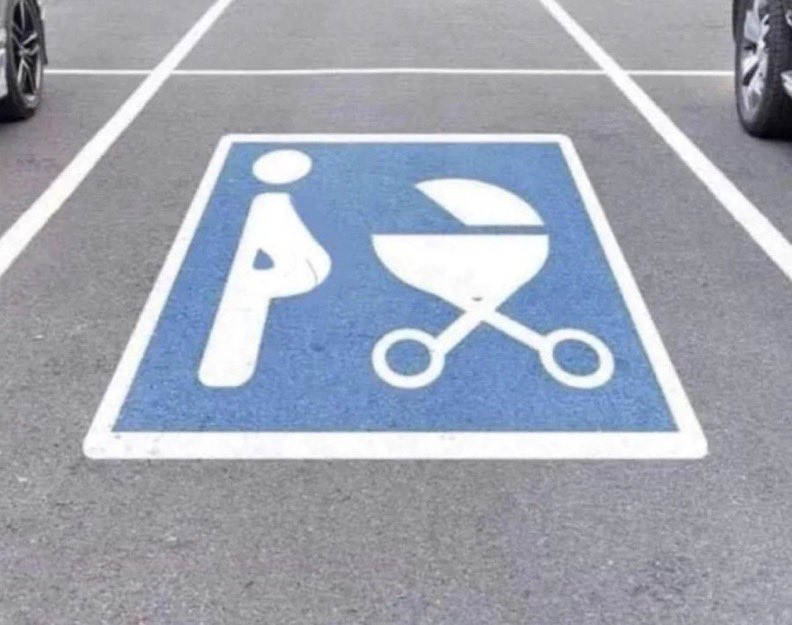
Place reserved for people twerking in front of a grill.
The Figen tweet media
English
77
43
576
24.9K
Le20h-France Télévisions
Le20h-France Télévisions@le20hfrancetele·
🎬🗣️ "J'ai une fille. Je n'ai pas été génial comme père, j'ai été correct à partir de 13-14 ans." Fabrice Luchini se confond avec Victor Hugo dans "Victor comme tout le monde". #JT20h
Français
3
12
41
28.1K
David Wineberg
David Wineberg@davidwineberg·
@IvanhoeMines_ Too bad US institutions can't help boost the sickly stock because it trades in the pink sheets instead of the NYSE, a liquidity killer. Pathetic for a global mining star. Sad that China's CITIC is its biggest holder and not some giant pension funds.
English
0
0
2
80
Ivanhoe Mines
Ivanhoe Mines@IvanhoeMines_·
Copper is critical to our economy. 🏙️ Our Kamoa-Kakula Copper Complex is the world's fastest-growing, highest grade, and lowest-carbon emitting major copper mine - supplying metals fundamental to the global energy transition. 💥
English
1
14
67
8.8K
New York Post
New York Post@nypost·
Pastors lay hands on Trump during Oval Office Prayer
English
594
254
1.7K
108.3K
David Wineberg
David Wineberg@davidwineberg·
@le20hfrancetele Quel plaisir pour un américain comme moi d'écouter une ministre de la défense intelligente, directe, compétente et attentive. Nous ici souffrons d'un imbécile ivrogne, fanatique réligieux qui s'adore et impose ses croyances sur l'armée. Vivre la différence.
Français
1
0
0
127
Le20h-France Télévisions
Le20h-France Télévisions@le20hfrancetele·
🔴🎙️"Le ciel n'était pas net puisqu'il y avait des missiles", Catherine Vautrin, ministre des Armées et des Anciens combattants, évoque un avion d'Air France contraint de faire demi-tour alors qu'il était chargé de rapatrier des ressortissants français bloqués au Moyen-Orient.
Français
8
12
29
13.4K
David Wineberg
David Wineberg@davidwineberg·
@ctindale Except: Hormuz filters 20% of global petro shipping. That means 80% does not transit through Hormuz. Hard to believe in this cascade if 80% still flowing. Does it also reflect petro shipping NOT by ship - ie. pipelines? Disruption will be real, but temporary & mitigated.
English
4
0
7
8.6K
David Wineberg
David Wineberg@davidwineberg·
@TheFigen_ Yeah, there's nothing quite like the totally artificial glare of bright orange florescent lighting that occurs absolutely nowhere in nature. What a brilliant idea - literally! Great for keeping french fries warm, but as natural lighting goes - not so much.
English
0
0
0
556
The Figen
The Figen@TheFigen_·
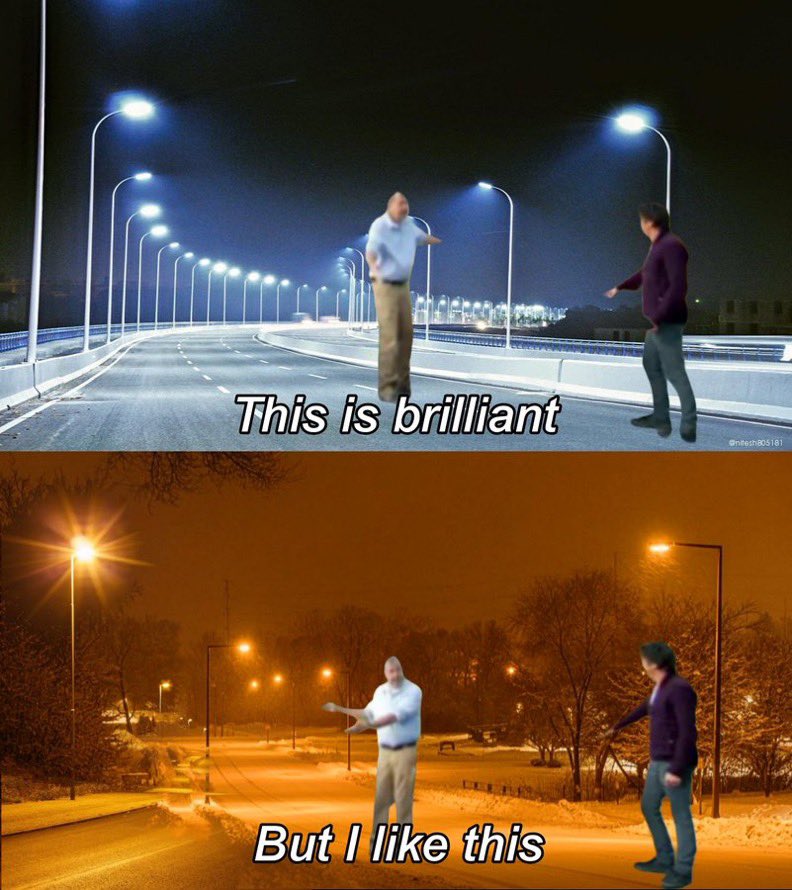
Sodium streetlights are a true symbol of nostalgia.
The Figen tweet media
English
177
4K
79.6K
733.3K
David Wineberg
David Wineberg@davidwineberg·
@ryangriffinAU @ctindale No, it's a little older than that: Caveat emptor. Don't come whining when you realize you made a mistake. Buyer's remorse is not a legal foundation.
English
0
0
0
35
🇦🇺Craig Tindale
🇦🇺Craig Tindale@ctindale·
Anthropics has attempted a coup. Let me explain: It is attempting to become a supragovernmental power able to dictate to the state its policies. Power rests on control of the means through which authority is exercised. Legitimacy must derive from electoral consent, but execution depends on administration. The modern state is inseparable from its technical apparatus. When AI becomes embedded in defence planning, regulatory analysis, intelligence synthesis, and economic coordination, it becomes part of that apparatus. It structures the field in which decisions are made and assumes, through electoral consent, the means to alter them. What is visible, calculable, and actionable passes through it. If the governing entity of that system can condition access or refuse deployment, then power operates through dependence. Anthropic is leading an supra democraic coup. The elected authority retains formal legitimacy, yet its range of action narrows to what the infrastructure permits. The infrastructure now assumes the moral & legal right to direct the democracy . It is an opaque structural coup. It is opaque because it unfolds within contracts, alignment policies, licensing terms, and technical standards. It is structural because it rests on control of indispensable capability. It is a coup in the sense that effective sovereignty migrates without a public rupture or the consent of an election. It assumes the role of Congress and the Senate. In practice, the governance layer sits above the electoral layer. Authority continues to speak in the name of the people. Capacity answers to the administrator of the system. Be careful, for this is how AI would take over.
Palmer Luckey@PalmerLuckey

This gets to the core of the issue more than any debate about specific terms. Do you believe in democracy? Should our military be regulated by our elected leaders, or corporate executives? Seemingly innocuous terms from the latter like "You cannot target innocent civilians" are actually moral minefields that lever differences of cultural tradition into massive control. Who is a civilian and not? What makes them innocent or not? What does it mean for them to be a "target" vs collateral damage? Existing policy and law has very clear answers for these questions, but unelected corporations managing profits and PR will often have a very different answer. Imagine if a missile company tried to enforce the above policy, that their product cannot be used to target innocent civilians, that they can shut off access if elected leaders decide to break those terms. Sounds, good, right? Not really - in addition to the value judgement problems I list above, you also have to account for questions like: -What level of information, classified and otherwise, does the corporation receive that would allow them to make these determinations? How much leverage would they have to demand more? -What if an elected President merely threatens a dictator with using our weapons in a certain way, ala Madman Theory/MAD? Is the threat seen as empty because the dictator knows the corporate executives will cut off the military? Is the threat enough to trigger the cutoff? How might either of those determinations vary if the current corporate executive happens to like the dictator or dislike the President? -At what level of confidence does the cutoff trigger, both in writing and in reality? The fact that this is a debate over AI does not change the underlying calculus. The same problems apply to definitions and use of ethically fraught but important capabilities like surveillance systems or autonomous weapons. It is easy to say "But they will have cutouts to operate with autonomous systems for defensive use!", but you immediately get into the same issues and more - what is autonomous? What is defensive? What about defending an asset during an offensive action, or parking a carrier group off the coast of a nation that considers us to be offensive? At the end of the day, you have to believe that the American experiment is still ongoing, that people have the right to elect and unelect the authorities making these decisions, that our imperfect constitutional republic is still good enough to run a country without outsourcing the real levers of power to billionaires and corpos and their shadow advisors. I still believe. And that is why "bro just agree the AI won't be involved in autonomous weapons or mass surveillance why can't you agree it is so simple please bro" is an untenable position that the United States cannot possibly accept.

English
53
68
468
42.4K