Bufa

10.6K posts

Bufa banner
Bufa

Bufa

@davisagbor

Numbers 23:19. Entrepreneur. Arsenal Diehard fan.

Katılım Şubat 2011
3.5K Takip Edilen1.2K Takipçiler
Bufa
Bufa@davisagbor·
@TheArsenalMind I think the Diomande deal is depended on Vini signing or leaving. If Vini he stays, no Diomande , if he leaves, they sign Diomande.
English
0
0
0
26
ARDENT GOONER
ARDENT GOONER@TheArsenalMind·
If Real Madrid fail to sign Yan Diomande do you think Arsenal’s chances of getting Vinicius become weaker? 👀
English
35
23
539
36.3K
Paras Shah
Paras Shah@parashah91·
Anyone here who bought a 55-inch TV that's still working fine after 8-10 years without any maintenance? If yes, which brand and model?
English
8.3K
398
10.2K
2.8M
Bufa
Bufa@davisagbor·
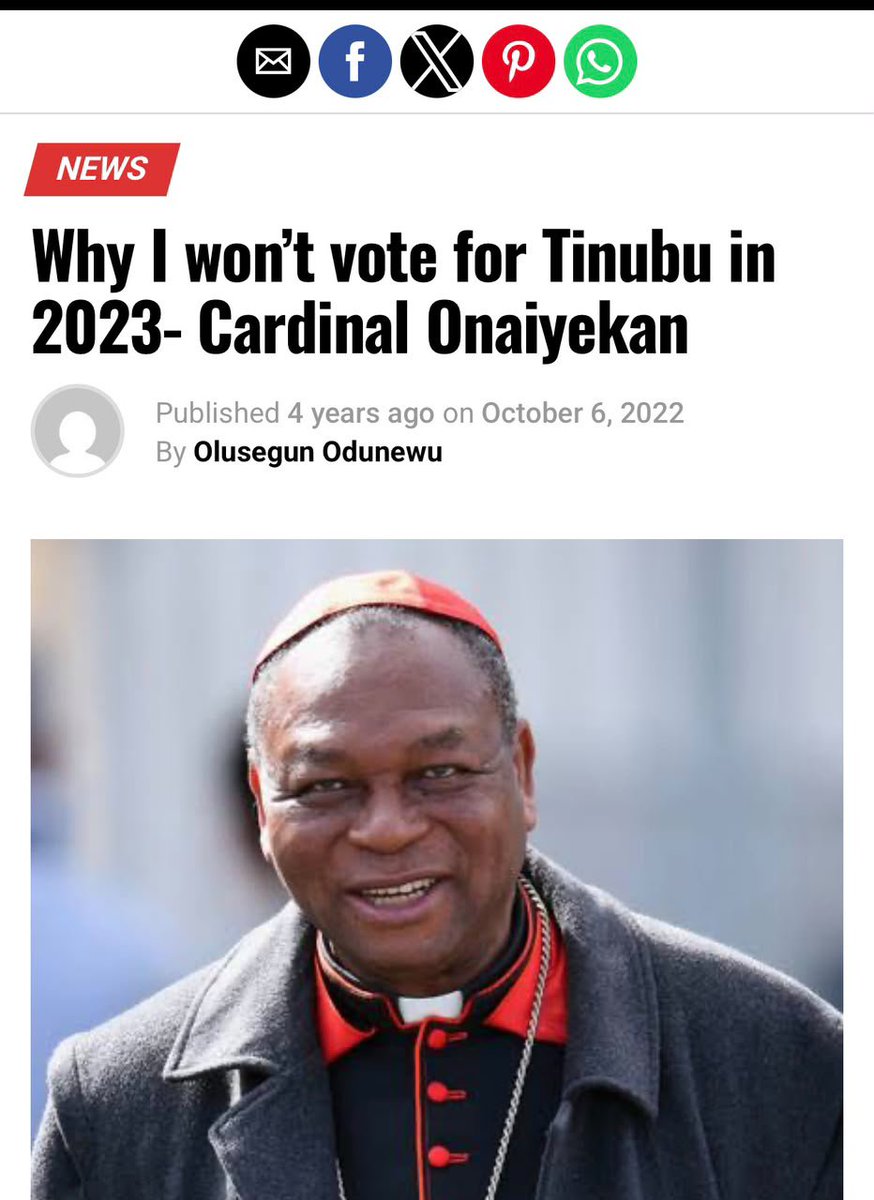
@aruhullahi The Catholic Bishop always say the truth. They are friends of the people and with the oppressors. If the country was doing well, they would have praised Bola, but the country is in a state of quagmire and you want to lie to Bola, right?
English
0
0
0
33
Adebayo Akinpelu
Adebayo Akinpelu@aruhullahi·
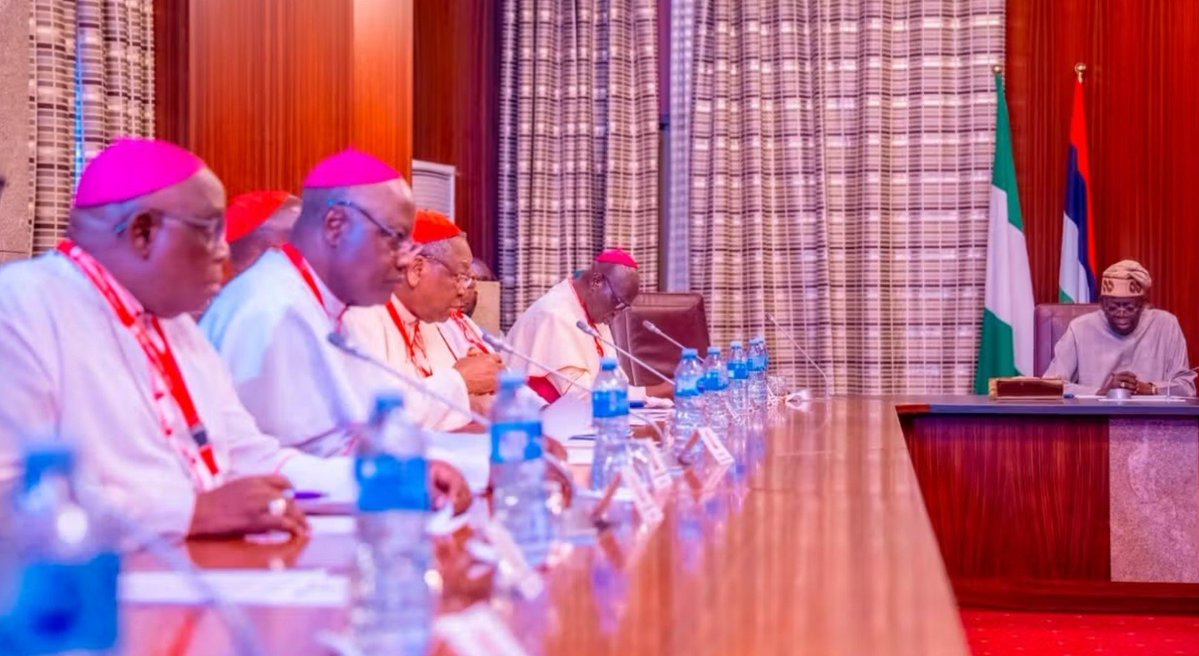
If the Catholic Bishops had commended President Tinubu, you would have dragged them from the altar to the streets with insults. That's how predictable the politics of convenience has become. You all read the same report, yet you cherry-pick only the parts that suit your narrative. When President Trump sent a letter to President Tinubu, many of you instantly screamed, "Fake!" and did everything possible to discredit it. Now you're suddenly acting like every statement from a respected institution is beyond question. That's politics not principle. The election season is here. Bring your best eleven, we'll bring ours. But remember, elections are won with structure, strategy, and votes not hashtags, outrage, or social media noise. See you at the polls.
A.M TEMIDAYO@AnewNaija

Had the Catholic Bishops’ visit gone differently, Bayo Onanuga’s press release would have read: "Catholic Bishops Applaud President Tinubu’s Reforms; Pledge Loyalty to Mr. President." They anticipated lies. Unfortunately for them, they got the hard truth. God bless the CBCN.

English
9
3
16
2.2K
Bufa
Bufa@davisagbor·
@SamAmadi Doc, look at the people pushing for it, if you look carefully, you will Atiku’s hand in there. Anyway coalition that PO is not the candidate will never work.
English
0
0
1
40
Sam Amadi
Sam Amadi@SamAmadi·
I totally agree with you. But the coalition could be to start to curate relationship that will make the unity possible down the line
Ibrahim H Abdulkarim@ziter001

To those urgently pushing for a single, united opposition candidate right now: Your passion for change is clear, and the desire for a strong, cohesive challenge to the status quo is understandable. But rushing into elite-level coalition talks at this moment risks doing more harm than good. It distracts from the real work that builds lasting power. The litigations are not yet concluded. The final list of candidates is still weeks away, up until September. Premature negotiations before those facts are settled put the cart before the horse. More importantly, many of the loudest voices for an immediate single ticket have shown little interest in the foundational tasks that actually decide elections: driving voter registration, educating citizens on electoral reforms, and mobilizing ordinary people into political parties and structures on the ground. Calling for unity while neglecting these basics is not strategy; it is theater. OCTOBER 2026 is the wiser horizon. By then, we will see what each party, group, and candidate actually brings to the table: concrete manifestos, tested strategies, campaign organizations, media networks, funding approaches, and real organizational reach. We will also have a clearer picture of how the incumbent APC treats the opposition space. Only with that information can Nigerians intelligently compare options, adopt the strongest elements, or forge a hybrid approach grounded in substance rather than personalities and private deals. Real opposition strength does not emerge from hurried elite bargaining over the form of government that might later serve private interests. It emerges when candidates and platforms prove themselves through preparation and performance. The arrowhead will become clear naturally once the groundwork is visible. Until then, every serious opposition actor should be focused on building: assembling campaign councils, recruiting media surrogates, refining manifestos, securing funding strategies, and organizing at the grassroots. Nigerians are watching. Time spent on premature coalition talk is time diverted from the hard, unglamorous work that wins elections. Let each group sharpen its offering. Let the strongest rise on merit and public support, not on closed-door negotiations driven by ego or convenience. Prepare now. Evaluate later. Support the best on the ground when the moment is right. Show workings. That is how credible opposition is built. Yours, Focused Obidient.

English
7
17
57
5K
Bufa
Bufa@davisagbor·
@HarmlessHQ We are seating on a time bomb and na Tinubu go detonate am.
English
0
0
8
306
Harmless
Harmless@HarmlessHQ·
"There's serious hunger in Nigeria. We have an army of beggars rising in Lekki, Ikeja, VI... they're not even begging you anymore, they bash someone's windscreen the other day. Because in their mind, how dare you drive G-Wagon, or even Prado." - Ebuka Obi-Uchendu.
Harmless tweet media
English
117
1.4K
4K
71.6K
Bufa
Bufa@davisagbor·
@AbujaPresident Because they cannot be bribed like other Clergies in this new generation churches.
English
0
0
0
135
Abuja President ⚖️
Abuja President ⚖️@AbujaPresident·
Why are Nigerian Catholic clerics generally more courageous in speaking truth to power than Pentecostal ones?
English
438
688
3.9K
233.6K
DeyBanga
DeyBanga@Tochukwu_Abosi·
@MalachyOdo1 Tinubu should calm before his matter comes in every diocesan weekly circular
English
2
0
3
1.1K
Malachy Odo II
Malachy Odo II@MalachyOdo1·
APC earthworms are lucky that Cardinal Okogie in now old and out of circulation. They shouldn't worry sha...God has raised other men. The Catholic Bishop of Nsukka will soon come with a sledgehammer.
English
35
184
768
19.8K
Osasu Obayiuwana
Osasu Obayiuwana@osasuo·
We all agree that Chiamaka Nnadozie didn’t do well against Malawi. She knows that, acutely. But do Nigerians have to be so harsh to a young lady that has done Nigeria extremely proud for the overwhelming part of her @NGSuper_Falcons career? A bad day happens to everyone, including you. These players are human and have feelings too... Criticise, yes. But mind your words!
Osasu Obayiuwana tweet mediaOsasu Obayiuwana tweet media
English
23
48
321
14K
Bufa
Bufa@davisagbor·
@HonShield Them no born Mbaka well to talk for this matter.
English
0
0
0
149
Hon Henry Shield
Hon Henry Shield@HonShield·
Watch out, They’ll soon bring Mbaka to do damage control! This APC govt?
English
154
276
1.1K
27.8K
Bufa retweetledi
Gramvoice
Gramvoice@Gramvoicehq·
This Samsung Galaxy S24 Ultra could be yours! Just follow these simple steps to stand a chance to win it: • Follow @gramvoicehq • Follow @jacob_gramvoice • Retweet this post Do these three easy things today for your chance to win the Samsung Galaxy S24 Ultra!
Gramvoice tweet media
English
152
239
282
690.8K
Oshare
Oshare@Oghenekevwe_·
There was really a need for Cardinal Onaiyekan to go on @ARISEtv to set the records straight. The mainstream media was already portraying their visit like an endorsement visit. If you slack with APC they'll use you without you even knowing
English
1
0
1
32
Bufa
Bufa@davisagbor·
@_Dejii Yes oh! It pains him he cannot create another faction of Catholic Bishops like he did to Afenifere when they were against him. You would have seen New Catholic Bishops supporting him. Tinubu does not thrive where there’s orderliness.
English
0
0
5
574
Dejii™
Dejii™@_Dejii·
What frustrates Bola Tinubu the most is the fact that Cardinal John Olorunfemi Onaiyekan is beyond his sphere of influence and control.
Dejii™ tweet media
English
172
2K
8.1K
120.8K
Teejay 2🌽🌽🌽
Teejay 2🌽🌽🌽@tajudine2013gm2·
@thecableng Cardinal Onaiyekan hate Tinubu since coming out for President because he is a Muslim. 😂😂😂😂😂
Teejay 2🌽🌽🌽 tweet mediaTeejay 2🌽🌽🌽 tweet media
English
1
0
0
65
TheCable
TheCable@thecableng·
TOPE AJAYI: "There is something fundamentally inappropriate about Cardinal John Onaiyekan granting a television interview to offer his own account and interpretation of what transpired during the private meeting between the Catholic Bishops’ Conference of Nigeria and President Bola Tinubu. It is, in my view, an abuse of clerical privilege." thecable.ng/onaiyekans-abu…
TheCable tweet media
English
86
21
60
28.5K
🍭Gust
🍭Gust@Gustsire·
@davisagbor @UchePOkoye Imagine all the meetings on strategy that had people like Balami and Valentine as participants. People who'd gladly sell info to the enemy.
English
1
0
1
48
Bufa retweetledi
Ugochukwu Ugwoke, ISch
Ugochukwu Ugwoke, ISch@FrUgochukwu·
A Response to Tope Ajayi’s Article "Cardinal Onaiyekan’s Abuse of Clerical Privilege" I read the article titled “Cardinal Onaiyekan's Abuse of Clerical Privilege” by Temitope Ajayi with great interest. Surely, the article raises important questions about the relationship between the Church and the State. However, I believe some of its conclusions, particularly from the perspectives of constitutional democracy and the Church’s public mission, deserve a respectful and balanced response and clarifications. Here is my point to point response to each of the concerns raised. 1. Was it improper for Cardinal Onaiyekan to speak publicly on Arise News? Not necessarily. The meeting between President Tinubu and the Catholic Bishops of Nigeria was not a sacramental confession that requires utmost secrecy, a diplomatic negotiation under secrecy, or a legally confidential proceeding. Unless the participants expressly agreed to confidentiality, there is no legal or moral principle that absolutely prevents either party from commenting on the discussion afterward. 2. The Church has both the right and the duty to speak. Catholic bishops are not merely private citizens expressing personal opinions. By virtue of their pastoral office, they have a responsibility to teach on moral and social issues. Catholic social teaching consistently affirms that the Church must speak whenever human dignity, justice, security, and the common good are at stake. That is exactly what the bishops did. 3. Speaking after a meeting is not necessarily a breach of trust. Providing one’s understanding of a discussion is different from revealing confidential state secrets. Democratic engagement often includes explaining to the faithful what was discussed, particularly when the meeting like theirs concerns issues affecting millions of citizens. 4. Criticism of government is not a denial of progress. One may acknowledge improvements while still concluding that much more remains to be done. Recognizing government achievements and identifying persistent failures are not mutually exclusive positions. 5. “Truth to power” remains relevant. The fact that a president receives intelligence briefings does not eliminate the value of independent voices. Security reports, economic data, religious leaders, civil society, academics, journalists, and ordinary citizens each offer different perspectives. No single source possesses the whole truth. 6. Access to privileged information does not settle public debate. The President undoubtedly possesses information unavailable to the public. However, democratic accountability also requires that government decisions remain open to public scrutiny and legitimate criticism. 7. Confidentiality should not become silence. If public officials may explain their side of a meeting, religious leaders should not automatically be denied the same opportunity, provided they do so truthfully, respectfully, and without disclosing genuinely confidential matters. 8. Clerical office does not diminish civic responsibility. The virtues expected of bishops such as prudence, temperance, and wisdom, do not require silence in the face of national concerns. History remembers many bishops who respectfully challenged civil authorities while remaining faithful to both the Gospel and legitimate constitutional order. In all, the real issue is not whether Cardinal Onaiyekan spoke, but whether what he said was truthful, fair, and served the common good. I believe that in a constitutional democracy, respectful dialogue between religious leaders and civil authorities should continue not only behind closed doors but, when appropriate, also in the public square, just as Cardinal Onaiyekan did. Fr. Ugochukwu Ugwoke, ISch
Ugochukwu Ugwoke, ISch tweet media
Bayo Onanuga, OON, CON@aonanuga1956

Cardinal Onaiyekan's Abuse of Clerical Privilege By Temitope Ajayi There is something fundamentally inappropriate about Cardinal John Onaiyekan granting a television interview to offer his own account and interpretation of what transpired during the private meeting between the Catholic Bishops' Conference of Nigeria and President Bola Tinubu. It is, in my view, an abuse of clerical privilege. The bishops requested an audience with the president. He granted the audience graciously. They presented, as was their right, a catalogue of the country's economic, social, and security challenges as they saw them. Except for their grudging acknowledgement of the benefits of NELFUND, they were dismissive of the other great things done by the administration. The bishops were notably acerbic in their submission, but the president listened to them patiently and responded. That should ordinarily have been where the matter rested. None of the issues raised by the bishops is beyond scrutiny or rebuttal. Their assessment is neither scripture nor an article of faith. It is a perspective, and perspectives can be challenged with facts and evidence. President Tinubu did exactly that, responding point by point to the issues they raised. On the bishops' demand for the return of schools to their owners, the President was surprised that such an issue could be tabled before him, as it is a matter for the states to resolve, in line with our constitution. So, he asked the bishops to take the matter to the governors and reminded them he returned mission schools in Lagos State when he was governor. The President argued that the bishops’ characterisation of the country's current condition was incomplete and, in several respects, inaccurate. He pointed to measurable progress on the economic, social, and security fronts. He did not pretend that Nigeria's problems had disappeared. He acknowledged that significant economic and security challenges remain. His point was that the country has emerged from "a dark tunnel", that his administration has laid the foundations for recovery and that the next phase is to ensure the greatest number of Nigerians feels the gains. What the clerics often overlook in these interventions is that governing a country is fundamentally different from shepherding a church. In a democracy, every interest group, including the Catholic Church, has every right to demand more from government. That is part of democratic engagement. But the president of a nation of more than 200 million people is required to make difficult choices every single day. Those choices involve competing interests, limited resources, and imperfect options. They will inevitably disappoint some constituencies. There is no president, whether Tinubu or whoever succeeds him, who can wave a magic wand and make Nigeria's accumulated problems disappear overnight. It is easy to compile a list of national problems. It is far more difficult to acknowledge the disasters that have been averted. Whatever anyone thinks of President Tinubu's policies, it is impossible to ignore the fiscal crisis he inherited and the measures taken to pull the country away from the edge of a financial cliff. Even the bishops themselves should recognise that one tangible consequence has been the restoration of greater fiscal stability across many states. Countless civil servants and pensioners who, for years, endured unpaid salaries and pensions are now receiving them more regularly. That was certainly not the reality in many states from around 2014. Even about four years ago, 27 state governments struggled to meet even their most basic obligations. Many of those civil servants and pensioners are themselves parishioners in Catholic churches. They know, from lived experience rather than official pronouncements, that there has been real relief in the regular payment of salaries and pensions. While this does not erase the discomfort many Nigerians still face, it is wrong to dismiss or ignore those improvements casually. So when President Tinubu reminded the bishops of these facts during the meeting, he was not, as Cardinal Onaiyekan later suggested, being aloof or dismissive. He was presenting evidence to support his argument that the country is not standing still. A disagreement over facts should not be interpreted as arrogance. The same applies to security. The bishops declared that Nigeria is bleeding. The President thinks otherwise. President Tinubu did not deny the seriousness of the security situation. Rather, he acknowledged the challenge while outlining the gains recorded by the Armed Forces and intelligence agencies across different theatres of operation. As Commander-in-Chief, he receives operational briefings, intelligence assessments, and battlefield reports unavailable to the general public. The bishops, like other Nigerians, rely largely on media reports and public information. That does not make the President infallible, but it does mean he possesses information unavailable to the generality of the people. It is, therefore, legitimate for him to argue that the overall picture is more nuanced than newspaper headlines sometimes suggest. Cardinal Onaiyekan's Arise News interview also reflected a familiar error that many ideological and professional critics make. They often assume that only critics speak truth to power, while everyone around a leader is either unwilling or incapable of doing so. It is an attractive narrative, but it is rarely true. What truth does anyone really need to tell President Tinubu that he does not already know? As president, he has multiple channels for feeling the pulse of the country. He reads an average of 10 newspapers every day. He watches television, including discussion programmes, to gauge public opinion. He receives daily security, social, and economic intelligence reports from various arms of government, reports that are prepared for decision-making and are not sugar-coated. In a meeting earlier in the week, he still referenced a very harsh and largely uninformed opinion piece written by Dr. Chidi Amuta in his last Sunday Thisday Newspaper column. Beyond that, he has friends and associates embedded in the social fabric of the country, drawn from different regions, professions, and political persuasions, who serve as informal sounding boards. Against that background, the suggestion that President Tinubu somehow needs only the Catholic Bishops to acquaint him with the truth is an overreach. They are an important constituency, but they are by no means the exclusive custodians of the national mood or the nation's conscience. To assume that criticism delivered publicly is the only form of truth-telling is to misunderstand how government works. Presidents are exposed daily to competing advice, conflicting intelligence, uncomfortable assessments, and hard realities. Presidents are constantly confronted with information, much of it unpleasant. The real question is not whether they know the truth but what choices they make in response to it. The Catholic Bishops discharged what they considered their moral obligation by presenting their concerns to the president. President Tinubu, for his part, accorded them respect by granting them an audience and responding to every issue they raised. That exchange reflected the civility expected in a constitutional democracy. Reciprocity should have dictated that the confidentiality and dignity of that engagement be preserved. As such, it was inappropriate for one of the participants to emerge almost immediately on national television to provide his own version of what was essentially a private conversation with the president. Clerical office carries privileges, but it also imposes obligations. Among the qualities the Scriptures require of bishops are temperance, maturity, self-restraint, and the wisdom to remain above needless public controversy. Those virtues become even more important when dealing with matters of state. Public influence should be exercised with discretion, not by converting privileged access into a platform for post-meeting commentary. -Ajayi is Senior Special Assistant to President Tinubu on Media and Publicity

English
61
612
1.3K
41.8K
Shakiru Onifade
Shakiru Onifade@shakiru_onifade·
@SamAmadi Cardinal Onaiyekan allows himself to be used as a tool in the hands of the opposition. He is one of the several tactics in the strategy of the opposition. He is undermining the credibility of an election that has not taken place. Perhaps they know the opposition stand no chance.
English
11
0
1
673
Bufa
Bufa@davisagbor·
@thecableng What rubbish is this? Obi never omitted his primary and secondary school certificate, only Bola did. The cable of lies.
English
0
0
0
736
TheCable
TheCable@thecableng·
Tinubu, Atiku, Obi omit primary, secondary certificates as INEC publishes candidates' particulars The Independent National Electoral Commission (INEC) has published the personal particulars of candidates contesting the 2027 presidential and national assembly elections. The particulars were displayed at INEC offices in local government headquarters across the country. thecable.ng/tinubu-atiku-o…
TheCable tweet media
English
174
20
53
111.9K
Bufa
Bufa@davisagbor·
@ARISEtv Go and arrest him na. Stupid people.
English
0
0
2
148
ARISE NEWS
ARISE NEWS@ARISEtv·
Presidency says Cardinal Onaiyekan breached confidentiality by discussing bishops’ private meeting with President Tinubu during an ARISE News interview. ow.ly/gwqK106BIN9
ARISE NEWS tweet media
English
993
952
3.5K
466.4K