ElWalka
13.8K posts

ElWalka
@dayonep1
It’s hard to win an argument with a genius, impossible with an idiot. Believe Your Eyes NOT the LIES!!!


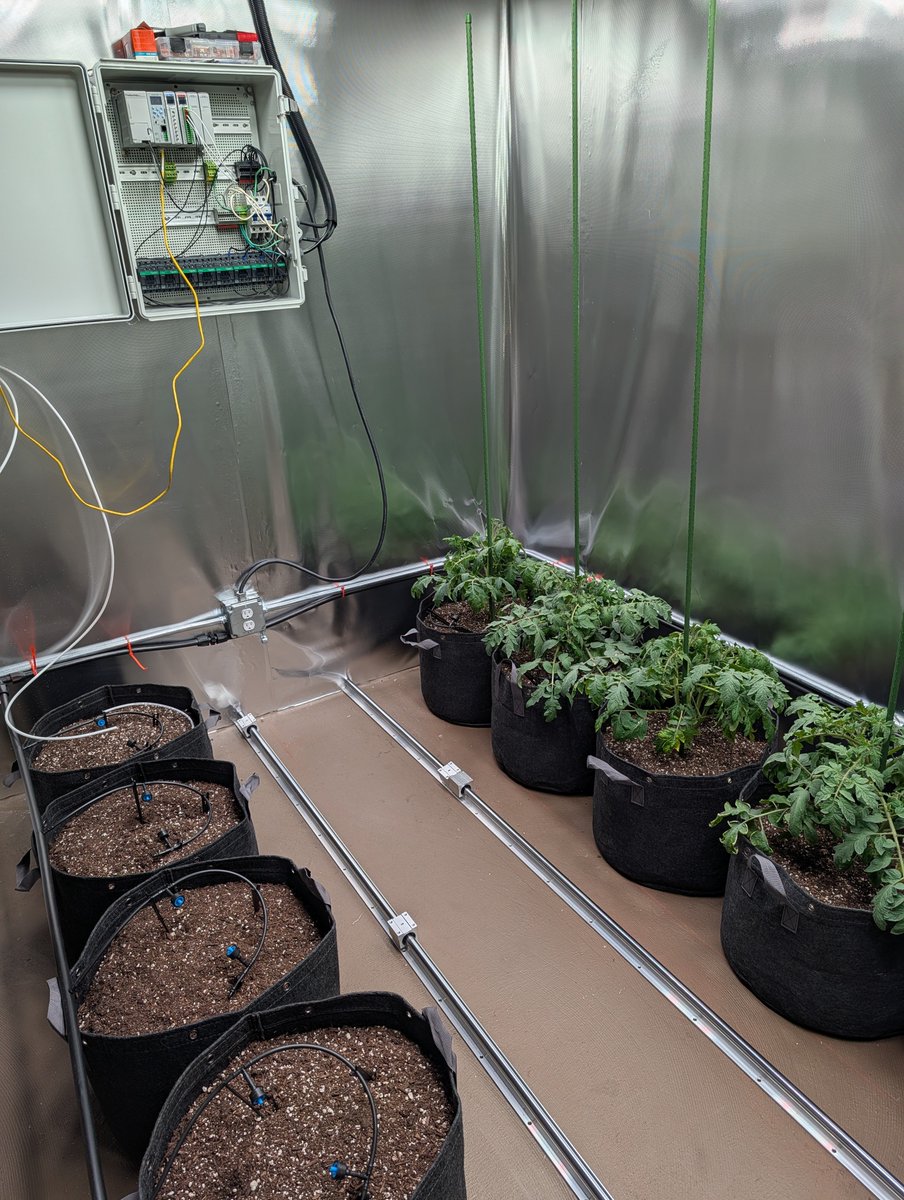
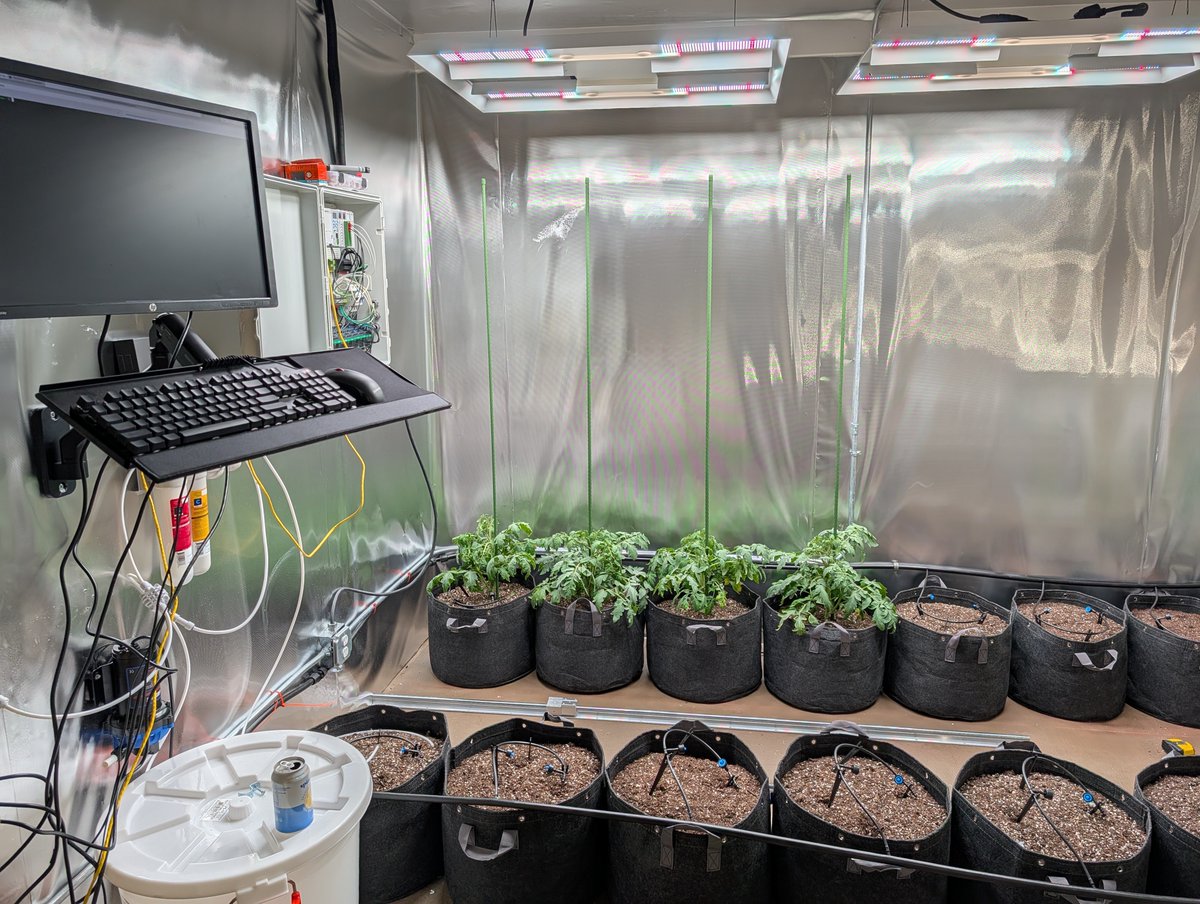
Here's an update so far on the automated research pods! Emergency update! So unfortunately, and hilariously I discovered that the in-warehouse ambient CO2 levels are 700! What does this mean for the pilot trial? Well, since pod one was supposed static enrichment - at 700 ppm of CO2 injected that meant that no supplemental injection was needed. And since pod 4 was supposed to be the control - or ambient(420ppm) we got 700! Basically - pod 1, 2 and 4 got *almost* identical CO2 treatments. So 3 controls, and one treatment... Oops! BUT here's the interesting thing. Pod 3. We did validate something with this brief trial from seedling to vegetative. Pod 3 had 1000 ppm CO2 injected, with a par/light level of 100. And STILL has the same amount of growth as the other 3 pods running at basically full hog. That's 57% LESS light energy than the other pods. That's huge cost savings already, where you supplement long light hours in place of CO2. This validates the research done by NC state, Huber et al. 2021, Frontiers in Plant Science (link below) To put it very simply - HUGE cost savings for indoor growing, just by supplementing CO2 in place of light. So what's next? I already have seedlings ready to go, and we'll transfer them for another pilot study - it will be tailored to match the indoor environment of the warehouse itself. These tomatoes will be transferred to the enclosed grow room where they can begin to grow as productive tomatoes. Which is perfect since the leader/follower arm is coming soon, and we'll need plants in there ready to train the act policy. This also lets me work out some kinks in the hardware. Dying serial connections on the Arduino, and some other odds and ends. I'm also excited to share the new upgrade - which will be the camera mounted on a linear actuator. This allows the agent to determine the exact height of the plant, without the parallax effect leading to better observations from the agents, and lighting control that's reactive to the height of the plant. More soon! 🍅🤖🧪🤩


the problem with Claude Code leaking/wasting tokens is very apparent now everyone been sharing screenshots, so i created a full guide to limit/stop the waste besides applying those tips in the guide, it's important to track your token usage via the right tools luckily there are two open source tools just for this, one has 12k stars and the other 7k Here is how to track every Claude token usage in 10 steps with them (so you don't waste Claude tokens): 1. Install ccusage. Zero setup. npx ccusage@latest -- reads your local logs instantly. No config needed. 2. Morning weigh-in before you code. Run ccusage daily every morning. See what yesterday cost and where cache saved you. 2 seconds. 3. Find your expensive sessions. ccusage session breaks it down per conversation. You'll spot the one that ballooned to 200K tokens. 4. Map your 5-hour billing windows. ccusage blocks shows usage across reset cycles. Are you front-loading hour one and sitting idle for four? 5. Install the live monitor. pip install claude-code-usage-monitor -- different tool, different job. Watches tokens burn in real time. 6. Split terminal: Claude left, monitor right. claude-monitor --plan pro gives you live progress bar, burn rate, and time-to-limit. 7. Watch burn rate on complex tasks. Agent teams, large file reads, Opus + high effort. When the monitor spikes, switch model, lower effort, or /compact. 8. Track weekly trends. ccusage monthly shows if spending is climbing or dropping. Compare week over week. The delta is your progress. 9. Check cache read ratios. Low cache reads relative to total input = broken caching. Either the prefix is changing, TTL is expiring, or you never enabled it. 10. Set a weekly token budget. Week 1: baseline (no changes). Week 2: apply tips. Track with ccusage weekly, stay on pace with claude-monitor daily. CCusage: github.com/ryoppippi/ccus… ccusage is your rearview mirror (what happened). Claude Code Usage Monitor: github.com/Maciek-roboblo… claude-monitor is your speedometer (what's happening now).

the AI version of what Kevin is describing: 1. pick a niche (dentists, gyms, med spas, roofers) 2. use Claude to research their competitors, audience, and top-performing content 3. build a content system that creates 30 days of short-form ads in one afternoon 4. run the ads. track customer acquisition weekly. show them the numbers. 5. charge $3-5K/mo per client because you're not selling "content," you're selling customers Kevin says these people make $250-500K/yr doing this manually. with AI handling the research, scripting, and repurposing, you can run 5-10 clients at once instead of 2-3. same skill. 3x the capacity. no team needed.