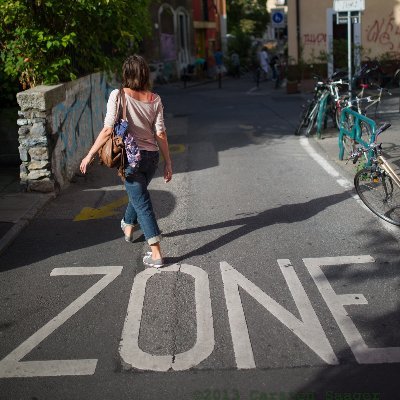
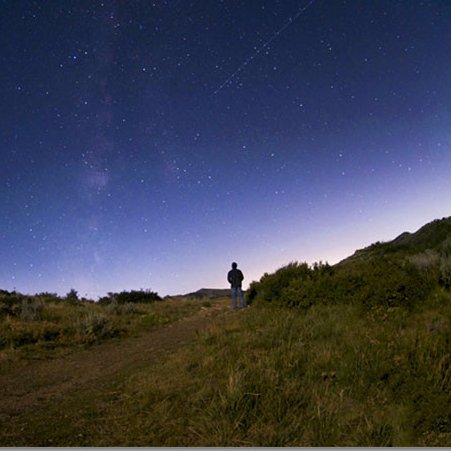
Intelligent people struggle with addiction. Their minds need more. They have obsessions nobody around them shares. Philosophy. Astronomy. Dostoevsky. Jazz. Quantum physics. Things they know deeply. Things they've gone so deep into that anything else feel like small talk. And small talk feels like suffocation. So... they drink. Work until 2 am. Doomscroll until they're numb. Because there is a gap. A gap between who you are and the conversations available to you. And it's one of the loneliest places a person can live.
@offgridding A pond is a miniature living world, a microcosmos. Fascinating and beneficial. Been thinking of doing this myself someday. Thanks for posting. (Meanwhile composting has its thrills. :)
I know I’ll never be a social media expert. I’m an engineer, after all.
While I’m here, I’ll share an uncommon perspective.
I’m not just drawn out of the studio, every day, to the land here, but to projects most tech people would find primitive. I read once that Seymour Cray would dig tunnels for hours in the sandstone around his property in Chippewa Falls. For me, when I am not in the woods, I’m often working on ponds.
This one has been years in the making, and I am not even close to done improving it.
I realize not many people will get this, and I am okay with that.
I’ll be out by the pond planning this year’s projects and checking to make sure the fish made it through the winter. It’s a place for wildlife, rain catchment, top-quality irrigation, mosquito control, a skating rink, and simply a beautiful place to be around.
What is completely outside your normal work/business that you love to keep up on?
I.M. Pei, the architect who designed the Louvre's glass pyramid, used to put it this way. In Western buildings, a window is a hole that lets in light and air. In Chinese buildings, a window is a picture frame. And the garden is always painted on the other side.
These are called 漏窗 (lou chuang), or "leaky windows." Wind. Moonlight. Glimpses of the garden, framed by every cutout in the wall. It all leaks through.
A garden designer named Ji Cheng published a whole manual on this in 1635. The Craft of Gardens. The final chapter is titled "Borrowed Scenery." Ji called it the most important part of designing a garden.
He named four kinds of borrowing. Distant: mountains, rivers, far horizons. Adjacent: the neighbor's roof, a wall, a tree next door. Upward: clouds, branches against the sky, even the stars at night. Downward: a pond, the rocks below. Every shape and height in these images is doing one of those four jobs.
In Suzhou, a canal city near Shanghai, the oldest surviving garden was built in the 1040s. It has 108 of these windows along a single corridor. No two are the same. Each frames a different slice of the same pond and the same hills.
By the early 1900s, Suzhou had more than 170 private gardens. Nine of them are now UNESCO World Heritage Sites. Researchers in 2021 photographed almost 3,000 windows across 15 of these gardens, just to train an AI that could tell the patterns apart.
The shapes meant something too. Pine for long life. Plum blossoms for purity. A bat anywhere in the pattern brought good luck to the household. Phoenix for wealth.
There's a pattern called "ice crack." Lines splinter across the wall like cracks on a frozen pond. Scholars adopted it as their own signature. For them, it stood for the moment ice breaks and spring begins, when life starts moving again.
The point of the design was simple. You should never see the whole garden at once. You walk a path, a wall blocks the view, then a window opens it again, framed differently each time. The Chinese proverb for it: "by detours, access to secrets."
A 2024 paper from Xi'an Jiaotong-Liverpool University showed the ice-crack pattern is actually stronger than a regular grid when the weight on top is uneven. Four hundred years later, the math still works.
Modern people have a problem with scale. Every room, every space, has to be bigger and bigger. The problem with that is, it costs so much so you don’t have the money to do cool finishes. In this case a tiled patio. You see plenty of plain concrete pads though.
Stay small.
This is also why my 9/10 advice is to buy an old house and fix it. Especially if it’s solid and all you need to do is cosmetic stuff.
VIDEO: A worn-out Pikachu plushie, tired teddy bear or stained stuffed animal can all get a new lease of life at a Japanese laundry service, making beloved toys squeaky clean again. Business is booming at Cleaning Yonmarusan, a regional chain in Yamanashi, west of Tokyo, with customers coming from all over the world for the service.
Monthly reminder that if you strike up a conversation with someone for about a minute or two they'll say something a little awkward because they always keep one foot on their shadow at all times. Under normal circumstances, you'll get a sense to avoid steering towards that thing, but this time you must have courage to do so. Then when they respond it will happen again. Steer towards it. And again. Very shortly a portal will open into a spiritual place. There is more knowledge immediately retrievable in a normie than a week of responsibly curated Twitter doomscrolling. They will not be speaking eloquently because you're in a realm of the unuttered and this room has been closed for years. Do not open the windows just yet. They will realize it sounds very silly to another person which will help them realize they should leave that room. I learned this from a medieval book and tried it twice. It worked both times. I've been scared to do it again and ultimately I'm a mental miser who would rather collect philosophy facts than help people. But I'm going to try to change that.
@erosbrousson Renting an apartment in France is impossible without years of proven salary and a 'guarantor' who will cover several years rent. I lived through this in Paris, 2000-2004. Black market was the only way. USA is much easier.
I have seen intelligent people destroy their careers by never learning to play dumb strategically. And game theory explains why: in most high-stakes hierarchies, influence is perceived as a zero-sum game. If you appear "too intelligent," you are perceived as a threat. That locks you out of important networks. Let the others feel superior for a while, and hide your intelligence until deployment.